
Edvard Munch died in his sleep on 23 January 1944, aged 80, at Ekely, his home on the edge of Oslo. Norway had been under German occupation since 1940. His last illness began as a cold, caught the morning after an explosion that shook the city.
The blast came on 19 December 1943, one week after his 80th birthday. Munch had spent the occupation behind the walls of Ekely, refusing all contact with the Germans and worrying about what would happen to his paintings.
Cool Stories About Art is a newsletter to learn art the fun way.
Join 200,000+ readers and get:
10 new art stories / month
The entire archive of content (1,000+ articles)
Comment, ask questions, and chat with other readers
Natural causes is the accurate answer, and it is the tidy one. On the night of 19 December, a gigantic explosion shook Oslo. Munch was woken by the blast and stumbled through the winter darkness. Afterward he painted what he had seen, in a watercolor.
The next day he had a cold. According to the Munch Museum, he never fully recovered. Nothing in that sequence looks like a dramatic death. It looks like an old man who caught a cold in midwinter and did not shake it.
That is the part the short answer leaves out. It also leads to the thing that worried Munch more than his health in those years.
What You'll Discover
What came after the blast.
What he feared the Germans would take.
Why he rewrote his will.
What Oslo found at Ekely.
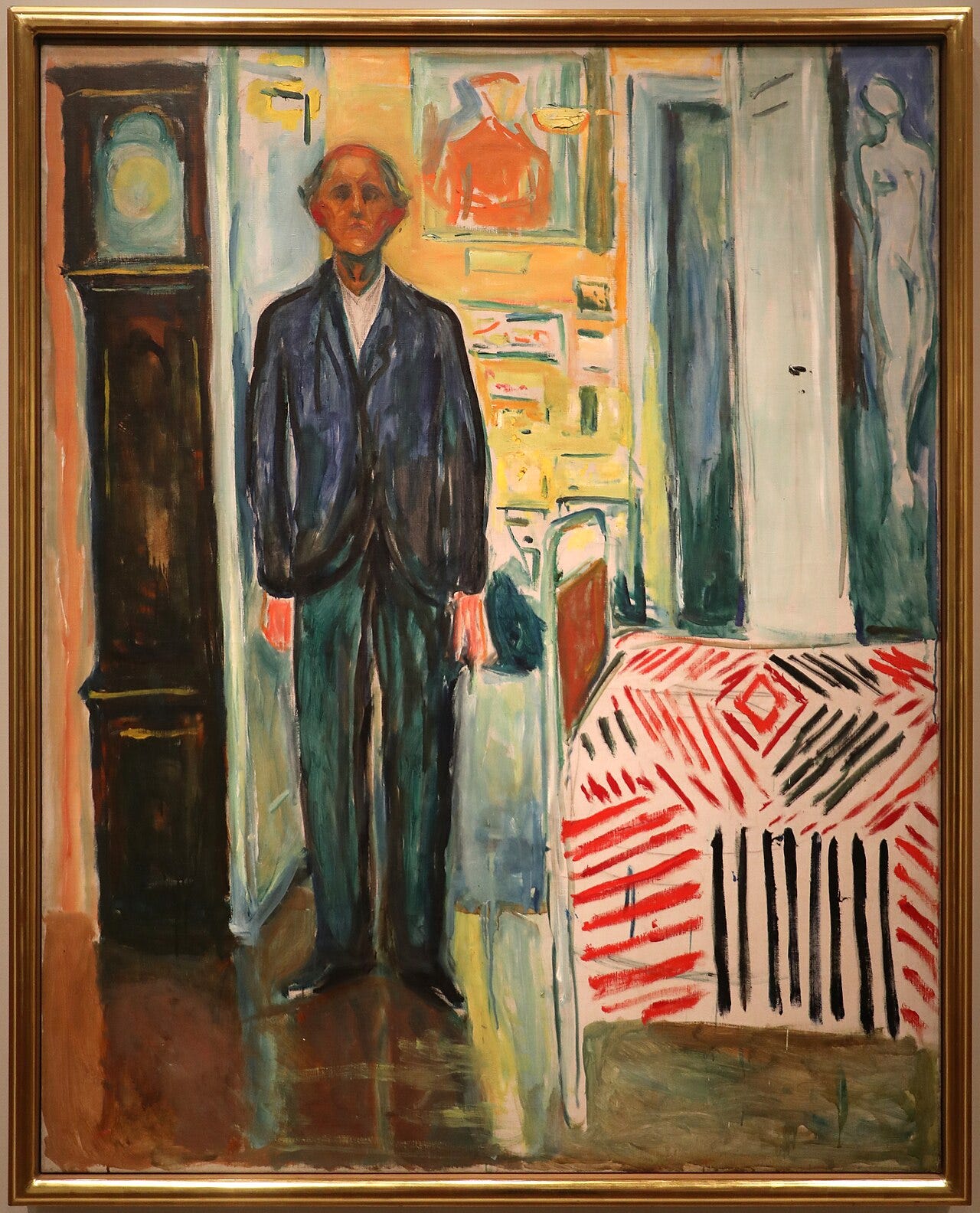
What his last self-portrait shows.