
Jan Matejko, 1838 to 1893, was Poland's great history painter. He filled vast canvases with battles and coronations at a time when Poland had vanished from the map, painting to keep a nation's memory alive.
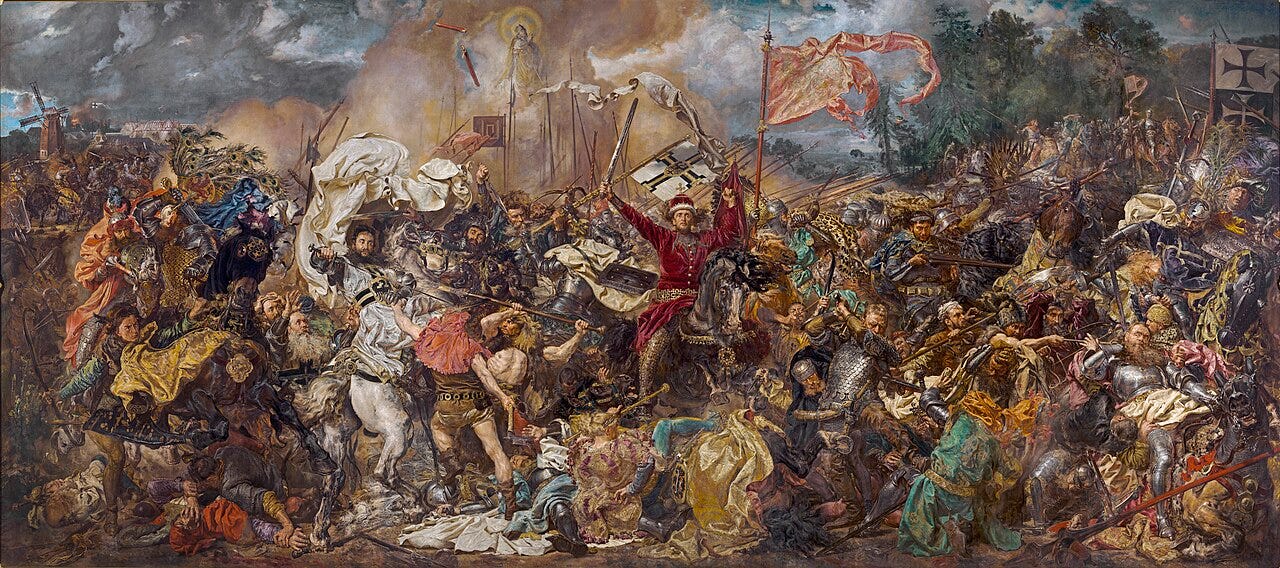
His ten metre wide Battle of Grunwald was so charged that the Nazis put a bounty on it during the war, yet Polish curators hid it and it still hangs in Warsaw today.
His name is said yan ma TAY koh. To Poles he is not just a painter. He is the man who kept the country visible when it had no borders.
More incredible painter stories
If Jan Matejko pulled you in, you will love these too:


Jan Matejko at a glance
1838. Born in Kraków, then under Austrian rule, ninth of eleven children.
1862. Stańczyk, the jester who mourns while the court dances.
1878. The Battle of Grunwald, nearly ten meters of national memory.
1882. Finished The Prussian Homage and gave it to the Polish nation.
1893. Died in Kraków. The city gave him a national funeral, and his house on Florianska is now a museum.
Painting a country that no longer existed
When Matejko worked, Poland did not exist as a state. It had been carved up by Russia, Prussia and Austria in the late 1700s, and would not return until 1918.
So he painted its past on purpose. Coronations, victories, defeats, all the moments that proved Poland had once been great and could be again.
This was patriotic work disguised as history painting. Each canvas was a quiet act of resistance.
The Battle of Grunwald, and the bounty the Nazis put on it
His most famous work, the Battle of Grunwald of 1878, shows the 1410 victory over the Teutonic Knights. It is almost ten metres wide.
During the Second World War the Germans understood its power. They hunted for it to destroy it and offered a reward for anyone who revealed its hiding place.
Polish curators had rolled it up and hidden it. It survived the war and hangs today in Warsaw, a painting the occupiers could not erase.
The coded details hidden in his crowds
Step close and the crowds resolve into individuals. Matejko researched faces, armor and heraldry like a historian, then packed them into dense oil painting.
Nothing is random. A dropped crown, a glance, a banner each carry meaning. He treated the canvas as a coded message his countrymen could read.
Grunwald, Stanczyk and Copernicus
First, the Battle of Grunwald of 1878, the roaring centerpiece of Polish pride.
Second, Stanczyk, painted in 1862. A court jester sits alone and grim while a ball goes on behind him, having just read of a military defeat. The fool is the only one who grasps the danger.
Third, Astronomer Copernicus of 1873, which claims the great scientist for Poland in a single glowing scene.
The students who carried his torch
Matejko ran the Kraków School of Fine Arts and shaped the next wave of Polish artists. Among his pupils were Stanislaw Wyspianski, Jozef Mehoffer and Jacek Malczewski.
They went on to lead Young Poland, the movement that carried his fire into a new century. His influence outlived him through their work.
A national figure in his own lifetime
Matejko was famous while he lived, not after. The city of Kraków gave him an honorary scepter as a symbol of royalty over Polish art.
When he died in 1893, the country he had painted back to life mourned him as a hero. Independence would arrive 25 years later.
Where his Poland survives
The National Museum in Kraków holds many of his paintings and runs the museum inside his former house. The National Museum in Warsaw displays the Battle of Grunwald.
A boyhood in a city that had lost its freedom
Jan Matejko was born in Krakow on 24 June 1838. His father Franciszek was a music teacher of Czech origin, and the family was large, with many children in a modest household.
At the time Krakow sat under Austrian control, part of a Poland that had been carved up between three empires. Matejko grew up hearing about uprisings and lost battles from his older brothers.
His mother died when he was about seven. He was raised afterward by relatives and older siblings, and the early loss shadowed his childhood.
Weak eyes, failing grades, and a pencil that never stopped
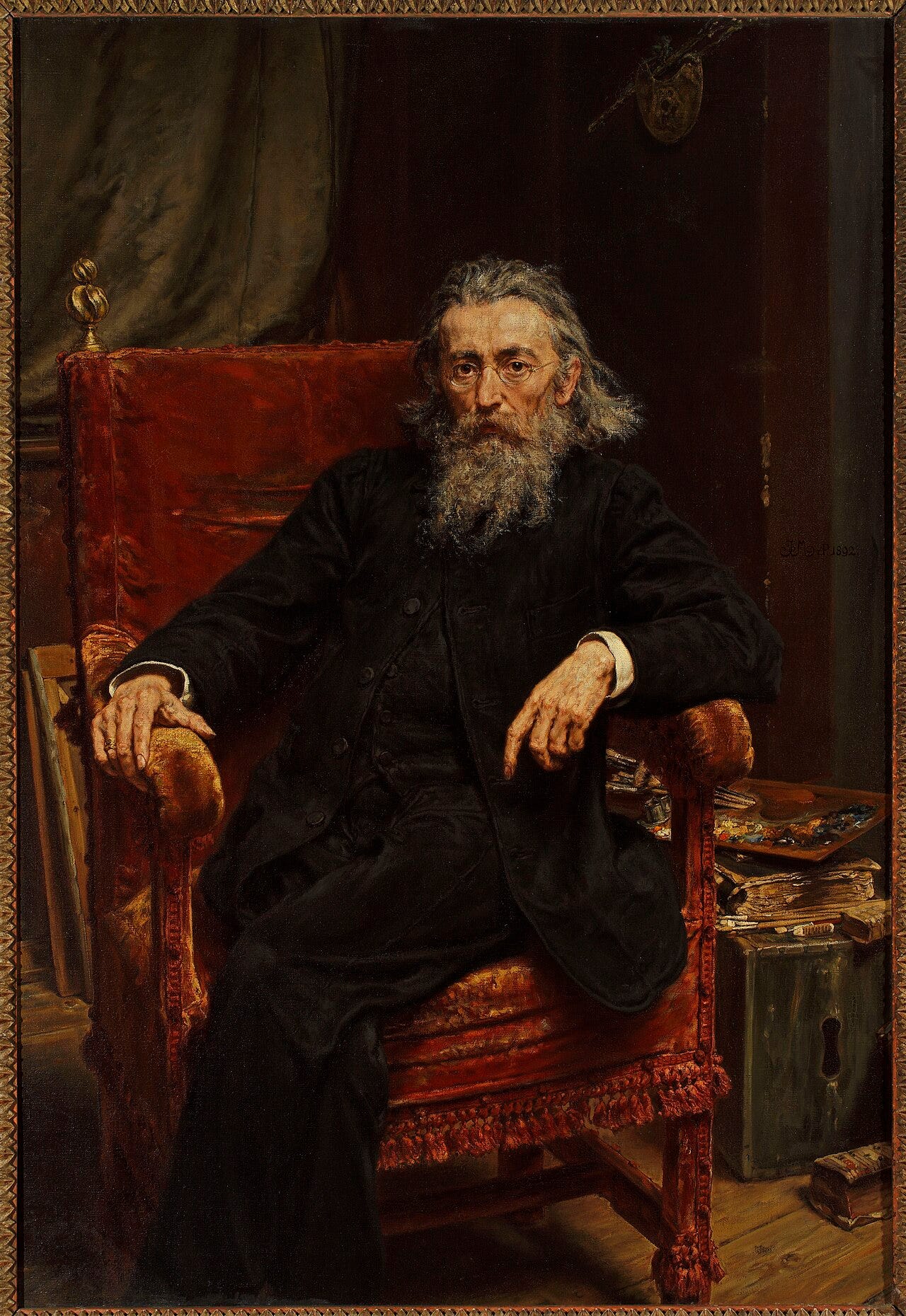
Matejko was a poor student in the classroom. He struggled with languages and formal lessons, and he left secondary school without finishing.
His eyesight was reported to be defective, which made ordinary study harder. Yet he drew constantly, filling pages with figures, costumes and scenes from the past.
What the school could not measure was his memory for detail. He absorbed armor, banners and faces, and that visual appetite became the foundation of everything he later painted.
From the Krakow School to the academies of Munich and Vienna
He entered the Krakow School of Fine Arts as a teenager, studying under teachers including Wojciech Stattler and Wladyslaw Luszczkiewicz. There he learned drawing and began his lifelong study of historical costume and objects.
In the late 1850s he continued at the Academy of Fine Arts in Munich, then a leading center for history painting. He also spent a brief period in Vienna, though that stay was short.
He returned to Krakow to build his career there. The city, with its old churches and the royal castle on Wawel Hill, stayed at the center of his life and work.
The Prussian Homage and a gift to the public
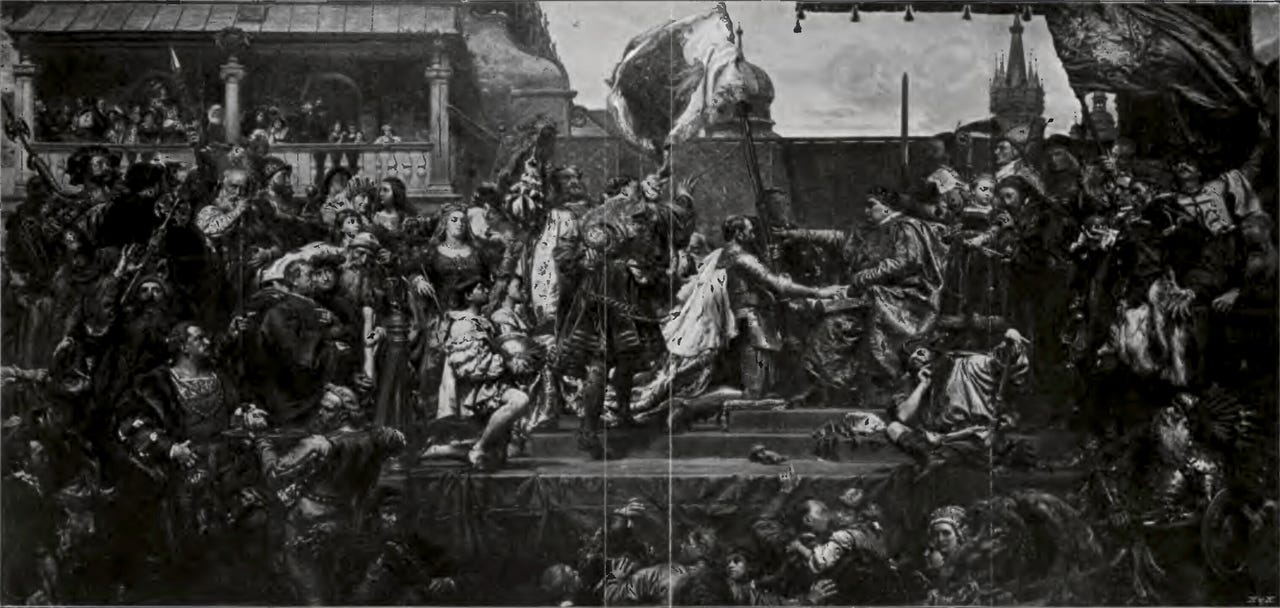
In 1882 Matejko completed the Prussian Homage. It depicts the moment in 1525 when Albrecht Hohenzollern knelt before King Sigismund the First of Poland in the market square of Krakow.
The subject carried weight in Matejko's own century, when Prussia held part of the partitioned land. The scene reminded viewers of a time when the balance of power ran the other way.
Matejko gave the painting to the nation. It is held today in the collection of the National Museum in Krakow.
The murals inside St Mary's Basilica
In his later years Matejko turned from the easel to the wall. Between about 1889 and 1891 he designed the painted decoration inside St Mary's Basilica in Krakow, the great brick church on the main square.
He covered the medieval walls with color, pattern and heraldry, blending gold stars, angels and Polish emblems across the vaults. Among his assistants were two gifted young painters, Stanislaw Wyspianski and Jozef Mehoffer.
The interior remains one of the most visited sights in the city. Most tourists who look up at the blue and gold ceiling do not realize they are standing inside a late work by Poland's national painter.
The kings of Poland, given a face
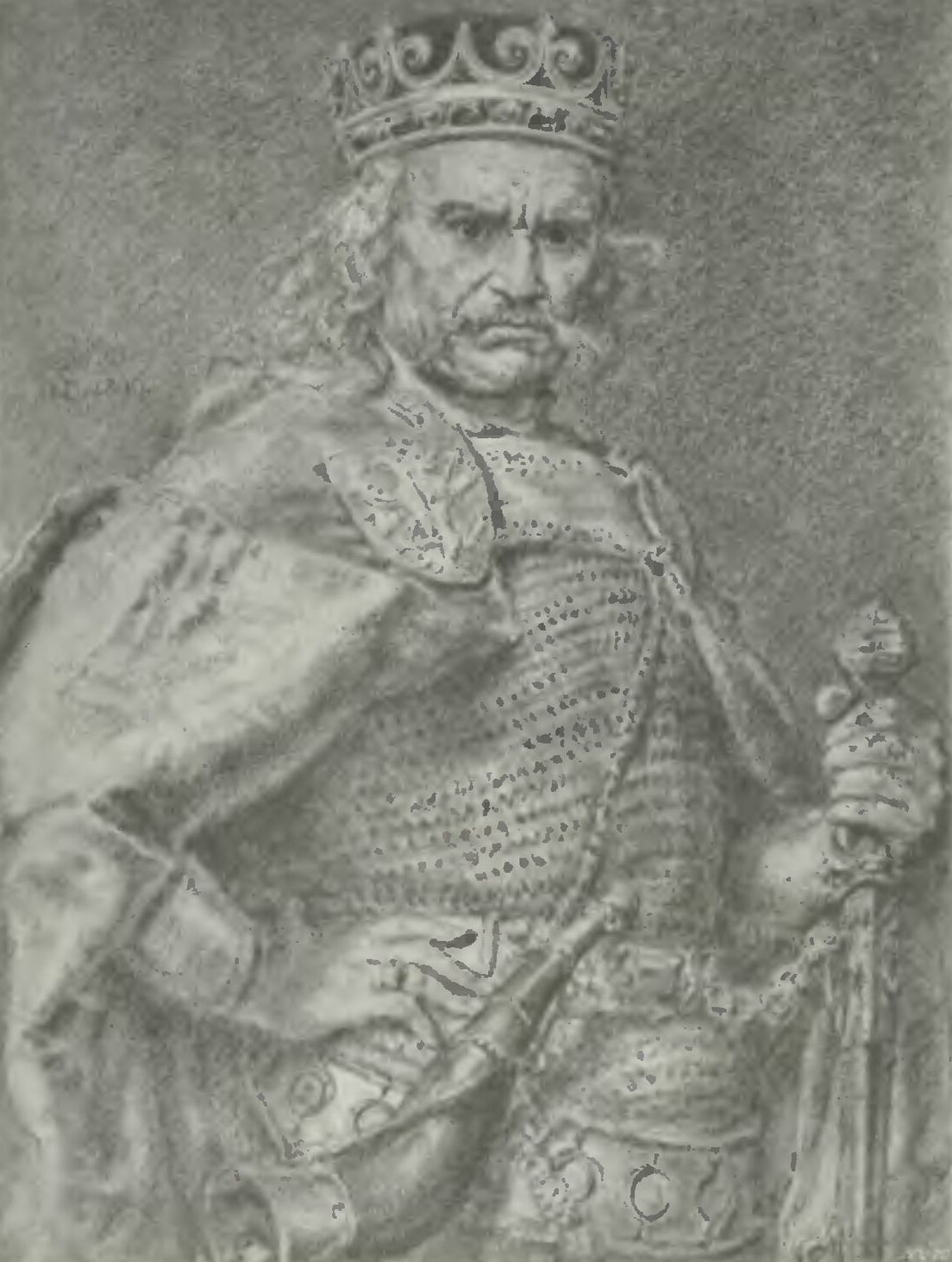
In the early 1890s Matejko produced a long series of portraits imagining the kings and princes of Poland, from the legendary first rulers down through the centuries.
No true likeness survived for most of them, so he invented faces built from chronicles, coins and his own reading of each reign. The set gave the public a single, consistent image for every ruler in the national story.
Reproduced in schoolbooks for generations, these portraits shaped how Poles pictured their own past. For many people, Matejko's inventions simply became the kings.
A national farewell, and the house on Florianska Street
Matejko died in Krakow on 1 November 1893. The city mourned him as a public figure, and his funeral drew large crowds who treated the loss as a national event.
His memory stayed woven into Krakow. A central square carries his name, Plac Matejki, and he was honored across the partitioned Polish lands as the man who had kept their history visible.
The house where he was born and lived on Florianska Street survives as the Matejko House, a branch of the National Museum in Krakow. Visitors can still see his studio, his collection of old objects and the rooms where he worked.
Rejtan, Skarga and the paintings of warning
Not all of Matejko's histories celebrated triumph. Many were warnings, scenes of the mistakes that had cost Poland its independence.
Rejtan, finished in 1866, shows a lone deputy throwing himself across a doorway to block the first partition of Poland in 1773, while his fellow nobles look away.
The Sermon of Skarga, from 1864, casts a Jesuit preacher foretelling the nation's ruin to an indifferent court. In 1869 the Union of Lublin recorded the older act that had once bound Poland and Lithuania together.
These pictures were arguments as much as paintings. Matejko wanted his countrymen to see both the greatness they had lost and the failures that had led to the loss.
More secrets to unlock


Where Matejko ranks among history painters
Matejko worked in the same decades as Paul Delaroche and Ernest Meissonier in France, and Ilya Repin in Russia. All four turned history into spectacle for a paying public.
Delaroche and Meissonier kept their scenes small and private, a queen at the scaffold, a general alone on a horse. Matejko chose the opposite scale, because his subject was never one moment. It was a nation with no state left to remember itself.
Among his own works, the Battle of Grunwald ranks first, purely on scale. Almost four by ten meters, and it still reads as one coherent battle rather than a wall of soldiers. Stanczyk ranks close behind, at a fraction of the size, because the drama sits in a single face instead of hundreds.
The Kings and Dukes of Poland series ranks last. Matejko invented faces for rulers with no surviving likeness, using only chronicles and coins as sources. The portraits look like costume design now, and they say more about Matejko's imagination than about the kings themselves.
The Jan Matejko questions that keep coming up
How do you say Jan Matejko? Yan ma TAY koh.
When was he born? In 1838 in Kraków, then under Austrian rule. He died there in 1893.
What is he famous for? Monumental paintings of Polish history, above all the Battle of Grunwald.
Why did he paint so much history? Poland had been partitioned out of existence, and he painted to keep its identity alive.
How big is Matejko's Battle of Grunwald? It is very large, about 4 by 10 meters, closer to a wall than a normal framed painting. It was finished in 1878 and shows the 1410 defeat of the Teutonic Knights.
Can you visit Jan Matejko's home? Yes. The Matejko House on Florianska Street in Krakow, where he was born and lived, is now a museum and a branch of the National Museum in Krakow. It preserves his studio and his collection of historical objects.