
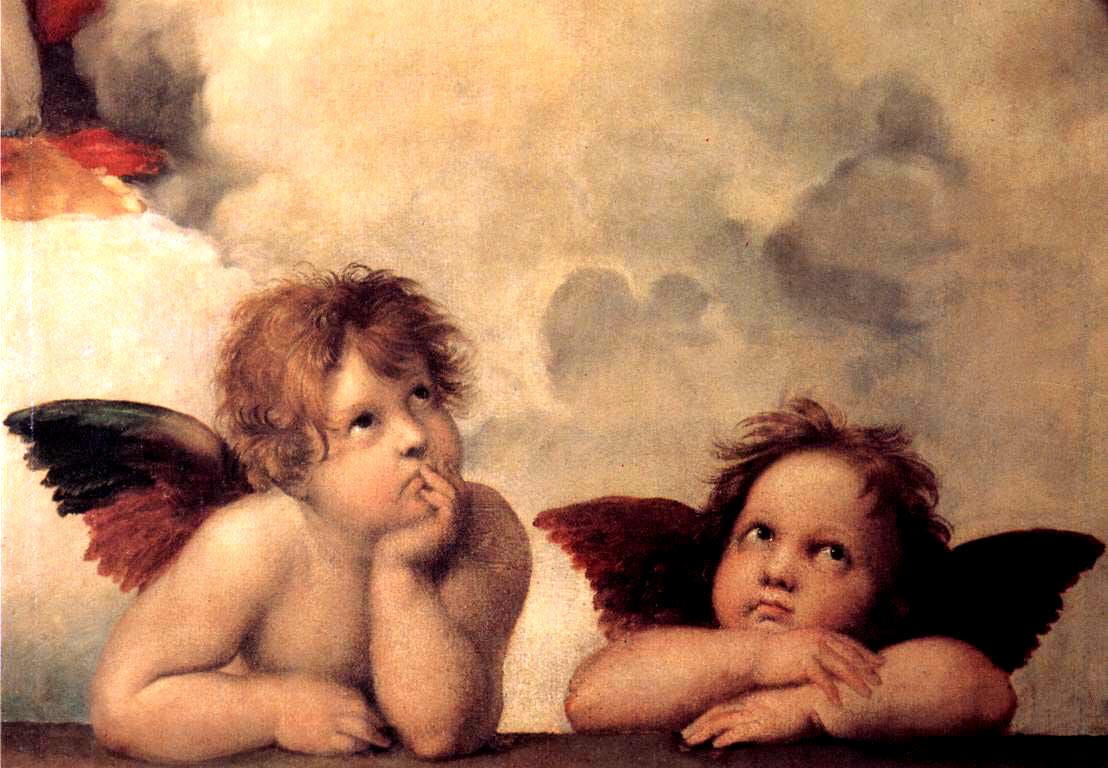
A putto is a chubby, usually naked and often winged small child, common in Renaissance and Baroque art. The plural is putti. The two bored, daydreaming putti leaning at the bottom of Raphael's Sistine Madonna are the most famous of all.
A plump, naked, often winged child, tumbling through the edges of a thousand paintings and ceilings.
That is a putto, plural putti, and the bored pair daydreaming under Raphael’s Sistine Madonna are the most famous of all.
Putto, the essentials
What it is: a plump child figure, usually naked, often winged.
The plural: putti.
The roots: ancient Roman art, revived in the Renaissance.
The famous pair: the two dreamy putti under Raphael's Sistine Madonna.
The confusion: putto, cherub and Cupid overlap but are not the same.
Keep learning art the fun way


Borrowed from the ancient world
The putto is older than Christianity.
Plump winged children swarmed through ancient Greek and Roman art, often as companions of love and the god Cupid.
When Renaissance artists rediscovered classical sculpture, they brought these little figures back.
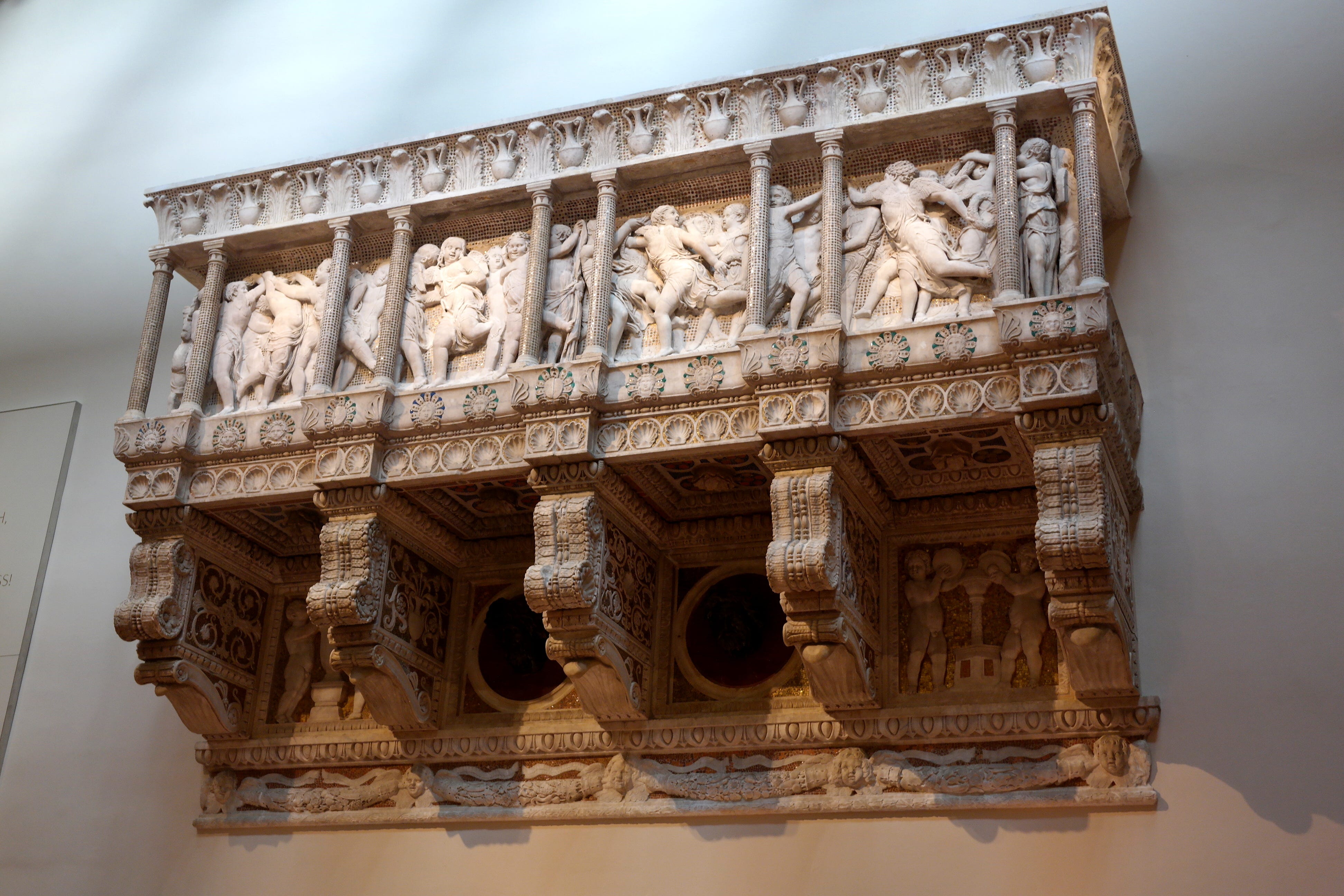
Donatello led that revival in the 1430s, carving rows of lively putti he called spiritelli for the singing gallery of Florence Cathedral, and the motif spread fast from there.
The putto became a standard part of the artist's vocabulary, painted in glowing tempera and carved in marble across Italy.
An ancient pagan motif walked straight into Renaissance churches.
Sacred and profane at once
To me, the putto is wonderfully two faced.
In a religious scene, a putto becomes an angelic presence, a small heavenly attendant, part of the sacred iconography.
In a mythological one, the same chubby figure is an erotic companion of Venus and Cupid. The artist could use the same little body for holy devotion or earthly love.
That flexibility, to my mind, is exactly why putti are everywhere, from altarpieces to bedroom ceilings.
One plump child, equally at home in heaven and in a love scene.
Putto, cherub, or Cupid
The names get tangled, so here is the difference.
A putto is simply a chubby child figure, with or without wings, sacred or secular.
A cherub, strictly, is a high rank of angel from the Bible, though in everyday speech people call any winged baby a cherub.
Cupid is a specific putto: the Roman god of desire, with his bow and arrow.
So every Cupid is a putto, though not every putto is a Cupid, and a true cherub is really something else entirely.
Same chubby look, three different jobs.
The favorite of ceilings
Putti found their natural home looking down from above.
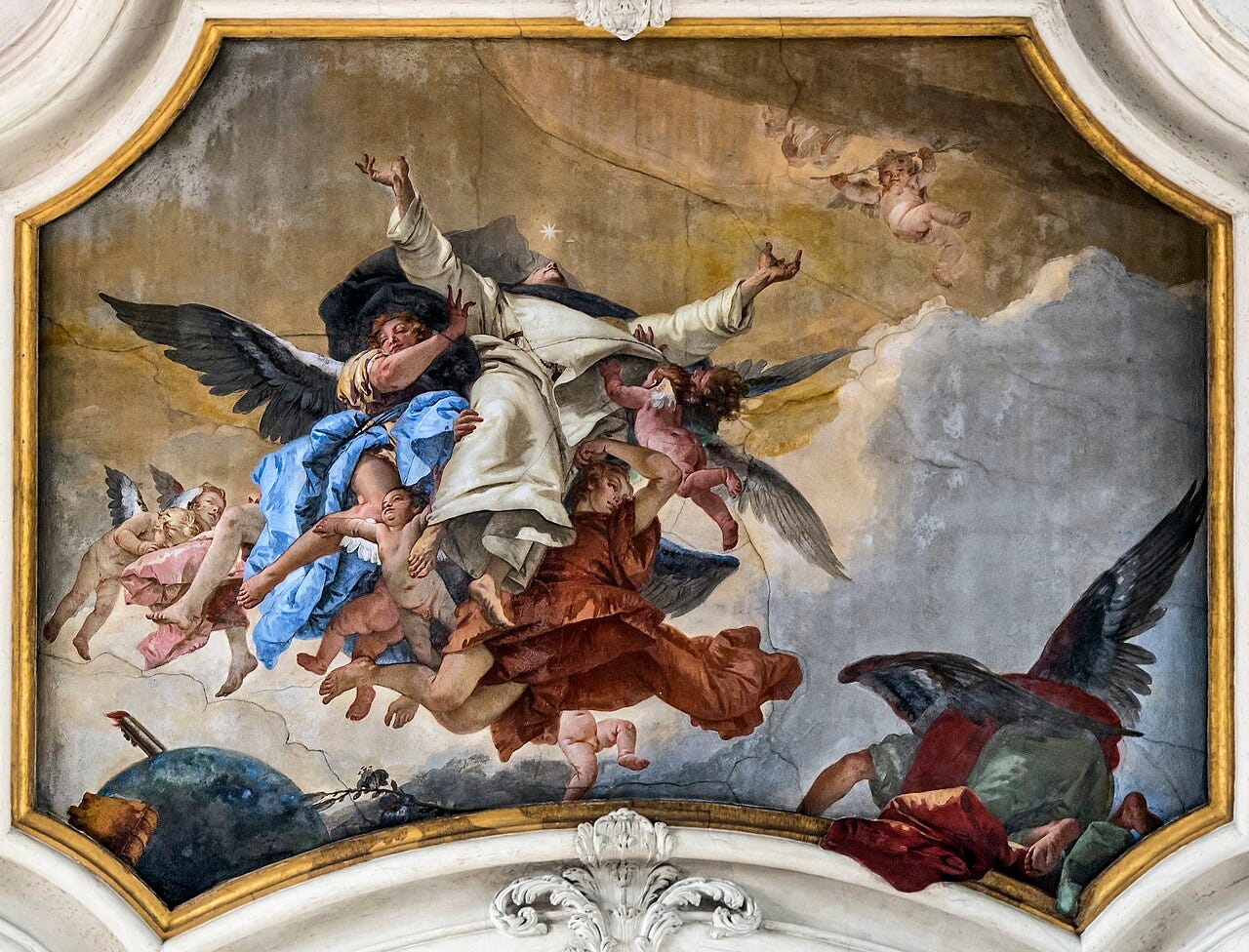
In Baroque churches and palaces, painters filled vast ceiling frescoes with tumbling clouds of putti, peeking over painted ledges, holding garlands, floating up toward the light.
Their small, lively bodies filled awkward corners and softened grand scenes with a note of play.
Look up in almost any Baroque interior and a putto is probably looking back down at you.
They are the cheerful crowd in the gallery of the gods.
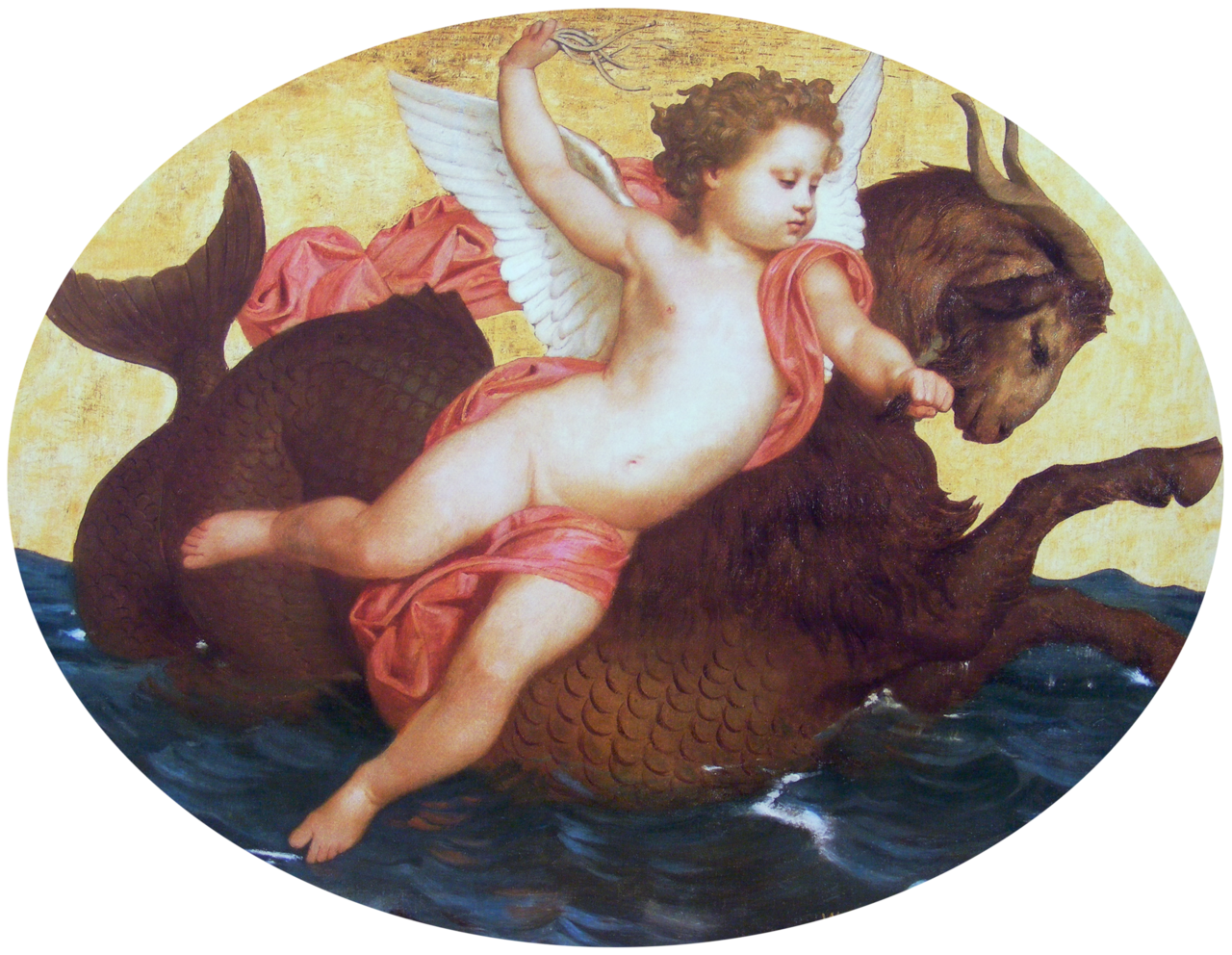
You can meet the most famous pair in Dresden, under Raphael’s Sistine Madonna, and the Met holds a porcelain Putto as Cupid.
Putto, the questions about putti
What is a putto? A chubby child figure in art, usually naked and often winged.
What is the plural? Putti.
Where did they come from? Ancient Greek and Roman art, revived in the Renaissance.
What is the most famous example? The two dreamy putti at the foot of Raphael's Sistine Madonna.
Is a putto the same as a cherub or Cupid? Not quite. A cherub is a type of angel, Cupid is the god of love, and a putto is the general chubby child figure.
More secrets to unlock


The little figure that conquered art
Putti became greeting card decoration, and it is easy to forget they came from Roman tombs and Renaissance altars.
Look again at Raphael's two, chins on hands, gazing up in pure boredom while a vision unfolds above them, and I think you see why painters could not let them go: the putto is the human note inside the divine scene.
Donatello's dancing frieze of spiritelli, carved for Florence Cathedral in the 1430s, predates Raphael's Sistine Madonna pair by about eighty years and demands more of the carver: real motion, overlapping bodies, a sense of a crowd caught mid step. Raphael's two putti do the opposite, propped on their elbows, doing nothing at all. That stillness is why they work as a poster, but Donatello's frieze remains the harder piece of craftsmanship.
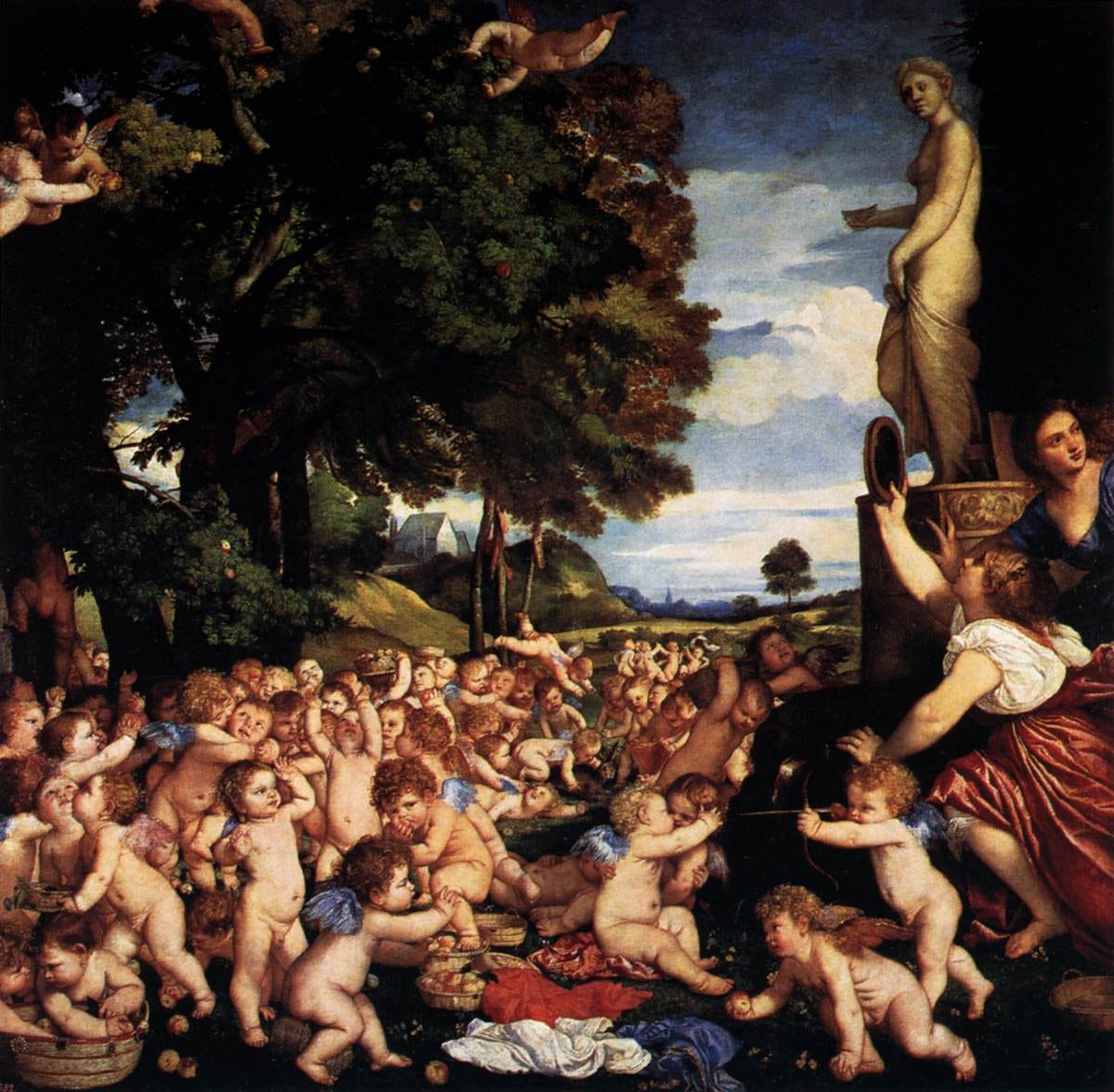
Titian pushed the same idea further in The Worship of Venus, painted around 1518 for Alfonso d'Este and now in the Prado, where dozens of putti mob a garden altar. Next to that crowd, Raphael's pair looks almost restrained. Titian's swarm sits closer to the ancient source this article traces putti back to, a horde of Cupid's companions, rather than two lone children at the foot of a Madonna.
Putto is also the more accurate word of the two. Cherub gets attached to almost any winged baby in art, yet the Bible's cherubim, described in Ezekiel, have four wings and four faces each, nothing like a chubby toddler.
