
Gauguin sailed to Tahiti in 1891 to escape what he saw as a corrupt, money driven Europe and to find a simple, untouched paradise to paint. What he actually found was a French colony. He painted the dream anyway, and those canvases made him immortal.
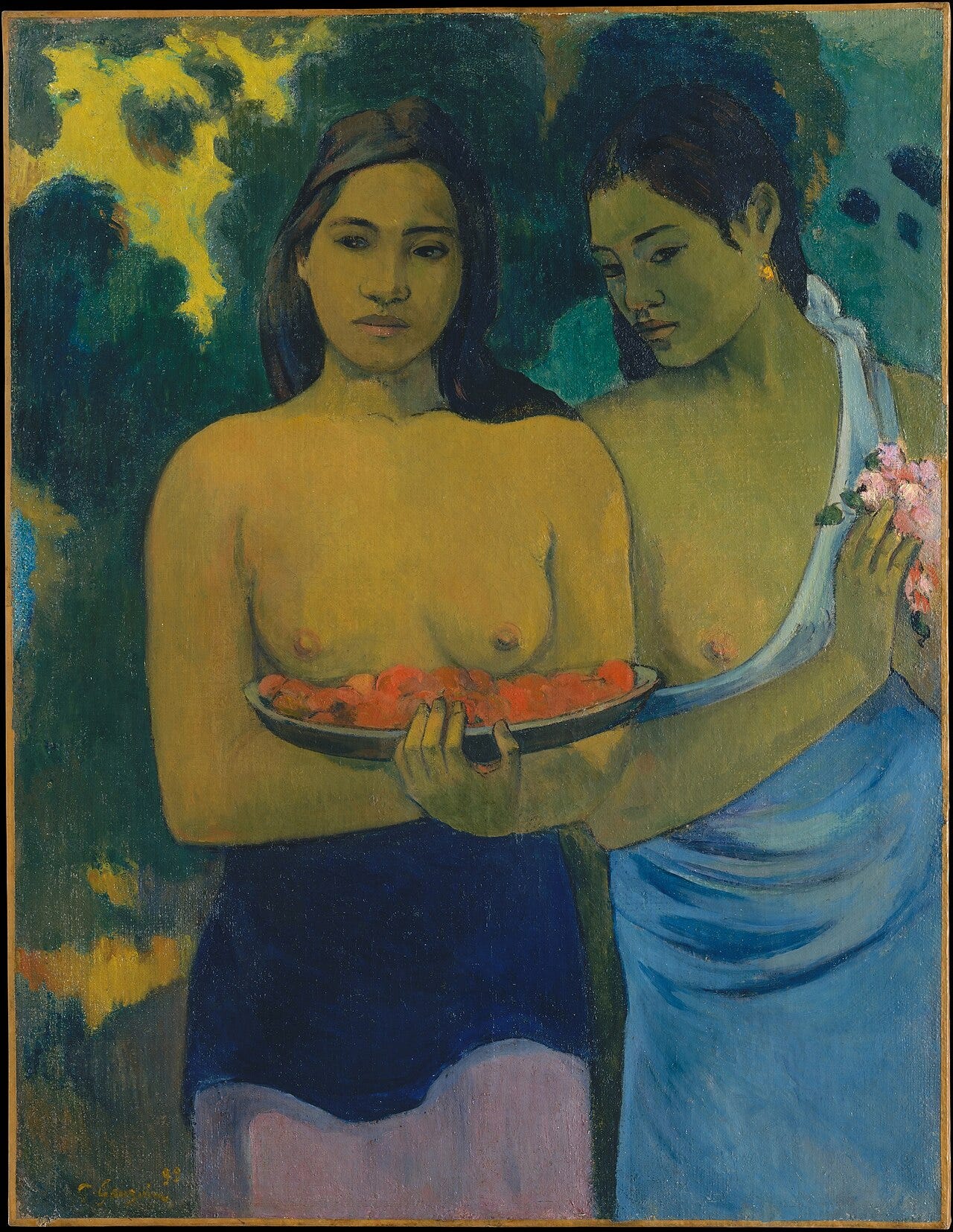
He was running away from Europe
By 1891 Paul Gauguin was broke, separated from his family, and sick of modern, industrial France. He wanted somewhere cheap, warm and far away, a place he imagined as wild and pure.
He even got the French government to send him semi officially, to record the life of the islands. He was chasing a fantasy of paradise that existed mostly in his own head.
Keep learning art the fun way


The paradise was already gone
When he landed, the capital Papeete was a dusty colonial town. Missionaries had dressed the women in long gowns, the old religion was being stamped out, and European disease had cut the population down.
The Eden he had crossed the world for did not exist. So he moved into the countryside and started painting the Tahiti he wanted to see instead.
He painted the Tahiti he wished for
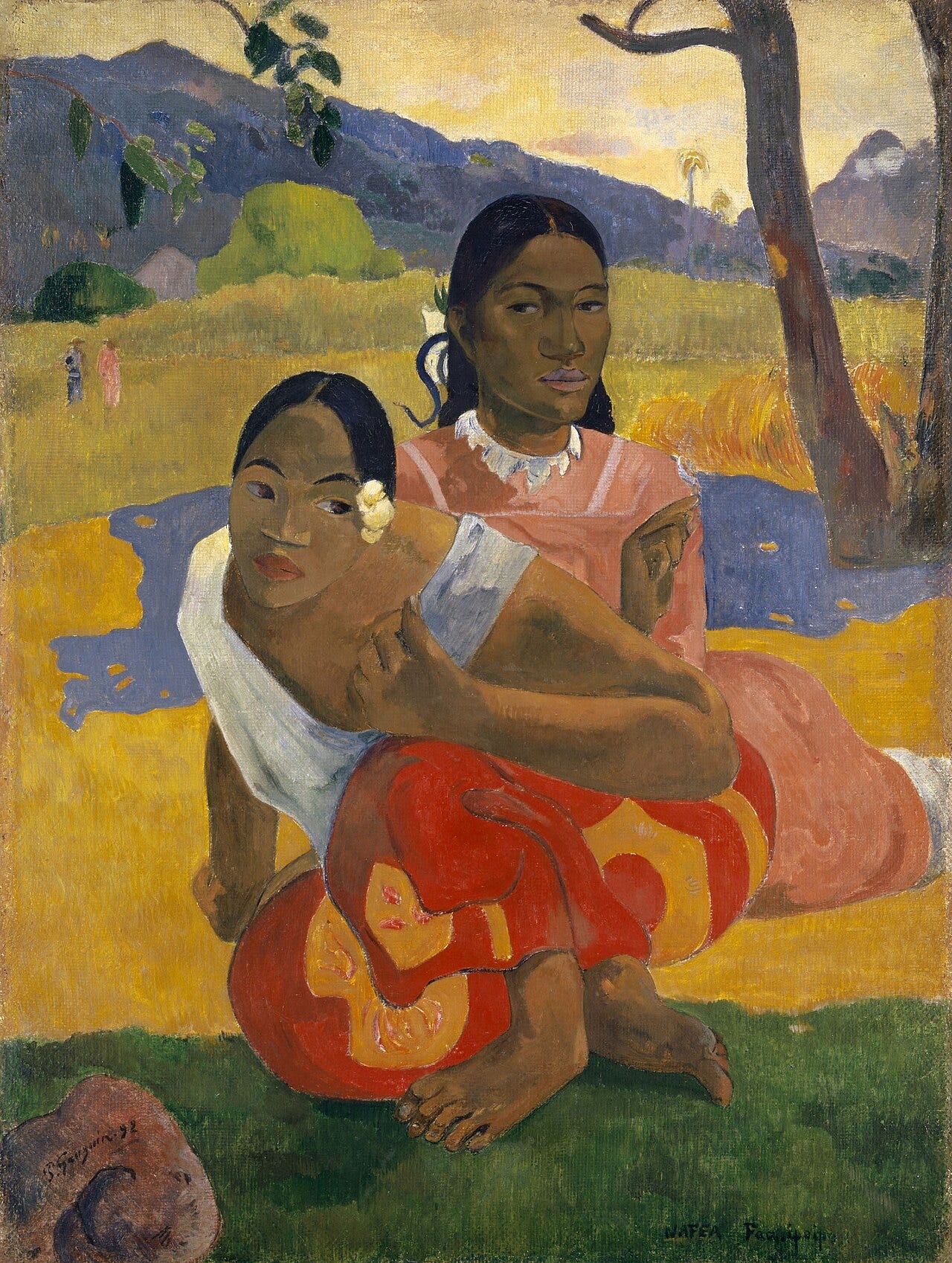
Gauguin filled his canvases with glowing skin, deep greens and reds, and Tahitian women posed like goddesses. He pieced together half lost Polynesian myths, much of it reconstructed or invented, and gave his paintings titles in the Tahitian language.
The result is some of the most seductive color in all of art. It is also a fantasy, a European man's dream of a people he did not really understand.
The part that taints it
This is where the romance breaks down. In Tahiti Gauguin took girls as young as thirteen as partners, fathered children with them, and spread the syphilis that was killing him.
He used the freedom and power that colonialism gave a European man. The paintings are beautiful. The conduct behind them was not, and I refuse to tuck that away in a footnote. Both facts are true at once.
His testament in paint
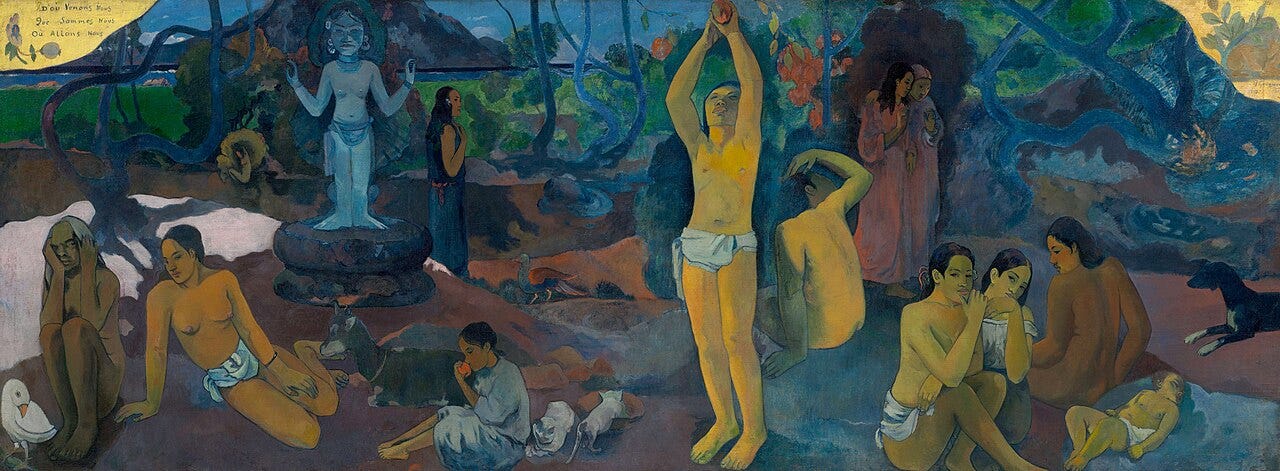
In 1897, ill and planning suicide, he painted a huge canvas asking Where Do We Come From? What Are We? Where Are We Going? He took poison after finishing it and survived.
It is his testament, made in a place that had failed to save him.
What people ask about his Tahiti years
When did Gauguin go to Tahiti? First in 1891. He returned to France, went back in 1895, then settled in the Marquesas in 1901.
Why did he go? To flee Europe and find a simpler, supposedly untouched world to paint.
Did he find his paradise? No. Tahiti was already a colonized, Christianized island, so he painted an imagined version of it.
What did he paint there? Tahitian women, landscapes and Polynesian myths, in flat, glowing color.
Did he ever come home? He returned to France once, in 1893, held a show that mostly baffled critics, and sailed back for good in 1895.
More secrets to unlock


The price of a dream
Gauguin sold almost nothing from Tahiti in his lifetime and died poor in 1903. In 2015 one of his Tahitian paintings, When Will You Marry, sold for a reported 210 million dollars, among the highest prices ever paid for a picture.
I trace his whole restless life in the complete story of Paul Gauguin.
Want the uglier side of the man? I dig into it in the paid story on why Gauguin was no hero.
