
Monet painted water lilies because he built the pond himself at Giverny and fell for the one surface that held everything he loved at once: floating flowers, the sky reflected upside down, and light moving on water.
He painted it more than 250 times across the last thirty years of his life, and gave the greatest panels to France. Water Lilies is only one stop in a longer run through his other essential paintings, from the harbor scene that gave Impressionism its name to the wife he painted on her deathbed. The blue and violet tones that dominate the late panels also anchor Blue Paintings: 12 Famous Works, a list built entirely around that one color.
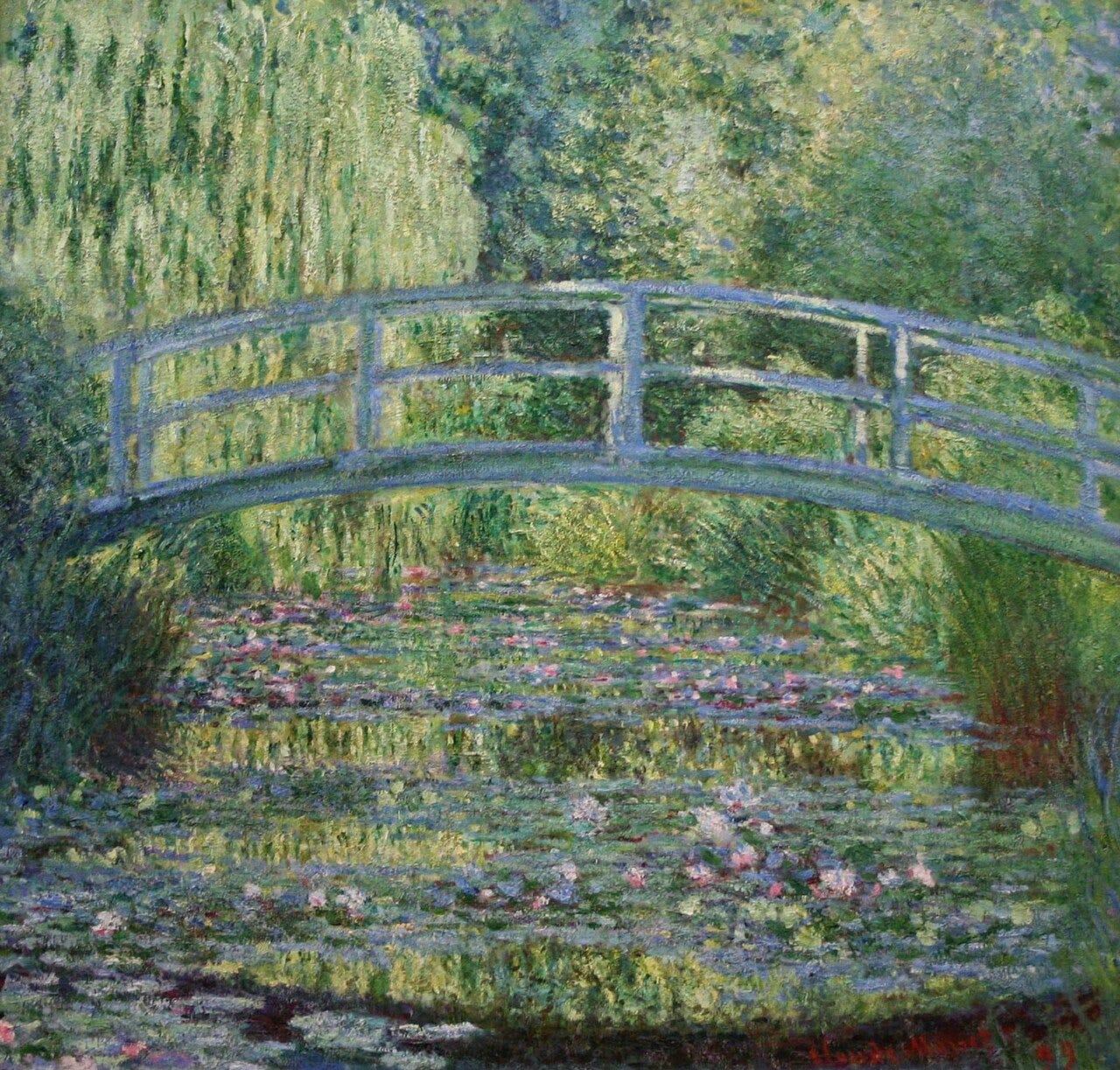
The lilies were not a subject he found. They were a subject he made, on purpose, with a shovel.
This is how a garden pond became the last great project of his life.
He grew his own subject
Monet did not stumble on the water lilies. He grew them.
In the 1890s, settled at Giverny, he dug a pond, planted it with lilies, and arched a Japanese style bridge over it. Then he spent the rest of his life painting it. The motif was always within walking distance, always changing, always his.
Keep learning art the fun way


The pond he had to fight for
Building the pond was not simple, and not everyone wanted it.
Monet diverted a branch of a small river, the Epte, to feed the pond, and some locals worried his strange water plants would poison the stream.
He had to petition the authorities for permission. He won, stocked the water with lilies, and set his gardeners to keep the surface perfect.
He was, in effect, composing the painting before he ever lifted a brush.
What he saw in the water
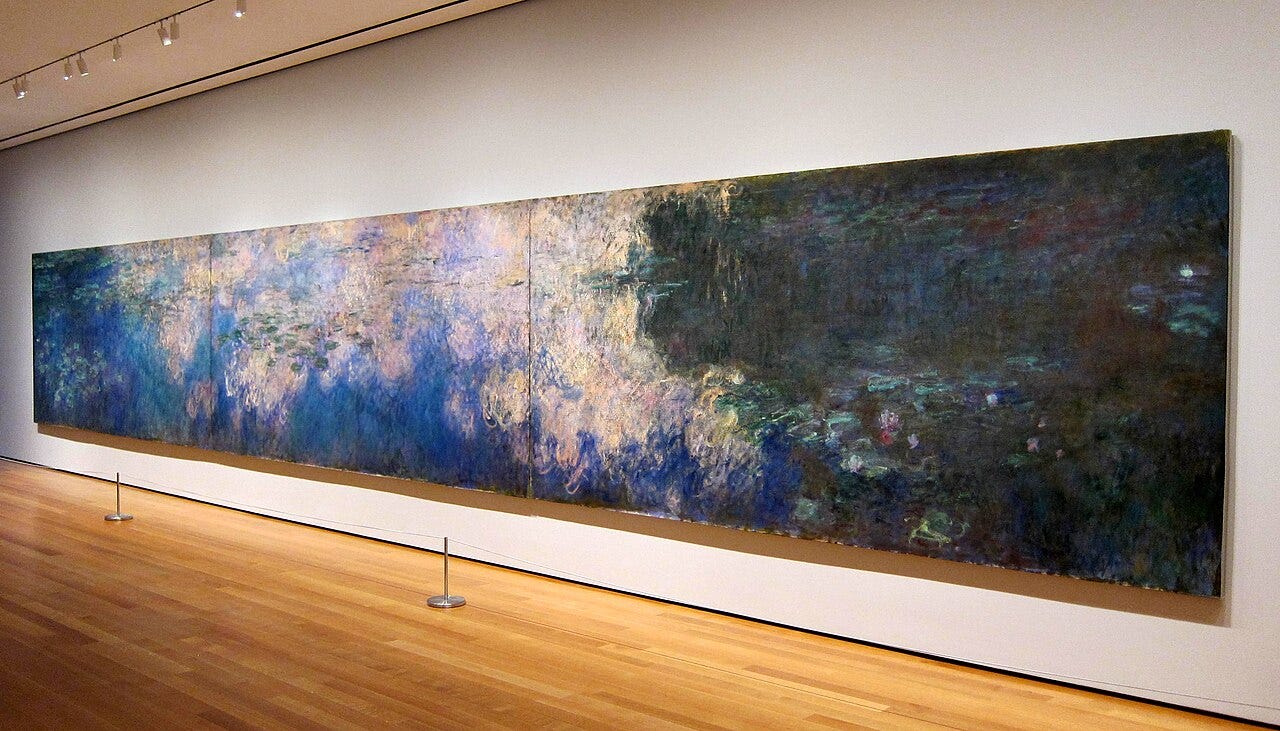
Then he did something radical. He tilted his gaze down and cut the world away.
In the lily paintings there is often no bank, no horizon, no sky overhead. There is only the surface of the pond, the lilies on it, and the sky reflected back from below. Up becomes down, and to me that downward flip is the whole of late Monet.
That love of flat pattern and water owed a debt to the Japanese prints he collected, which hung all over his house. The arched bridge over the pond was itself modeled on the bridges in those prints by Hokusai and Hiroshige.
He did not just paint a Japanese influence. He built one in his garden and then painted it.
The obsession that would not end
Once he started, he could not stop.
From around 1899 until his death in 1926, Monet returned to the pond again and again, more than 250 times. The paintings grew looser and larger, the lilies dissolving into strokes of color.
As he aged, he conceived them on a giant scale, wall sized panels he called the Grandes Décorations.
His eyesight was failing through these years, which changed the late work in ways worth their own story: How Monet’s Cataracts Changed Modern Art.
A gift to a grieving country
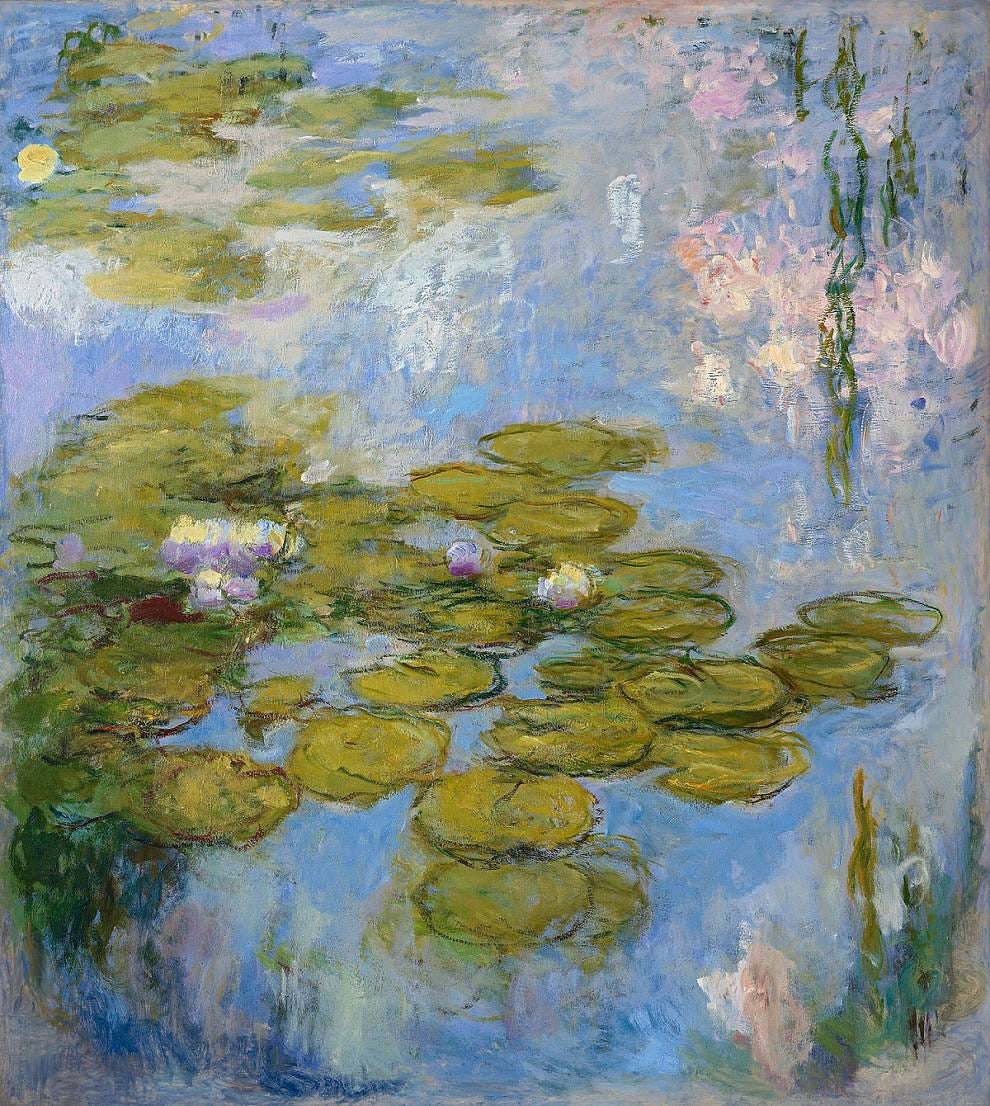
The greatest lily panels were not painted to be sold. They were a gift.
Monet offered the vast Grandes Décorations to France, signing the donation the day after the armistice that ended the First World War in 1918. He meant them as a place of peace for a country drowning in grief.
They were installed in two oval rooms at the Orangerie in Paris, eight huge compositions running around roughly a hundred meters of curved wall, where you stand surrounded by water and light.
To make them, Monet built a vast new studio at Giverny just to hold canvases that size.
One painter later called the rooms the Sistine Chapel of Impressionism.
What people miss about them
The lilies get sold as soothing decoration, and that flattens what they are.
The pond itself is a built thing, an artwork before it was ever a painting. The calm you feel in front of them is real, but it was engineered, watered, and fought for with the local council.
Nothing about it was found by chance. For how the whole garden fits together, see Inside Monet’s House: A Room by Room Story of Giverny.
What people still ask about the lily pond
Why did Monet paint water lilies? He built the pond at Giverny and became obsessed with painting water, reflections and light with no horizon.
How many water lily paintings did Monet make? More than 250 over about thirty years.
Where are the big water lily panels? In the Musée de l’Orangerie in Paris, in two oval rooms designed for them.
Why is there no sky in many of them? You see the sky only as a reflection on the water, because Monet painted looking straight down.
When did he paint them? From around 1899 until his death in 1926.
More secrets to unlock


The room he never saw full
Monet worked on the great panels almost to the very end, half blind, repainting and scraping as his sight came and went.
He gave them to the nation and asked that they be shown together, in silence, as one surrounding world. The Orangerie rooms opened to the public in 1927, a few months after he died.
I trace the whole life that led there, from the series that began with his haystacks, in Monet: The Complete Story.

Monet's water lilies belong to an entirely different plant than the white lily that has stood for both virginity and death since the Annunciation, a distinction drawn out in our guide to lilies in painting.