
The Mona Lisa most likely had eyebrows and eyelashes when Leonardo painted her. They probably disappeared when restorers cleaned the painting, though no record says when.
Three witnesses show that the brows were there: a biography of Leonardo printed in 1550, modern digital scans of the painting and a copy made in his workshop. The cleanings explain how they could have vanished.

Cool Stories About Art is a newsletter to learn art the fun way.
Join 200,000+ readers and get:
10 new art stories / month
The entire archive of content (140+ articles)
Comment, ask questions, and chat with other readers
In the Louvre, the skin above her eyes is smooth and bare, without a single hair or even a shadow where the brows should arch. That empty forehead adds to the feeling that she is hard to read.
Leonardo never parted with the portrait, and it followed him to France. A visitor saw it at his house at Cloux in October 1517: Antonio de Beatis, secretary to a traveling Italian cardinal. He noted only that it showed a Florentine lady, and wrote nothing about her face.
The first witness to describe her eyebrows is Giorgio Vasari, a Florentine painter who wrote the lives of the great Italian artists. He published his biography of Leonardo in 1550, thirty-three years after that visit, though he had never set eyes on the painting.
Even so, Vasari described the brows hair by hair. In the same pages he wrote that Leonardo spent four years on the portrait and left it unfinished, yet he praised its finest detail as if he had studied it up close. That contradiction is why his account has to be checked against the painting itself.
How Vasari's praise grew
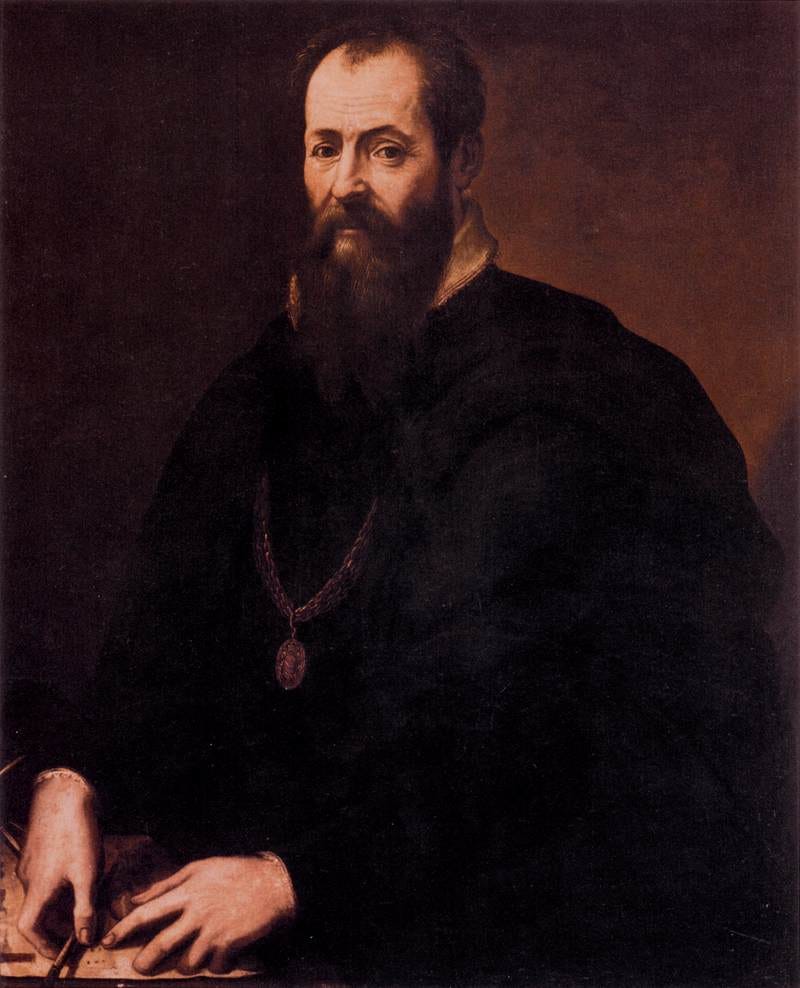
Vasari did not write that description only once. When he brought out a revised edition of his book, he went back to the lines about her brows and rewrote them.
What You'll Discover
What cleaners did to the panel.
What an inventor's scans claimed in 2007.
What a copy in Madrid shows.