
A small canvas of soft, melting watches made Salvador Dalí's name. He painted The Persistence of Memory in 1931, and his own showmanship then turned the Spanish painter into the best known Surrealist in the world.
The canvas measures 9.5 by 13 inches, a little larger than a sheet of printer paper. It went on show in New York in 1932, before its painter had set foot in America, and a buyer paid $250 for it.

Cool Stories About Art is a newsletter to learn art the fun way.
Join 200,000+ readers and get:
10 new art stories / month
The entire archive of content (140+ articles)
Comment, ask questions, and chat with other readers
Surrealism was a Paris movement of poets and painters who tried to put dreams and the unconscious into art. Dalí was thrown out of the group in 1934. Two years later, on December 14, 1936, he was on the cover of Time magazine, as the painter who had brought Surrealism to America.
The expulsion worked in his favor. With no leader left to obey, Dalí could be as outrageous as he liked, and an ocean away, Americans were ready to watch him do it.
The Surrealist trial of 1934
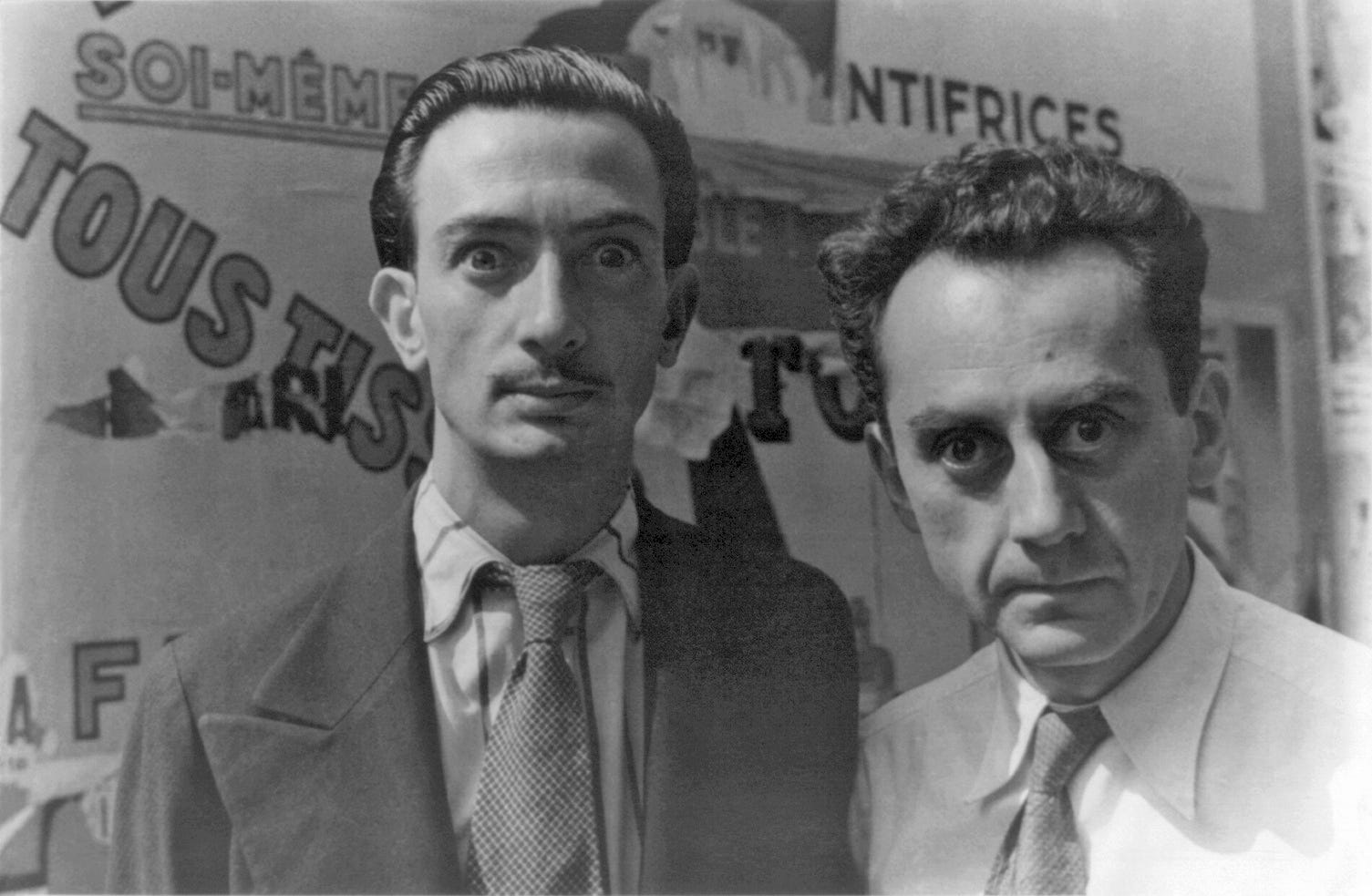
The leader was André Breton, the poet who ran the Paris Surrealists and had welcomed Dalí into the group in 1929. In February 1934 he put the painter on trial in front of the whole group, and the charge was "the glorification of Hitlerian fascism."
What You'll Discover
Where his fame really began.
What the melting clocks really were.
What went wrong inside the diving suit.
Which candy carries his drawing.