
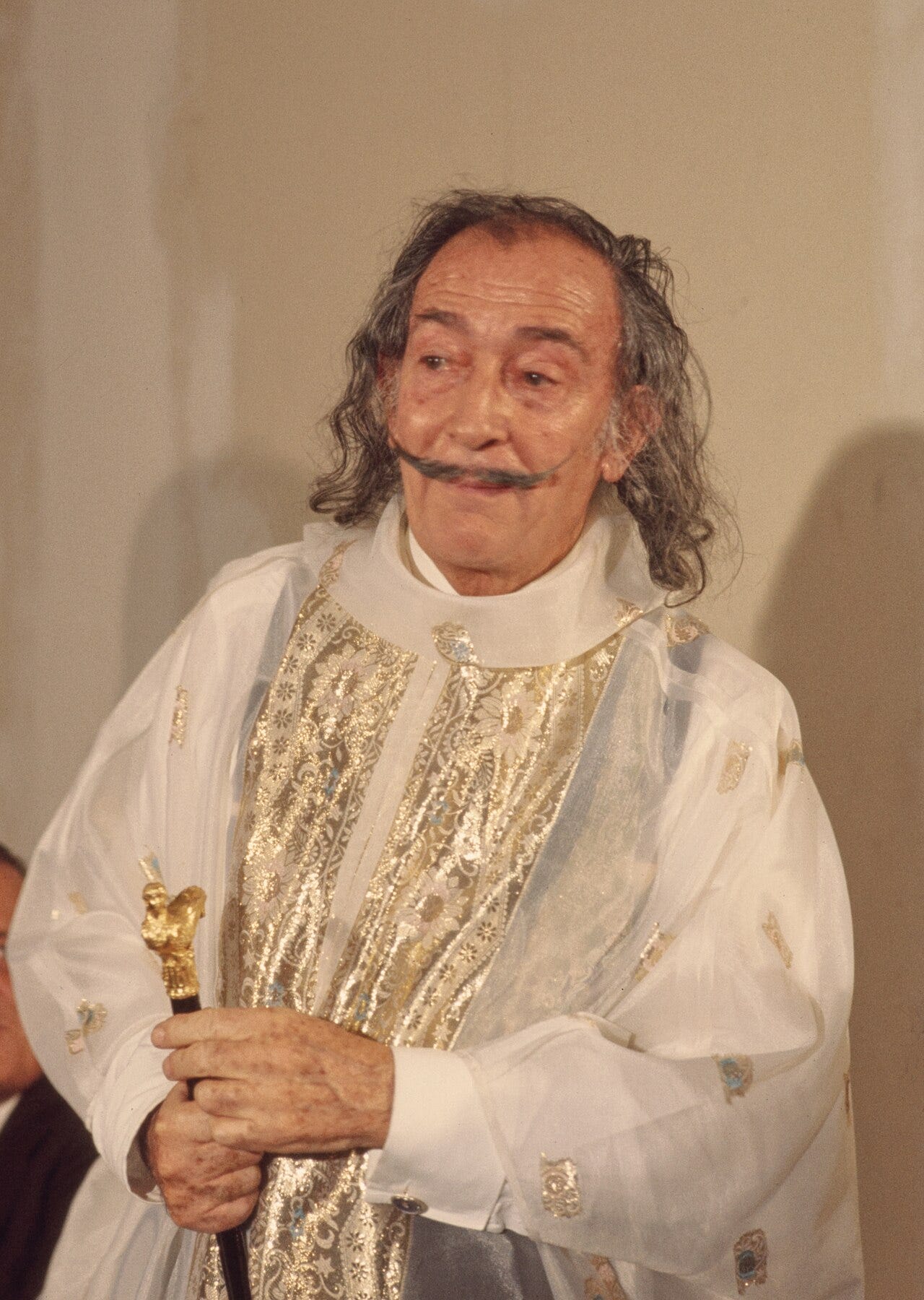
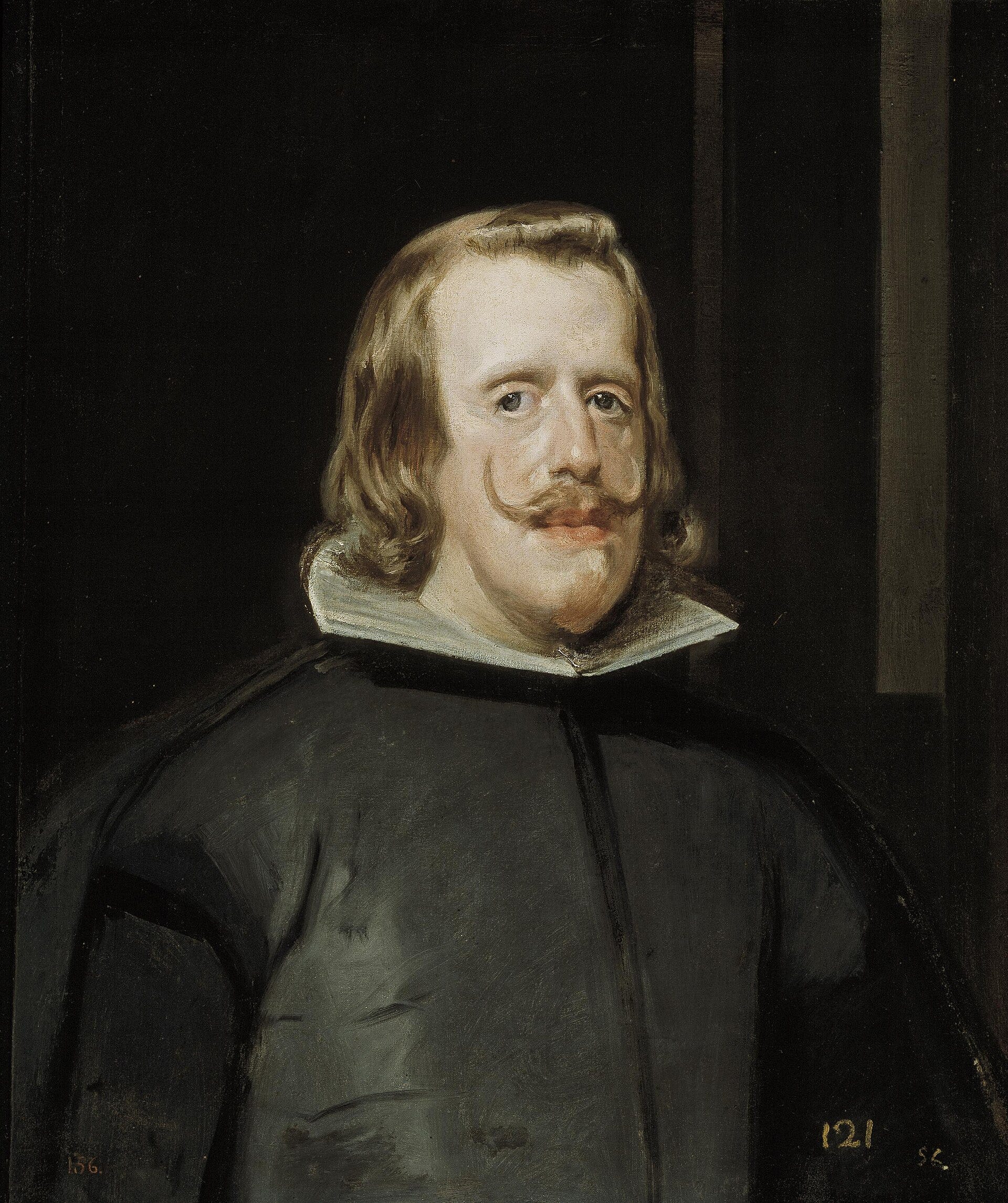
Salvador Dali wore a long, thin mustache, waxed and twisted into two points that rose almost straight up. The usual answer is that he copied Velázquez, and the mustache of Philip IV does turn up at the ends. Dali's own explanations were different: Hungarian wax, the pomade of Marcel Proust, a way to stay healthy.
The shape took years to arrive. In the 1930s he wore a sedate, narrow mustache. The upturned points appear in his painting in 1941, and by 1954 they were famous enough to fill a photo book, which he made with Philippe Halsman.
Cool Stories About Art is a newsletter to learn art the fun way.
Join 200,000+ readers and get:
10 new art stories / month
The entire archive of content (140+ articles)
Comment, ask questions, and chat with other readers
The Velázquez answer is the part I could not trace to Dali himself. Artnet's history of the mustache says only that the painter is "thought to be" a major source.
The Dali Foundation says something smaller: his house at Portlligat is decorated with characters who wear mustaches, Velázquez among them, and Dali used to say that he collected mustaches, especially famous ones. A collector admires. He does not necessarily copy.
Put Dali in front of a camera and the explanations multiplied, and the king's painter does not come up in any of the ones quoted below. It was a Hungarian mustache. It was waxed with the pomade Marcel Proust used. It existed, he said once, because he did not smoke. And the upturned points, the part everyone remembers, were not there when he started.
What did Dali say the mustache was?
One answer comes from 1954, on the television show The Name's the Same…
What You'll Discover
The painter everyone credits.
The photo book built around it.
What the embalmer found in 2017.