
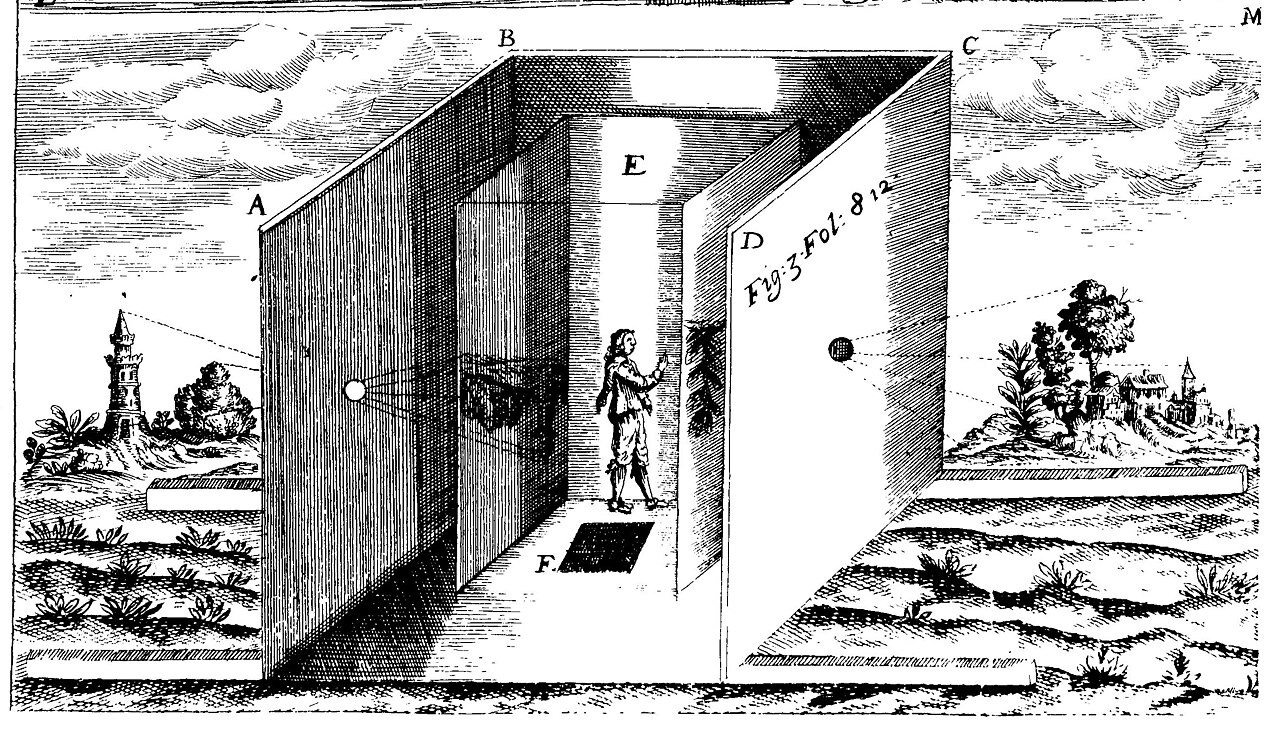
Most experts think he probably did, at least as a tool to study light, though no one has ever proven it. A camera obscura is an early optical device that projects a live image of a scene through a lens.
The strange, glowing dots and the photographic depth in Vermeer's paintings point hard toward one. But no lens, no notebook, and no document survive to settle it. That same unproven mystery is exactly what a Dutch forger later exploited to pass his own paintings off as lost Vermeers; the man who forged Vermeer and fooled the Nazis tells how far he got with it.
It is the great open question of his work.
The paintings whisper an answer the records refuse to confirm.
His most famous painting carries a mystery of its own: nobody agrees on who she really was, a question tackled separately in Who Is the Girl with a Pearl Earring?
Keep learning art the fun way


What a camera obscura even is
The name means dark chamber, and that is literally what it was.
Light from a sunlit scene passes through a small lens into a darkened box or room and lands on the opposite surface as a full color, upside down image of the world outside.
By Vermeer’s day it was a known instrument, used by scientists and curious gentlemen across the Dutch Republic.
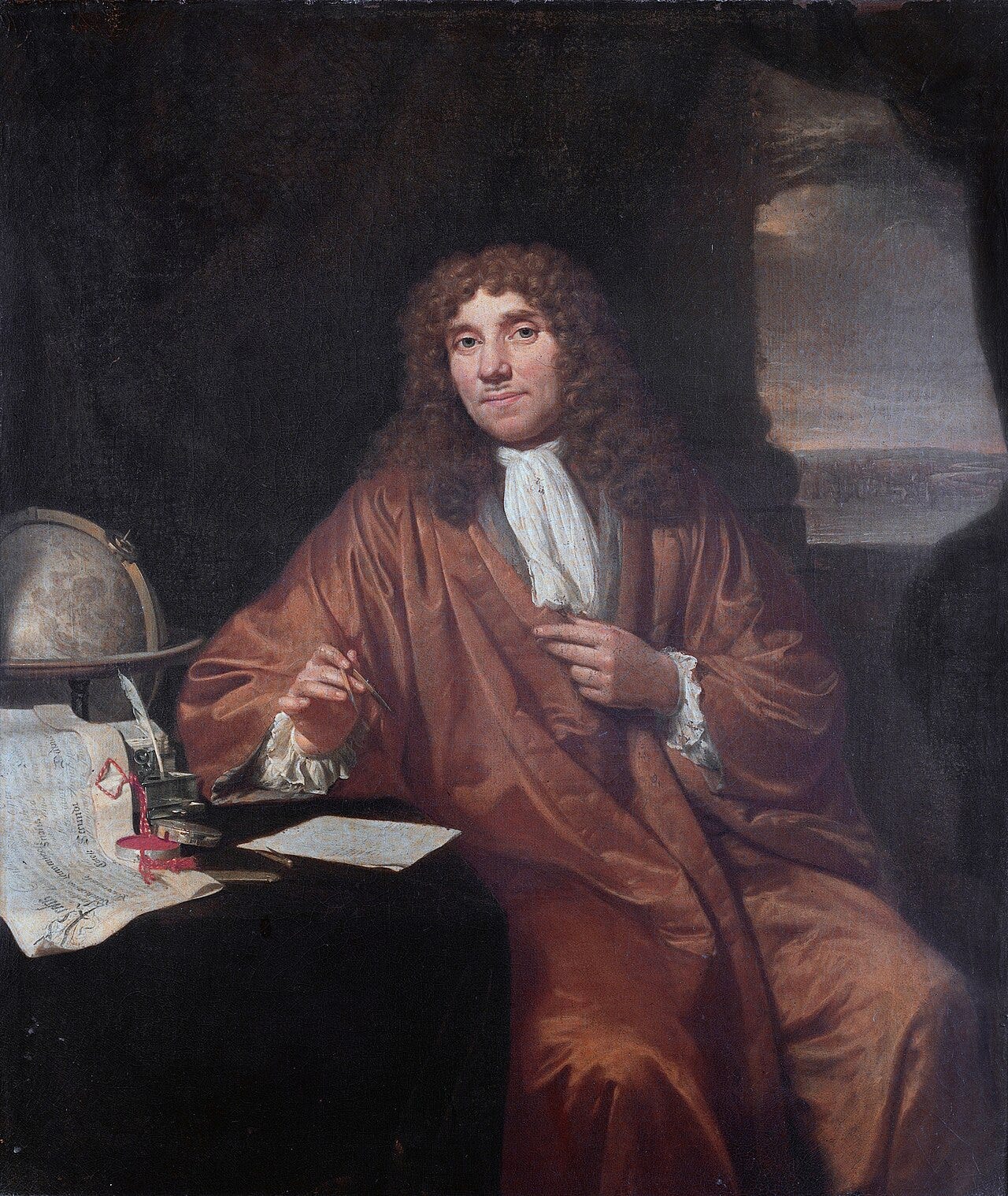
Delft, his town, was a center of lens making. His neighbor, the pioneer of the microscope Antonie van Leeuwenhoek, was a master lens grinder, and was even named executor of Vermeer’s estate.
The clues hiding in the paint
Vermeer never wrote about his method, so the evidence is in the pictures themselves.
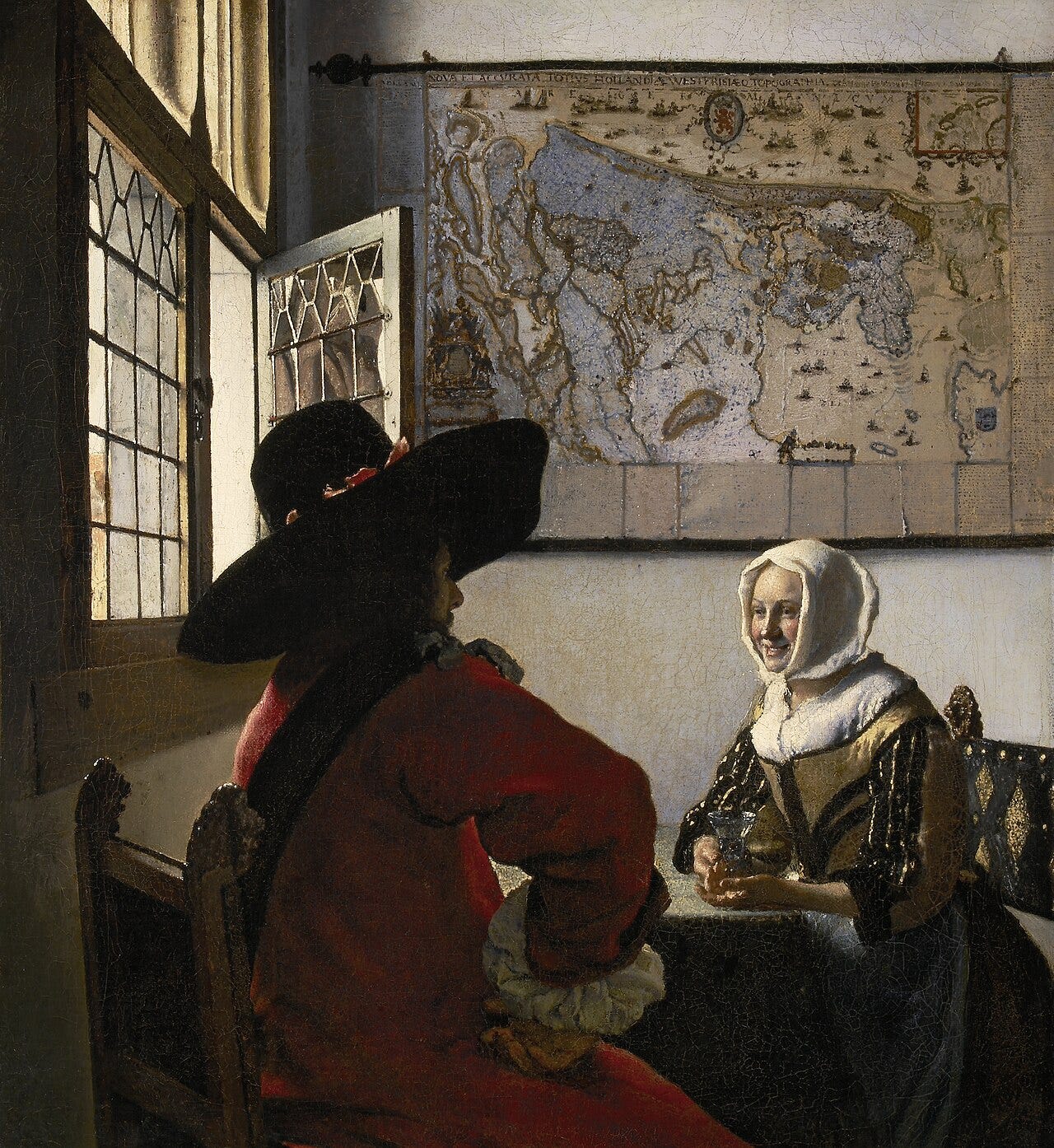
Look at the bright little beads of light scattered across his surfaces, on a loaf of bread, on a brass nail, on the prow of a boat in the View of Delft.
They are soft and out of focus, exactly like the blurred discs a lens throws when a point of light is not sharply focused. Painters working from the naked eye did not see the world that way.
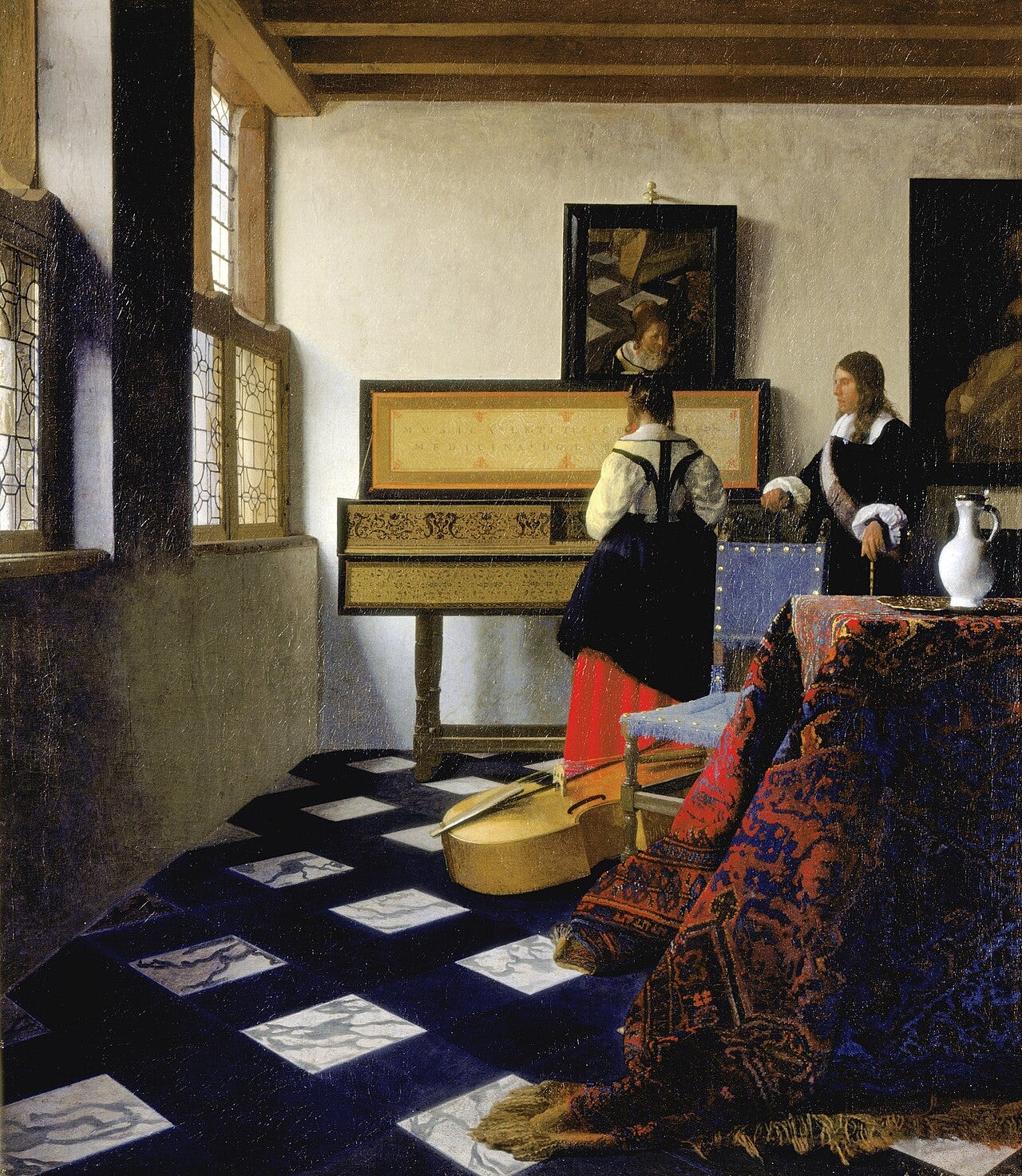
There is more. Vermeer left almost no underdrawing. Foregrounds sometimes sit slightly out of focus, like a photograph. Depth and perspective feel uncannily exact. All of it fits a man studying a projected image.
The people who tried to prove it
In modern times the theory has been tested, hard.
The painter David Hockney and the scientist Charles Falco argued in 2001 that many old masters, Vermeer included, used lenses and mirrors far more than art history admits.
Then in 2013 an inventor named Tim Jenison, in the documentary Tim's Vermeer, built a simple rig of a lens and a small mirror and, with no painting training, slowly reproduced a whole Vermeer interior.
He showed those glowing dots appearing on their own, straight from the optics.
It did not close the case, but it made the optical theory very hard to wave away.
The case against, and why it matters less than you think
Plenty of scholars push back, and they have fair points.
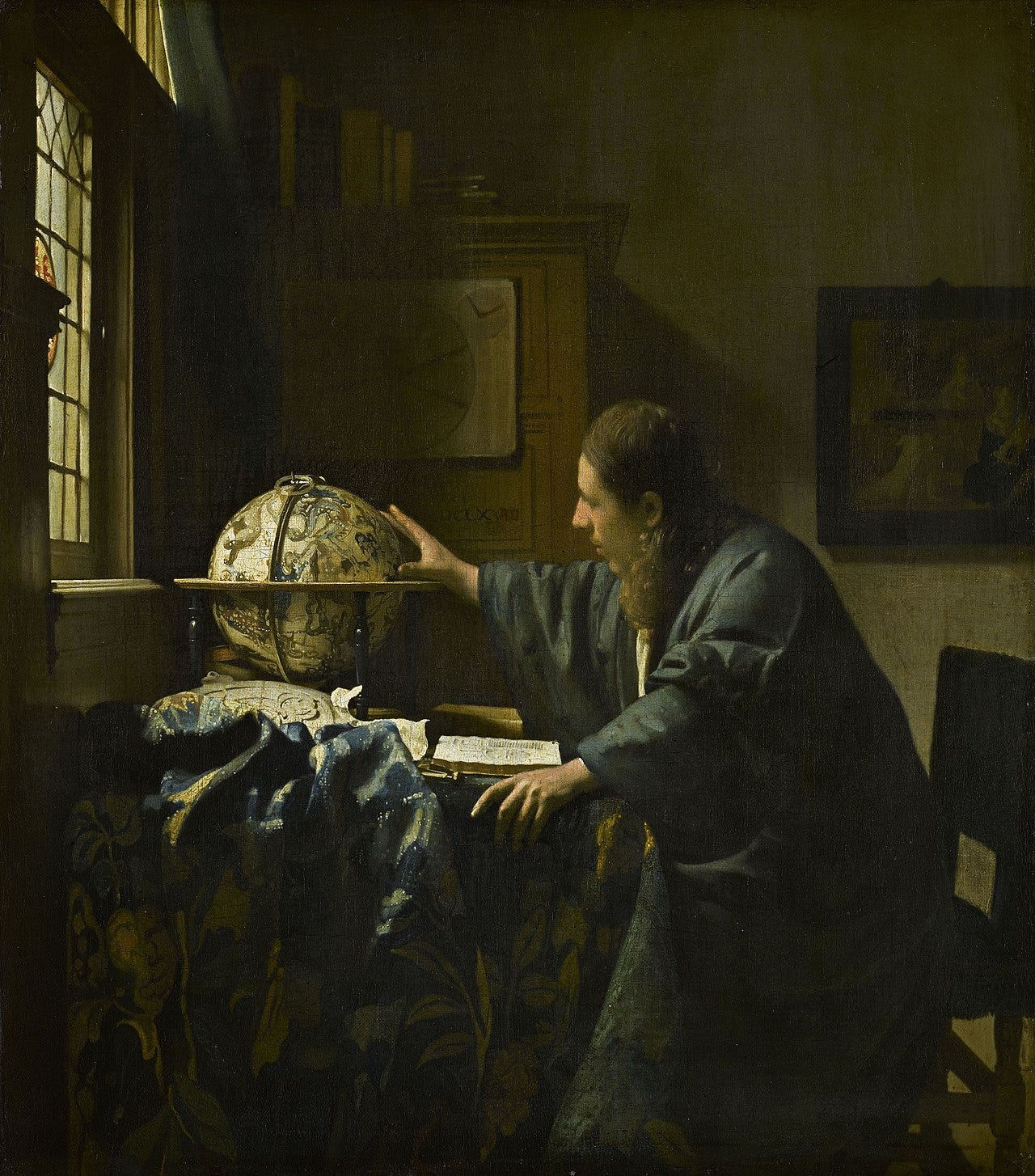
No lens or camera obscura owned by Vermeer has ever been found. He left no notes. A few of his effects do not match how a simple lens behaves. Maybe he just had an extraordinary eye, trained to see light the way a camera does.
But both sides agree on one thing. A camera obscura cannot paint. It cannot choose the silence of a room, mix that impossible blue, or know which two brushstrokes make a pearl. Whatever Vermeer looked through, the genius stayed in his hand.
Sorting the claim from the proof
Likely: Vermeer used a camera obscura as a study aid. The optical clues are strong.
Unproven: no device, drawing, or document ties him to one.
Settled: even if he used one, the artistry is entirely his. A lens picks nothing and paints nothing.
More secrets to unlock


How the camera obscura theory holds up
Did Vermeer use a camera obscura? Most likely as an aid, but it has never been proven.
What is a camera obscura? A dark box or room where a lens projects a live image of a scene.
What is the evidence? Soft glowing highlights like a lens out of focus, no underdrawing, and photographic depth.
Did he trace it? No tracing is needed for the theory. The idea is that he studied the projection, then painted by hand.
Does it make him a cheat? No. The device cannot compose or paint. The art is his.
The clue we will probably never close
After decades of study, X rays and one inventor rebuilding a Vermeer from scratch, the honest verdict has not moved much.
The paintings behave as if a lens was in the room, and not one shred of hard proof says so. Like everything about this painter, the answer hides just out of focus, which feels right for the man who made blur beautiful.
I trace the whole life behind the mystery in Vermeer: The Complete Story, the same obsession with light that left him so few paintings.
I look closely at one of his paintings in Vermeer's Woman Holding a Balance.
