
Because he painted slowly, spent lavishly, and did it part time, then lost everything in a national crash. Only about 34 paintings by Vermeer survive, and that is likely close to his entire career.
He layered painstaking glazes, used a blue more expensive than gold, ran an art dealing business, fathered eleven surviving children, and was ruined when the French invaded in 1672. He died in debt three years later. The story of that sudden, debt ridden death explains as much about the short list of paintings as anything he chose.
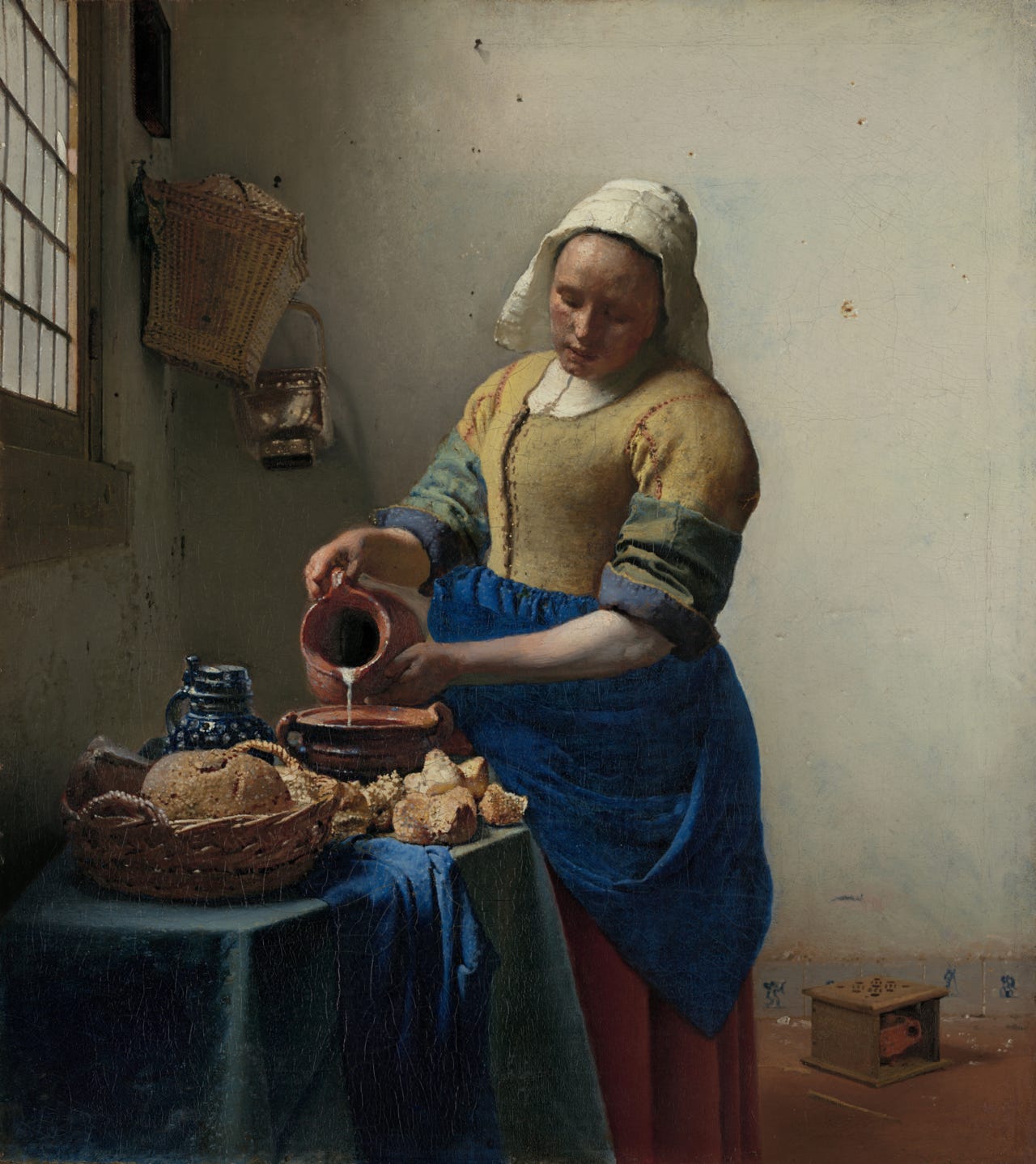
For one of the most admired painters in history, the output is tiny on purpose and by circumstance.
The reasons the most wanted painter in the world made so little stack up fast.
The number, and how small it is
Around 34 paintings are accepted as Vermeer’s today.
Set that against Rembrandt’s hundreds of paintings and far more drawings and prints, and the scale of Vermeer’s silence is clear.
A few works may be lost, but most scholars agree he was simply never prolific. He made perhaps two or three pictures in a good year.
This was not laziness. It was the cost of how he worked.
Slow by nature
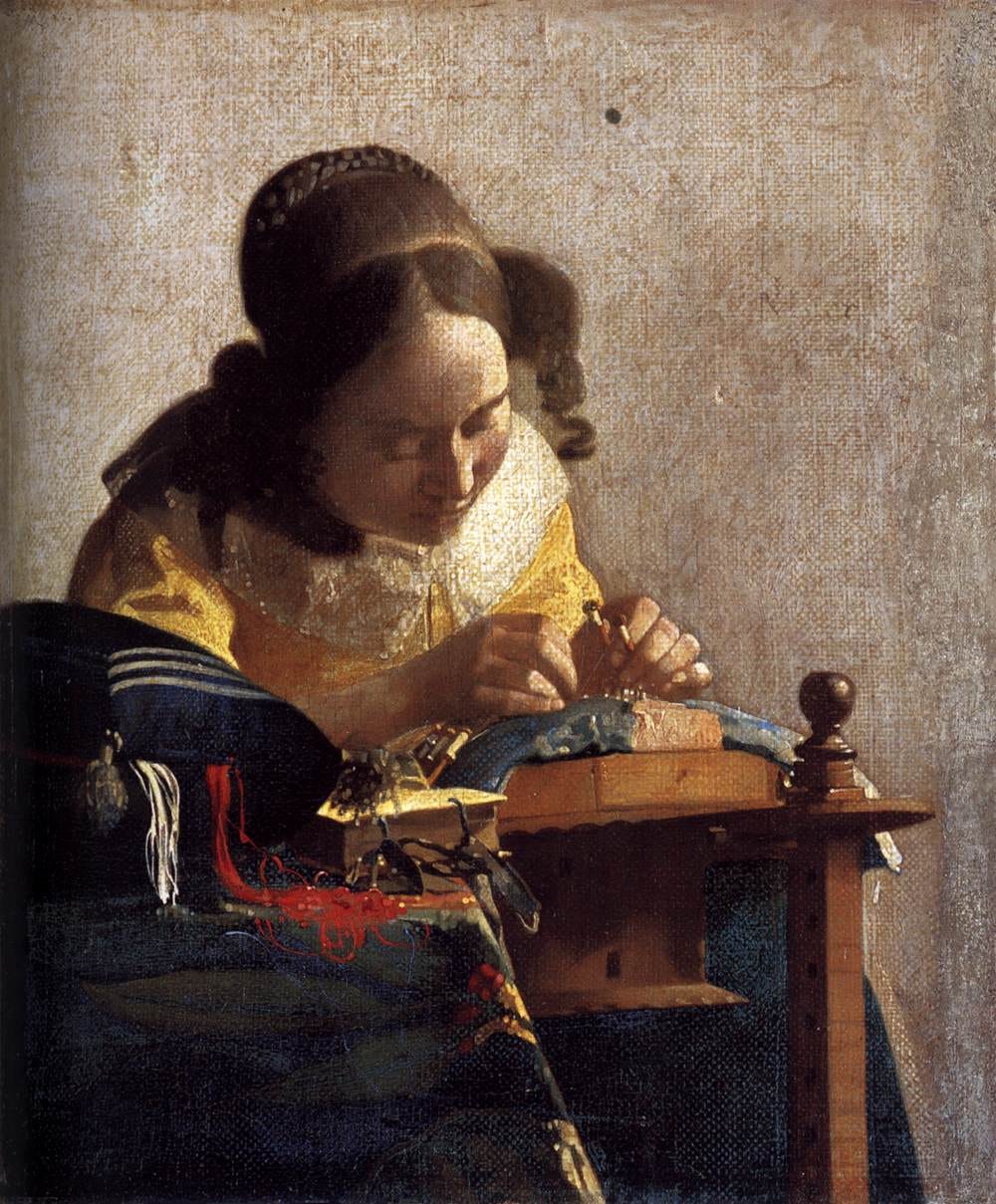
Vermeer built his paintings the way a jeweler sets stones.
He worked in thin, translucent layers, adjusting light and edges over and over, sometimes painting out whole objects. There are no quick Vermeers.
Each surface, each pearl of light, was the result of patient, repeated labor. That alone caps how many a man can finish in a lifetime.
Expensive by choice
Then there was the blue.
Vermeer loved natural ultramarine, ground from lapis lazuli mined in Afghanistan and shipped halfway across the world. By weight it cost more than gold.
Most painters rationed it for a Madonna’s robe. Vermeer poured it everywhere, even into shadows and underlayers where no one would notice.
A painter who uses gold priced pigment by the handful does not turn out canvases quickly or cheaply.
The day job and the full house
Painting was only part of his life.
Vermeer inherited and ran an art dealing business, buying and selling other artists’ work, which ate his time. At home he had a vast family, eleven surviving children, in a house he shared with his mother in law.
Time, space and money for his own painting were always tight.
The crash that finished him
The end came fast, and from outside.
In 1672, the Dutch call it the rampjaar, the disaster year, France invaded the Republic. The economy seized up and the art market collapsed. Vermeer could not sell his own paintings or the ones he dealt. That same market had spent decades rewarding painters who could work fast and sell wide, a run of names covered in famous Dutch Golden Age paintings.
He slid into debt, and in 1675 he died suddenly, leaving his widow to face creditors. She handed two paintings to the local baker to settle the bread bill.
One buyer, not a crowd
There is a final piece that explains the small, private output.
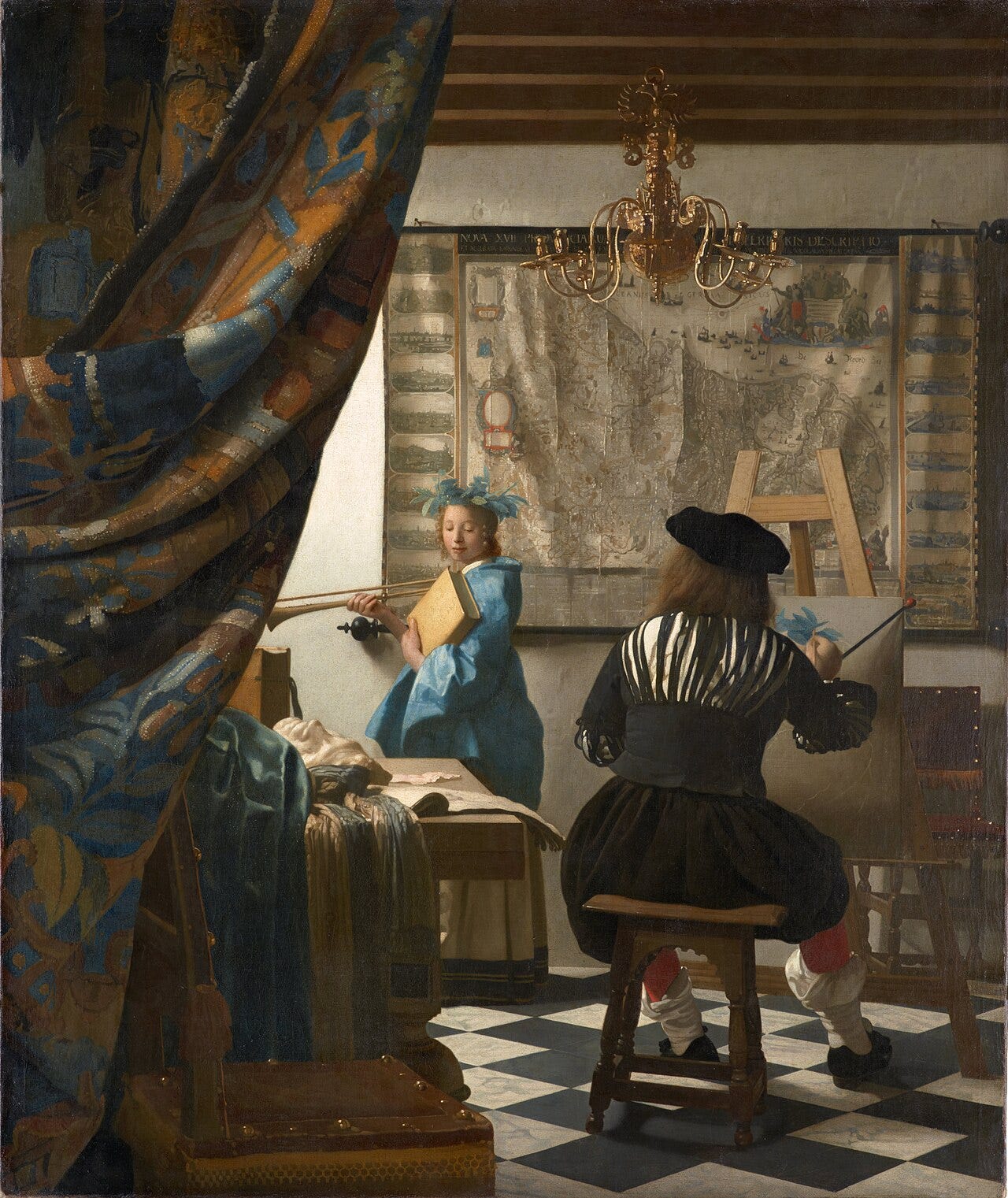
Much of Vermeer’s work seems to have gone to a single Delft collector, Pieter van Ruijven, who may have had first pick of nearly everything he made.
With one steady patron, Vermeer never needed to flood a market. He could afford, for a while, to make a few perfect things for one pair of eyes.
Sorting it out
Fact: about 34 paintings survive, likely near his lifetime total.
Why so few: slow layered technique, gold priced ultramarine, an art dealing job, and a huge household.
The final blow: the 1672 French invasion wrecked the market, and he died in debt in 1675.
Keep learning art the fun way


More secrets to unlock


The questions readers ask about his tiny output
How many paintings did Vermeer make? Only about 34 survive, probably close to his whole career.
Why so few? He worked very slowly, used ruinously expensive materials, and painted part time.
Were many lost? Perhaps a handful, but most experts think he simply made few.
Was he poor? He had moments of success, but he died in serious debt after the 1672 crash.
Who bought his work? Much of it went to a single Delft patron, Pieter van Ruijven.
The math of a small, perfect life
Add it up and the rarity makes sense. A jeweler’s pace, a pigment dearer than gold, a side career, eleven children, and then a war that broke the market.
Vermeer did not paint few pictures because he lacked ambition. He painted few because each one cost him so much, in time, money and care, that a lifetime only had room for about thirty four.
I tell the whole story of that life in Vermeer: The Complete Story.
I read one real canvas up close in Woman Holding a Balance, and weigh the camera obscura question on its own.
