
Famous Paintings of Dogs: 12 Beloved Canine Icons
Dogs have padded through art for thousands of years, curled at the feet of kings, guarding the dead, hunting, grieving and, in one famous case, cheating at cards.
As our oldest animal friends, they carry meaning no other creature does, loyalty, love and a mirror of ourselves. Here are twelve of the most famous paintings of dogs, all now in the public domain.
I have gathered the works that put a dog at the heart of the picture, from a half buried mongrel to a table of poker playing hounds.
What to open next
If this is the kind of art history you want more of:
The Arnolfini Portrait, detail by detail, the mirror, the dog, and the question everyone asks
Twelve famous portraits and the real people, the faces behind the paintings
Luncheon of the Boating Party, detail by detail, who everybody at that table actually was
1. Cassius Coolidge, A Friend in Need (1903)
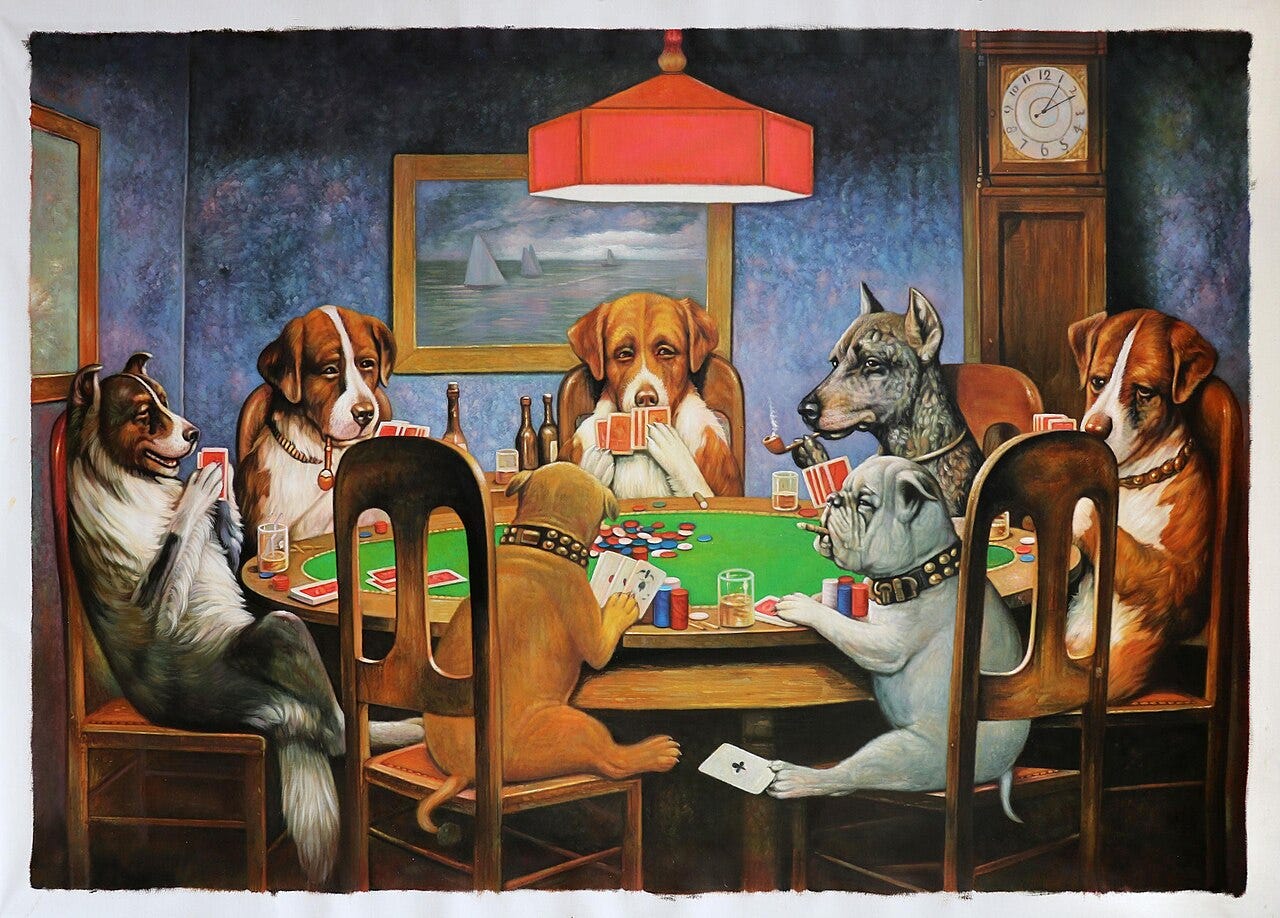
The most famous dog painting in the world shows seven dogs sitting around a table playing poker, one bulldog slyly slipping his pal an ace under the table.
Coolidge, an American who never trained as an artist, was hired by a calendar company to paint dogs doing human things, and made sixteen of them. This one, with its cheating hound, became a poster on a million dorm and bar walls.
Critics have always sneered at it as pure kitsch. Yet in 2005 two of the original poker paintings sold together for almost 600,000 dollars.
2. Edwin Landseer, The Old Shepherd's Chief Mourner (1837)
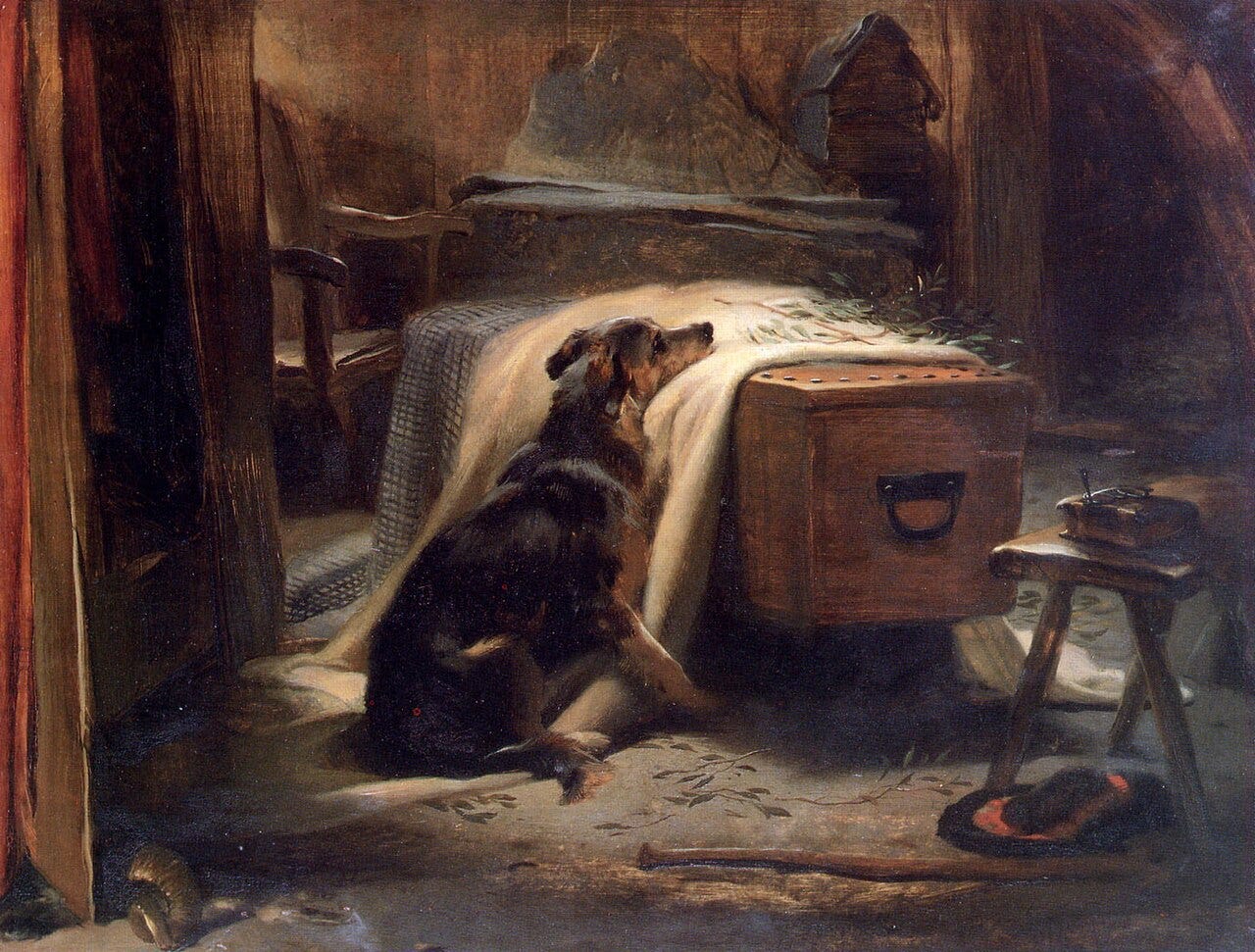
A rough collie rests its head on its dead master's coffin in a bare cottage, refusing to leave, the only mourner at a poor shepherd's funeral.
Landseer, the most beloved animal painter of Victorian Britain, made the dog's grief so real that the whole nation wept over it.
The critic John Ruskin praised it as proof that painting could reach the deepest human feeling. Every detail tells the story, the shepherd's glasses and Bible laid aside, the untouched food.
Landseer became so linked with dogs that he also modeled the great bronze lions in Trafalgar Square.
3. Francisco Goya, The Dog (about 1820)
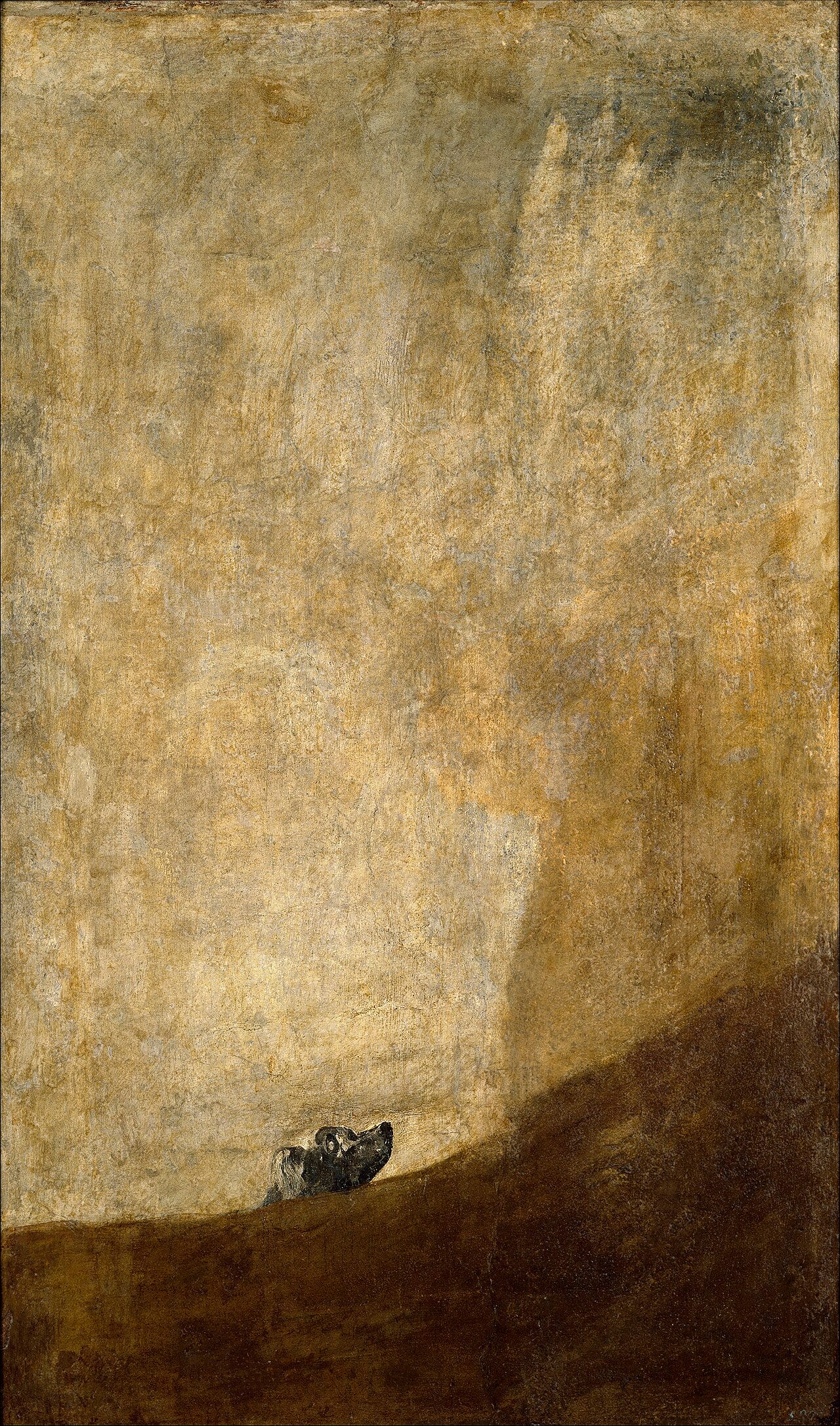
A small dog's head pokes up from behind a huge slope of empty nothing, staring at a blank sky, in one of the strangest and most haunting images ever painted.
Goya daubed it straight onto the wall of his own house near the end of his life, one of the private, despairing works now called the Black Paintings.
The dog seems to be drowning or sinking, helpless against a void that fills most of the picture. Nobody agrees what it means, and Goya never meant anyone to see it.
Only decades after his death was it cut from the wall, moved onto canvas and hung, at last, in the Prado.
4. Jan van Eyck, The Arnolfini Portrait (1434)
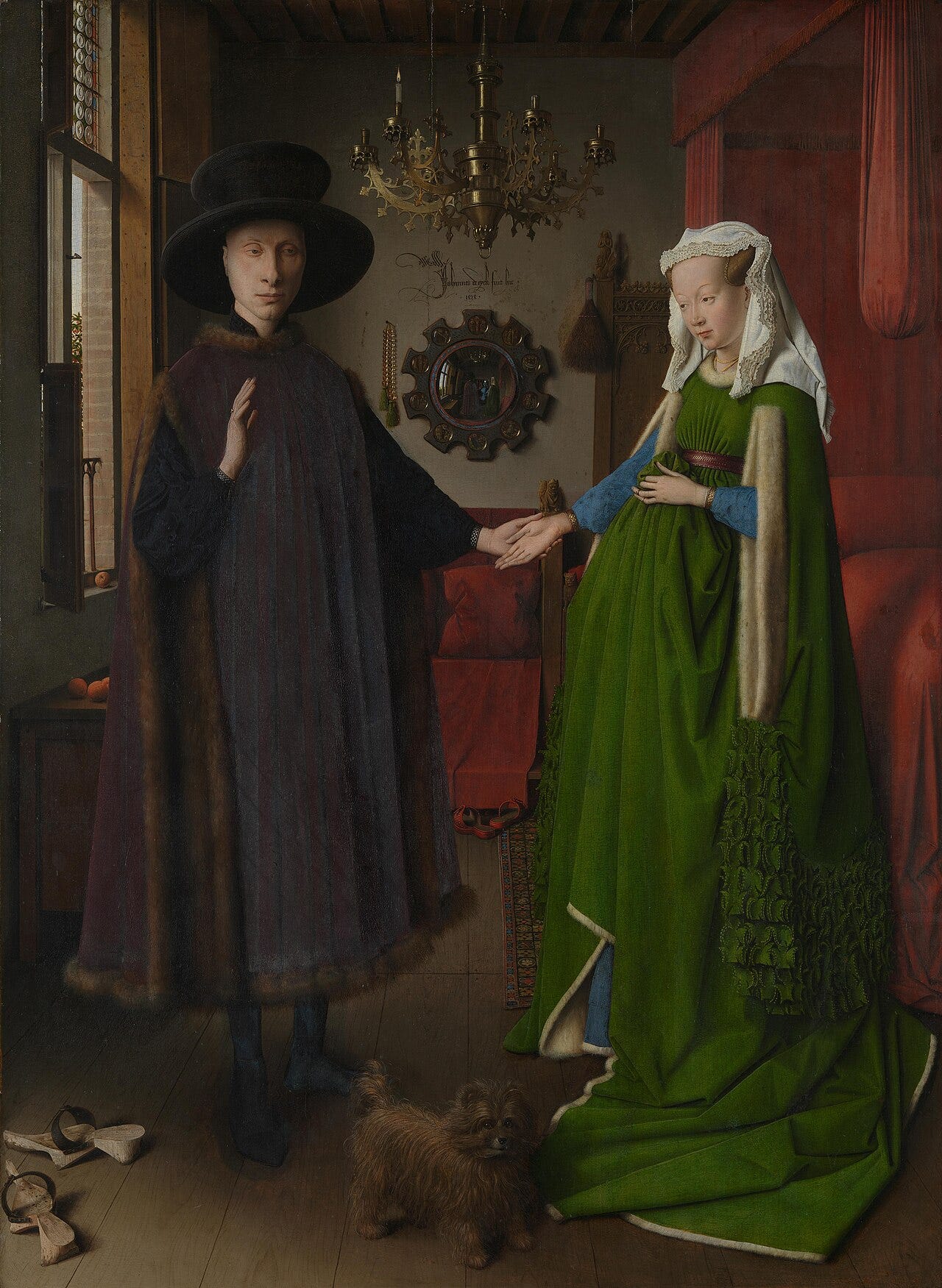
In the most famous double portrait of the Middle Ages, a wealthy couple stand in a Flemish bedroom, and a tiny, bright eyed terrier sits at their feet in the very front of the picture.
Van Eyck painted the little dog with every wiry hair in place, a symbol of the loyalty and faithfulness of marriage. It is one of the first pet dogs in Western art painted purely as itself, alert and adorable.
The whole picture is a puzzle of hidden meaning, right down to the signature on the wall reading, van Eyck was here, and I unpack its secrets in the full piece on the Arnolfini Portrait The little dog was a costly lapdog that only the wealthy could keep, a quiet boast tucked into the front of the scene.
5. Briton Riviere, Fidelity (1869)
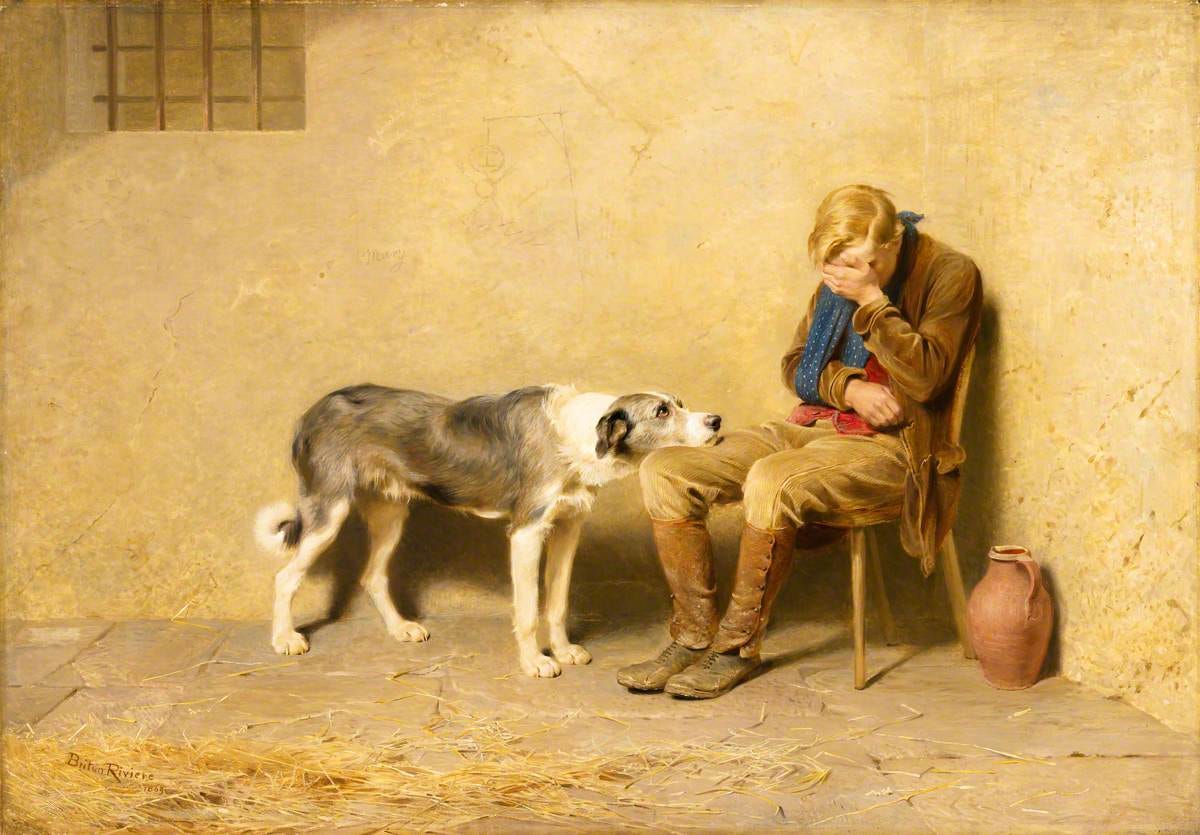
A shepherd sits slumped and defeated in a stone prison cell, and pressed against his knee, gazing up with total devotion, is his loyal dog, who has followed him even here.
Riviere was a Victorian painter who made his name on the deep bond between people and animals. The man has been arrested, perhaps for poaching, but the dog neither understands nor cares about guilt, offering only unbroken love.
The whole message sits in the title, Fidelity, faithfulness through anything. It struck such a chord that Riviere painted several versions to meet the demand.
6. George Stubbs, A Rough Dog (about 1790)
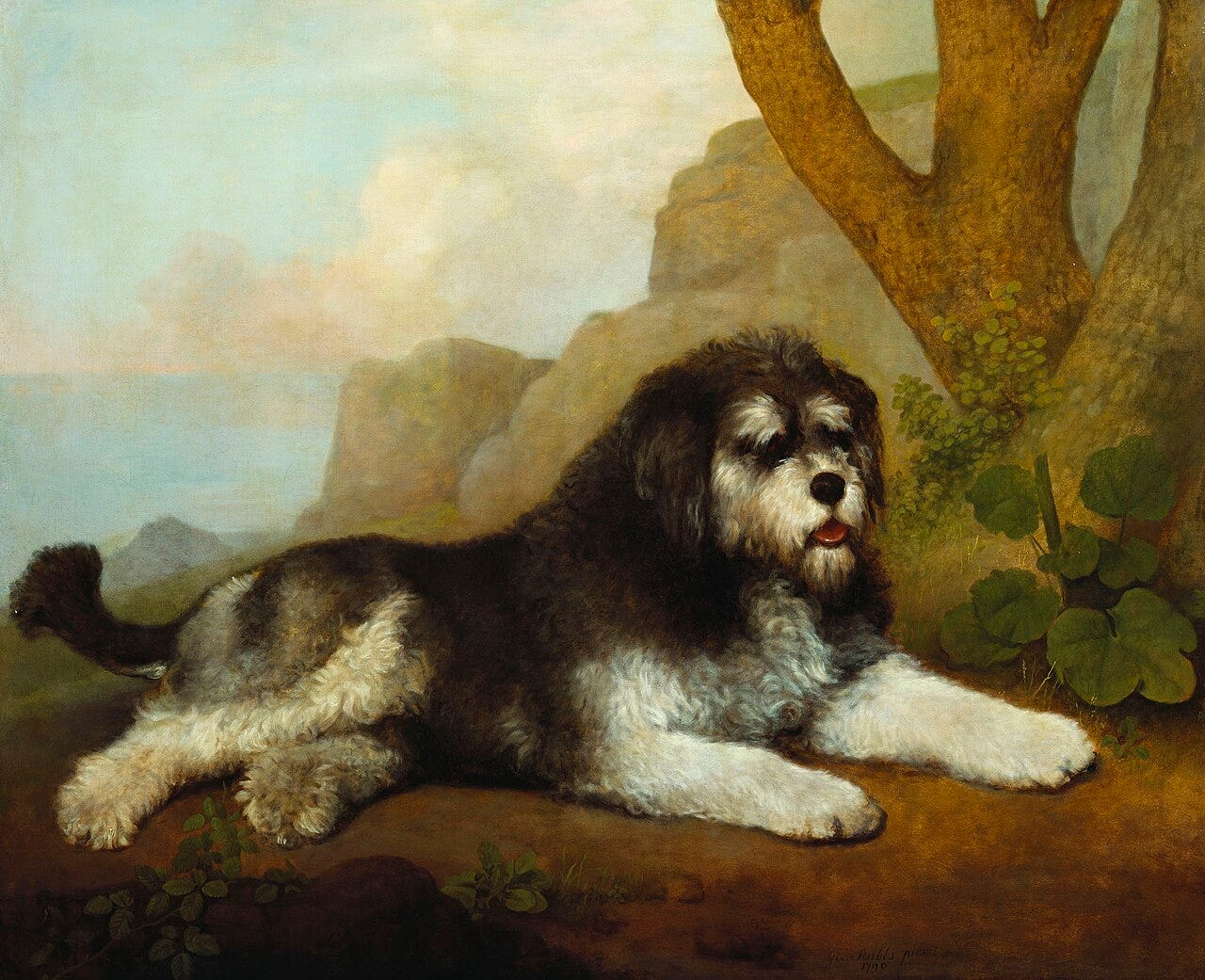
The greatest animal painter in British history, famous above all for his horses, also painted dogs with the same cool anatomical genius.
Stubbs studied dead animals for months to learn exactly how they were built, and it shows in the shaggy weight and lively eye of this rough coated dog.
He painted hounds, spaniels and lapdogs for aristocrats who loved their animals almost as much as their children. Every muscle and tuft of fur is exactly right, yet the dog still seems ready to bark.
He dissected animals so thoroughly that his book on the anatomy of the horse is still studied today.
7. Jean Baptiste Oudry, Misse and Turlu, Greyhounds of Louis XV (1725)
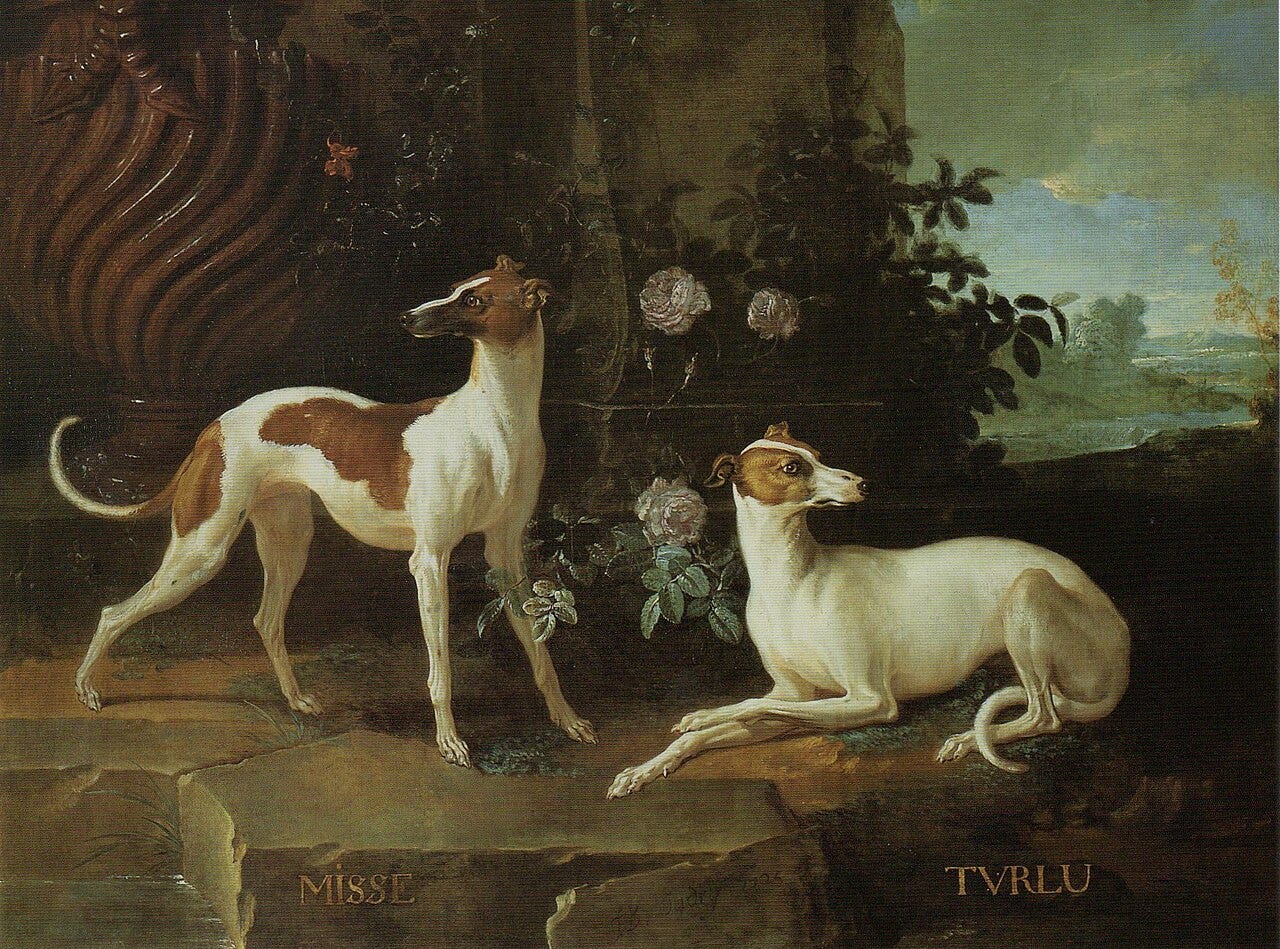
Two elegant greyhounds, the favorite hunting dogs of King Louis the Fifteenth, stand alert in a landscape, painted life size with all the dignity of royal portraits Oudry was the official painter of the royal hunt, and the king loved his dogs so much that he had them immortalized like courtiers.
Each hound has a name, Misse and Turlu, and a personality picked out in the set of an ear or a lifted paw. This was the great age of the aristocratic pet, when a king's dog might live better than most of his subjects.
Oudry painted the royal kennels so often that his dogs became the most famous in France.
8. Thomas Gainsborough, Pomeranian Bitch and Puppy (about 1777)
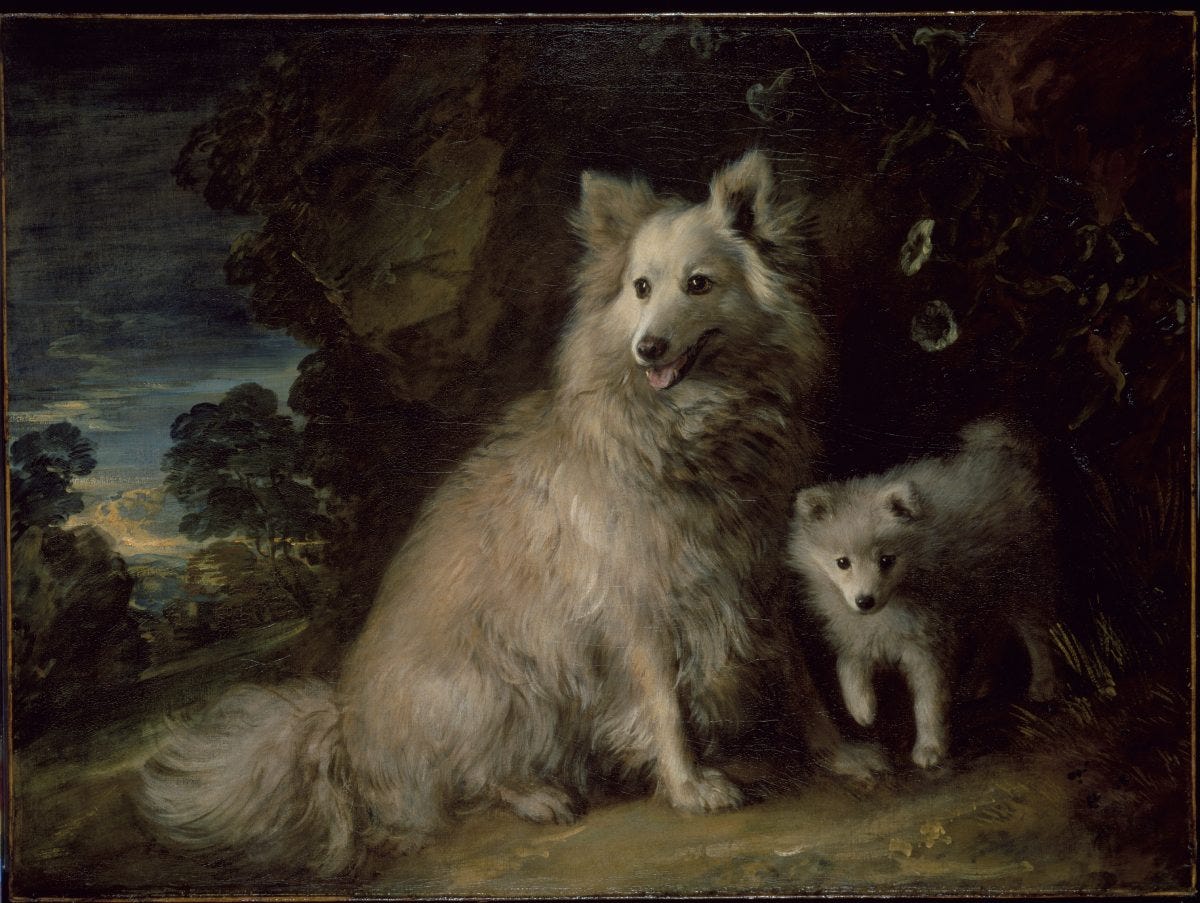
Gainsborough, better known for his glittering society portraits, adored dogs and kept several of his own. Here a fluffy white Pomeranian mother watches over her small puppy, painted with a soft, feathery touch that makes the fur almost move.
He painted this pair for a musician friend, catching the tender bond between the two animals without a trace of syrup. The loose, quick brushwork was decades ahead of its time.
His own two dogs were named Fox and Tristram, and he trained them to carry notes between him and his wife when they quarreled.
9. Edouard Manet, King Charles Spaniel (about 1866)
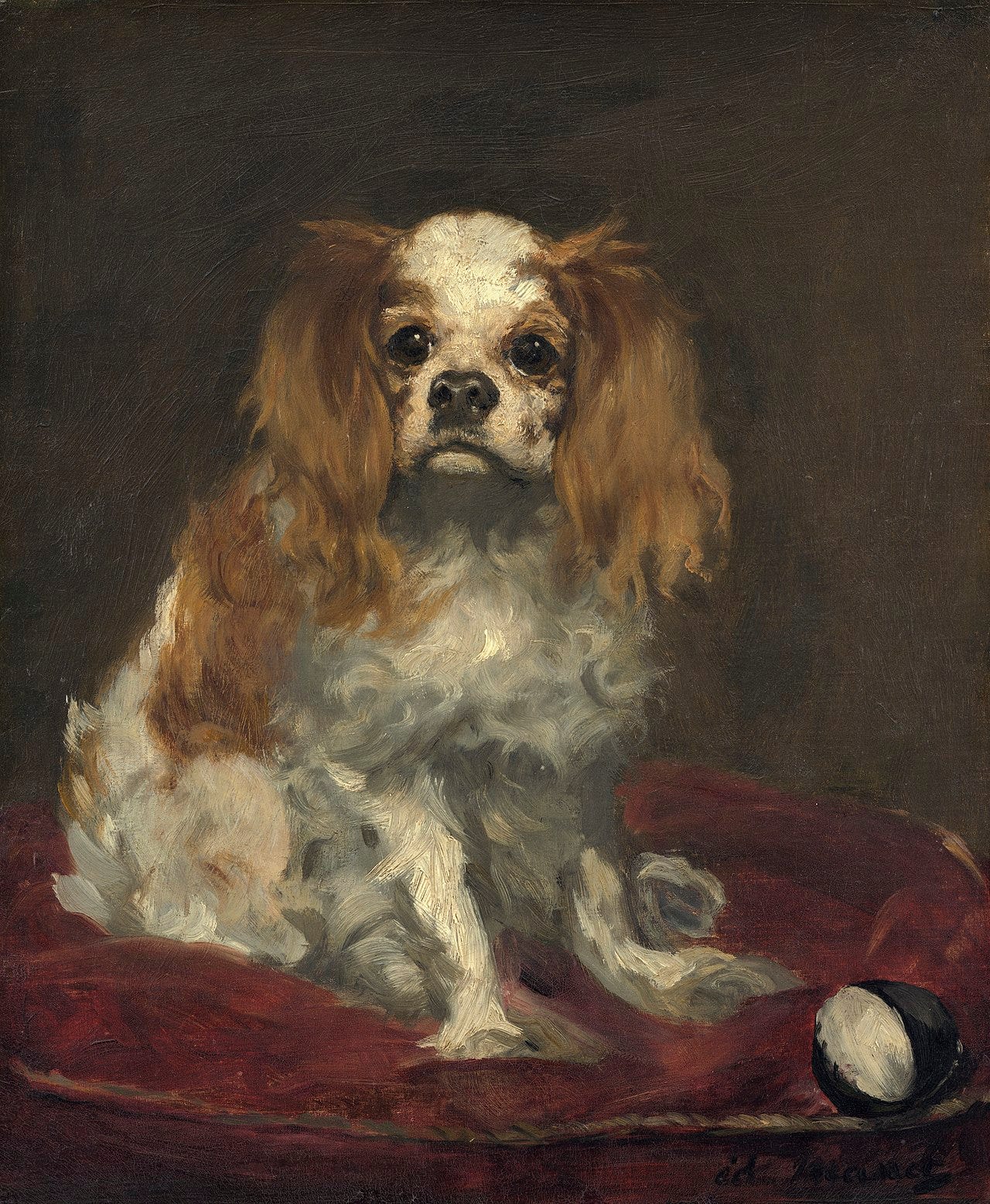
Manet, the great disrupter of French painting, dashed off a silky little King Charles spaniel on a red cushion, one paw raised, all spoiled charm, in a small dog portrait with a few swift, sure strokes.
There is no story and no message, just the pure pleasure of paint and a charming animal. The spaniel belonged to a friend, and Manet made it look effortless, though the loose handling was anything but.
It is barely bigger than a sheet of paper, and it now hangs in the National Gallery of Art in Washington.
10. Edwin Landseer, A Distinguished Member of the Humane Society (1838)
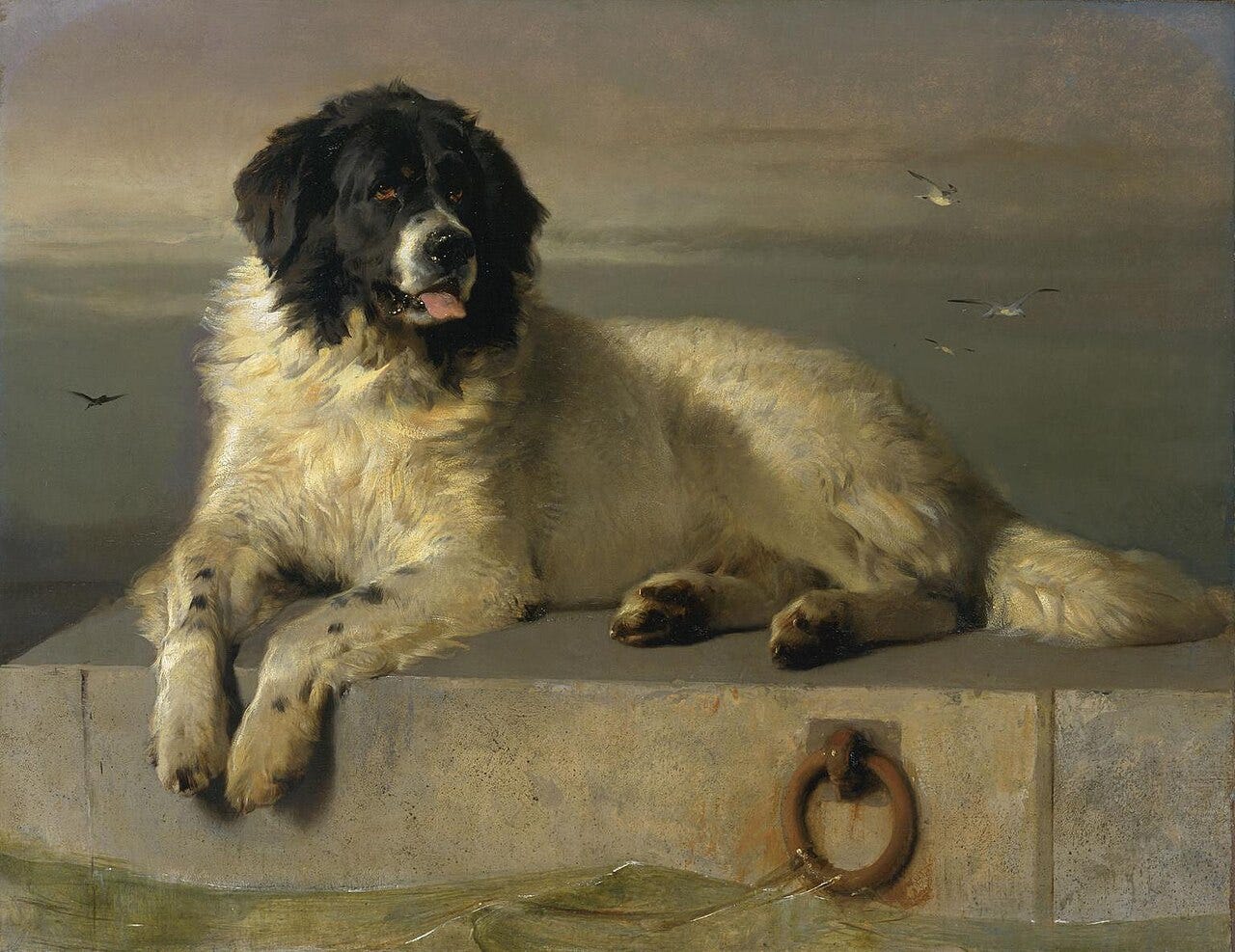
A great black and white Newfoundland dog lies on a stone quay by the water, calm and noble, a rescuer who has pulled drowning people from the sea. Landseer gave the dog such gravity that people treated it as a hero rather than a pet.
There is no owner in sight, only the dog itself, painted as a figure of dignity and courage. The picture made the Newfoundland the most admired rescue dog in Britain.
In fact the black and white variety of the breed is now called the Landseer Newfoundland, named after this very painting.
11. William Hogarth, The Painter and his Pug (1745)
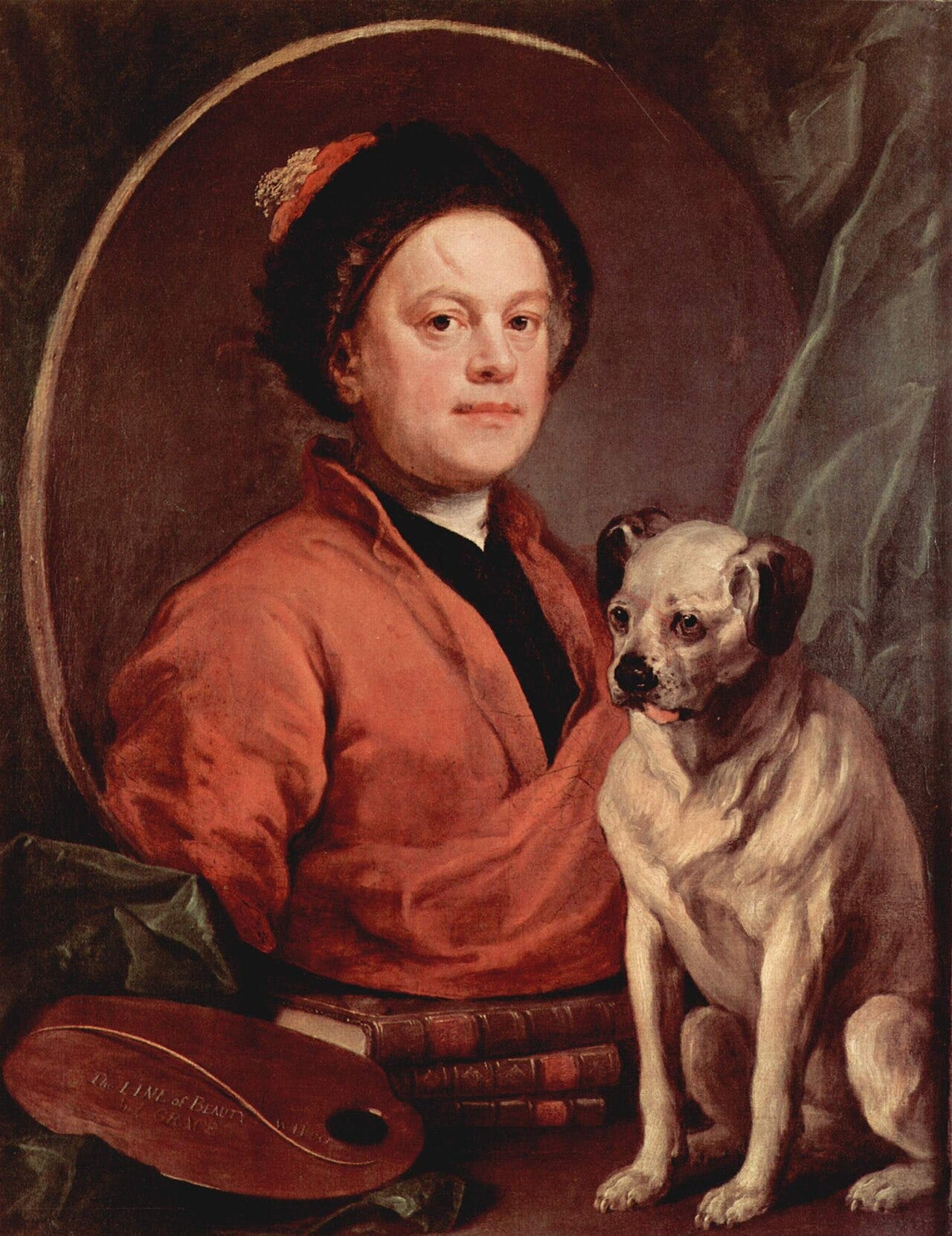
When Hogarth painted his own portrait, he set his beloved pug dog Trump right in front, snub nosed and grumpy, almost stealing the picture.
The great English satirist saw so much of himself in his stubborn, combative little dog that he made Trump part of his self image.
The painting is full of clever touches, Hogarth's portrait resting on a stack of books by his favorite writers, a palette below marked with his line of beauty.
Trump sits in front of it all, entirely unimpressed. Hogarth loved pugs so much he owned a string of them, and the breed became a kind of personal emblem.
12. Philip Reinagle, Portrait of an Extraordinary Musical Dog (1805)
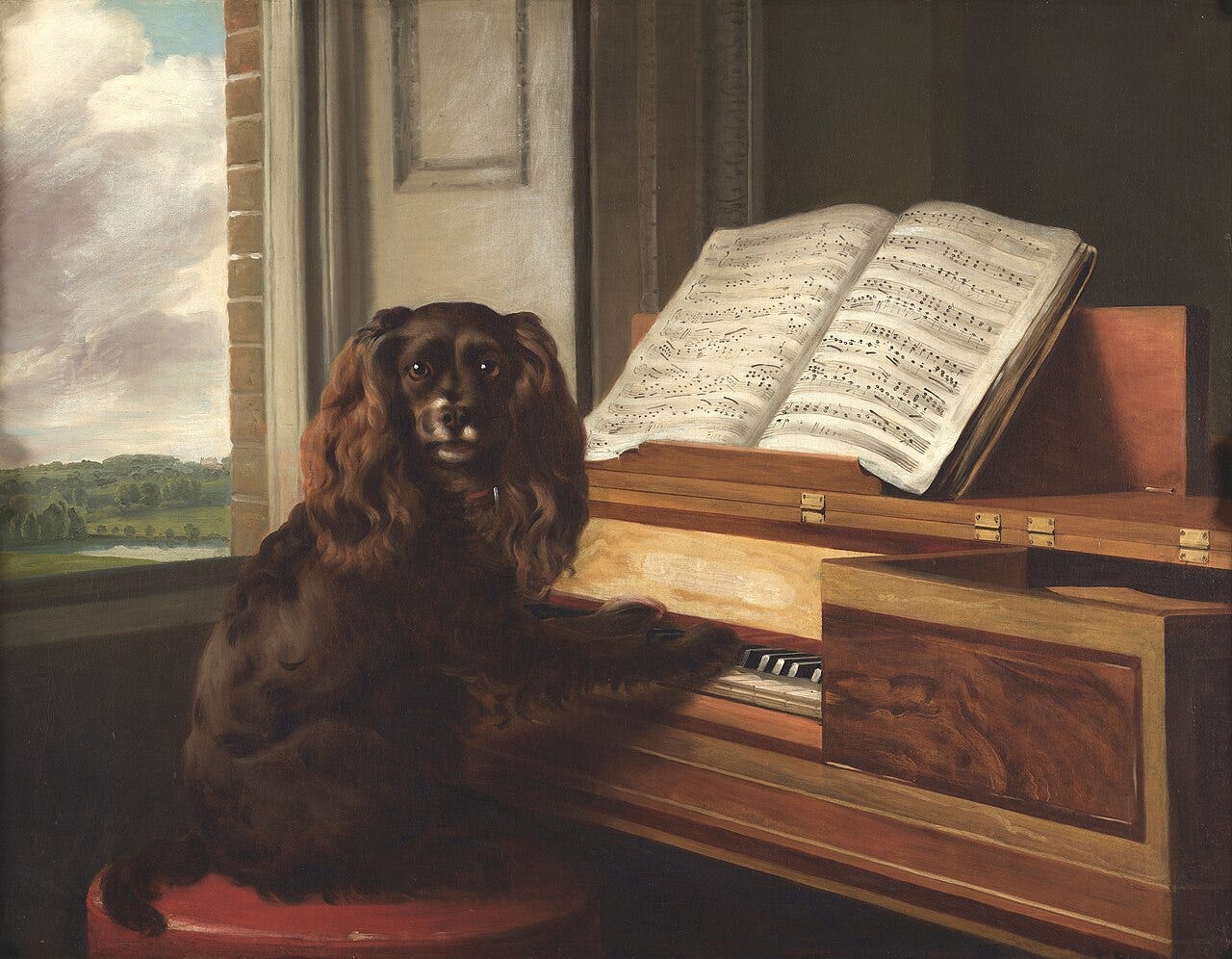
Portrait of an Extraordinary Musical Dog shows exactly that, a serious spaniel seated at a piano with one paw on the keys, as if about to play a sonata.
Philip Reinagle, a respected British animal painter, made this gently absurd picture in 1805, and audiences adored the joke. It sits somewhere between a straight animal portrait and pure comedy, a dog treated with total seriousness in a ridiculous role.
The trick works only because Reinagle painted the spaniel so beautifully and truthfully. It is the ancestor of every silly, lovable dog picture since, right down to hounds playing poker.
What people ask about dogs in art
What is the most famous dog painting? Cassius Coolidge's A Friend in Need, better known as one of the Dogs Playing Poker pictures.
Who is the most famous painter of dogs? Edwin Landseer in Victorian Britain, whose grieving and heroic dogs made him a household name.
What do dogs symbolize in art? Above all loyalty and faithfulness, which is why a dog often sits at the feet of married couples or on a tomb.
What is Goya's The Dog about? A tiny dog sinking into a void, one of Goya's despairing Black Paintings, usually read as a symbol of helplessness and doom.
Why are there dogs in so many old portraits? A dog signaled wealth, status and loyalty, and a favorite pet was a natural thing to put in a family picture.
If these dogs pulled you in, you will love these too:
Was Monet really the first Impressionist, the painting that may have got there first
The secret behind Monet Magpie, one bird in the snow, and why it matters
Lady with an Ermine, detail by detail, why she is holding that animal
Our oldest companions
For as long as we have made art, we have painted our dogs, because a dog has always been more than an animal to us. It is a symbol of everything we hope to be, faithful, loving and true, and everything we fear to lose.
Whether grieving on a coffin or cheating at poker, the painted dog holds up a mirror to its owner. We keep painting them for the same reason we keep them, they never let us down.