
Figures built from gleaming tubes and cylinders, as if people had been assembled in a factory. Fernand Léger loved the machine age so much that he painted human beings to look like polished engine parts, and made one of the most distinctive styles of the twentieth century.
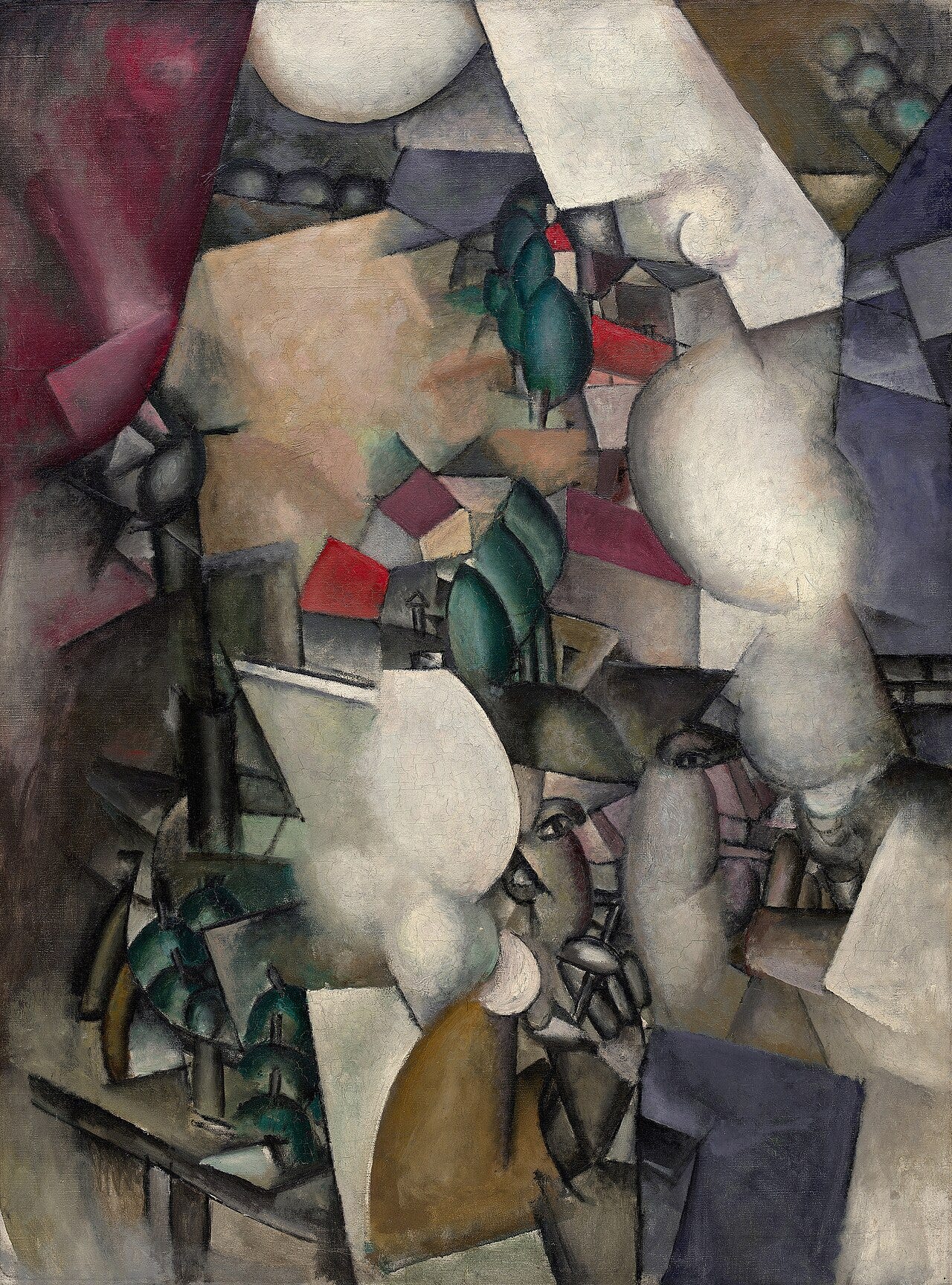
He was a French artist, an early Cubist who broke away to celebrate the modern world of machines, workers and the city, in a manner sometimes called Tubism.
More incredible painter stories
If Fernand Léger pulled you in, you will love these too:


Fernand Léger at a glance
1881. Born in Argentan, Normandy, a cattle dealer’s son.
1913. Contrasts of Forms pushed him to the edge of abstraction.
1916. Gassed at Verdun. The war rewired his art toward machines and workers.
1924. Made Ballet Mécanique, a film with no story and a mechanical heartbeat.
1955. Died at Gif-sur-Yvette. The Léger museum opened at Biot five years later.
Tubism
Léger started close to Cubism, but where Picasso and Braque broke things into facets, he built his forms from smooth cylinders and cones.
Critics nicknamed the style Tubism, and his rounded, metallic figures look proudly mechanical, citizens of a new industrial age.
The beauty of the machine
Léger believed the machine was beautiful, and filled his work with gears, scaffolding, road signs and factory shapes in strong primary colours.
He wanted an art for the modern city and the worker, bright and clear, moving steadily toward abstract art without ever leaving the real world behind.
The war and the worker
Serving in the First World War changed him. He was struck by the beauty of gun barrels in sunlight and by the ordinary soldiers around him, and afterward put working people at the centre of his art.
A committed leftist, he painted builders, cyclists and acrobats as modern heroes, dignified and strong.
Beyond the canvas
Léger spread his ideas across many forms. He made a pioneering abstract film, designed for the theatre and the ballet, taught widely and created murals and stained glass.
He spent the war years of the 1940s in the United States, where the energy of New York and its billboards fed straight into his late work.
You can explore works by Fernand Léger in the collection of the Metropolitan Museum of Art. His 1914 canvas The Village hangs there in the Leonard A. Lauder Cubist Collection.
A Normandy boyhood and a draftsman's training
Fernand Léger was born in 1881 in Argentan, in Normandy, into a family of cattle farmers. His father died when he was young, and the rural world of animals and fields stayed with him.
At sixteen he was placed with an architect in Caen to learn drawing. Around 1900 he moved to Paris and worked as an architectural draftsman while trying to enter the art schools.
He was refused by the Ecole des Beaux Arts and studied instead at the Ecole des Arts Decoratifs and in private studios. That early training in plans and precise line shaped the way he built a picture for the rest of his life.
Contrast of Forms and the edge of abstraction
By around 1909 Léger was moving in the Cubist circle in Paris and showing beside the painters of the Section d'Or group. He broke figures and landscapes down into simple volumes.
Where Braque and Picasso favored flat facets, Léger preferred rounded tubes, cones and cylinders. The critic Louis Vauxcelles is usually credited with the nickname Tubism for this taste for tube like forms.
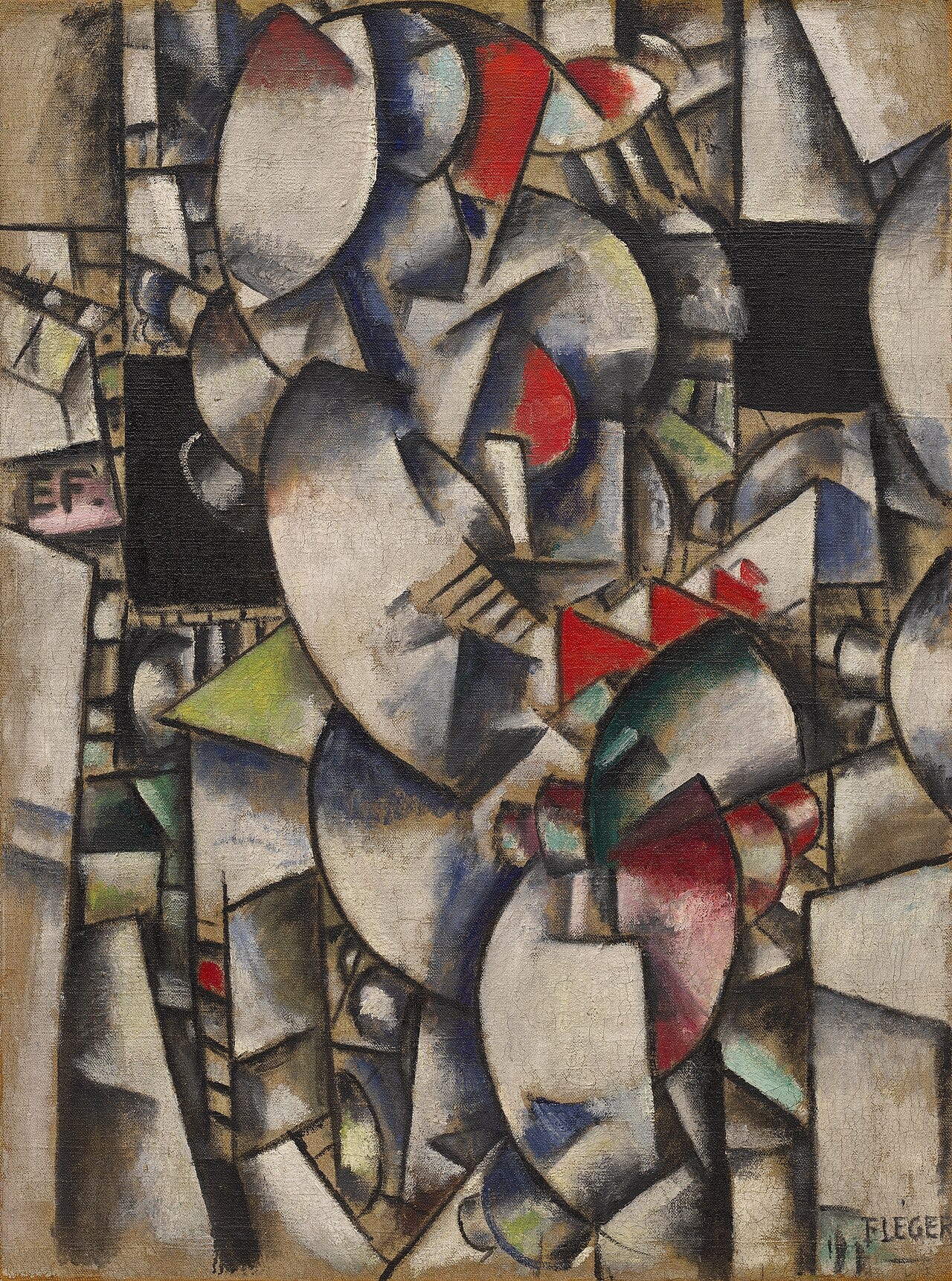
The series called Contrast of Forms, painted around 1913, pushed the idea toward near abstraction. Blocks of color and curved volumes collide with almost no subject at all.
It was as far into pure form as he ever went before the war pulled him back toward people.
The City, a wall of signs and machines
After the war Léger threw himself into the noise of the modern city. Posters, shop signs, scaffolding, traffic and factory parts became his raw material.
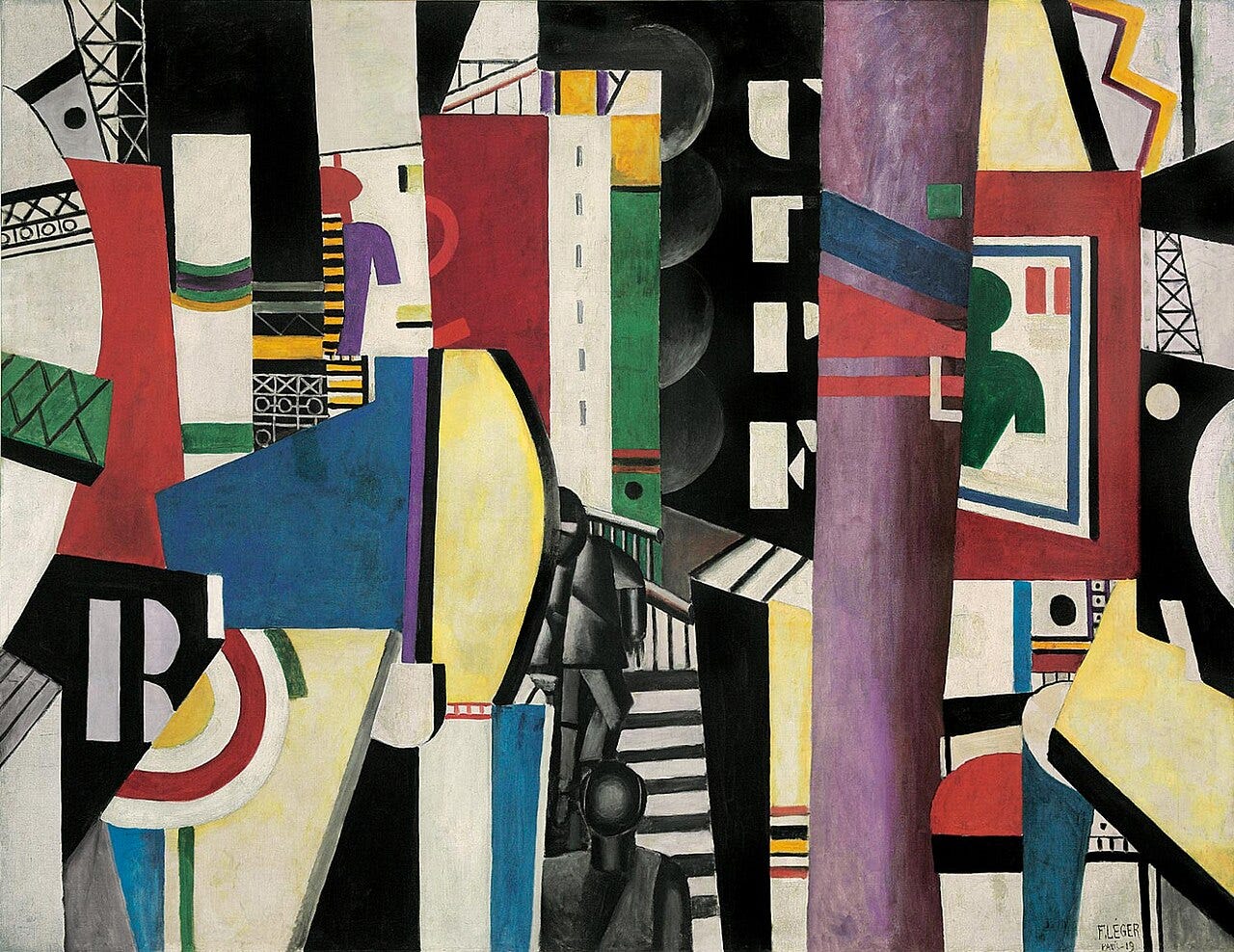
The painting called The City, dated 1919 and now held by the Philadelphia Museum of Art, gathers these fragments into a flat wall of color and machine shapes. Figures stand among the signage almost like robots.
He treated a piston or a stencil letter with the same care other painters gave to a face. For Léger the modern street was not ugly. It was the honest new subject that art had been slow to notice.
Gassed at Verdun
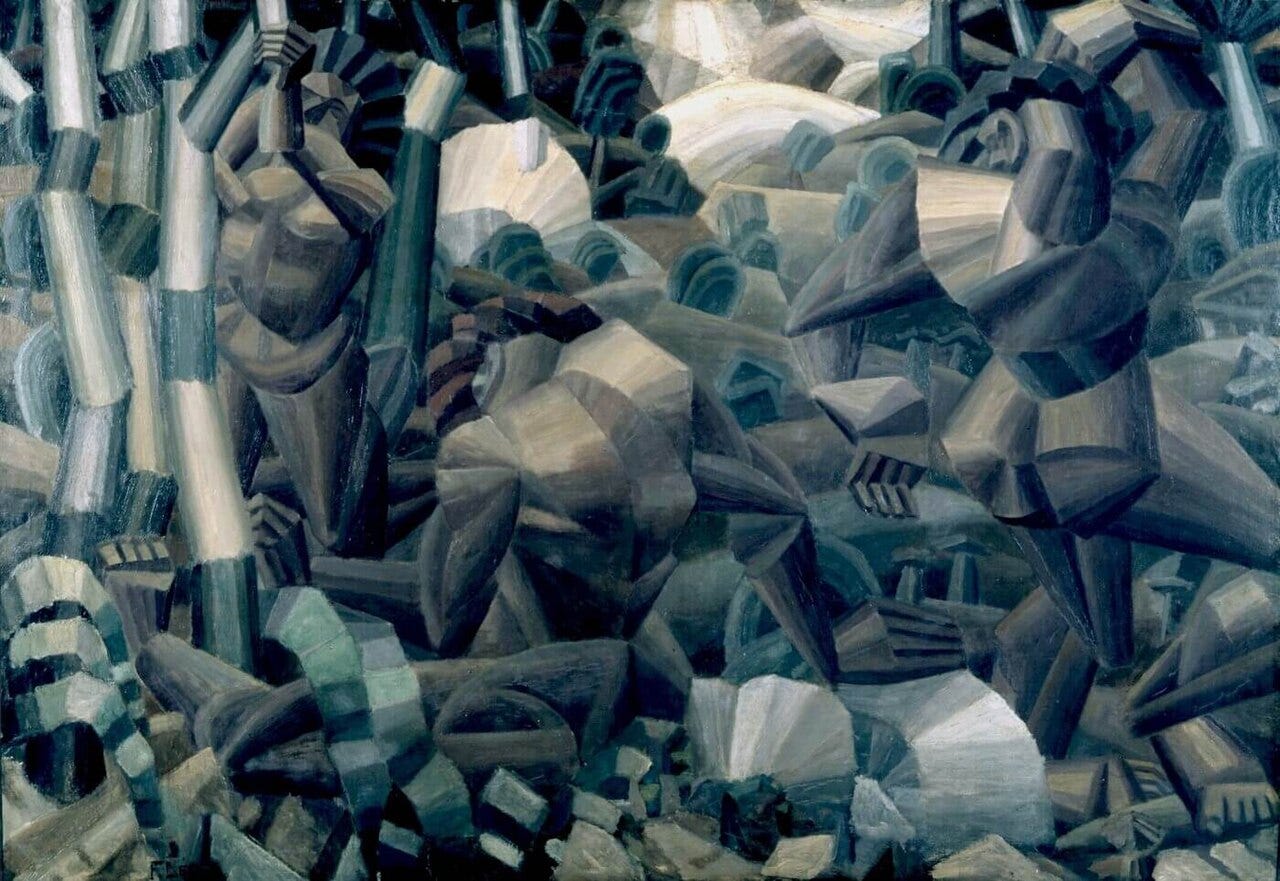
Léger was mobilized in the First World War and served as a sapper and stretcher bearer. He spent time at the Verdun front, among the worst fighting of the war.
He later said the sight of sunlight on the polished breech of a field gun taught him more than any museum. The machinery of war fascinated him even as it terrified him.
In 1916 he was caught in a gas attack, likely mustard gas, and was hospitalized before his discharge in 1917. He came out of the trenches determined to make an art of machines, soldiers and ordinary working people.
Ballet Mécanique and the moving image
In 1924 Léger worked with the American filmmaker Dudley Murphy on a short film called Ballet Mécanique. It has no story. Instead it cuts between kitchen tools, machine parts, faces and a woman climbing a staircase, over and over.
The rhythm of objects on screen mirrors the rhythm of his paintings. The film is now treated as a landmark of early experimental cinema.
Here is a surprising detail. The composer George Antheil wrote a score that called for sixteen player pianos to run in exact synchrony, along with sirens and propellers.
The technology of 1924 could not lock the pianos together, so the full version could not be performed as written for decades.
The teacher and the American years
Léger was a committed teacher. In 1924 he opened a studio, the Académie Moderne, with Amedee Ozenfant, and later ran his own school that drew students from many countries.
When France fell in 1940 he sailed to the United States and stayed until 1945. He taught at Yale and at Mills College in California and kept painting.
American life fed his work. Neon signs, the highway, divers and industrial color all entered his canvases during these years.
The common man and the party card
Léger came home to France in 1945 and joined the French Communist Party that same year. His politics matched a belief he had held since the war, that art should belong to working people.
He wanted his paintings hung where ordinary people could see them, not locked away for collectors. Leisure, the factory and the building site became honest subjects.
He did not turn his figures into propaganda. He painted workers at rest and at play with the same weight he had once given to the machine.
Stained glass, mosaics and the museum at Biot
In his last decade Léger moved beyond the canvas. He designed stained glass and mosaics for churches, including work for the church at Assy and the Sacred Heart church at Audincourt.
The big late paintings, The Builders around 1950 and The Great Parade completed around 1954, show construction workers and the circus in flat bands of red, blue and yellow.
He died in 1955 at Gif sur Yvette. A museum devoted to him opened at Biot, in the south of France, in 1960, founded by his widow Nadia Léger and his collaborator Georges Bauquier, who later gave it to the French state.
Designing for the stage
Léger did not keep his shapes on canvas. He also worked for the theatre and the ballet, carrying his machine forms onto the stage.
In 1923 he designed the sets and costumes for the ballet La Creation du monde, a production that drew on African art and jazz age music. Dancers moved as living pieces of his geometry.
It was one more way he pushed his art into daily life. For Léger, a stage set for a crowd was as worthy a place for painting as any gallery wall.
The Fernand Léger questions that keep coming up
How is Léger different from Picasso? Cubism in Picasso's hands stayed a studio conversation about form; Léger aimed it at the street. His cylinders and signs celebrate machines, workers, and public life, which is why his late murals moved so naturally onto walls and stained glass.
What is Tubism? The nickname critics gave his pre-war style, built from gleaming cylinders and cones, after Louis Vauxcelles mocked the tube-like forms. Léger kept the geometry and outlived the joke.
What is Ballet Mécanique? The 1924 experimental film he made with Dudley Murphy and George Antheil's score: pistons, whisks, and a smiling washerwoman cut into rhythm, one of the founding works of artists' cinema.
Why did Léger spend the 1940s in New York? He sat out the Occupation in the United States from 1940 to 1945, teaching at Yale and painting divers and cyclists, and returned to France with his palette brighter than ever.
How much does a Léger cost? His 1913 Contraste de formes sold for about 70 million dollars in 2017, the record for the artist, and major mechanical-period canvases sit comfortably in eight figures.
Where can I see Léger? The Musée National Fernand Léger in Biot, which he planned before his death in 1955, plus the Centre Pompidou, MoMA, and the Philadelphia Museum for The City.
More secrets to unlock


Why the machine man endures
Léger looked at the modern world of factories and crowds and decided it was beautiful, not frightening, and built a whole style to prove it.
His gleaming workers and bright machine shapes still feel optimistic, a vision of art made for everyone in the age of the engine.
A museum devoted entirely to his work stands in the south of France, filled with his murals, mosaics and ceramics as well as his paintings.
His influence reached far into graphic design and architecture, so the clean, confident look of mid century posters and public art owes a real debt to the painter who turned people into engines.
He worked tirelessly across a long career, and his late American years gave his work a fresh jolt of colour and scale drawn from the energy of New York streets.
His art for the worker and the city found admirers among architects and designers, and his clear, confident shapes shaped public art and graphic design for decades after his death.
He even worked on stained glass and mosaic for churches and public buildings, carrying his clear primary colours and strong outlines into glass and stone for the widest possible audience.
That ambition has an address: the Musée National Fernand Léger at Biot, in the south of France, built by his widow Nadia and opened in 1960, five years after his death. Its facade carries a giant ceramic mosaic enlarged from a design of his for a stadium that was never built.