
Gustave Caillebotte was the Impressionist who painted modern Paris with a cool, almost photographic eye, and who quietly used his fortune to save the whole movement.
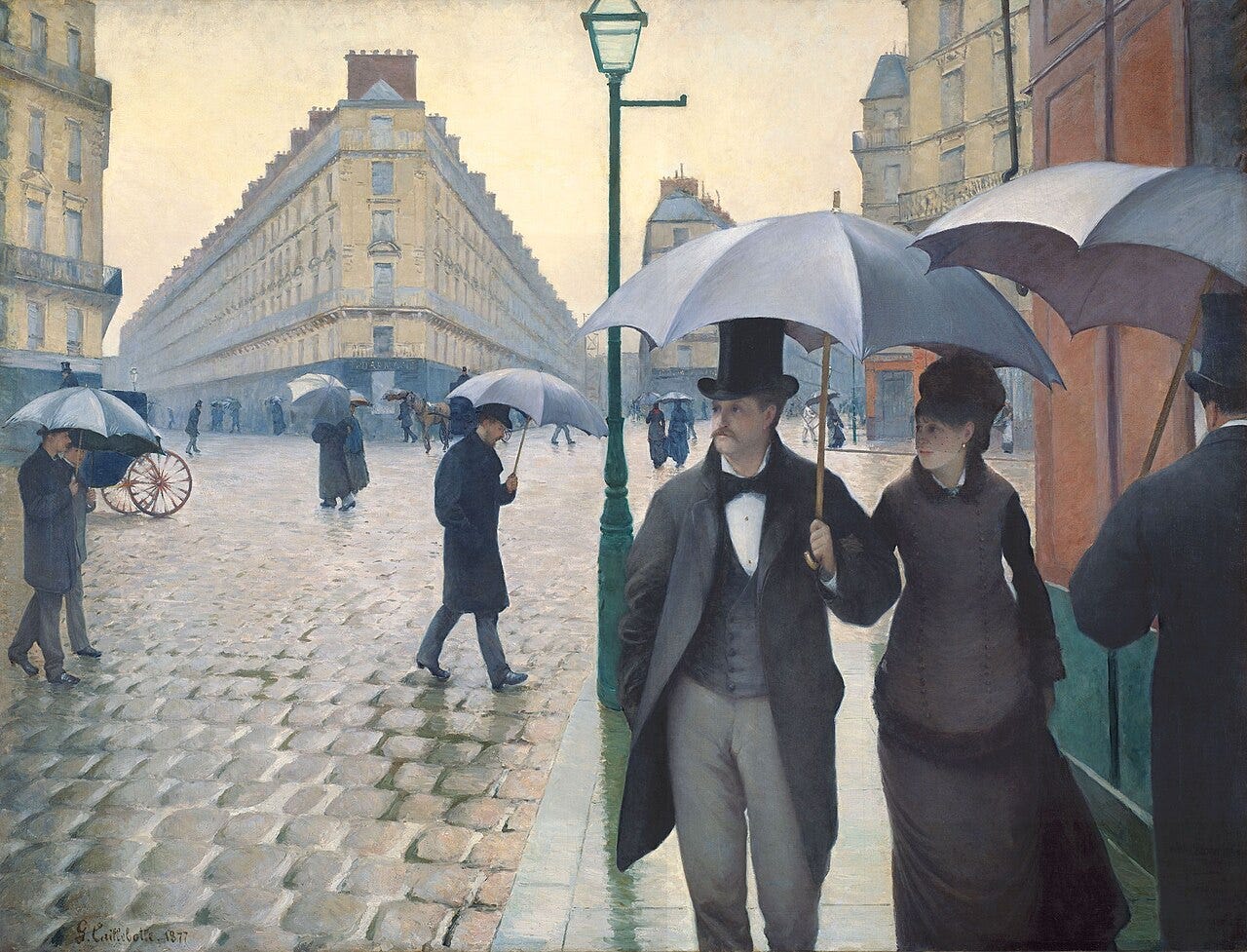
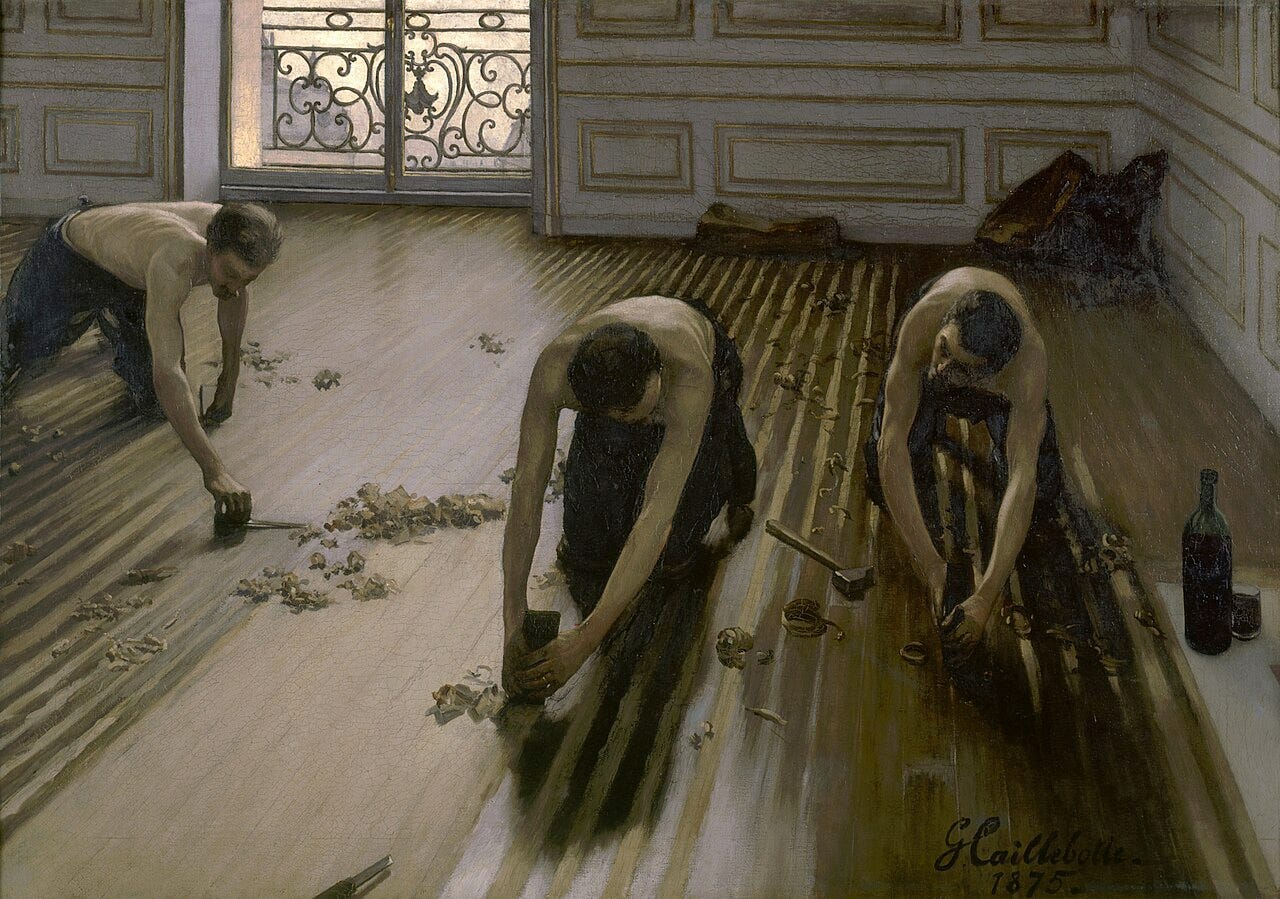
His Paris Street, Rainy Day and his men scraping a wooden floor look nothing like soft Monet light. They are sharp, urban and strange, and for decades the world forgot he ever painted at all.
He was rich enough not to need to sell. So he bought his friends' work instead, and left it to France, which is half the reason you can see Impressionism in a museum today.
Born: Paris, 1848, into wealth
Known for: modern city scenes, fearless perspective, Impressionist patronage
Died: Gennevilliers, France, 1894
More incredible painter stories
If Gustave Caillebotte pulled you in, you will love these too:


Gustave Caillebotte at a glance
1848. Born in Paris into textile money.
1875. The Floor Scrapers was rejected by the Salon jury.
1876. Joined the second Impressionist exhibition and started bankrolling the group.
1877. Paris Street, Rainy Day anchored the third Impressionist show.
1894. Died at 45. His bequest forced the French state to take Impressionism seriously.
A new way to see the city
Caillebotte trained as an engineer and lawyer before turning to paint, and it shows. He loved steep perspective, iron bridges, balconies and wet cobblestones, the hard machinery of the modern city the other Impressionists mostly avoided.
Paris Street, Rainy Day, with its huge umbrellas and tilting pavement, feels almost like a photograph taken a century too early. See the movement he belonged to in what is Impressionism.
The floor scrapers
In 1875 he painted three workmen on their knees stripping a parquet floor, bare backed, in a smart apartment. The official Salon rejected it as vulgar.
Today The Floor Scrapers is seen as one of the first paintings to treat urban manual labour with real dignity.
He painted what he actually saw around him, rooftops, rowers, his own garden, with an honesty that looked odd next to prettier Impressionist scenes.
The man who saved Impressionism
Here is the part most people miss. Caillebotte was the movement's banker and friend. He bought paintings from Monet, Renoir, Pissarro, Degas and Cezanne when almost nobody else would, paid Monet's rent, and funded the group exhibitions.
In his will he left dozens of these works to the French state. After a long fight, many entered the national collection, and they form the core of the Impressionist rooms now at the Musee d'Orsay.
Without him, the story of modern art looks very different.
You can explore works by Gustave Caillebotte in the collection of the Metropolitan Museum of Art.
Born into money he never had to chase
Gustave Caillebotte was born in Paris on 19 August 1848, into serious wealth. His father Martial ran a textile business that supplied bedding and fabric to the French army, and it made the family rich.
When the factory land was sold, apartment buildings went up on it, and several passed to his father. The rent from those buildings meant Gustave and his brothers never had to earn a living.
That single fact shapes everything about him. He painted because he wanted to, not because he needed to sell. He rarely put a price on his own canvases, and that is also why the public forgot him for decades. No sales meant no trail.
The law student who trained under Leon Bonnat
Caillebotte did the respectable thing first. He earned a law degree in 1868. He never practiced.
He trained in the studio of Leon Bonnat, a fashionable academic portraitist known for tight drawing and dark, precise finish. In 1873 he was admitted to the Ecole des Beaux Arts in Paris, the official art school of the French establishment.
Here is the twist. A man drilled in academic technique then threw in with the Impressionists, the rebels the Ecole looked down on.
That double training shows in his work. His edges are sharper and his perspective more exact than most of his Impressionist friends.
The soldier before the painter
Before any of the art, there was a war. Caillebotte finished his law degree, but before he could build a career the Franco Prussian War broke out in 1870.
He served in the French military as the conflict raged and the Second Empire collapsed. He left the army in 1871, by then sure he did not want to be a lawyer at all.
The war years sit quietly behind his calm city scenes. The Paris he later painted, with its wide new boulevards and iron bridges, was a capital rebuilding itself after defeat and the violence of the Commune.
He painted it as a man who had watched the old order fall.
Paris Street, Rainy Day and the camera that was not there
In 1877 Caillebotte unveiled Paris Street, Rainy Day at the third Impressionist exhibition. It now hangs at the Art Institute of Chicago.
It is enormous, close to seven feet tall and almost ten feet wide, with life size Parisians strolling under umbrellas in the latest fashions.
Look at the framing. The couple on the right is cut off at the edge, walking straight toward you, as if caught mid step.
The critic Paul Sebillot said in 1877 that the picture gave an idea of what photography would become. Scholars have long argued Caillebotte used photographs or an optical device to plot that plunging, cropped view.
He was painting a snapshot decades before the word existed.
The men at the window, backs turned to us
Some of his most quietly gripping pictures show a single man staring out at the city.
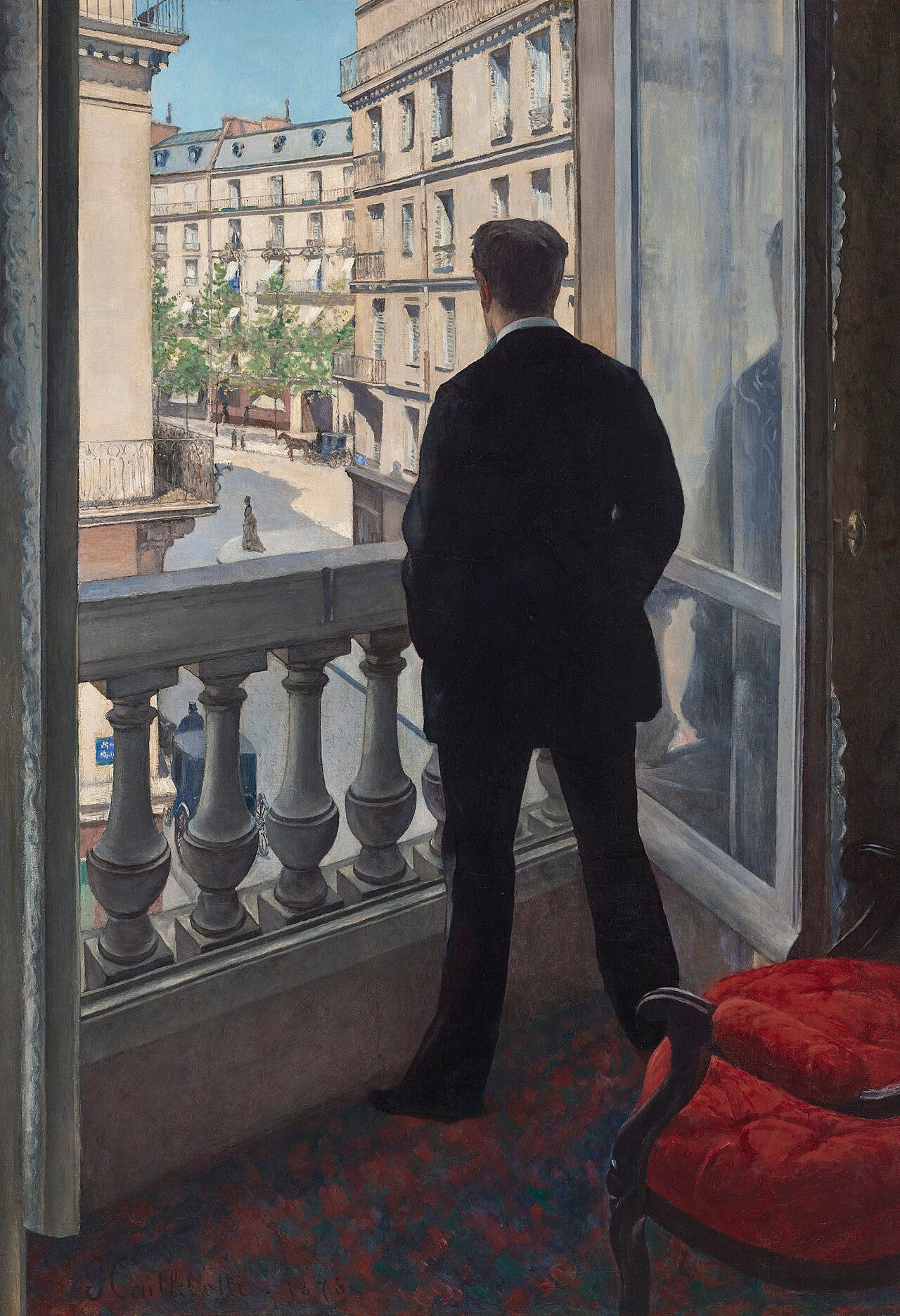
Young Man at His Window, painted in 1876 and now at the Getty Museum, shows his younger brother Rene standing at an open window of the family apartment, hands in pockets, feet planted apart.
Rene gazes down at a lone woman crossing the sunlit street, and the steep perspective pulls your eye straight to her.
He showed it at the second Impressionist exhibition in 1876, at age 27. It was his public debut. He returned to the idea in Man on a Balcony in 1880, another figure seen from behind, watching the boulevard.
These are paintings about looking. The watcher becomes the subject.
The rowers, the river, and a lifelong love of water
Caillebotte grew up partly at the family country estate at Yerres, southeast of Paris, where he learned to row on the river. Between 1877 and 1878 he painted a whole run of swimmers, fishermen and rowers there.
His boating pictures break from his friends. Where Renoir painted couples flirting in boats, Caillebotte painted men rowing hard as serious sport.
Skiffs, shown at the fourth Impressionist exhibition in 1879, catches flat bottom canoes cutting across the water.
Later he settled at Petit Gennevilliers on the Seine, where boats, the garden and the river filled his canvases. The wealthy amateur painted labor and effort, even at play. His rowers sweat.
The gardener who traded plants with Monet
In his final decade Caillebotte turned his Petit Gennevilliers home into a private paradise. He built a large garden and a greenhouse packed with fruits, vegetables, flowers and rare orchids, and he painted them.
He and Claude Monet shared this obsession. The two friends exchanged plants, seeds and letters about gardening, each tending a garden that fed his art. Monet had Giverny. Caillebotte had Petit Gennevilliers.
He was just as serious about boats. Caillebotte designed, built and raced yachts, and helped run the sport of competitive sailing.
So the man had a full second life away from the easel. Orchids in the greenhouse, sails on the Seine, and a paintbrush for both.
One of the greatest stamp collections in the world
Here is the fact almost nobody expects. Around 1878 Gustave and his brother Martial built a stamp collection together, and it became one of the most important of its era.
The brothers did real research, reconstructing original printing sheets of rare issues, including the Sydney View two pence stamp of Australia. Martial sold the collection in 1887 to a British collector named Thomas Tapling.
When Tapling died, his collection, the Caillebotte stamps included, passed to the British Library in London, where it remains one of the treasures of world philately.
So a founding figure of Impressionism is also, quietly, a landmark name in stamp collecting.
Dead at 45, forgotten for half a century
Caillebotte died suddenly on 21 February 1894, at Gennevilliers. He was only 45.
His art nearly vanished with him. Because he never needed the money, he had barely sold anything, and most of his paintings stayed with his family.
For decades they were not exhibited or reproduced. To the public he was known, if at all, as the collector who gave the Impressionists to France, not as a painter in his own right.
That changed in the 1970s, when scholars pulled his canvases back into the story of Impressionism. Now Paris Street, Rainy Day is a signature draw in Chicago, and the Getty and Orsay stage him as a headline artist.
The friend who saved everyone else was the last to be rediscovered.
The Gustave Caillebotte questions that keep coming up
What is Gustave Caillebotte famous for?
Modern Paris scenes like Paris Street, Rainy Day and The Floor Scrapers, and for his Impressionist collection.
Was he an Impressionist?
Yes, and also the movement's key patron. See what is en plein air.
How did he die?
Suddenly, of a stroke, in 1894, at just 45.
Was Caillebotte an Impressionist? Yes, though an unusual one. He exhibited with the group and funded it, but his crisp, almost photographic realism set him apart from the softer brushwork of Monet or Renoir.
More secrets to unlock


From dismissed amateur to solo show headliner
Long dismissed as a rich amateur, Caillebotte is now recognised as one of the most original eyes of his generation, and major museums are giving him solo shows. The collector finally has the spotlight he gave everyone else.
A final detail. He was also a champion sailor and boat designer, and bred prize chrysanthemums, painting both with the same precise attention he gave the streets of Paris.