
Gustave Doré, the French illustrator who lived from 1832 to 1883, was the greatest illustrator of the nineteenth century, the man who shaped how millions pictured Dante, Don Quixote and the Bible.
For me his shadowy scenes are the secret grandparent of cinema. Trained in Strasbourg and hired by a Paris newspaper at fifteen, he built an engraving workshop that turned his drawings for Dante, Milton and Perrault into thousands of plates, made him rich, and left him forever chasing the respect as a painter that the French art world refused to give.
Picture Dante hell, or Don Quixote tilting at windmills, or the parting of the Red Sea. The image in your head is very likely the one Gustave Doré drew.
He was the greatest illustrator of the nineteenth century, the man who shaped how millions pictured the great books, and his shadowy visions still echo through cinema today.
More incredible painter stories
If Gustave Doré pulled you in, you will love these too:


Yet for all that fame, Doré spent his life desperate to be taken seriously as a painter instead, a wish the art world never quite granted him.
Gustave Doré at a glance
1832. Born in Strasbourg, self taught with a pencil from childhood.
1847. Hired at fifteen by a Paris paper, soon the best paid illustrator in France.
1861. His illustrated Inferno gave Hell its lasting face.
1872. London: A Pilgrimage, the dark city in 180 engravings.
1883. Died in Paris at 51, leaving roughly ten thousand images.
The man who illustrated the great books
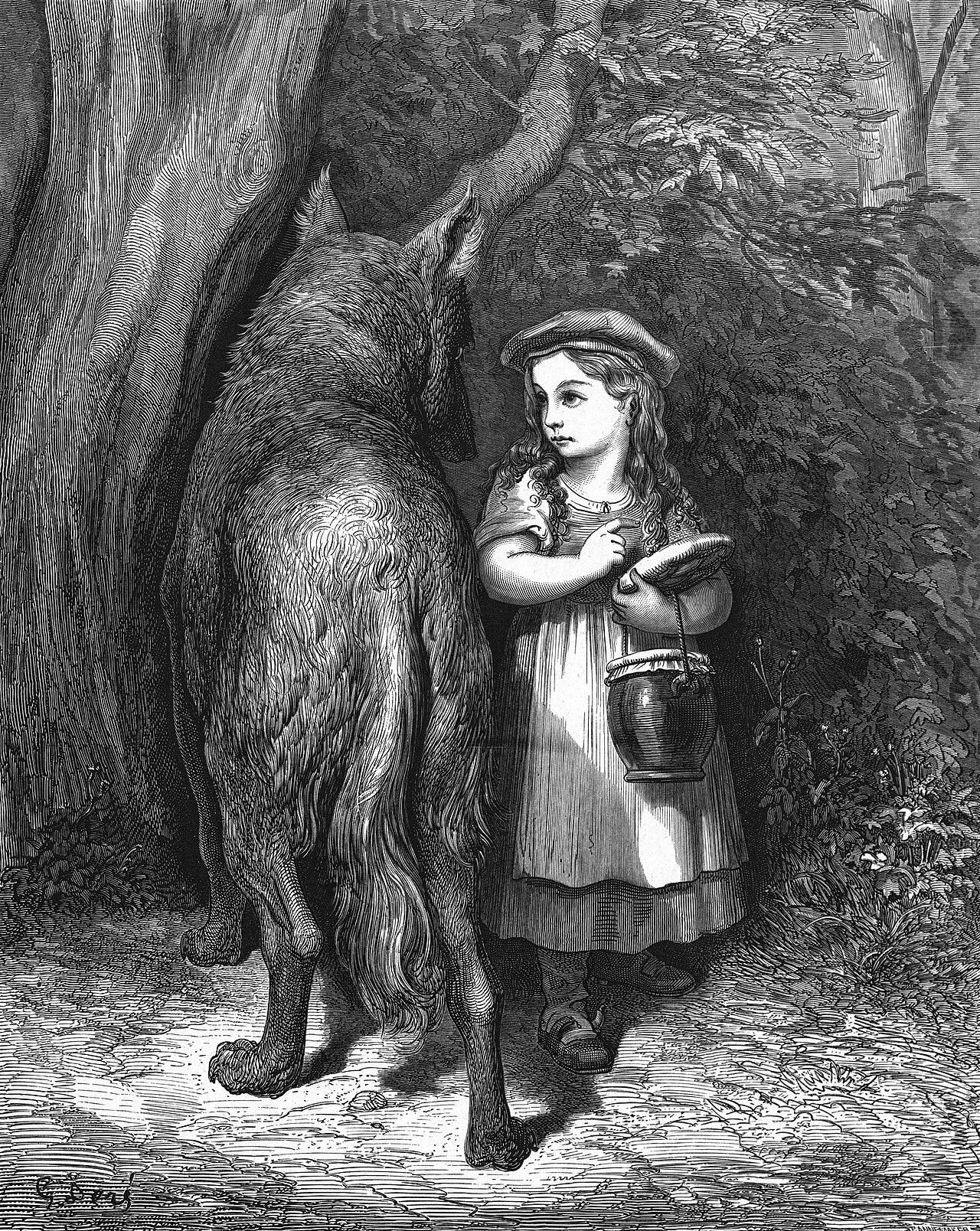
Doré illustrated a staggering library: Dante Divine Comedy, Don Quixote, the Bible, Milton Paradise Lost, the fairy tales of Perrault, the poems of Poe. His images became the standard pictures of those stories.
His scenes are theatrical and full of deep shadow, vast landscapes with tiny figures and light breaking through gloom, close in spirit to romanticism.
How the images were made
Doré drew his designs onto woodblocks, but he did not cut them himself. A large team of skilled engravers translated his drawings into printable blocks, an industrial workshop turning out images at huge speed.
It made him rich and prolific, a master of engraving as a business, producing thousands of plates across his career.
The painter nobody wanted
Doré longed to be respected as a serious painter, not just an illustrator. He made enormous canvases and even sculpture, and in 1869 opened his own Doré Gallery in New Bond Street, London, which drew paying crowds for decades.
The French art establishment never really accepted him. The label of illustrator stuck for life, a frustration that shadowed his fame.
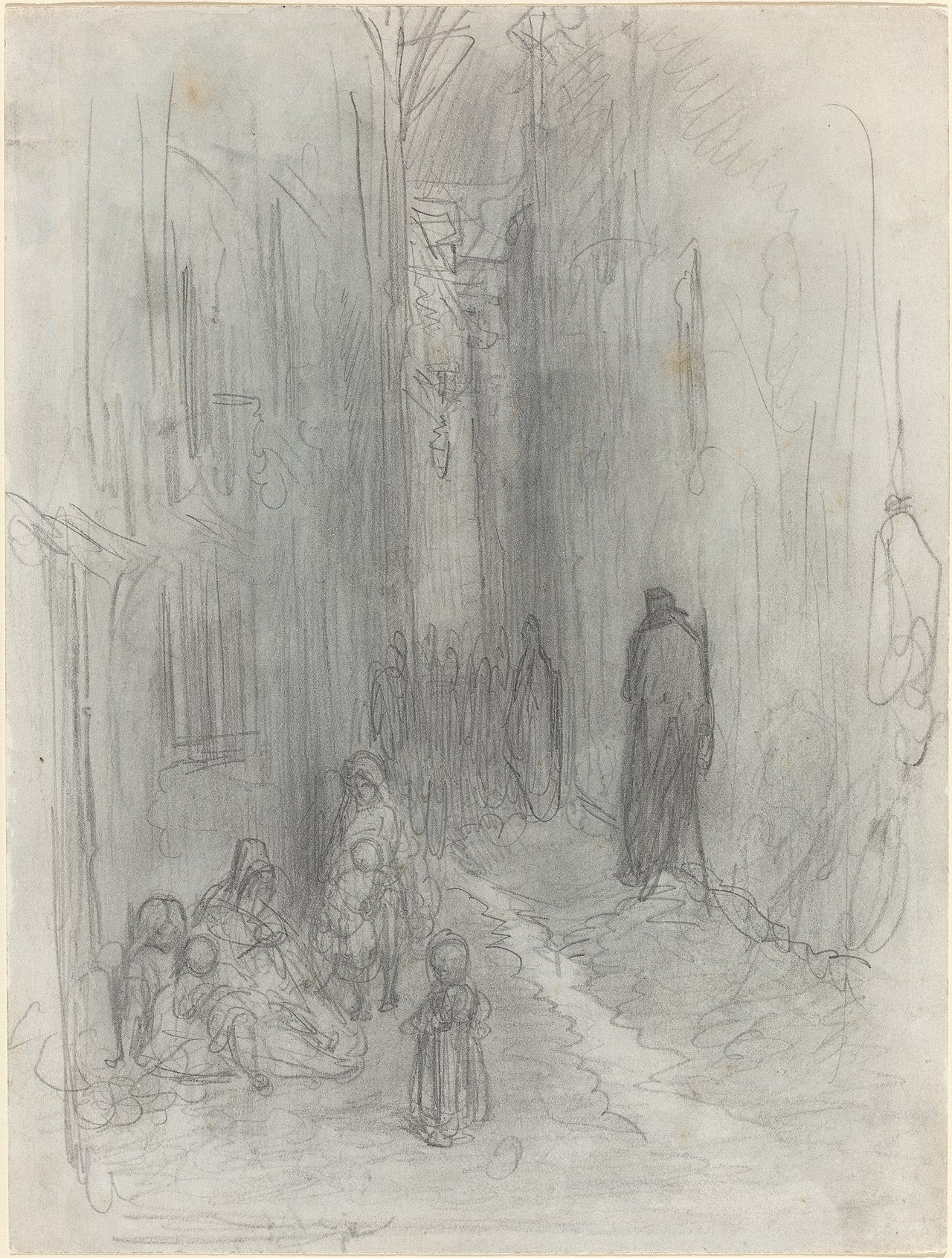
London and the dark city
One of his most ambitious projects was London, a set of engravings of the Victorian city. Alongside its grand sights he drew the slums, the crowds and the crushing poverty of the poor.
Criticised at the time for dwelling on misery, these bleak scenes are now valued as a haunting record of the world largest city at its harshest.
Famous at fifteen
Doré was a child prodigy, born in Strasbourg in 1832. A Paris newspaper hired him at fifteen, and by his twenties he was the most famous illustrator in the world.
Where his prints and canvases survive
One of the Met holdings is his drawing Le Christ sortant du tombeau.
His prints are held in collections worldwide, including a deep group at the Metropolitan Museum of Art. His large paintings are mostly in France, at the Musée d'Orsay in Paris and the museums of Strasbourg.
The boy from Strasbourg who taught himself
Gustave Doré was born in Strasbourg on 6 January 1832, in the Alsace region near the German border. He drew almost before he could write.
Family accounts say he was making caricatures by the age of five. In 1841, aged eight, he staged a mock procession through Strasbourg with his schoolmates, perched on a decorated cart and handing finished drawings to the crowd.
He never had real academic training. He taught himself by copying the popular picture albums of Grandville and the Swiss storyteller Rodolphe Topffer.
He was already so good that when he reached Paris in the autumn of 1847, publishers were copying his childhood work. He is one of art's clearest self taught prodigies.
The book that gave Hell its face
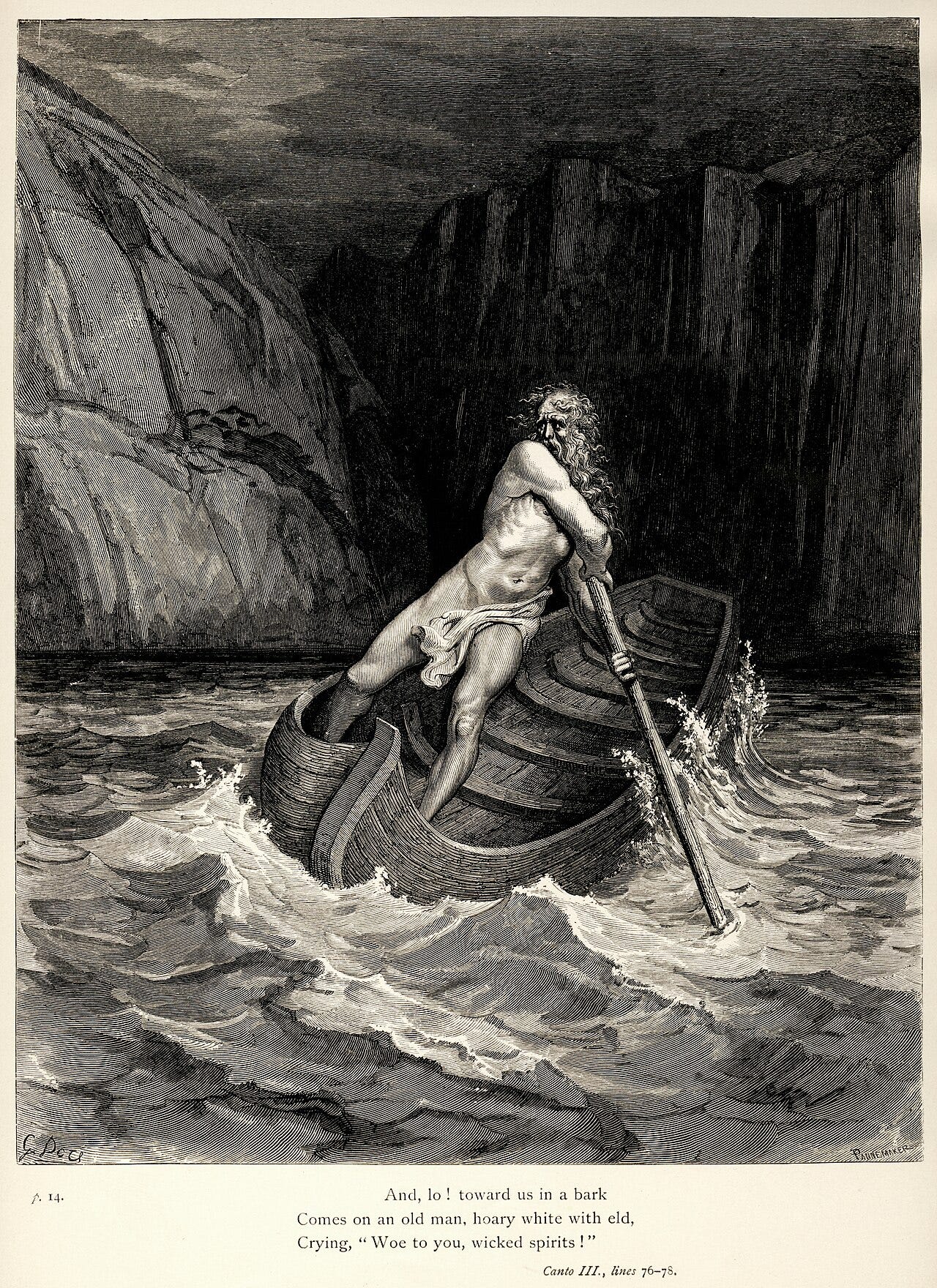
The book that pushed him to the front of the Paris art world arrived in 1861. Doré illustrated Dante's Inferno, the journey through Hell from the Divine Comedy.
His dark, crowded scenes of the damned spread across Europe and the United States. In the same year he carried the theme onto canvas, showing a large painting, Dante and Virgil in the ninth circle of Hell, at the Salon in Paris.
That was a clear bid to be seen as a serious painter, not only an illustrator. The Inferno plates became some of the most copied images of the century.
For countless readers since, Hell simply looks the way Doré drew it. That one book reshaped how the poem is pictured to this day.
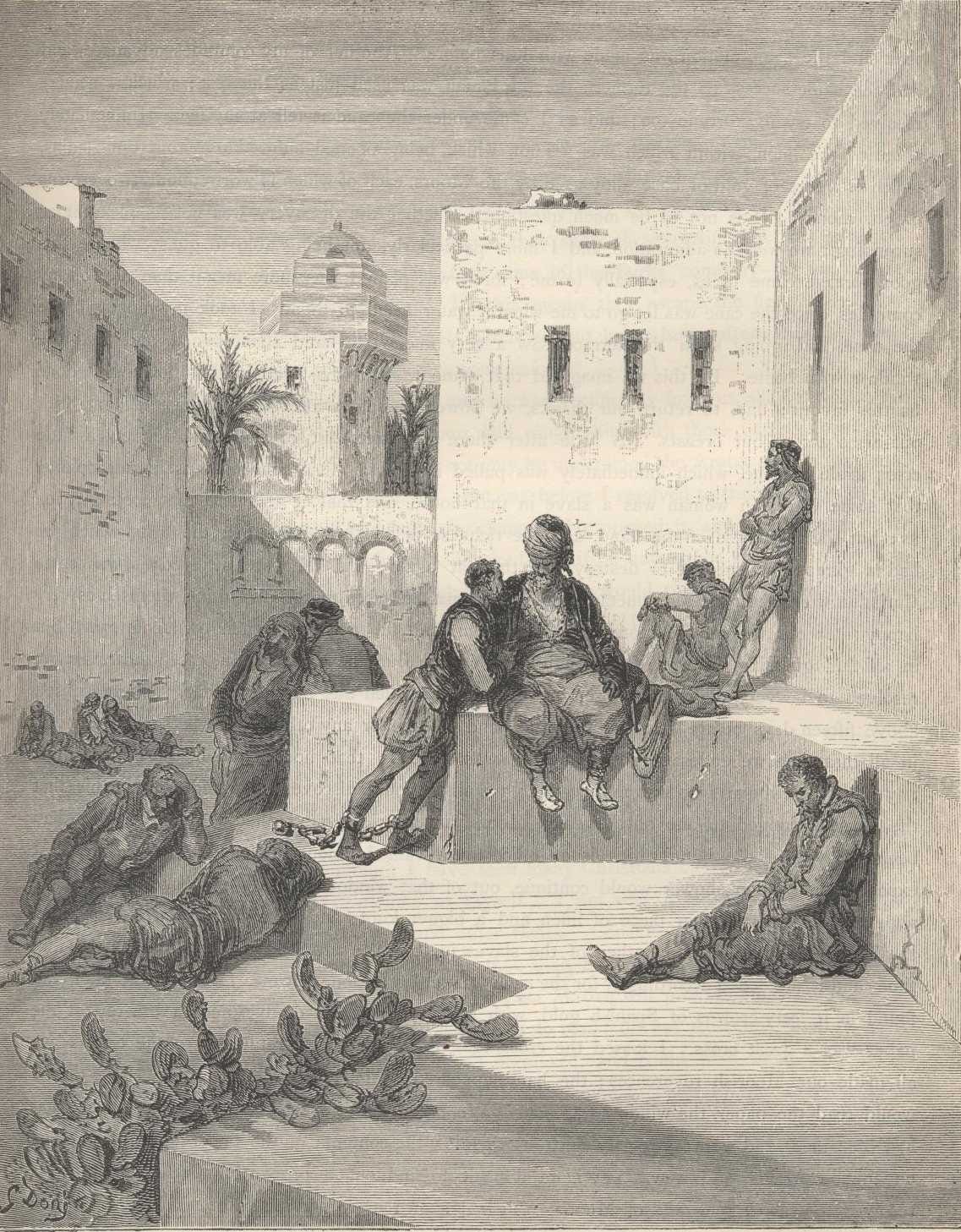
On the road with Don Quixote
To illustrate Cervantes' Don Quixote, Doré went to Spain to see the country for himself. He first travelled there in 1855 with the writer Theophile Gautier.
In 1861 he returned with Baron Jean Charles Davillier, sketching villages, beggars and mountain roads along the way. He wanted local flavour, so his knight and his dusty fields would feel real.
The illustrated Don Quixote appeared in 1863 to wide praise. Even the young Emile Zola, who had little patience for popular art, said Doré had almost rewritten the book.
Most people still picture the tall, gaunt knight and his round squire exactly as Doré drew them, and his images also shaped how France imagined Spain itself.
The giant Bible that some wanted banned
In 1866 Doré published his illustrated Holy Bible, a giant folio that became a household object across Christian Europe and America.
It arrived while Ernest Renan's Life of Jesus of 1863 was still causing uproar for treating Jesus as a historical man. Doré's Bible went the other way, filling scripture with vast crowds, angels and floods of light.
Never had the Bible been pictured so lavishly, and not everyone approved.
The opening image of God standing on a cloud, creating the world, was shown in the window of a London bookshop. After public complaints, it had to be taken down.
The book still made Doré famous in every home that owned one, and his scenes went on to feed church art and, later, cinema.
The gallery on New Bond Street
Doré made a fortune. In 1867 and 1868 he helped found the Doré Gallery on New Bond Street in London, a permanent room to show his enormous religious canvases.
British crowds paid to file past them for years. The largest, Christ Leaving the Praetorium, was built on a colossal scale and packed with figures.
By the 1860s Doré sat at the centre of European life. He met Napoleon III and Alexandre Dumas, mixed with the composers Rossini and Wagner, and threw lively parties.
British readers even grumbled that his King Arthur, drawn for Tennyson's Idylls of the King, did not look English enough. The Paris critics still refused to rank him with the great painters.
The paying public, in London especially, did not care.
The sculptor nobody expected
Doré took up sculpture late, in 1877, again with no training. His first Salon sculpture, Fate and Love, showed he could model as well as he could draw.
His largest effort was The Poem of the Vine, a bronze vase almost touching the ceiling, weighing close to three tonnes. At the time it was the biggest bronze ever cast. It crawls with rats, snakes, satyrs and grape pressing putti.
His final work was the monument to the novelist Alexandre Dumas, unveiled on Place Malesherbes in Paris on 4 November 1883, months after Doré's own death.
D'Artagnan from The Three Musketeers stands guard at its base. Even so, France would not honour him as a sculptor, and the recognition he wanted most stayed just out of reach.
His mother, and the grief that never lifted
The steadiest bond in Doré's life was with his mother. He lived with her for most of his adult life and never married.
Her death in 1879 hit him hard. Friends said he was never the same, slipping into long spells of melancholy in his final years. In that mood he turned to darker, more unsettling subjects.
A reported romance with the actress Sarah Bernhardt is often mentioned, though it was never confirmed and led to no marriage. Doré poured his affection instead into his work and a wide circle of famous friends.
The loss of his mother runs quietly under the shadowed, mournful tone of his last paintings and sculptures. He outlived her by only four years.
The mountaineer with a paintbrush
Away from the studio, Doré was a tireless mountaineer. He hiked the Vosges, the Savoy Alps, the Pyrenees, Switzerland and Scotland, and painted what he saw.
He became one of France's leading mountain landscape painters of the century. On a trip to the Scottish Highlands in 1873, around Braemar and Balmoral, he began working seriously in watercolour.
He was good enough to join the Society of French Watercolourists, exhibiting with them from 1879 to 1882. Over time he shrank the human figures in these scenes until the peaks, storms and dusk skies stood alone.
These quiet landscapes surprise people who know Doré only from Hell and the London slums. The same hand that drew demons also loved a raw sky after rain.
A short life, ten thousand pictures
Doré died in Paris on 23 January 1883, of a heart attack. He was 51.
He had worked without pause for more than thirty years and left behind some ten thousand illustrations. His last major book, illustrations for Edgar Allan Poe's poem The Raven, about a man mourning his lost love, was published in England and America in 1883 and 1884.
Doré did not live to see it in print, and the Dumas monument he had just finished was unveiled that same November. He spent his life chasing respect as a painter and a sculptor and never quite caught it.
Yet his drawn worlds outlasted the men who dismissed him. More people have seen Doré's Hell than have ever read Dante.
The Gustave Doré questions that keep coming up
What is Gustave Doré famous for? The most reproduced illustrations of the nineteenth century: his Dante, Don Quixote, Milton, and the 1866 Bible shaped how the West pictures heaven, hell, and everything between.
How fast did Doré work? Freakishly: he published his first illustrated album at 15, produced over 10,000 engravings, and drew directly on the woodblock without preparatory studies.
What is London: A Pilgrimage? His 1872 report on the city with Blanchard Jerrold, whose views of slums and docks influenced everyone from Van Gogh, who collected them, to film noir.
Why did Doré crave recognition as a painter? Paris critics filed him as an illustrator and mocked his salon canvases, so London built him his own gallery, and he sculpted, at the end, the monument to Dumas in Paris.
Did Doré influence cinema? Directly: Méliès, DeMille, and the makers of King Kong and Lord of the Rings lifted compositions straight from his plates. Film's idea of the epic is Doré's.
Where can I see Doré? The Musée d'art moderne in Strasbourg, his birthplace, holds the major collection; the engravings live in every serious print room and most old Bibles.
What is he known for? His dramatic book illustrations, especially for Dante, Don Quixote and the Bible.
Did he carve his own engravings? No, he drew the designs and a team of engravers cut the blocks.
Did he paint too? Yes, he made large paintings and sculpture, hoping for a recognition he never fully got.
When did he die? In 1883, in Paris, aged 51.
Why did the art world never accept him? France dismissed him as a mere illustrator, so his large paintings and sculpture were snubbed by critics his whole life, despite the paying crowds at his own London gallery.
Where was Gustave Doré born and when did he die? He was born in Strasbourg, in the Alsace region of France, on 6 January 1832. He died in Paris on 23 January 1883, of a heart attack, at the age of 51. He was largely self taught and never married, living for most of his life with his mother, who died in 1879.
What is Gustave Doré most famous for? He is best known as the illustrator of the great books, above all Dante's Inferno of 1861, Cervantes' Don Quixote of 1863, and a giant illustrated Bible of 1866. He also painted and sculpted, including The Poem of the Vine and the Alexandre Dumas monument, yet his illustrations are what lasted.
More secrets to unlock


Why his shadows still flicker
Doré wanted to be a painter and became something rarer: the artist who decided how whole generations pictured their favourite books.
Film makers from the silent era onward borrowed his lighting and scale, so his vision lives on in the movies, long after the paintings he cared about were forgotten.