
Horace Pippin, 1888 to 1946, was a self taught African American painter and World War One veteran. A sniper's bullet crippled his right arm, so he painted by guiding his right hand with his left, and became one of America's most admired self taught artists.
His war scenes, his John Brown series, and blunt paintings on race now hang in major American museums, from the Met to Philadelphia.
Pippin at a glance:
Born in West Chester, Pennsylvania, in 1888.
Fought with the Harlem Hellfighters; a sniper crippled his right arm in 1918.
Painted by steering his right wrist with his left hand.
Discovered in a shoemaker's shop window in 1937.
In MoMA's Masters of Popular Painting within a year of discovery.
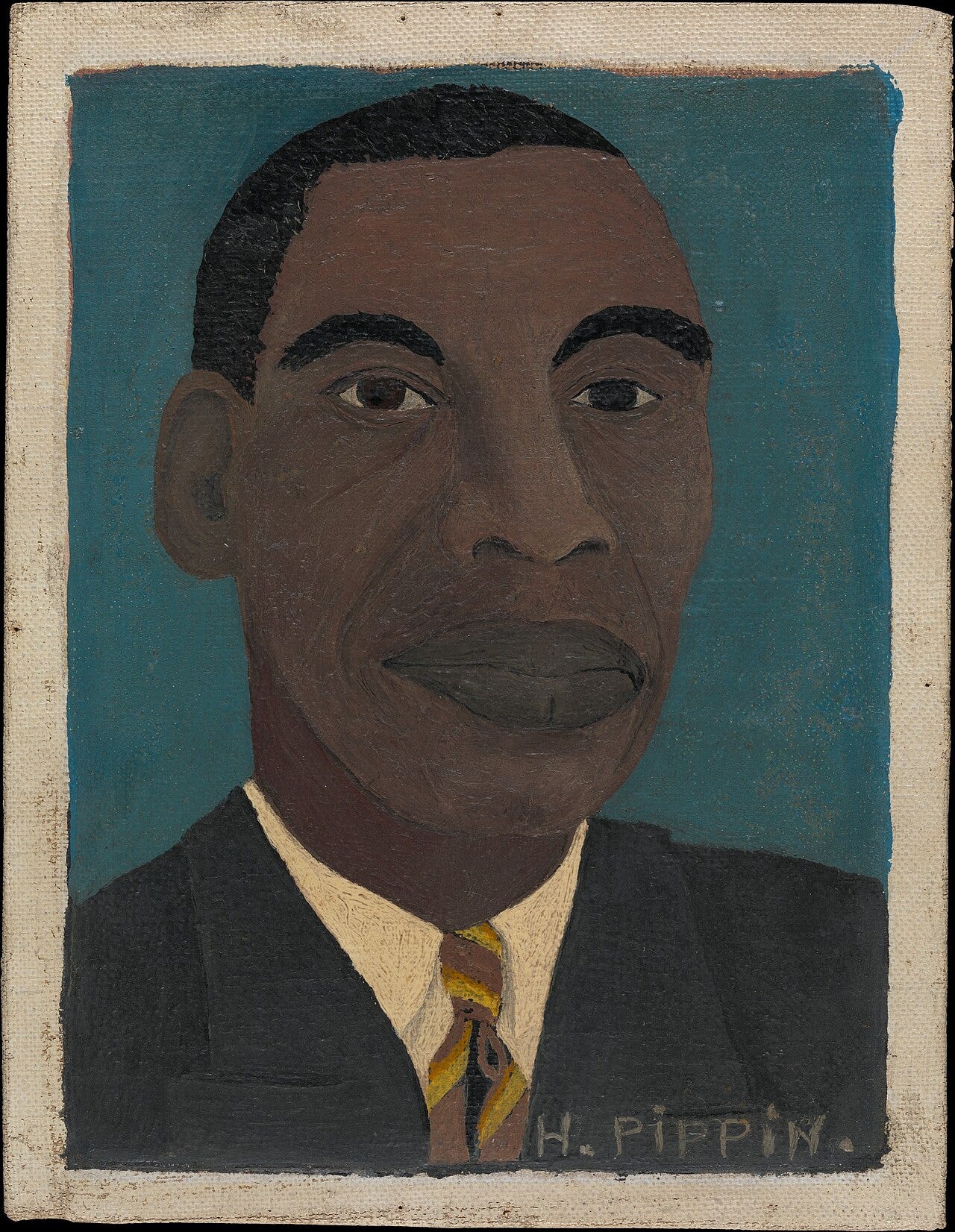
He had no training and a wounded body. He still made some of the most honest American paintings of his century.
More incredible painter stories
If Horace Pippin pulled you in, you will love these too:
A boy between West Chester and Goshen
Horace Pippin was born on 22 February 1888 in West Chester, Pennsylvania. His family moved north while he was young, and he grew up in Goshen, New York.
Money was tight and his schooling was short. He left the classroom in his teens to work, taking jobs as a hotel porter, a farm hand, a moulder and a dealer in used clothing. Drawing stayed with him through all of it.
As a boy he reportedly entered a mail in advertising contest for an art supply company and won a set of crayons and paints. By his own later telling, it was one of his first sets of real materials.
Discovered at forty nine
For years Pippin painted in West Chester with no audience. In 1937 the illustrator N C Wyeth and the critic Christian Brinton saw his work in a local shop window.
Within a year his paintings hung at the Museum of Modern Art in the 1938 show Masters of Popular Painting. Recognition came fast and late.
The collectors who lifted him
The Philadelphia dealer Robert Carlen gave him a solo show in 1940. The famous collector Albert Barnes invited him to study at the Barnes Foundation, though Pippin soon left, wary of being taught out of his own voice.
In New York, the dealer Edith Halpert took him on at her Downtown Gallery. Within a few years a poor veteran had become a name the art world fought to show.
More than a primitive
Critics filed Pippin under naive or primitive art. The label flattens him.
His John Brown series faces American slavery head on. Mr Prejudice, from 1943, shows a divided nation and the racism Black soldiers met even in wartime work.
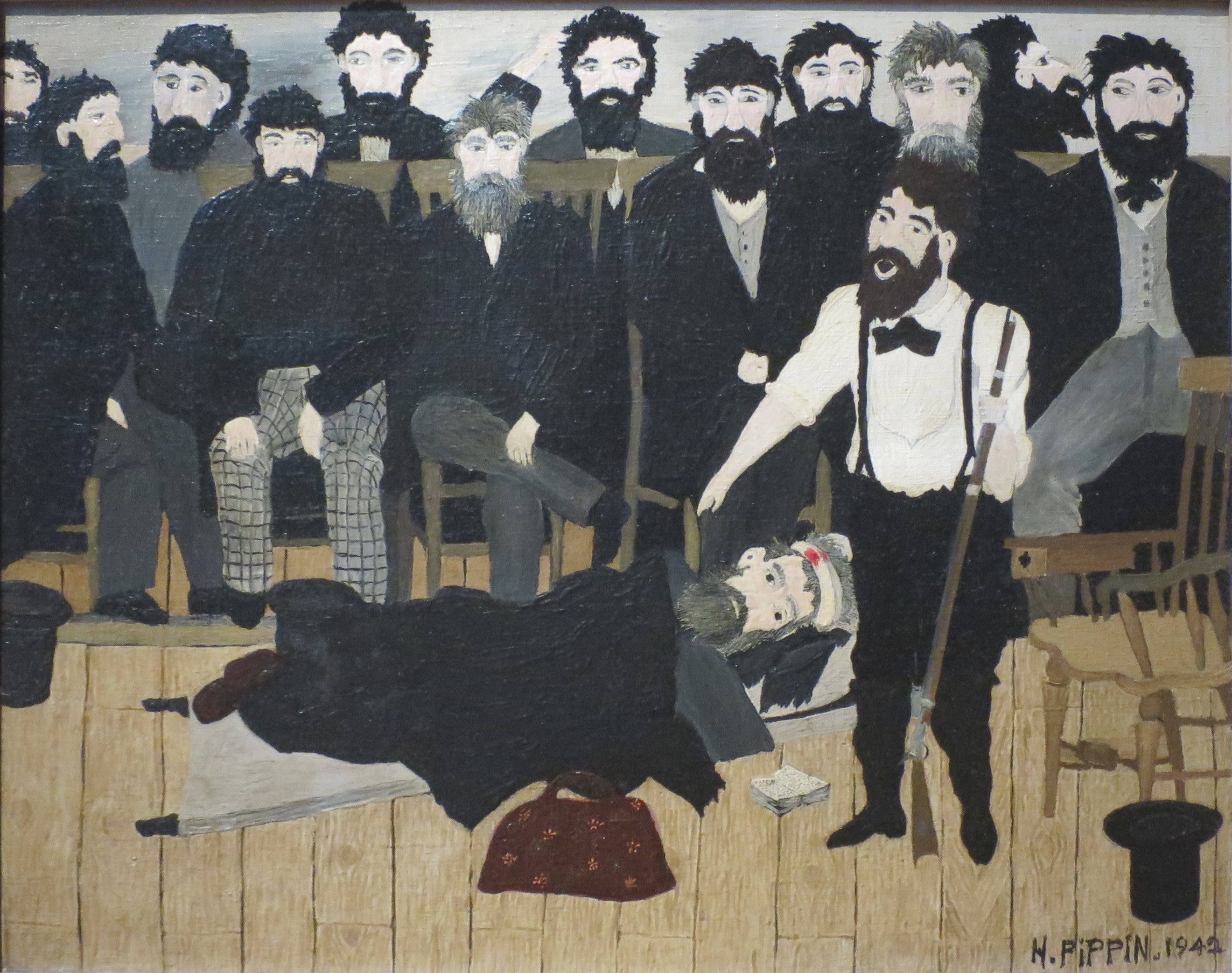
This is history painting with a clear point of view, closer in spirit to social realism than to folk decoration. Grandma Moses, another self-taught American painter of the same decades, gets the same treatment in the Grandma Moses complete story.
The war, John Brown, and Mr Prejudice
First, The End of the War: Starting Home, his slow first greatest painting, where soldiers crawl home through smoke.
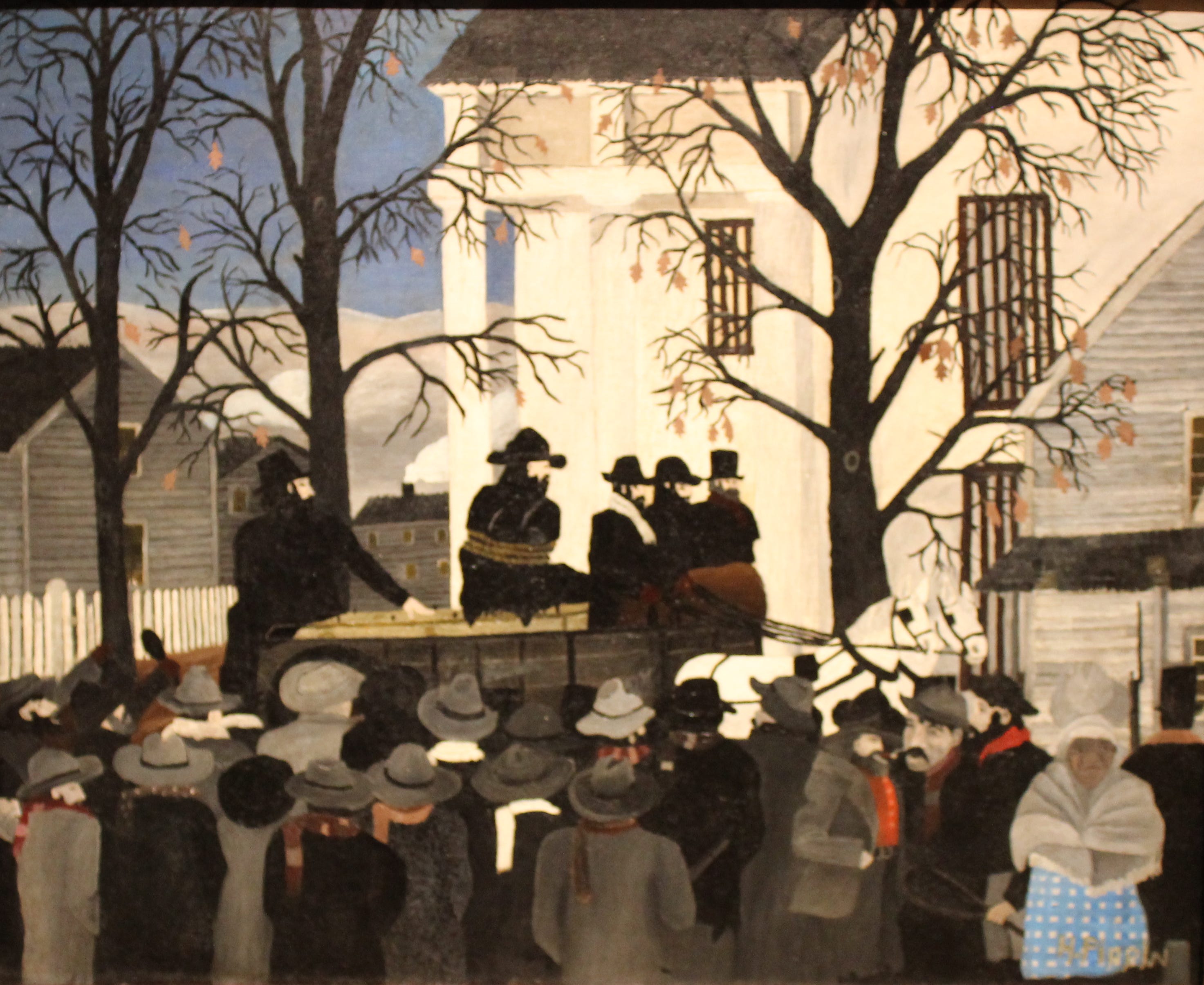
Second, John Brown Going to His Hanging, in which a Black woman at the front turns to face the viewer, the only witness who meets our eyes.
Third, Mr Prejudice of 1943, a blunt diagram of a country split by race even as it fought a war abroad.
From West Chester to the Met
The Philadelphia Museum of Art holds key Pippin paintings. The Smithsonian American Art Museum shows more of his work in Washington.
You can explore works by Horace Pippin in the collection of the Metropolitan Museum of Art.
Company K and the war in France
In 1917 Pippin enlisted and served in the First World War with the 369th Infantry Regiment, the African American unit later known as the Harlem Hellfighters. He was a member of Company K and saw front line combat in France.
He carried notebooks through the war and filled them with drawings and written accounts of what he witnessed. Parts of those illustrated war diaries survive and are held in museum collections, including the Smithsonian.
Pippin later said the war gave him the pictures he most needed to paint. The trenches became the subject he returned to again and again.
Burning images into wood
In the autumn of 1918 a sniper's bullet struck his right arm and shoulder. The wound left the arm partly paralyzed and cost him much of its normal use. For a man whose gift lived in his drawing hand, it could have ended the work entirely.
Pippin found his own way back. He first worked with a hot poker, burning designs into wood panels, a technique known as pyrography, because it let him press and guide the tool slowly.
When he turned to oil paint, he steadied his weakened right hand by supporting and guiding it with his left arm. Moving his right wrist along his left forearm, he pushed the brush across the surface inch by inch.
Three years on a single panel
His first large oil is usually given as The End of the War: Starting Home, a battle scene he labored over for roughly three years around 1930 to 1933. The painting now belongs to the Philadelphia Museum of Art.
He built the surface up in thick, worked layers, applied so heavily in places that the paint stands in relief. He carved the frame with tanks, grenades and other weapons of the war.
Some accounts add that he reinforced the crusted surface with burnt match sticks. The exact materials are best treated with care, but the sheer physical effort behind the panel is not in doubt.
Scenes of home and Black daily life
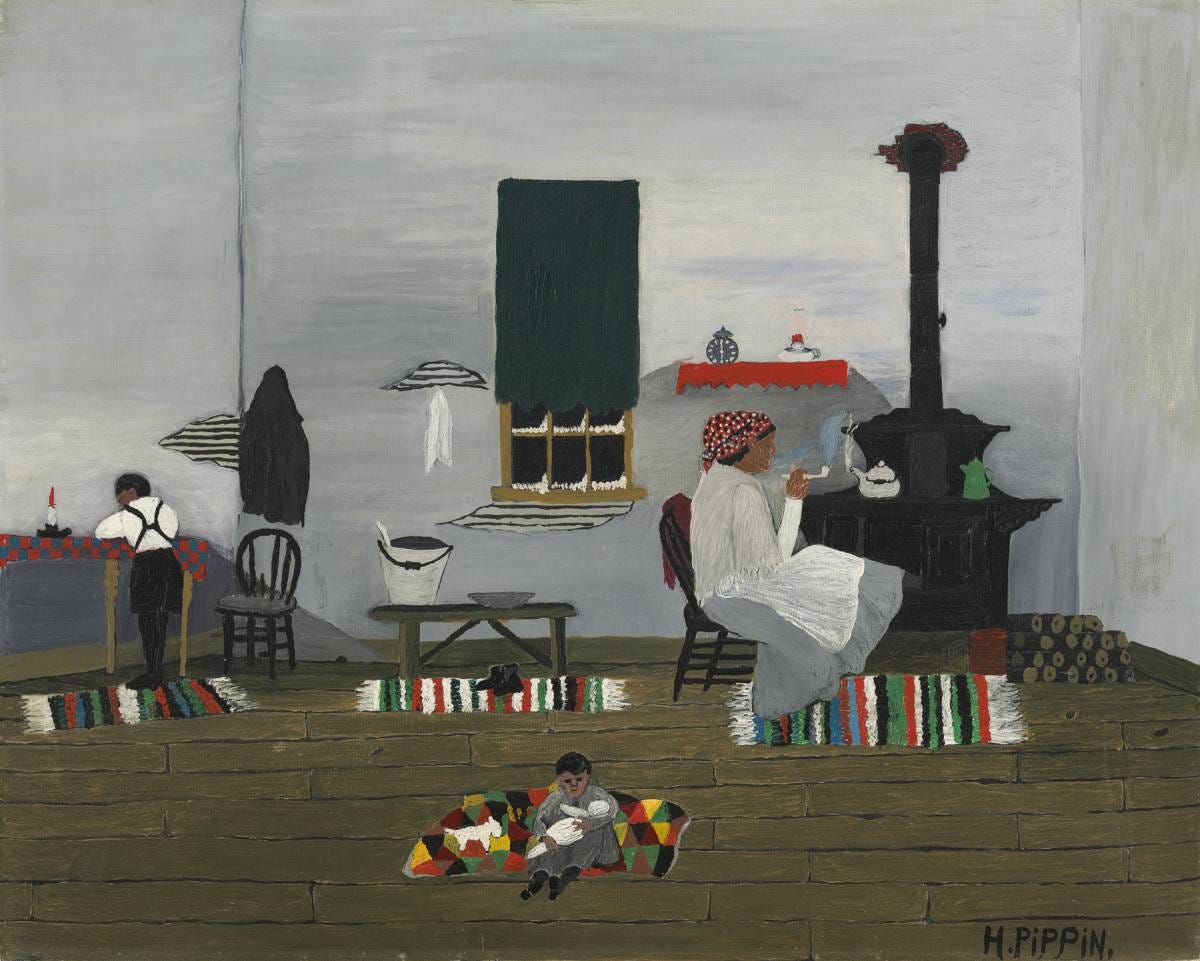
Away from the war, Pippin painted the world he knew best. Quiet interiors fill his work, with families gathered at a fireside, a mother at her chores, and the everyday labor of a Pennsylvania town.
He rendered these rooms with plain, careful shapes and a slow, deliberate surface. Nothing is idealized. The dignity comes from the ordinary attention he gives each object and each figure.
These domestic pictures are among the reasons he is now seen as one of the most important American painters of his generation, not a curiosity but a record of a life and a community.
The peaceable mountain, and a quiet end
Late in his short career Pippin turned to scripture. Between about 1944 and 1946 he made the Holy Mountain series, drawing on the prophet Isaiah's vision of a peaceable kingdom where the lion lies down with the lamb.
The paintings are gentle on the surface and heavy underneath. Behind the grazing animals and calm figures he set small dark scenes of war and lynching, so that peace and violence share the same canvas.
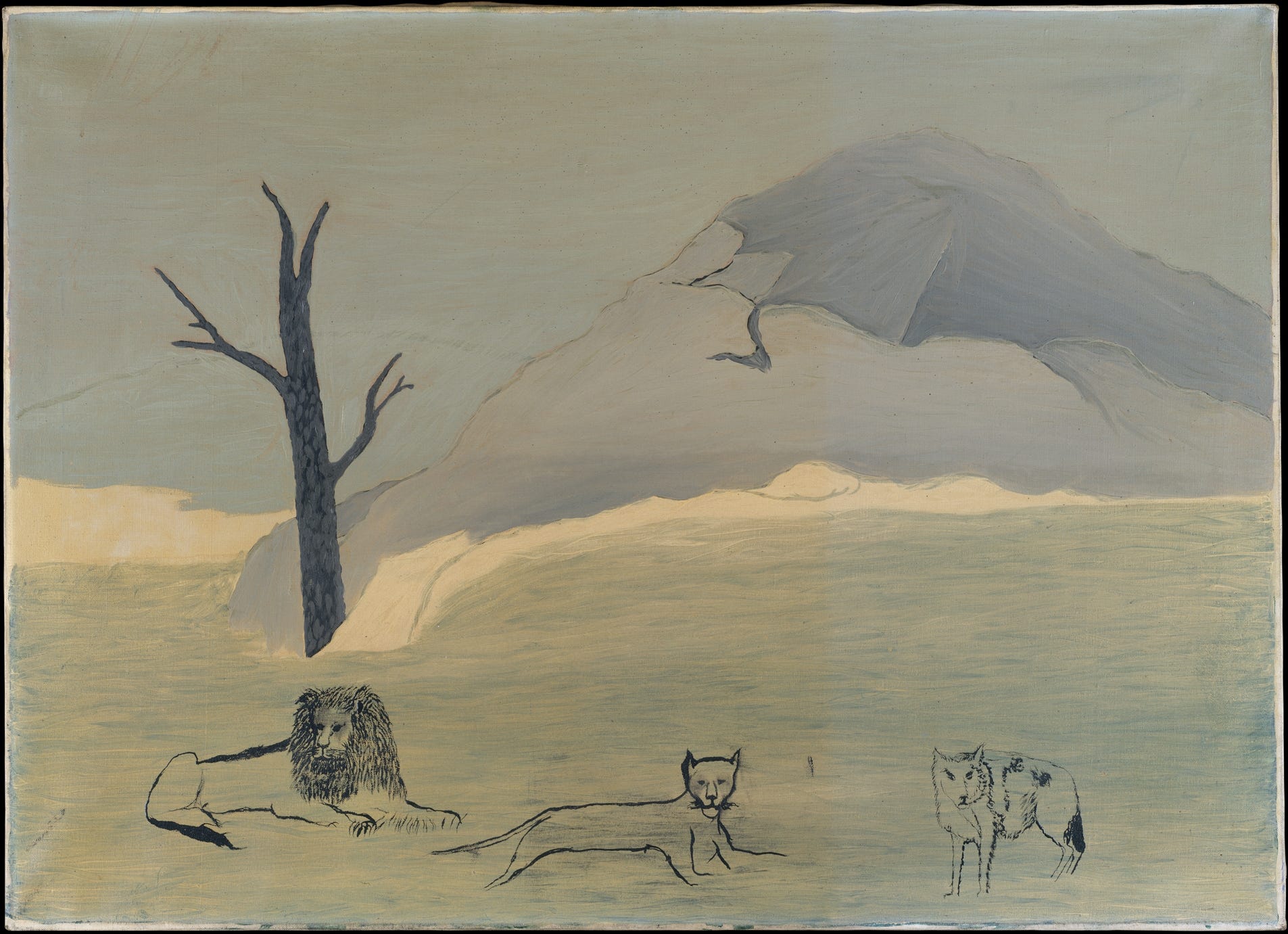
Pippin died in West Chester on 6 July 1946, at the age of 58. In under a decade of serious work he had gone from an unknown veteran to a painter whose pictures now hang in major American museums.
A picture built from memory
Pippin did not work from models or from life. He composed a painting in his head first, holding the whole scene in mind, and only then set it down.
He once described how he saw the finished picture before he began, then worked slowly to match what he had already imagined. That inner planning is one reason his surfaces feel so settled and deliberate.
It also explains the strange calm of even his violent subjects. Every figure has been placed and weighed in advance, nothing left to chance on the canvas itself.
The regiment and its honors
Pippin served in a unit that earned lasting fame. The 369th Infantry, the Harlem Hellfighters, spent more time in front line combat than almost any other American regiment of the war.
For their courage the French army decorated the unit, and individual soldiers received the Croix de Guerre. Pippin came home a wounded veteran of one of the most honored formations of the conflict.
That pride, and that pain, ran straight into his art. The war he had survived became the subject he could never fully set down.
The burnt-wood years
Before canvas, Pippin drew with a hot poker, burning lines into wood panels because his weak arm could manage the leaning gesture.
The burnt-wood panels trained the compositions: strong contours, flat planes, no correction possible. When he moved to oil around 1928, the discipline came with him.
Three years for a first painting
His first canvas, The End of the War: Starting Home, took three years of layering; the paint stands in ridges thick enough to cast shadows.
He worked memories out slowly, he said, war first. The heavy impasto of the early war pictures is literal: the surface carries the weight of what it shows.
The quiet rooms nobody else painted
Between the war canvases and the Holy Mountains sit his domestic interiors: Black family life by stove light, Saturday baths, Sunday mornings.
Almost nobody was painting those rooms in the 1940s. Museums now treat them as the center of his achievement, history painted at kitchen scale.
The Horace Pippin questions that keep coming up
Who was Horace Pippin? A self-taught African American painter from West Chester, Pennsylvania, who began painting seriously in his forties and became nationally famous within a decade.
How did the war shape Pippin's art? He served with the Harlem Hellfighters in the trenches, where a sniper's bullet crippled his right arm in 1918. He painted by guiding his right wrist with his left hand, and his war memories fill his first canvases.
What is John Brown Going to His Hanging? His 1942 history painting of the abolitionist's last ride, with a Black woman, said to recall his own grandmother, turning her back on the scene. It is at the Pennsylvania Academy.
How was Pippin discovered? The critic Christian Brinton and N.C. Wyeth saw his work in a shoemaker's window in 1937; within a year he was in MoMA's Masters of Popular Painting.
What did Pippin paint besides war? Domestic interiors, biblical scenes, portraits, and the Holy Mountain series, peaceable kingdoms painted while the Second World War raged.
Where can I see Pippin? The Phillips Collection, the Pennsylvania Academy and the Philadelphia Museum, the Barnes Foundation, and the Hirshhorn.
How long did Pippin paint before being discovered? About a decade of burnt-wood panels and slow canvases before Christian Brinton and N.C. Wyeth saw his work in a West Chester shop window in 1937.
What are the Holy Mountains? His peaceable-kingdom series painted during the Second World War, Edward Hicks's vision restated by a wounded veteran while the news ran to slaughter.
Who was Horace Pippin? A self taught African American painter and World War One veteran, born in 1888.
What media did he use? Burnt wood panels at first, then oil paint on canvas.
What is he most known for? War scenes, the John Brown series, and Mr Prejudice on American racism.
Why is he called a primitive painter? Because he was self taught, though his work is deliberate and pointed.
When did he die? In 1946, in West Chester, Pennsylvania, aged 58.
Was Horace Pippin really self taught? Yes. Museum records consistently describe him as largely self taught. He had no academy training and worked out his own methods, first burning images into wood and then painting in oil after his war injury.
How did his war wound affect the way he painted? A sniper's bullet in 1918 partly paralyzed his right arm. To paint, he guided and supported his right hand with his left arm, moving the brush slowly across the canvas, a method he used for the rest of his career.
More secrets to unlock
One last fact
Pippin died suddenly in July 1946, at 58, in West Chester, Pennsylvania, the town where he was born.
He had been painting for barely twenty years, one slow canvas at a time, right wrist propped on his left fist, and left only around 140 pictures.
The museums that once ignored self-taught painters now compete for every one of them.