
Frida Kahlo died on 13 July 1954 in Mexico City, aged 47. The official cause was a pulmonary embolism, but she had been gravely ill for years, and many believe she ended her own life with an overdose of painkillers.
The true cause was never officially settled.
Here is what is known about her last days, and why the official story has always been doubted.
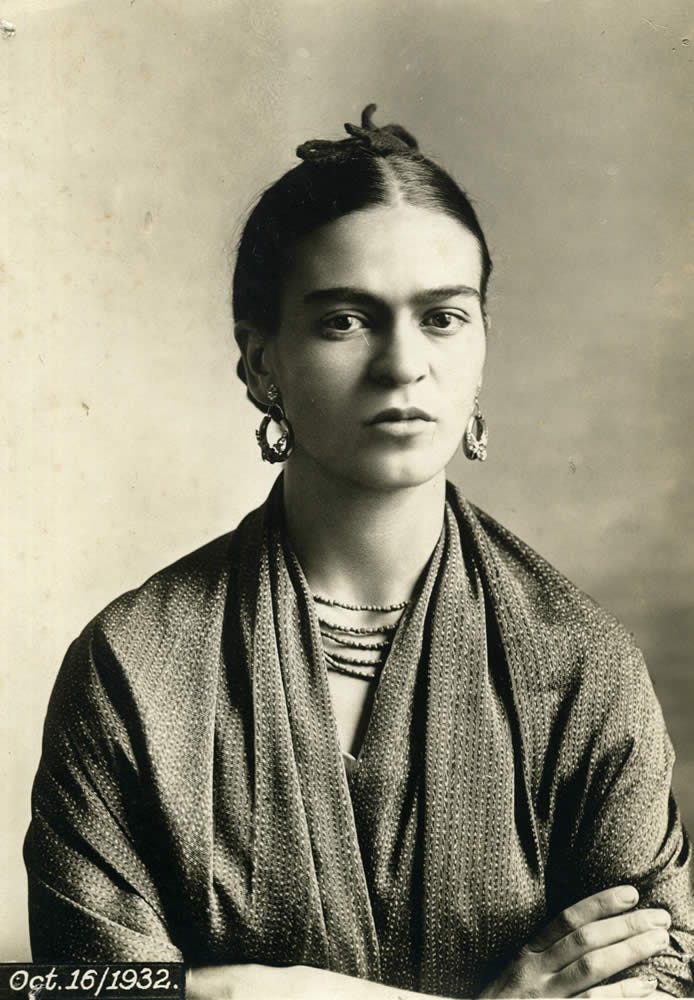
How Frida died
Died: 13 July 1954, in the Blue House, Coyoacan.
Age: 47.
Official cause: a pulmonary embolism.
Suspected: an intentional overdose.
Days before: she left her sickbed to join a protest.
Keep learning art the fun way


A body that had been failing for years
Frida's death did not come out of nowhere. Her body had been breaking down since the streetcar accident at eighteen.
Her years of pain and resilience are captured in 24 rare photos of her life.
She went through about thirty operations, spinal fusions, repeated infections, and in 1953 the amputation of her right leg below the knee.
She lived in constant pain and on heavy doses of painkillers. The accident that started it all is here: what happened to Frida Kahlo.
The last public act
About a week before she died, sick with pneumonia and against her doctors' orders, Frida got out of bed.
In her wheelchair, she joined a communist demonstration in the streets of Mexico City, protesting against foreign meddling in Guatemala.
The outing left her weaker, and her fever returned. Her politics mattered to her right to the end, as you can read in was Frida Kahlo a communist.
The night she died
A few days later she was found dead in her bed in the Blue House.
The death certificate recorded a pulmonary embolism, a blood clot in the lungs. No autopsy was carried out, so that diagnosis was never confirmed.
The suicide question
Many who knew her doubted the official cause. Frida had spoken about wanting to die and had survived earlier crises.
The final entry in her diary read: I hope the exit is joyful, and I hope never to return. Some believe she took a deliberate overdose of her painkillers. With no autopsy, it can never be proven either way. What is certain is that she was ready to go.
The funeral and the flag
Frida was cremated at her own wish, so she would not be laid out flat, the position she had hated through years in plaster casts.
A friend draped her coffin in the red communist flag with its hammer and sickle, inside Mexico's national palace of fine arts, and it caused an uproar.
What people still ask about her last days
How did she die? Officially a pulmonary embolism, in 1954.
How old was she? 47.
Did she die by suicide? Possibly. It was never confirmed, and there was no autopsy.
What were her last words? I hope the exit is joyful, and I hope never to return.
Where did she die? The Blue House in Coyoacan, where she was born.
More secrets to unlock


Born and gone in the same house
Frida was born and died in the same place, the Casa Azul in Coyoacan.
Her ashes stay there in an urn shaped like a pre Columbian figure, near the bed where she spent so much of her life. I tell that whole life in Frida Kahlo: The Complete Story, and walk the house room by room.
