
Frida Kahlo, the Mexican painter, caught polio at age six. At 18, on September 17, 1925, a streetcar hit the wooden bus she was riding in Mexico City, and an iron handrail went through her pelvis.
She survived, spent months in bed, first in the hospital and then at home, and began to paint there. The pain followed her for life, through repeated operations and the loss of her right leg in 1953, until her death the following year.

Cool Stories About Art is a newsletter to learn art the fun way.
Join 200,000+ readers and get:
10 new art stories / month
The entire archive of content (140+ articles)
Comment, ask questions, and chat with other readers
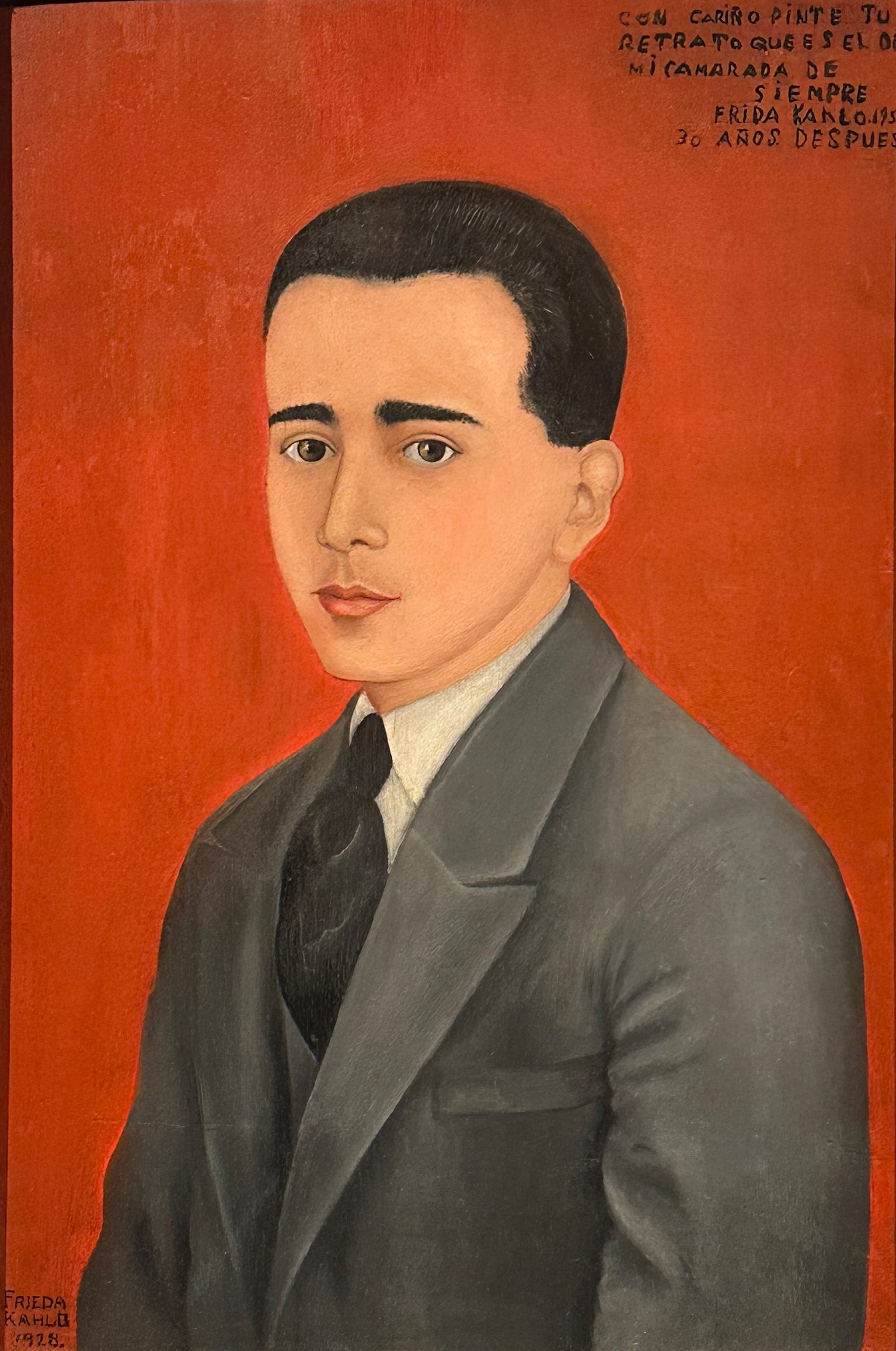
Almost everything known about the crash comes from two witnesses. One is Frida herself. The other is Alejandro Gómez Arias, her boyfriend, who was on the same bus and walked away with bruises.
Their accounts do not match. In Frida's version, the rail went through her "the way a sword goes through a bull." In his, a passenger's packet of gold powder burst and covered her bleeding body.
Even the vehicle that hit them changes from one telling to the other. Frida called it a train. Gómez Arias described a streetcar with two cars, though he too slipped into calling it "the train."
Her medical file is hardly more reliable than their memories. Few of her original records survived, and a 2008 review of her medical history found that her own accounts tended toward exaggeration.
The list of fractures repeated today comes from a clinical account written in 1946. The handrail itself is not in doubt. Whether that list explains the suffering of her later years is much less certain.
The second bus
The story starts before the crash, with a bus Frida Kahlo was never meant to take. She and Gómez Arias had boarded an earlier one that afternoon, until a small loss on board sent her back into the street.
What You'll Discover
What the handrail did to her body.
How she started painting in bed.
Why the pain never went away.
What happened to her right leg.