
He died suddenly in December 1675, at just 43, in his home town of Delft, worn down by debt after a war wrecked the Dutch art market.
Within a day or two he went from active to dead, and he left his wife and eleven children with almost nothing but unsold paintings and unpaid bills.
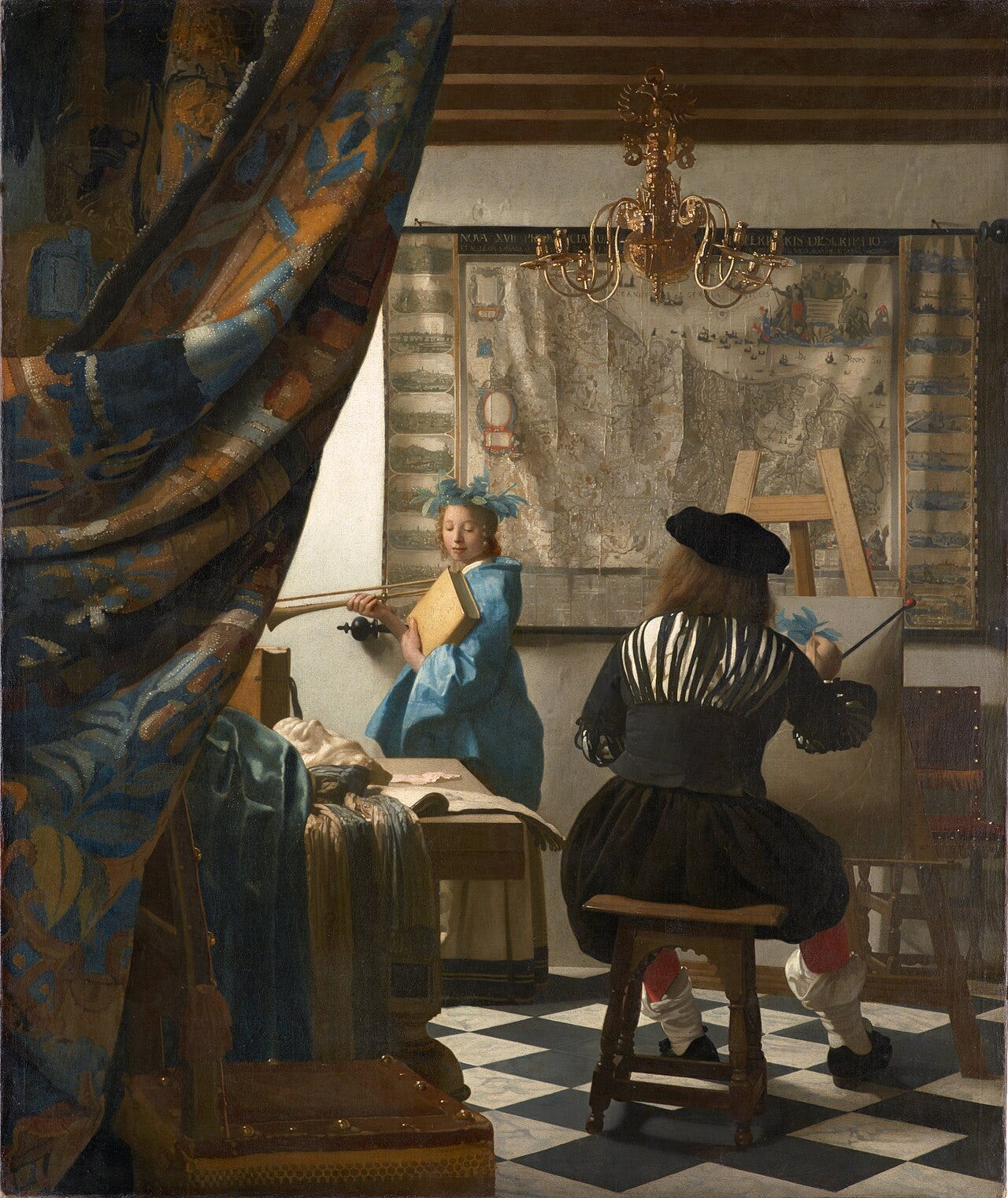
There was no long illness on record, and no famous deathbed. There was a stack of debts and a house full of children.
What killed him was not really an illness. It was money.
A sudden collapse
The end came fast.
His widow, Catharina, later described how he went from healthy to dead in a day or a day and a half. She blamed the stress of money.
With no autopsy and no clear diagnosis, the likeliest reading is a stroke or heart failure brought on by ruin, the body giving out under the weight of debt. He was buried in the Old Church in Delft, in the family grave.
Catharina's own petition, filed a year and a half later to free trust money for the children, names it. She wrote that money worries had pushed him into such decay that, as if he had fallen into a frenzy, he went from healthy to dead in a day and a half. Frenzy was a real medical term of the period, covering high fever and confusion. It is the closest thing to a diagnosis that survives, and it comes straight from his widow's own words, not a later guess.
He was 43, and he left behind only a few dozen finished paintings, most of which he had never managed to sell well.
Keep learning art the fun way


The year that broke him
To understand the debt, you have to understand 1672.
The Dutch call it the Rampjaar, the disaster year. France invaded, the country went into crisis, and the market for luxury paintings simply vanished.
Vermeer did not only paint, he also dealt art to make a living, and suddenly nobody was buying. His income collapsed at the exact moment he had a huge family to feed.
He spent his last three years sinking, unable to sell his own work or anyone else’s. The painter of calm, sunlit rooms died in the middle of a financial storm.
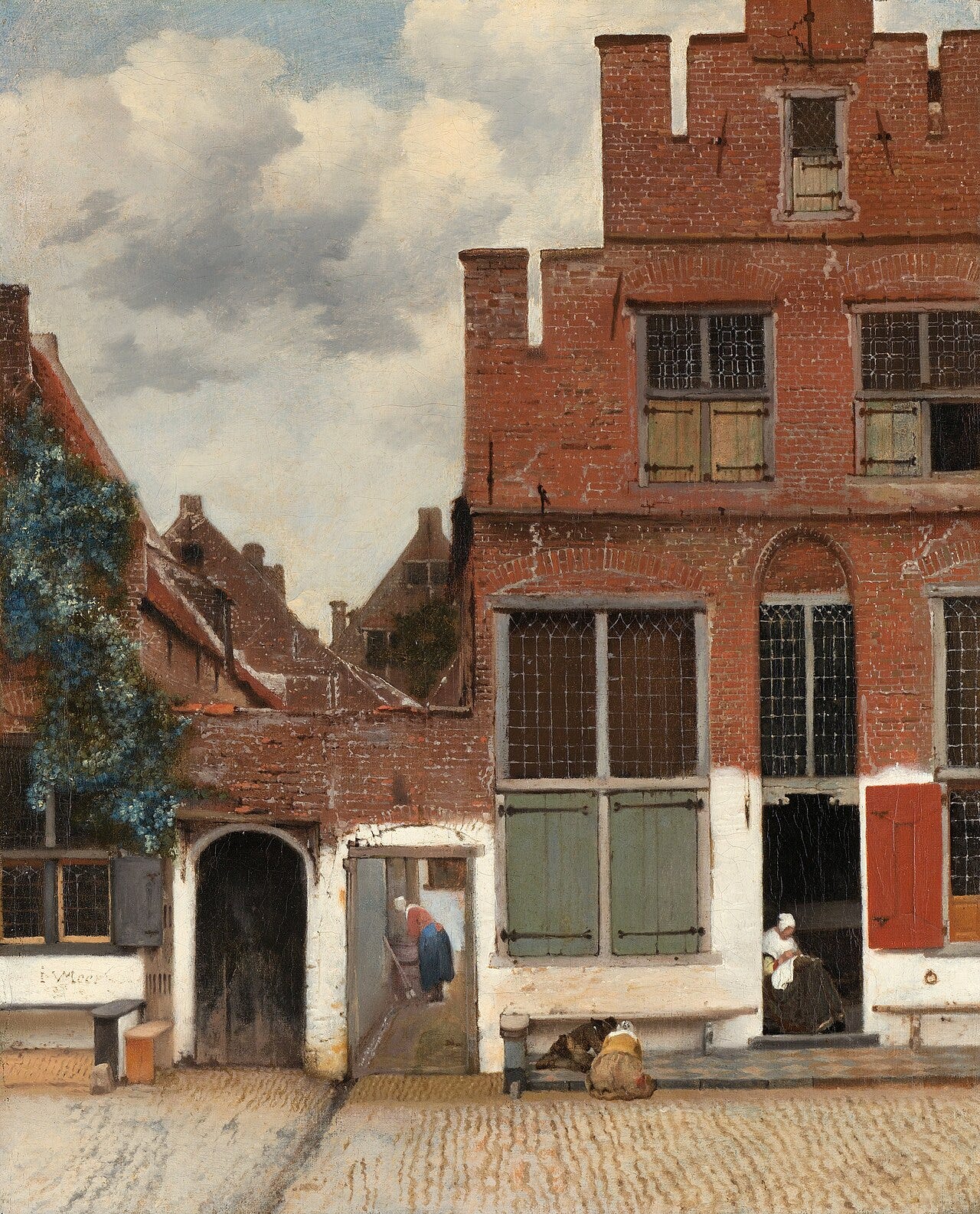
What his widow had to do next
His death turned at once into a paperwork tragedy.
Catharina was left insolvent and had to apply for bankruptcy. To settle a bread debt, she handed two of his paintings to the local baker as security.
She tried to protect a few canvases by signing them over to her mother, anything to keep them from creditors. The man who had used ultramarine more precious than gold left a family fighting over loaves of bread.
It is a brutal coda for an artist whose surviving work, like Woman Holding a Balance, is all stillness and grace.
Forgotten for two centuries
Then something stranger happened. He vanished.
For nearly two hundred years Vermeer was a minor name, his paintings often passed off under more famous signatures.
It took a French critic, Théophile Thoré-Bürger, who tracked down his works in the 1860s, to pull him back into the light and build the legend we know today. The fame that could have saved his family arrived about two centuries too late.
What people get wrong about his death
The romantic idea is that genius is always recognized in time. Vermeer is the proof it is not. He did not die famous, mysterious, or at peace with a finished life’s work.
He died young, in debt, and largely unknown, undone by a war and a market crash he could not control.
The mystery is not how he died. It is how a painter this good could slip out of history for two centuries before the world noticed, and to me that is the real tragedy.
More secrets to unlock


The debt that outlived him
When did Vermeer die? In December 1675, in Delft, at the age of 43.
What did he die of? No illness is recorded. His widow said he died within a day or two, likely from the stress of debt, possibly a stroke or heart failure.
Why was he in debt? The 1672 French invasion crashed the Dutch art market, ruining both his sales and his art dealing.
What happened to his family? His widow went bankrupt and even gave paintings to a baker to settle a bread debt.
Was he famous when he died? No. He was rediscovered only in the 1860s.
Those bread paintings were worth almost nothing then. Today a single Vermeer would buy the bakery, the street, and most of Delft. I tell the whole story of the quiet genius who died poor in Vermeer: The Complete Story.
