
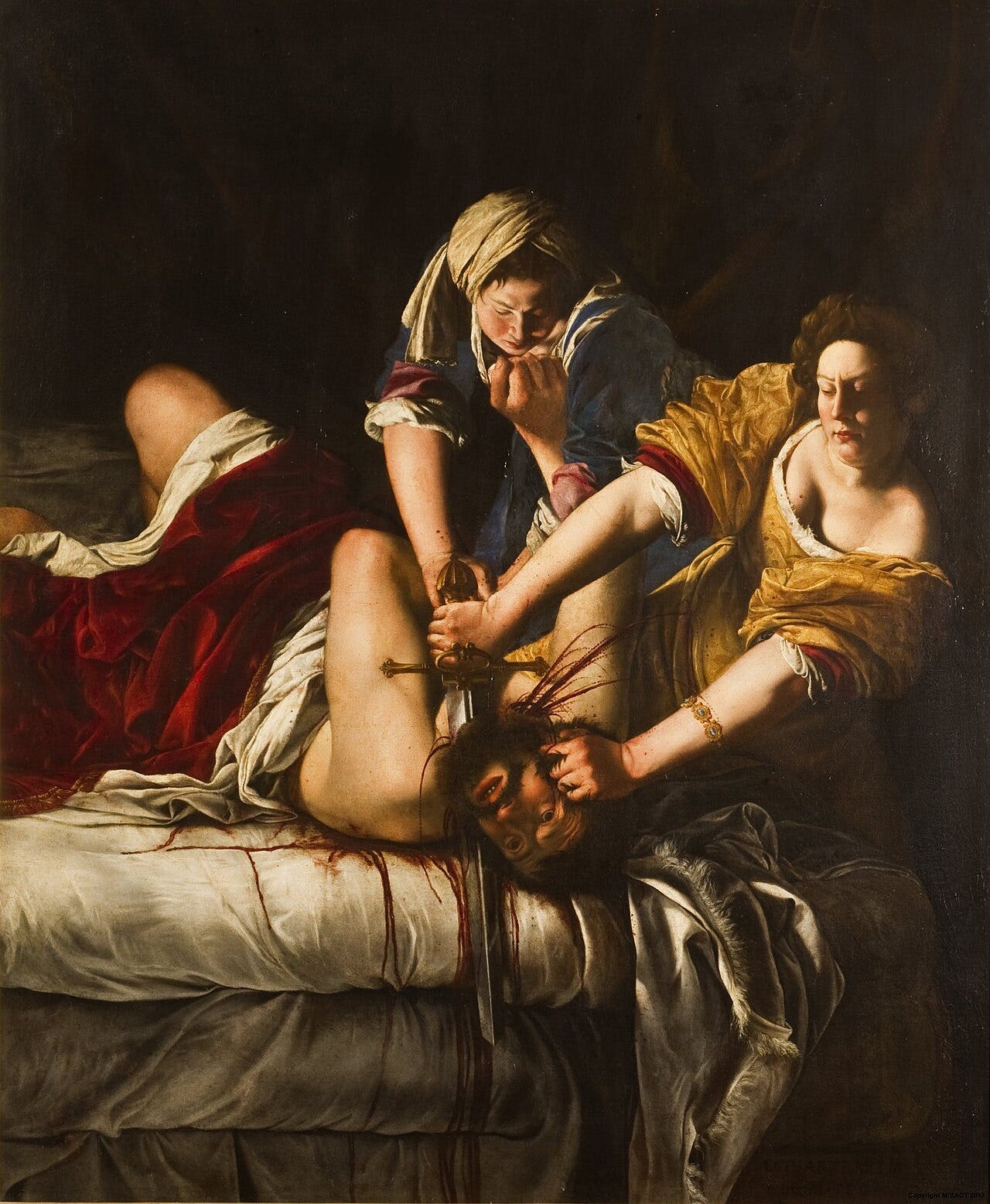
Artemisia Gentileschi was a Baroque painter who became the first woman admitted to Florence's academy of art, won a public trial against the man who assaulted her, and was rediscovered three centuries after her death.
Keep learning art the fun way


Her life is often told as a single trauma. The fuller record shows a working painter with patrons, a court career, and a reputation that crossed Europe.
She was the first woman in Florence's academy
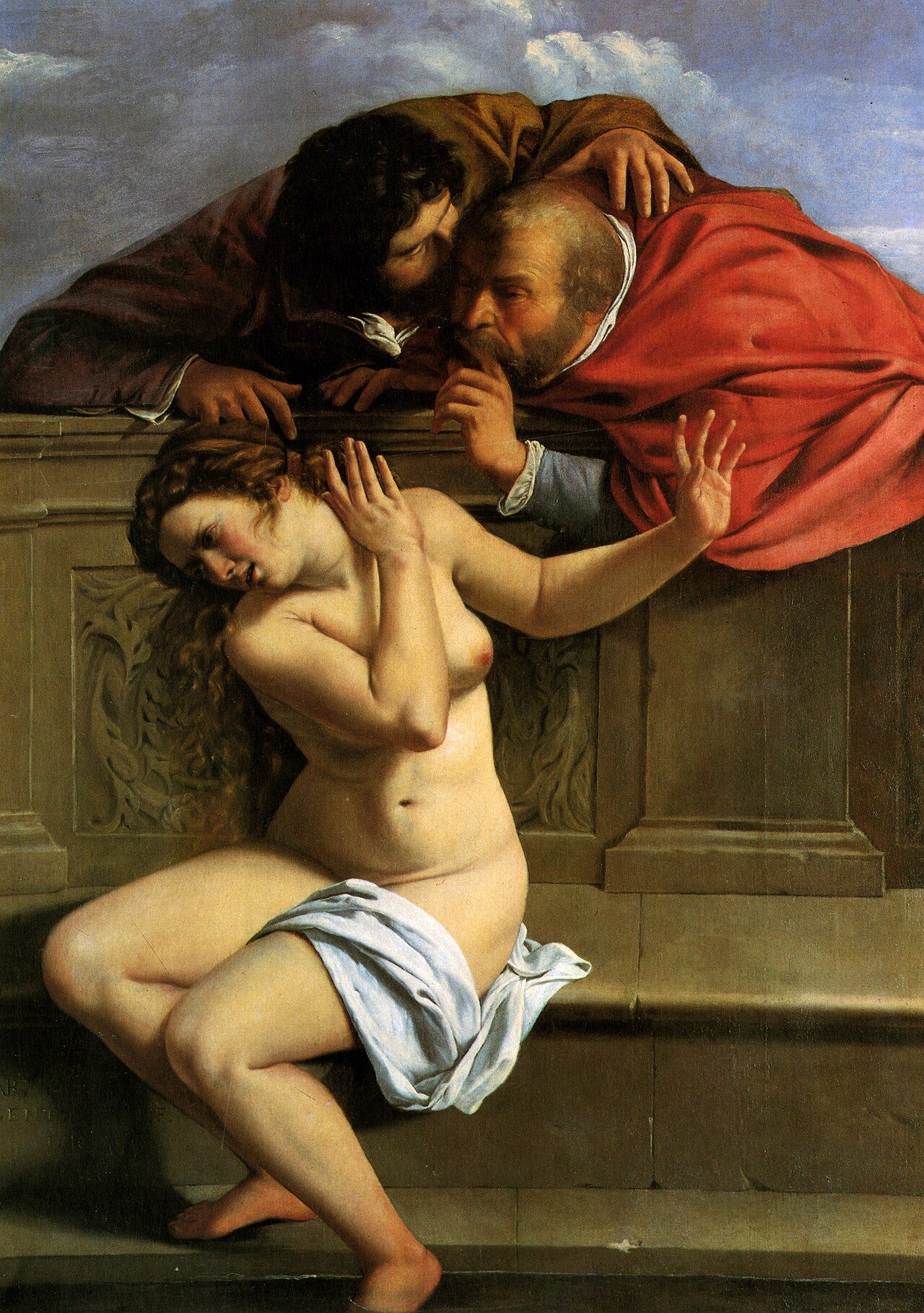
In 1616 she joined the Accademia delle Arti del Disegno in Florence, the first woman to do so. She moved in Medici circles and counted contacts who knew Galileo.
She won a hard trial
In 1612 her father brought charges against the painter Agostino Tassi. During her testimony she was put to a thumb screw test meant to prove she was telling the truth. Tassi was convicted, though he served little. She kept working through all of it.
She had an international career
She painted in Rome, Florence, Venice, Naples, and London, where she joined her father at the court of Charles I. That range was rare for any painter of the age, and far rarer for a woman.
She was lost, then found again
For centuries her work was filed under her father's name or treated as a curiosity. Modern scholarship and a run of exhibitions brought her back.
In 2018 the National Gallery in London bought her self portrait for about three and a half million pounds.
More secrets to unlock


What readers ask about Artemisia
When and where was she born? In Rome, in 1593.
How did she die? In Naples, around 1654, the exact date uncertain.
What is she famous for? Judith Slaying Holofernes.
Was Judith autobiographical? Historians are cautious and warn against reading her life straight into the work.
For the full life, the trial, and the comeback, read the complete Artemisia story, or see her beside her peers in the old masters were women too. The comeback came with a date: the National Gallery retrospective of 2020 was the first the museum had ever devoted to a woman painter.