
Pablo Picasso (1881 to 1973) was a Spanish painter who spent most of his adult life in France, and the most surprising fact about him is what he told a French magistrate in 1911: asked about the poet Guillaume Apollinaire, his friend, he said he had never seen the man in his life.
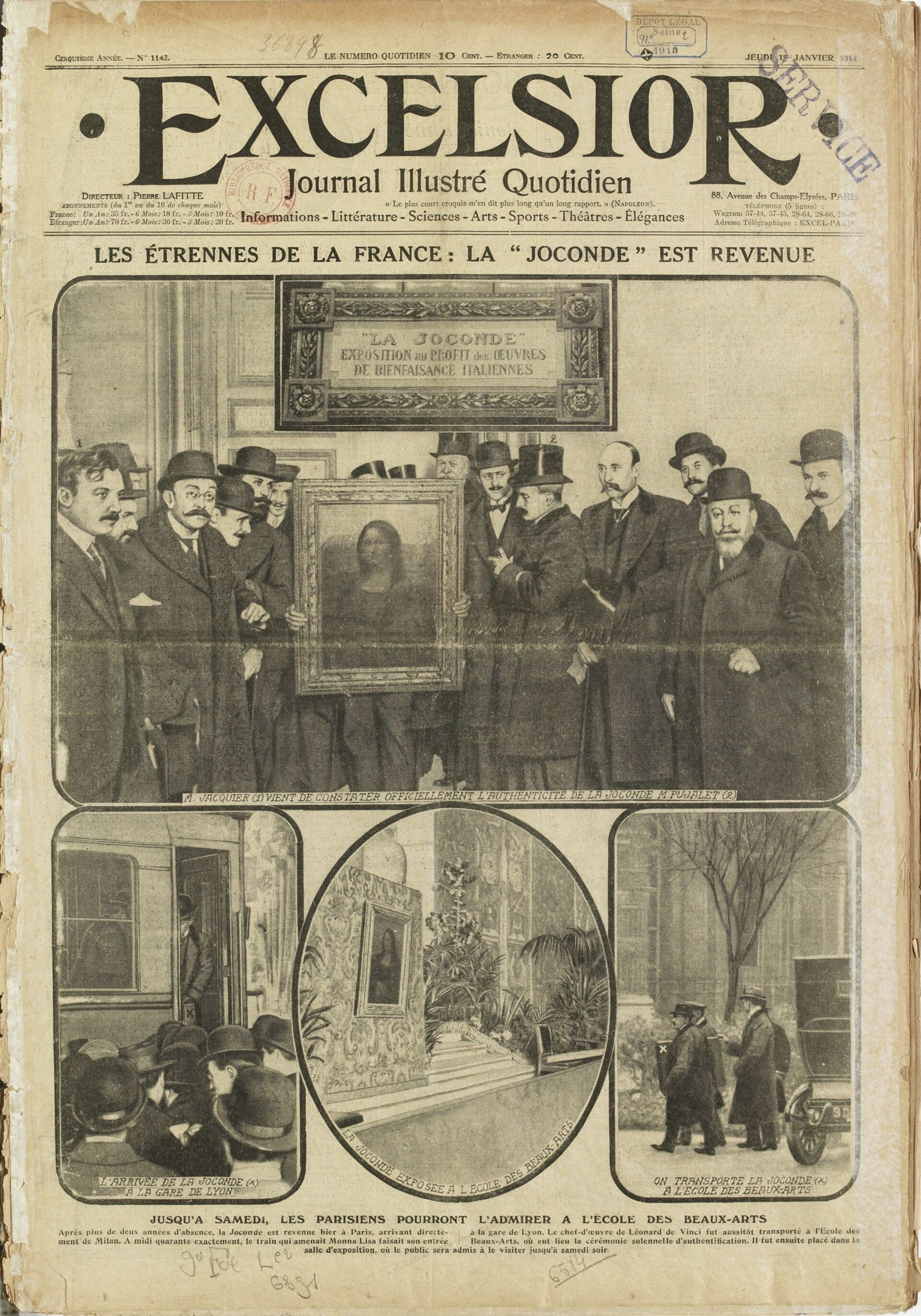
The Mona Lisa had vanished from the Louvre on 21 August 1911. More than two weeks later, on 7 September, the police arrested Apollinaire, and Picasso was summoned to answer questions about him.

Cool Stories About Art is a newsletter to learn art the fun way.
Join 200,000+ readers and get:
10 new art stories / month
The entire archive of content (140+ articles)
Comment, ask questions, and chat with other readers
He was not really being asked about the painting. The question was about Apollinaire, and Apollinaire was in custody because of a thief named Géry Pieret, who had once been the poet's secretary. In 1907 Pieret had walked out of the Louvre with small Iberian sculptures and sold them to Picasso, who liked them enough to borrow the face of one for Les Demoiselles d'Avignon.
In 1911, broke again, Pieret went back to the museum for more, and he left one of his finds with Apollinaire. When the Mona Lisa disappeared, he took his story to a newspaper, Paris-Journal, and said he had stolen from the Louvre before. The police now had two men, Apollinaire and Picasso, who had owned Louvre property.
So the lie in the courtroom had a plain cause, and it had little to do with the Mona Lisa. Years later Picasso described the moment himself, in his own words, and the case ended in a way few people remember.
How did the Mona Lisa case end for Picasso?
It ended with a dismissal and a lifelong embarrassment…
What You'll Discover
Which of his names he kept.
Why he kept his nail clippings.
What he told the Gestapo officer.
What he left behind when he died.