
Paul Cezanne looked like a quiet provincial painter of fruit and mountains. In truth he was a stubborn, anxious radical who broke with his best friend, hid his own family, and painted so slowly his fruit rotted.
The five second Cezanne
Born rich in Aix en Provence in 1839, the son of a banker.
Childhood best friend of the novelist Emile Zola.
Painted Mont Sainte Victoire more than thirty times.
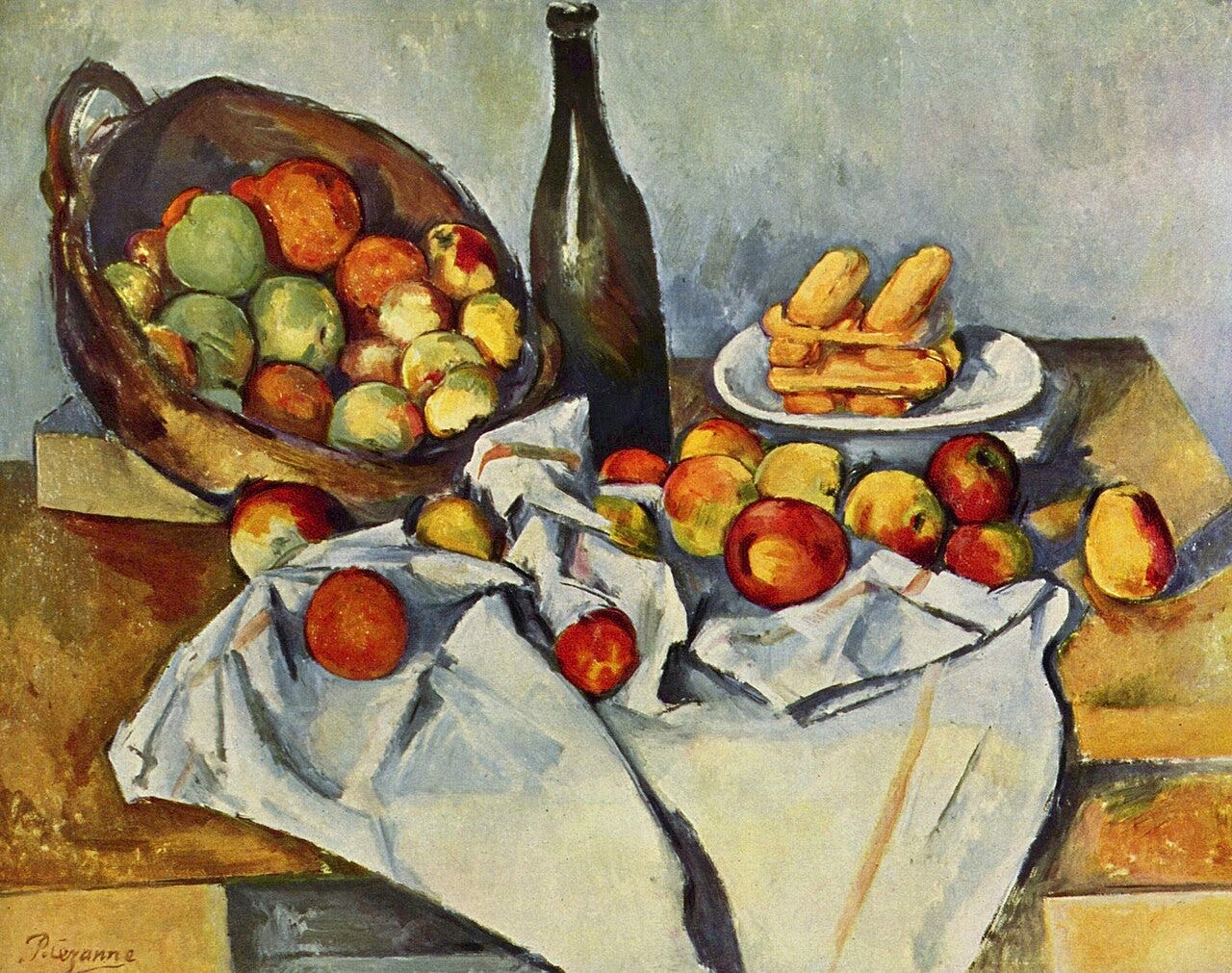
Worked so slowly he used fake fruit that would not rot.
Picasso and Matisse called him the father of them all.
Keep learning art the fun way


He hid his family from his own father
Cezanne depended on money from his strict banker father, who would have cut him off for living with a working class woman. So for years he hid his partner, Hortense Fiquet, and even their son from the old man.
He only married Hortense in 1886. His father died a few months later and left him a fortune, which finally set him free to paint as he pleased.
A novel ended his oldest friendship
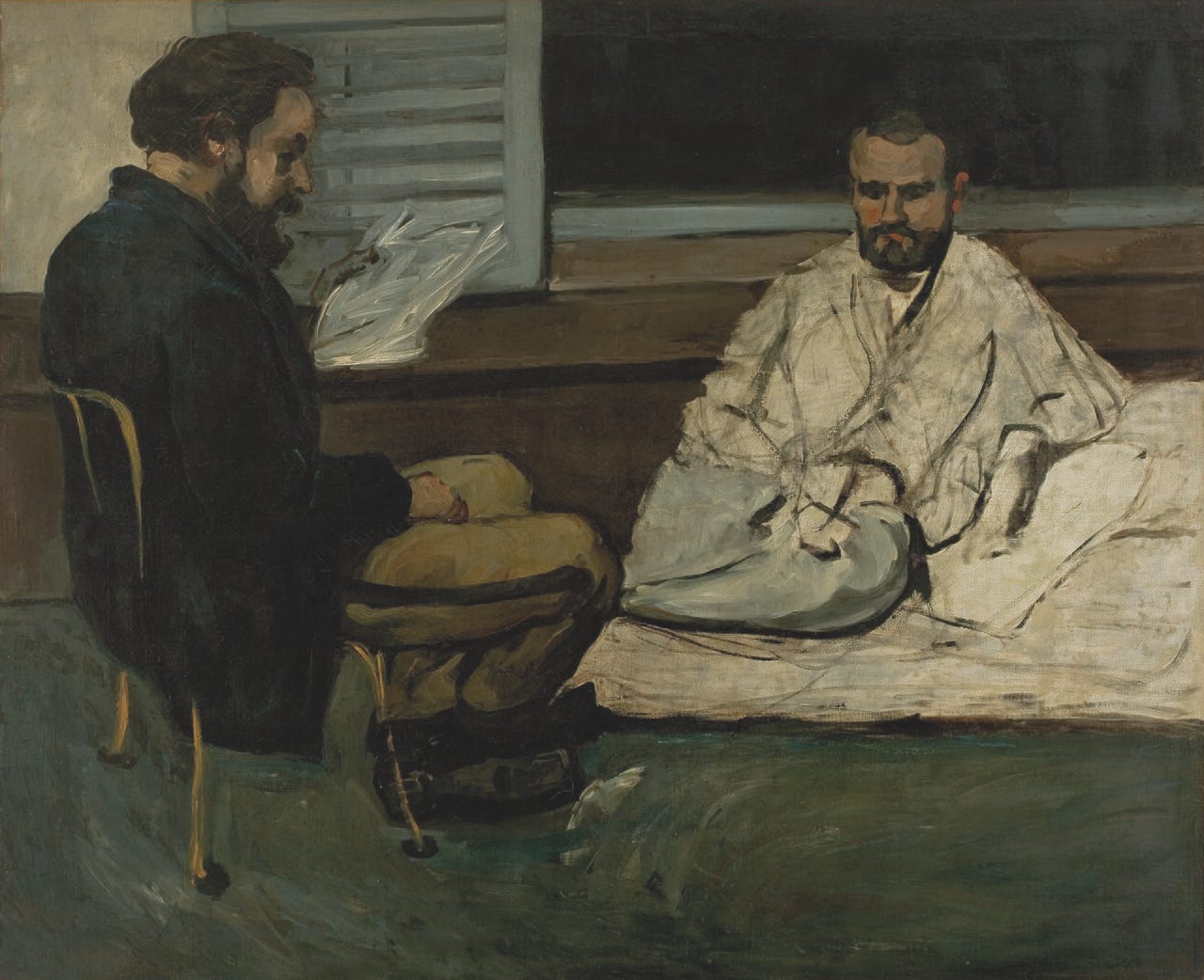
Cezanne grew up beside Emile Zola in Aix, and Zola became one of France’s great novelists. Then Zola published L’Oeuvre, a story about a talentless painter who fails and kills himself.
Cezanne saw himself in it. He wrote one cool letter of thanks and never spoke to his childhood friend again.
His fruit rotted, so he faked it
Cezanne painted agonizingly slowly, rearranging a bowl of fruit for weeks. Real apples and pears shriveled long before he finished.
His fix was to use paper flowers and wax fruit that would hold still and never spoil. The most natural looking still lifes in art were sometimes painted from fakes.
He made people sit like apples
He treated faces and fruit as the same problem in form. He once told a sitter to be still, like an apple, because an apple does not move.
His portrait of the dealer Ambroise Vollard is said to have taken about 115 sittings, and Cezanne still called it unfinished, pleased only with the shirt front.
Fame came late, then exploded
The Salon rejected him for years, and critics mocked him. His first proper solo show came only in 1895, when he was 56.
Within a decade younger artists were making pilgrimages to Aix. After his death his way of building form from color fed straight into Cubism. The case for his greatness is argued in is Cezanne the greatest painter.
Three questions people still ask about Cezanne
How did he die? He collapsed while painting outdoors in a storm in 1906 and died days later, at 67.
Was he an Impressionist? He showed with them early, then went his own, more structured way.
What is he most famous for? Mont Sainte Victoire, his apples, and being the bridge to modern art.
Why did he fall out with Zola? Zola based a failed painter on him in the novel L’Oeuvre in 1886. Cezanne wrote once to thank him and never spoke to him again.
More secrets to unlock


Why the slowness was the point
About 115 sittings for one portrait, weeks per bowl of fruit, more than thirty tries at a single mountain. For me that patience is the whole secret, and it is exactly what changed painting. His full arc is in the complete story of Paul Cezanne.
