
Paul Cezanne was the French painter often called the father of modern art. Working alone in the south of France, he built pictures from patches of color and quiet geometry, and opened the door to Cubism.
He painted the same apples and the same mountain, Mont Sainte Victoire, again and again, broke with his boyhood friend Emile Zola, and died in 1906 still mocked, only to be called within a few years the father of us all.
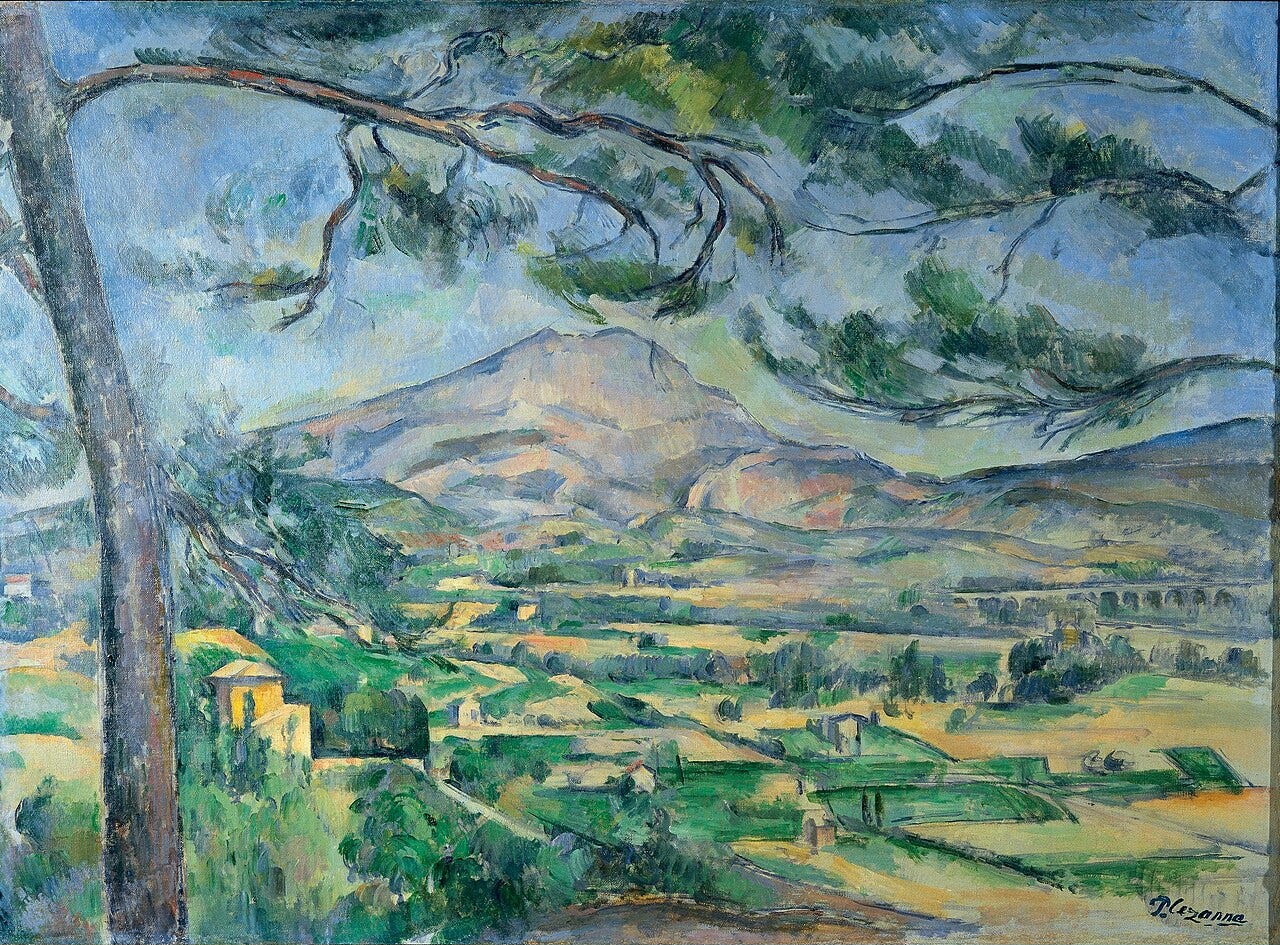
Picasso and Matisse both called him the father of us all. Yet in his own lifetime he was mocked, rejected by the Paris Salon again and again, and known mostly for paintings of apples and a single mountain he returned to over and over.
More incredible painter stories
If Paul Cézanne pulled you in, you will love these too:


He was stubborn, solitary and quietly radical. Here is the whole story.
Paul Cézanne at a glance
1839. Born in Aix-en-Provence, son of a hatmaker turned banker.
1872. Painted beside Pissarro at Pontoise, the apprenticeship that calmed his hand.
1886. Married Hortense and inherited his father’s fortune in the same year.
1895. Vollard’s first solo show revealed him to the young painters.
1906. Caught in a storm at his easel, he died days later in Aix.
The man who changed how we see
Cezanne changed how artists see. Before him, a painting tried to be a window onto a scene. He treated it instead as a flat surface to be built, patch by patch, into a solid structure.
That shift, from copying nature to constructing it, is the hinge between the 19th century and modern art.
Without Cezanne there is no Cubism, and arguably no abstract art either.
The patchwork under the roughness
A Cezanne can look rough or unfinished at first, until you see the system underneath.
Patches of color. He built forms from small planes of color set side by side, like a mosaic of brushstrokes.
Hidden geometry. He once advised treating nature through the cylinder, the sphere and the cone.
Shifting viewpoints. A still life seen from several angles at once, so a table tilts and a bowl leans. This idea fed straight into Cubism.
The unfinished look. Bare canvas left showing, as if the picture is still being thought out in front of you.
His work is the heart of Post Impressionism, the generation that pushed past Impressionism into something more structured.
Apples and a mountain
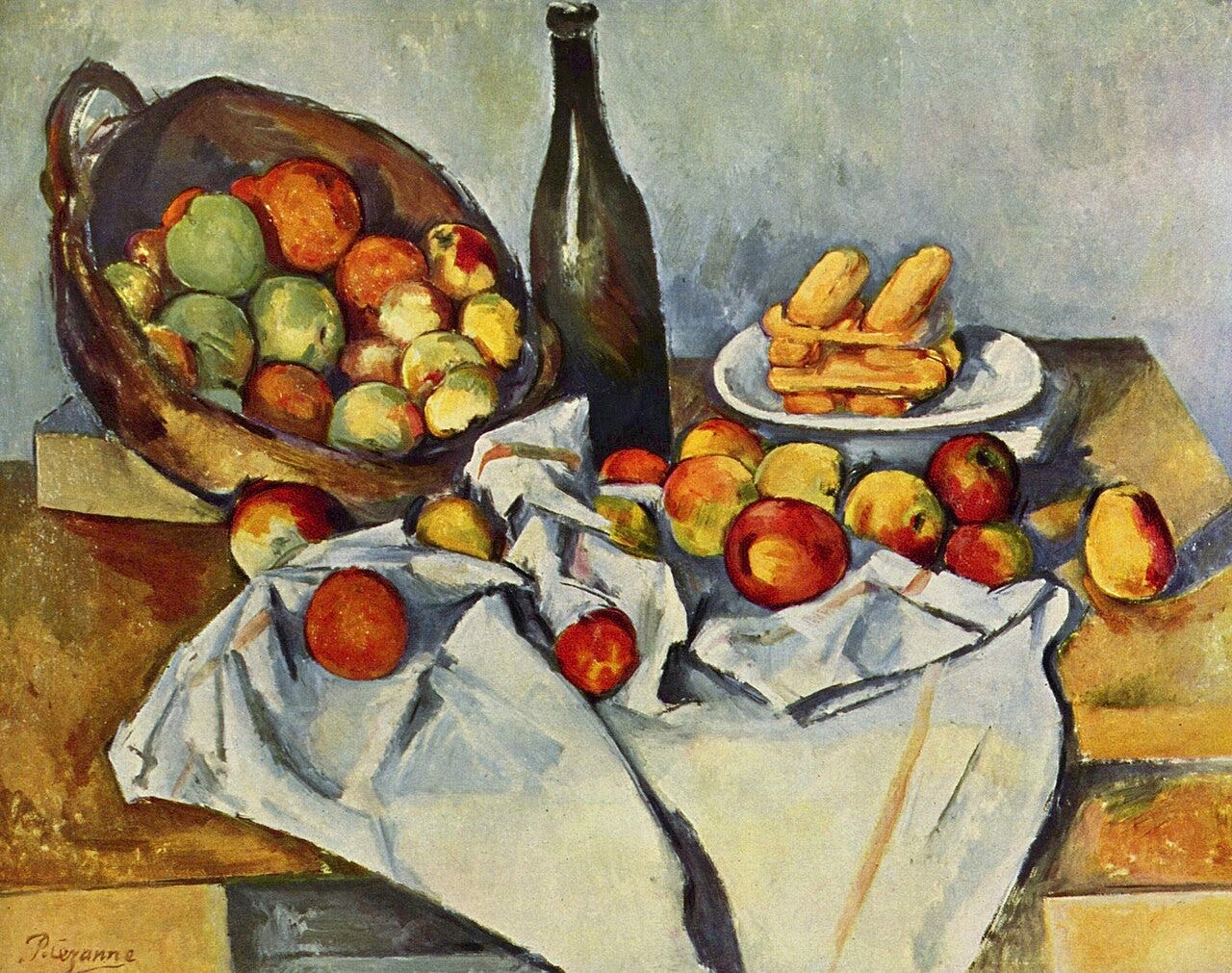
Cezanne is famous for two humble subjects he painted endlessly: apples, and Mont Sainte Victoire, the mountain near his home in Aix.
He reportedly said he wanted to astonish Paris with an apple, treating a simple bowl of fruit as seriously as any grand history scene. And he painted that one mountain more than 30 times, studying how to build its mass and light.
The repetition was the point: he was solving the same deep problem again and again. His command of still life reset what the genre could be.
The bridge to Cubism
Cezanne’s tilting tables and faceted forms were a revelation to the next generation. For me it is the most quietly influential move in all of modern art.
A few years after his death, a big memorial exhibition in Paris stunned young artists. Picasso and Braque took his shifting viewpoints and broken planes and pushed them into full Cubism. The quiet man from Aix had handed them the future.
What Pissarro and Poussin taught him
Cezanne learned from both the new and the old.
The Impressionist Camille Pissarro mentored him, taught him to lighten his palette and paint outdoors, and treated him as an equal when others laughed.
From the old masters in the Louvre, especially Poussin, he took a love of solid structure, and from Delacroix a passion for color. He wanted, he said, to make Impressionism into something as durable as the art of the museums.
Zola, the friendship that broke
Cezanne’s closest boyhood friend was the writer Emile Zola, who grew up beside him in Aix.
Their friendship ended in pain. In 1886 Zola published a novel about a brilliant painter who fails and kills himself. Cezanne recognized himself in the character, took it as a betrayal, and the two men, once inseparable, never spoke again.
The slow, solitary man
Cezanne worked with painful slowness and lived increasingly apart from the art world.
A portrait of the dealer Ambroise Vollard supposedly took more than a hundred sittings, and even then Cezanne said only the shirtfront satisfied him.
Backed by money from his banker father, he retreated to Aix and painted in near isolation, indifferent to fashion.
How Cezanne died
His death came from his devotion to working outdoors. In 1906 he was caught in a storm while painting in the fields and collapsed.
He developed pneumonia and died days later, at 67, still largely unrecognized by the public. Within a few years he would be hailed as the father of modern painting.
France, above all
France holds the heart of his work, but he is everywhere now.
The Musee d’Orsay, Paris. The essential stop, rich in his still lifes, bathers and portraits.
The Atelier de Cezanne, Aix en Provence. His preserved studio, near the mountain he painted so often.
Outside France, the Metropolitan Museum of Art in New York holds major groups of his still lifes and Mont Sainte Victoire views.
The hatmaker's son who never had to sell
Paul Cezanne was born in Aix en Provence in January 1839. His father, Louis Auguste Cezanne, started as a dealer in felt hats. He was a self made man who turned that trade into money, then into a bank. In 1848 he co founded the main bank in Aix.
That detail shaped everything. Cezanne grew up the son of one of the richest men in town.
It meant he could paint for forty years while the public laughed, and never depend on a single sale to eat. Most of his rivals scraped by. He did not. The price was a domineering father he spent his whole life trying to please, and quietly defy.
The law student who ran to Paris
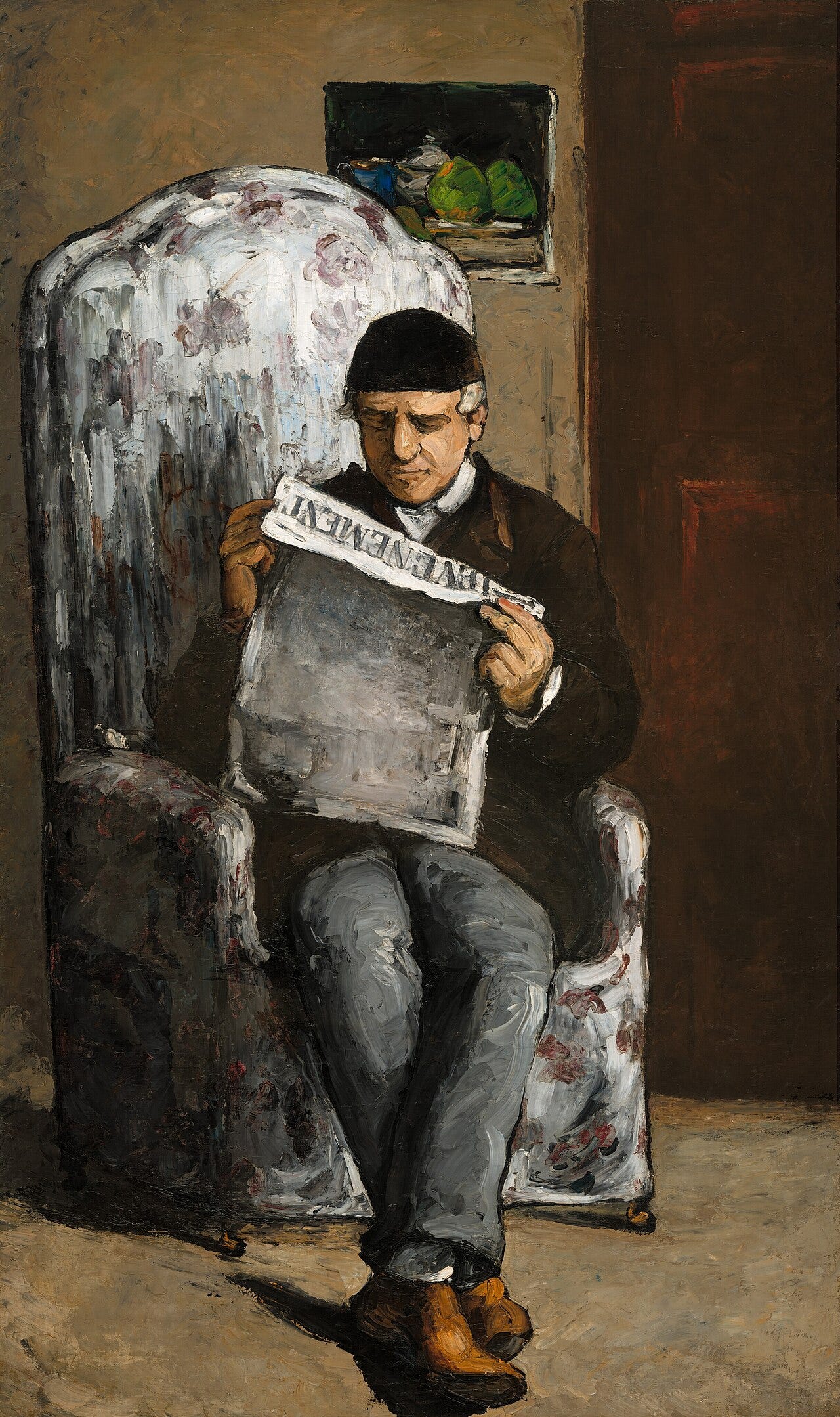
His father wanted a lawyer, not a painter. So Cezanne dutifully enrolled to study law at the University of Aix around 1859, while sneaking off to the free drawing academy in town.
In 1861 he finally broke away and went to Paris, drawn by his boyhood friend Emile Zola, who was already there. His father grudgingly allowed him a small monthly allowance.
Paris nearly beat him. He failed the entrance exam for the official art school, worked instead at the Academie Suisse, a cheap studio with live models and no teachers, and grew so discouraged he went home to clerk at the family bank.
The bank bored him worse than failure, and he returned to painting.
The couillarde years, when his paint turned violent
Before the calm apples, there was a young man painting murders.
Cezanne's earliest pictures, through the 1860s, are dark, heavy and unsettling. He loaded pigment on with a palette knife, so thick it stands off the canvas. He later called this his couillarde manner, roughly his gutsy style.
The subjects match the surface. Abductions, a strangling, a picnic that feels menacing. He worked in the shadowy tradition of Delacroix, all storm and no daylight.
He once told Renoir it took him twenty years to understand that painting was not sculpture. The famous restraint came later. The furnace came first, and it never fully cooled.
Rejected by the Salon, almost every year
For most artists of the day, the official Paris Salon was the only door to a career. For Cezanne it stayed shut for decades.
The jury turned him down year after year. In 1863 his work hung instead in the Salon des Refuses, the show of rejected paintings that Emperor Napoleon III allowed after a public outcry.
He was accepted by the real Salon only once, in 1882, and only because a friend on the jury, the painter Antoine Guillemet, listed him as his own pupil so the work could slip through.
Cezanne kept submitting anyway. He wanted the establishment's approval long after he had stopped needing it.
Hortense, the model he hid from his father
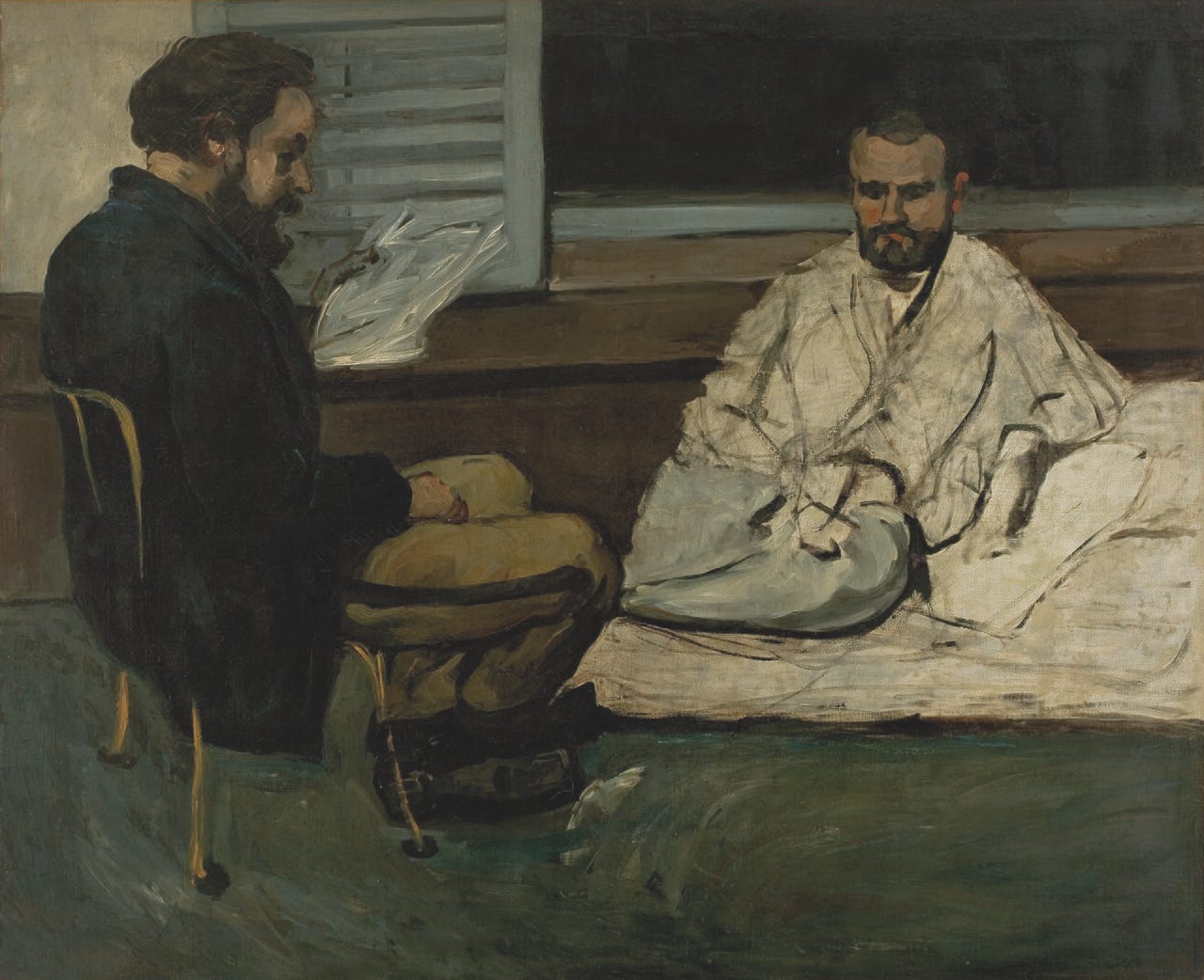
Around 1869 Cezanne met Marie Hortense Fiquet, a young artist's model and bookbinder eleven years his junior.
They began living together in Paris. In January 1872 she gave birth to their son, also named Paul.
Here is the strange part. Cezanne hid all of it from his father for years, terrified of losing his allowance if the old banker learned he had a mistress and a child.
He shuttled between his secret family in the north and his father's house in Aix. The father eventually found out and cut the allowance in half, then relented.
Hortense sat for nearly thirty of his portraits, patient and still, while their private life stayed a careful lie.
The wedding and the inheritance, both in 1886
1886 changed his life twice over. In April, after living with Hortense for about seventeen years, Cezanne finally married her in Aix, with his aging parents present. The secret was over.
Six months later, in October 1886, his father Louis Auguste died. The banker left his difficult son a large fortune. At forty seven, Cezanne was suddenly a wealthy man, free of the allowance that had ruled him and free of the father he had feared.
The same year broke another bond. Zola published a novel, L'Oeuvre, about a failed painter. Cezanne recognized himself in it, and never wrote to his oldest friend again.
The Card Players, five quiet monuments
Starting around 1890, Cezanne painted a group of Provencal peasants sitting at a table, playing cards.
He made five versions over several years, using local farm workers from his family estate as models. There is no drama, no winner, no story.
Just men absorbed in a game, built out of blocks of color. They are among the most admired figure paintings he ever made.
The stillness is the point. He took a bar room subject and turned it into something as grave and settled as a church fresco. In 2011 one version reportedly sold to Qatar for over 250 million dollars, then one of the highest prices ever paid for a painting.
The faces he painted again and again
Cezanne was slow, and he needed sitters who would not complain.
His wife Hortense was the answer. He painted her close to thirty times over the years, never flattering, never chatty, her expression flat and unreadable. He reportedly made her hold poses for hours, telling her to sit as still as an apple.
At the very end of his life he found another patient model in Vallier, the gardener and handyman at his studio outside Aix. The old man in his straw hat became the subject of Cezanne's last portraits in 1906.
He was not painting personalities. He was studying weight, structure and light on a human being who would stay put.
Vollard's gamble in 1895
For most of his life Cezanne barely showed his work in public. Then a young Paris dealer took a chance.
In 1895 Ambroise Vollard gave Cezanne his first solo exhibition, gathering roughly 150 of his paintings into one gallery. Cezanne himself stayed in Provence and did not attend.
The public reaction was not a triumph. Critics and casual visitors met the show with confusion and mockery. But a small circle noticed.
Younger painters, along with collectors like the Havemeyers, began to champion him, and word spread quietly. That show, greeted with skepticism, is where his real fame slowly began.
Recognition came late, and never loudly.
The father of us all, and the myth of the pauper
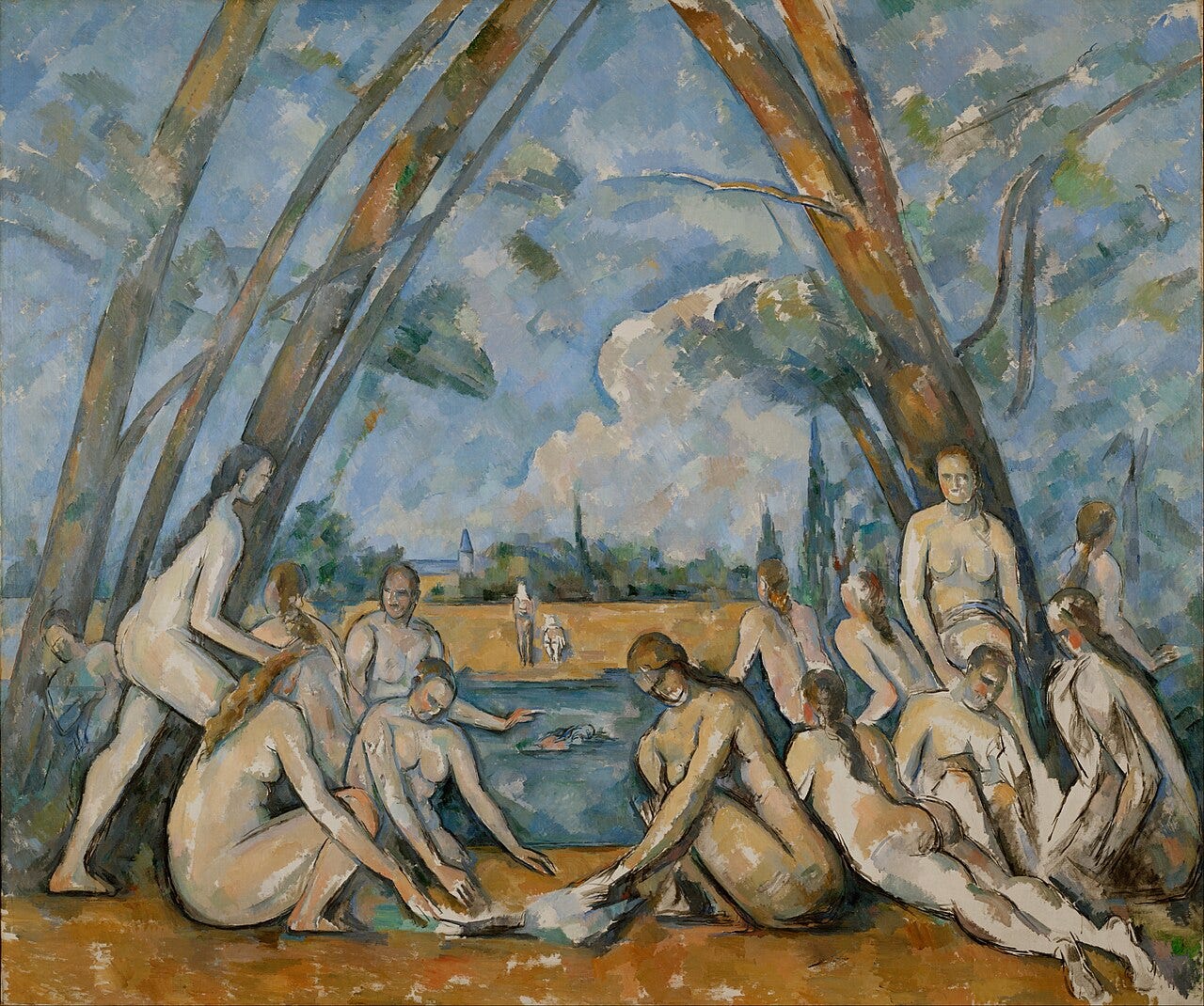
A stubborn legend says Cezanne died poor, unknown and ignored. It is wrong.
By 1904 the Salon d'Automne in Paris gave him a whole room of his own, and young artists were making pilgrimages to Aix to meet him. He was rich from his inheritance and famous among the people who mattered most, the next generation.
After his death in 1906, a large retrospective in 1907 sealed it. Pablo Picasso called him the father of us all. Henri Matisse revered him too, keeping a small Cezanne of bathers for decades as a private guide.
He never courted the public that laughed at him. He won the painters who came after instead.
The Paul Cézanne questions that keep coming up
What is he known for? Still lifes of apples, Mont Sainte Victoire, and founding modern art.
What style is he? Post Impressionism, and the bridge to Cubism.
Where was he from? Aix en Provence, in the south of France.
How did he die? Of pneumonia in 1906, after being caught in a storm while painting.
Why apples? He used simple fruit to solve deep problems of form, color and space.
Was Paul Cezanne rich? His family was wealthy. His father ran a bank in Aix, and in 1886 left Cezanne a large fortune that made him financially secure for life. He could paint for decades while the public laughed, without depending on a single sale.
Did the Salon ever accept Cezanne? Just once, in 1882, when a jury member listed him as a pupil so the work could slip through. Otherwise the official Paris Salon rejected him for years, and in 1863 he showed at the Salon des Refuses, the exhibition of refused paintings.
More on Cezanne: Interesting Facts About Paul Cezanne.
More secrets to unlock


One last fact
In 2011 one of his five Card Players sold privately to Qatar for a reported 250 million dollars, at the time the highest price ever paid for any painting. Not bad for a painter the official Salon rejected every single year but one.