
John Collier, 1850 to 1934, was one of the leading British portrait painters of his time, but we remember him for serpents and seductresses.
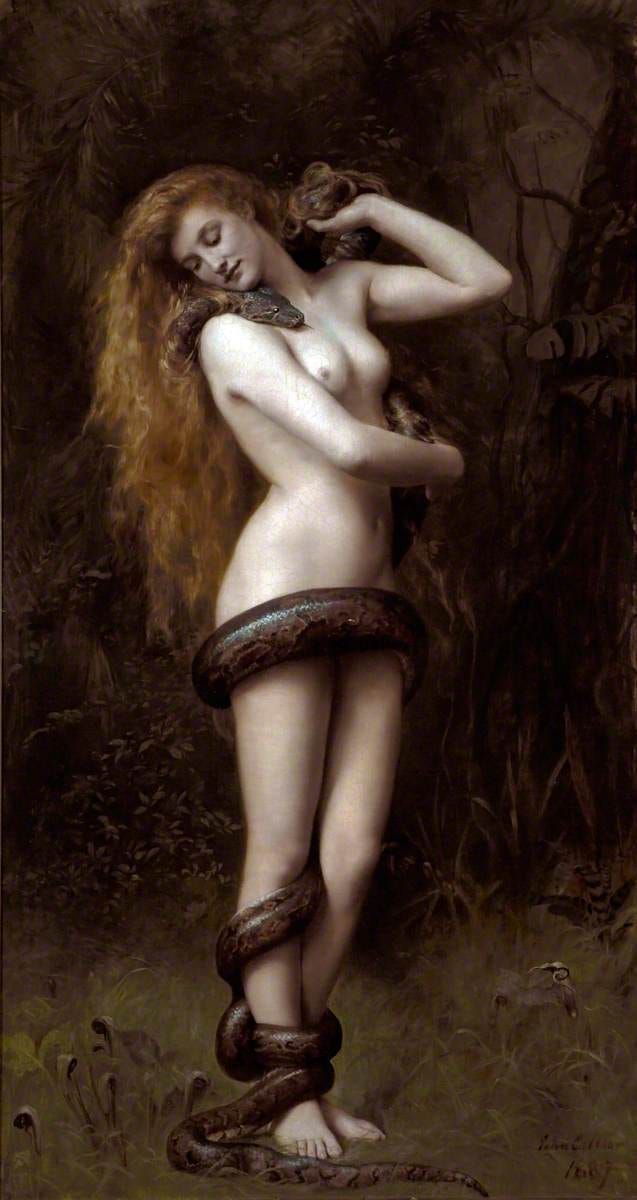
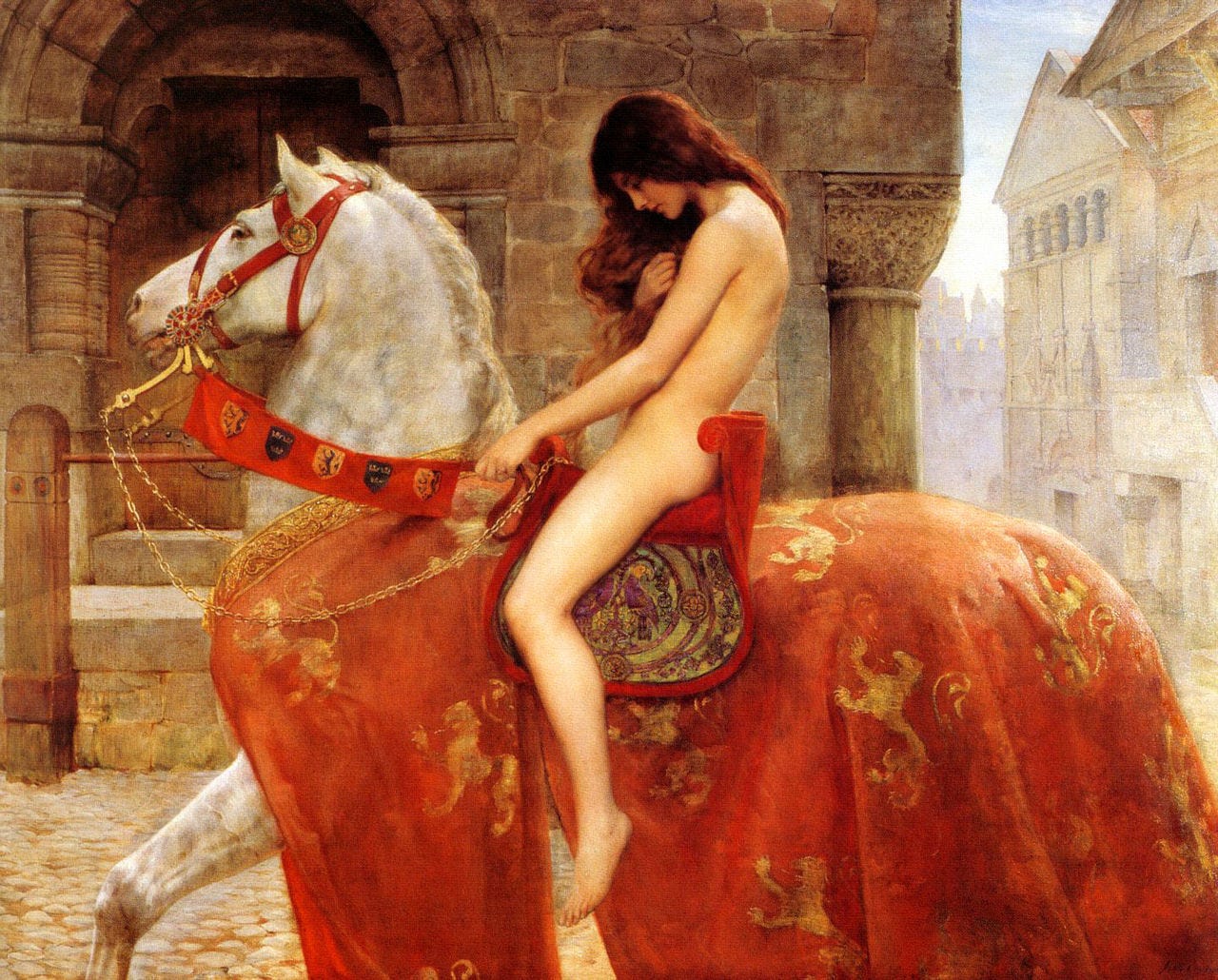
His Lilith, with a snake coiled around a naked woman, and his Lady Godiva are among the most reproduced images of late Victorian art.
He was also the son in law of Darwin's great defender Thomas Henry Huxley, and married two of Huxley's daughters, which forced one wedding abroad.
His private life was as dramatic as his canvases. He married two sisters, which was illegal in England, so he did it abroad. Here is the full story.
More incredible painter stories
If John Collier pulled you in, you will love these too:


John Collier at a glance
1850. Born in London into a family of Liberal politicians.
1879. Married Marian Huxley, daughter of the biologist Thomas Huxley.
1889. Married her sister Ethel in Norway, the union still illegal in England.
1898. Lady Godiva, the picture the internet never stopped sharing.
1934. Died in London, a rationalist to the end.
The portrait painter we remember for myths
Collier earned his living painting the great and good of Victorian Britain, scientists, statesmen and society figures. He even wrote textbooks on how to paint a portrait.
Yet his fame today rests on his literary and mythic pictures: temptresses, legends and moments of high drama.
A late Pre Raphaelite
Collier worked in the wake of the Pre Raphaelites, the British painters who loved sharp detail, rich color and stories from poetry and myth.
He gave that taste a polished, academic finish. His surfaces are smooth, his subjects theatrical, his women often dangerous.
The scandal: marrying two sisters
Collier married Marian Huxley, daughter of the famous scientist Thomas Henry Huxley. She died in 1887.
He then fell in love with her sister Ethel. In England, marrying a dead wife's sister was illegal at the time, so the couple wed in Norway in 1889.
It caused a quiet scandal, and tied Collier even closer to one of the great families of Victorian science.
The story and the stare
Look for the story and the stare. His nude subjects are usually femmes fatales, women with power over men, painted with cool precision.
His portraits are sober and exact. The myth pictures are where he let the drama loose.
Three pictures that made his name
First, Lilith of 1887, the first wife of Adam in Jewish legend, shown entwined with a serpent.
Second, Lady Godiva of 1897, the noblewoman who rode naked through Coventry in protest, now in that city's museum.
Third, his literary scenes from Tannhauser and other tales, where temptation always lurks.
The myth of the mere society painter
Because he painted so many respectable portraits, Collier is sometimes dismissed as a safe establishment hand.
The Lilith and the Godiva tell a different story. He had a real appetite for myth, danger and the female figure as a force to be reckoned with.
Where to find his myths
The Tate holds work by Collier. His Lady Godiva is at the Herbert Art Gallery and Museum in Coventry.
Tied to the house of science
Through his two marriages into the Huxley family, Collier sat inside the world of Victorian science. His father in law, Thomas Henry Huxley, was Darwin’s fiercest champion.
He painted many of the era’s thinkers and leaders, and wrote practical books on how to paint a portrait. The respectable scientist’s friend and the painter of serpents and seductresses were the same man.
You can explore works by John Collier in the collection of the Metropolitan Museum of Art.
Born into a Liberal dynasty
John Collier was born in London on 27 January 1850, into one of the wealthy Liberal families of Victorian England.
His father, Robert Collier, was a barrister and Member of Parliament who rose to become a judge on the Judicial Committee of the Privy Council. In 1885 he was raised to the peerage as the first Lord Monkswell.
The family had money and reach. Collier's grandfather had sat in Parliament, and his elder brother, the second Lord Monkswell, later served as Under Secretary of State for War.
So young John grew up around law, politics and public life. Painting was not the obvious path for such a son, but he chose it anyway, and the family connections opened doors that many artists never reached.
A training that crossed three cities
Collier did not learn to paint in one studio. He was educated at Eton, then set out to train wherever the best teaching was.
He studied at the Slade School of Fine Art in London under Edward Poynter, one of the leading academic painters of the day. From there he went to the Munich Academy in the mid 1870s, then on to Paris to work under the French history painter Jean Paul Laurens.
That mix mattered. The Slade gave him careful drawing, Munich gave him a taste for rich, dark tone, and Paris sharpened his sense of narrative and finish.
By the time he settled back in London he had absorbed several traditions at once, which is why his work sits between Victorian storytelling and a cooler, more European polish.
The face painter of the Edwardian establishment
Portraiture became Collier's living, and he was very good at it. For decades he was one of the busiest portrait painters in Britain, in demand among politicians, scientists, judges and members of the royal family.
He painted his father in law, the biologist Thomas Henry Huxley, and he painted Charles Darwin. He showed well over a hundred works at the Royal Academy across some sixty years, a rate few artists ever matched.
His method was plain. He wanted a clear, solid likeness rather than flattery or effect, and that reliability is exactly why the great and the powerful kept knocking.
Nine of his portraits are held today by the National Portrait Gallery in London, a measure of how central he was to recording the Victorian and Edwardian ruling class.
The wedding that had to happen in Norway
Collier's first wife was Marian Huxley, a Slade trained painter and daughter of Thomas Henry Huxley. She died in December 1887 after a breakdown and a sudden illness in Paris.
In 1889 Collier married her younger sister, Ethel. There was a problem. A man could not legally marry his deceased wife's sister in England at the time, a rule known as the Deceased Wife's Sister law.
So the wedding was held in Norway, where it was allowed, with Huxley himself taking his daughter across for the ceremony. England only lifted the ban with the Deceased Wife's Sister's Marriage Act of 1907.
Ethel is said to have enjoyed the loophole, once marching into a tax office to argue that a marriage England did not recognise could not be taxed as one.
The problem pictures that got everyone talking
Some of Collier's most talked about paintings were not portraits at all. They belonged to a Victorian and Edwardian craze called the problem picture.
These were scenes of modern life staged to look like a puzzle, with a story that the painter deliberately refused to explain. Was the woman guilty. Had a marriage failed. Viewers argued in front of them and in the newspapers.
Collier became one of the leading names in the genre, which was at its most popular between about 1895 and 1914. His Prodigal Daughter of 1903 is a classic case, a young woman returning home in evening dress while her parents sit in shock.
He gives you the drama and withholds the answer, and audiences loved the guessing game.
Myth, legend and the classical stage
Collier also reached for older stories. He painted grand subjects drawn from myth, history and literature, giving them the same careful, believable finish as his portraits.
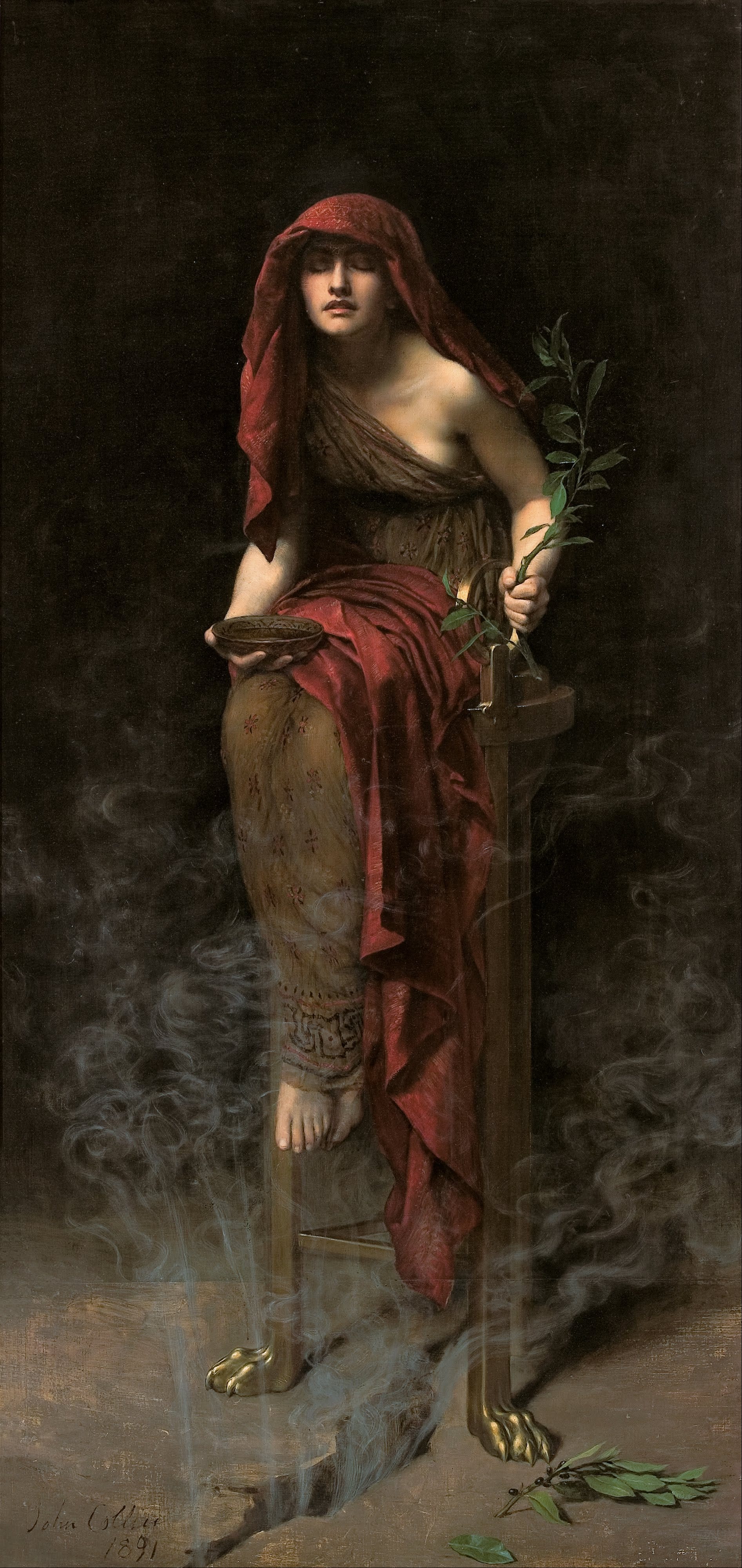
His Priestess of Delphi of 1891 shows the oracle seated on her tripod in rising vapour, and it now hangs in the Art Gallery of South Australia.
In the Venusberg took its cue from the Tannhauser legend, the knight trapped in the goddess's underground realm. The Land Baby of 1899 turned to Charles Kingsley's popular tale The Water Babies.
These were paintings built to be read, not just admired. Collier trusted his audience to know the source and to enjoy seeing it made solid and real on a large canvas.
The painter who wrote the manual
Collier did not only paint. He wrote about how painting should be done, and he wrote clearly.
In 1905 he published The Art of Portrait Painting, a practical guide setting out his own working creed. His argument was simple and firm. A portrait should tell the plain truth of a face, not dress it up with mood or clever handling.
He valued honest observation above flair, and he said so in print as well as showing it on canvas. That made him something of a public teacher of his craft, at a time when many artists preferred to keep their methods private.
The book also fixed his reputation as a thoughtful professional rather than a showman.
Honoured everywhere but the Royal Academy
For all his fame, one door stayed shut. Collier was never elected an Associate or a full member of the Royal Academy, the top badge of the British art world.
It was an odd gap for a man who showed there year after year for decades. He was far from unrecognised elsewhere. He was a founding member of the Royal Society of Portrait Painters, set up in 1891 to promote the art he practised, and he served as one of its vice presidents.
Historians have puzzled over the Academy snub ever since, usually putting it down to his blunt, unfashionable style and his refusal to charm the critics.
Collier seems not to have lost sleep over it, and the commissions kept coming with or without the letters after his name.
A rationalist to the end

Collier lived at the centre of Victorian science, and he shared its outlook. He was an open rationalist who did not hold to religious belief, in the tradition of the intellectual circle around Charles Darwin and his own father in law.
Huxley had coined the word agnostic to describe exactly this position, a refusal to claim knowledge of God either way. Collier moved easily in that world of scientists, writers and reformers, and it shaped both his mind and his subjects.
He kept working almost to the end of a long life. He died in London on 11 April 1934, aged eighty four. By then his kind of storytelling painting had fallen out of fashion, yet his crisp portraits of famous Victorians remain some of the clearest images we have of them.
Where Collier Ranks Among Victorian Storytellers
Waterhouse and Alma Tadema worked the same territory as Collier: myth, drama, and women as the visual anchor. Waterhouse leaned into mood, as in The Lady of Shalott of 1888 at the Tate. Alma Tadema chased marble and sunlight in Roman scenes that sold for enormous sums in his own lifetime.
Collier's finish is flatter and more graphic than either painter's. Lady Godiva, now in Coventry's Herbert Art Gallery, is his strongest picture: the empty street and the still horse carry the whole story without a single added flourish.
Lilith gets more attention online today, but it is the weaker painting. The serpent does the explaining that a stronger composition would not need. Priestess of Delphi, now in the Art Gallery of South Australia, ranks below both.
By 1897, when Lady Godiva went on show, Cézanne had already been exhibiting with the Impressionists for over twenty years. Collier kept painting literal, legible stories anyway, true to his own creed that a portrait should tell "the plain truth of a face." Alma Tadema's reputation collapsed within a decade of his death in 1912 and took decades to recover. Collier's plainer style never had as far to fall.
More secrets to unlock


The John Collier questions that keep coming up
When was John Collier born? In 1850 in London. He died there in 1934.
What is he famous for? His Lilith and Lady Godiva, and his Victorian society portraits.
Was he a Pre Raphaelite? A late follower, blending their love of myth with a polished academic finish.
What was the scandal? He married his late wife's sister, illegal in England, so they wed in Norway.
Where can I see his work? The Tate, and the Herbert in Coventry for Lady Godiva.
Was John Collier related to the Huxley family? Yes, closely. He married two daughters of the biologist Thomas Henry Huxley in turn. His first wife, Marian, died in 1887, and in 1889 he married her younger sister Ethel. That tied him into a family that later included the writer Aldous Huxley and the biologist Julian Huxley.
Why was John Collier never made a Royal Academician? Despite exhibiting at the Royal Academy for around sixty years, Collier was never elected an Associate or a full member. There is no single official reason on record. Most accounts point to his plain, truth first style and his reluctance to court the art establishment.