
John Singer Sargent was the most sought after portrait painter of his age, the American who painted Europe's high society with astonishing speed and swagger.
Then one scandalous portrait, Madame X, nearly wrecked his career, and at the height of his fame he walked away from portraits. He was born in Florence to American parents, trained in Paris, and spent thirty years turning the faces of the Gilded Age into some of the most alive portraits ever painted, before pouring his last decades into free, luminous watercolors.
He could pin a person's whole character to the canvas in a few confident strokes. That gift made him rich, famous, and eventually bored.
More incredible painter stories
If John Singer Sargent pulled you in, you will love these too:


John Singer Sargent at a glance
1856. Born in Florence to American expatriates who never stopped moving.
1884. Madame X scandalized the Paris Salon. He moved to London soon after.
1907. Swore off society portraits, keeping only the charcoal heads he called mugs.
1918. Painted Gassed after touring the Western Front.
1925. Died in London in his sleep, having refused a knighthood to keep his American passport.
The society machine
For decades Sargent was the portrait painter the rich and powerful queued for, in Paris, London and the United States. He caught not just a face but a posture, a glance, a whole social world, working fast and loose where others laboured.
A Sargent sitting was a status symbol.
In Paris, his rival for that same market was Giovanni Boldini, the Italian portraitist nicknamed the Master of Swish for brushwork fast enough to blur silk trains and elbows off the canvas.
The Madame X scandal
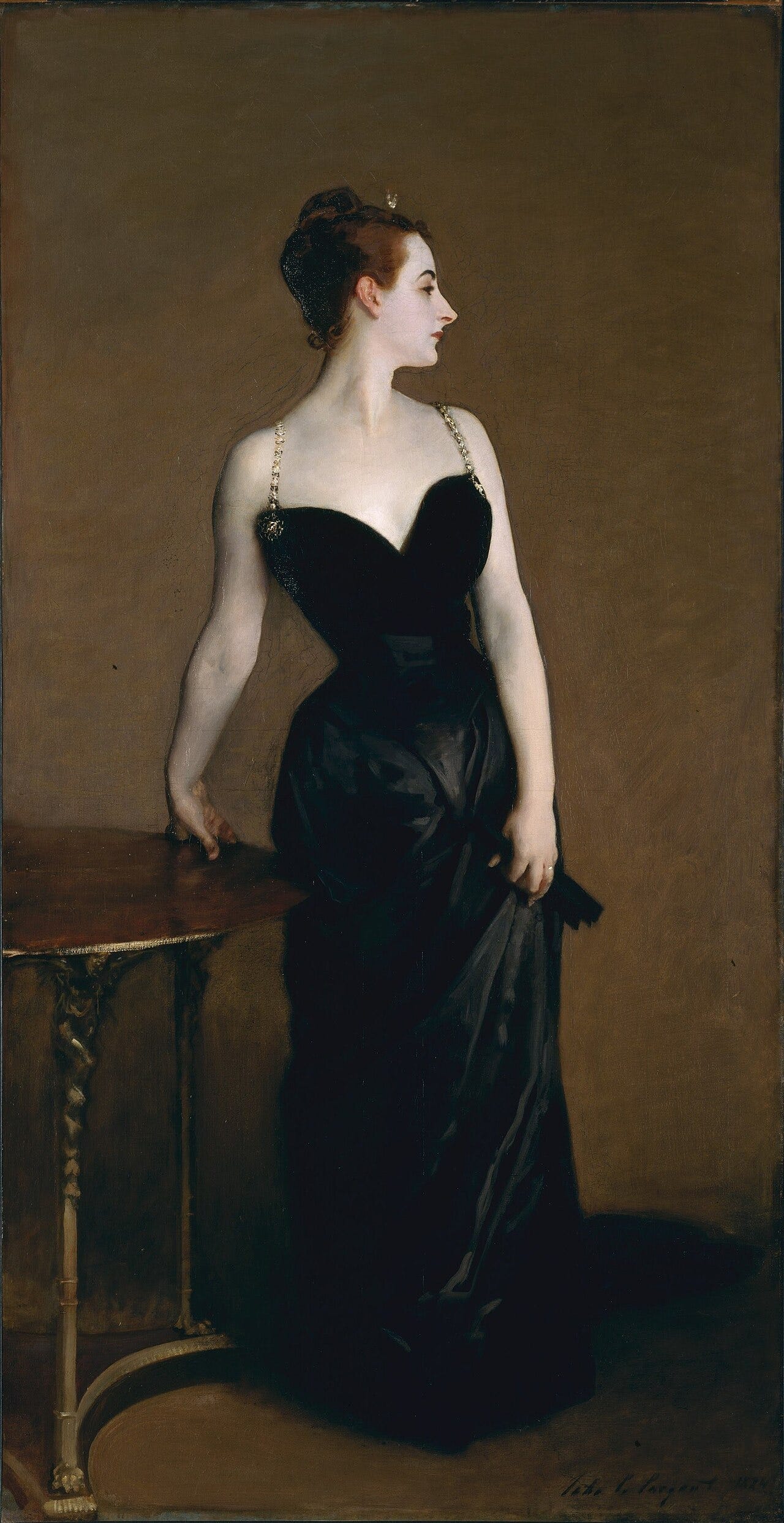
At the 1884 Paris Salon he showed a portrait of the socialite Virginie Gautreau, pale skin against black, with one jewelled strap slipping off her shoulder.
Paris was scandalized. The mockery was so intense that he repainted the strap and left France for London. The painting he thought would crown him almost finished him.
The watercolors almost no one expected
Freed from clients, Sargent poured himself into thousands of watercolors: Venice in the rain, white marble quarries, friends dozing in gardens, the hulls of boats.
Loose, sunlit and quick, they are some of the finest watercolors anyone has ever made, and they show a private artist behind the society star.
Gassed
The First World War pulled him back to grand statement. Sent to the front, he painted Gassed, an enormous frieze of blinded soldiers roped together, hands on the shoulders of the man ahead, stumbling past the wounded.
From the painter of glittering duchesses came one of the most quietly devastating war pictures of the century.
The numbers behind the man
Across his life Sargent made around nine hundred oil paintings and more than two thousand watercolors, plus countless drawings.
Where his portraits and watercolors hang today
The Metropolitan Museum of Art in New York holds Madame X. It bought the portrait in 1916, and at Sargent's request kept the sitter's name hidden for years. The Met also keeps a full essay on his life.
A childhood with no fixed address
John Singer Sargent was born in Florence on 12 January 1856. His parents were American. His father, Fitzwilliam Sargent, was a Philadelphia doctor who took his wife, Mary, to Europe in 1854 and never truly settled again.
The family drifted with the seasons. Winters in Nice, Rome, or Florence. Summers in the Alps or at resorts along the coast. Sargent got little regular schooling.
Instead he picked up French, Italian, and German alongside English, an education gathered from guidebooks and travel.
His mother was an amateur watercolourist. She kept him supplied with sketchbooks and pushed him to draw, and her wanderlust handed him his early subjects.
One point is worth clearing up: he was born in Italy but American by blood, and he stayed a United States citizen for life.
What Carolus Duran taught him
In May 1874, at eighteen, Sargent walked into the Paris studio of Carolus Duran, a fashionable young portrait painter.
Carolus Duran taught a method called au premier coup, meaning at the first stroke. The idea was to skip preliminary drawings and load the brush, then lay the paint straight onto the canvas.
You worked broadly and kept the freshness of a sketch in the finished picture.
That direct handling shaped almost everything Sargent did afterward. His loose, confident surfaces start here. Carolus Duran was also well connected, a friend of Monet and Manet, and in 1877 he invited his young pupil to help paint a ceiling decoration.
The Spanish master he chased
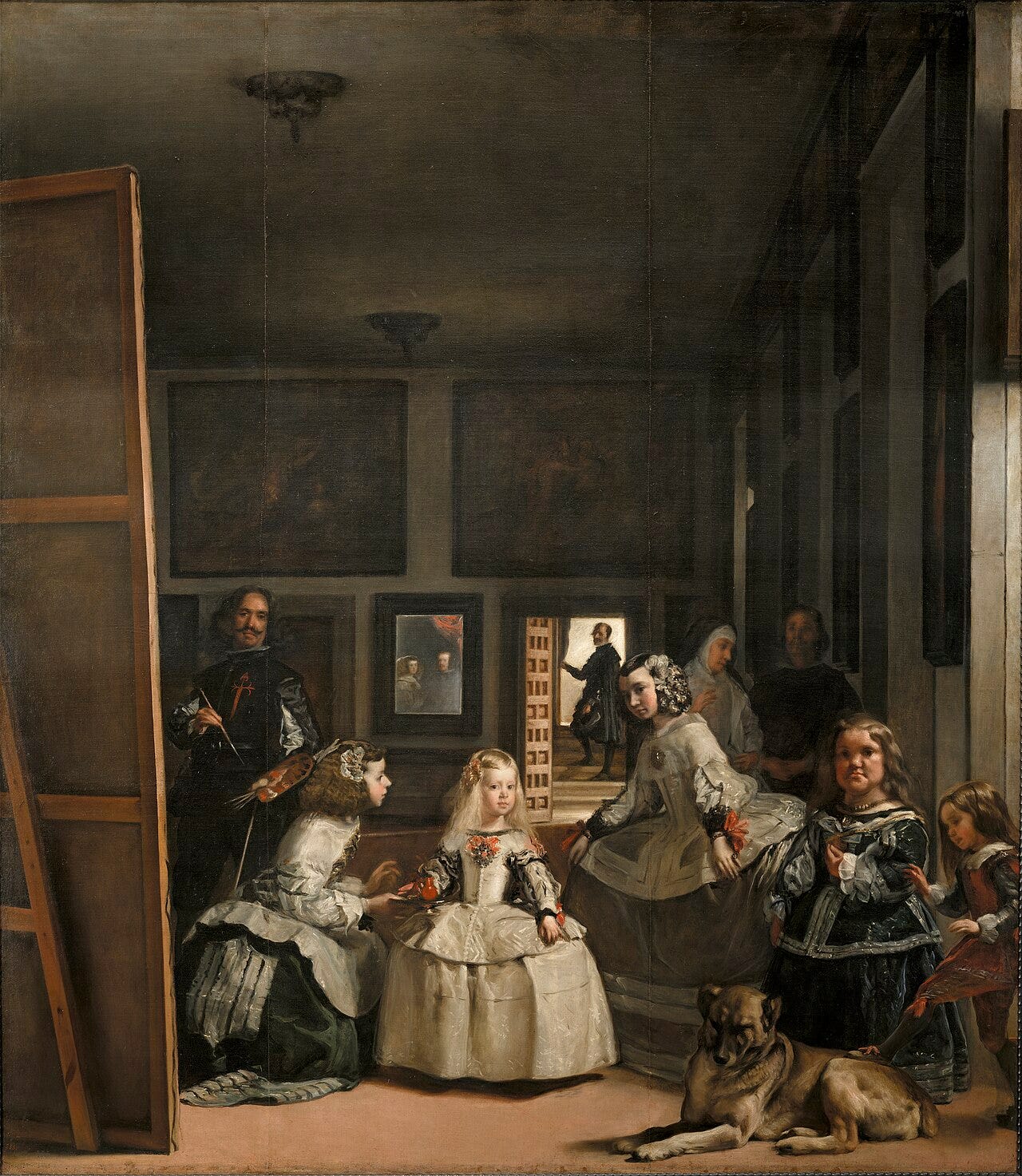
Carolus Duran steered his students toward the painterly old masters, and above all toward one name: Diego Velazquez.
Sargent took the lesson to heart. In 1879 he traveled to Madrid to copy Velazquez in the Prado. The following year he went to Haarlem in Holland to study the quick, loaded brushwork of Frans Hals.
Those trips fed directly into his art. The Spanish journey in particular gave him the raw material for his early scenes of dancers and music.
It is worth noting where his modern look came from. That loose, dark, unfussy handling was rooted in seventeenth century Spain, not spun out of thin air.
A Salon star before the scandal
People remember the Madame X disaster of 1884. They forget that Sargent had already conquered Paris.
He debuted at the Salon in 1877, showing a careful mix of portraits and subject pictures. The praise for such a young foreigner was unusual.
Honors followed fast: an honorable mention in 1879 for his portrait of Carolus Duran, then a second class medal in 1881.
His grandest early picture was El Jaleo, from 1882, a large theatrical scene of a Spanish dancer lit from below. Isabella Stewart Gardner later bought it for her Boston museum, where it still hangs in its own alcove.
So the scandal did not make Sargent. It nearly unmade a painter who was already winning.
London, Tite Street, and a garden at dusk
After Madame X, Paris cooled on him. In 1886 Sargent moved to London for good. He took over Whistler's old studio at Tite Street in Chelsea. English patrons were slow to warm up, finding his work, in his own words, beastly French.
With time on his hands, he spent the autumns of 1885 and 1886 at Broadway, a village in Worcestershire, among a group of artist friends.
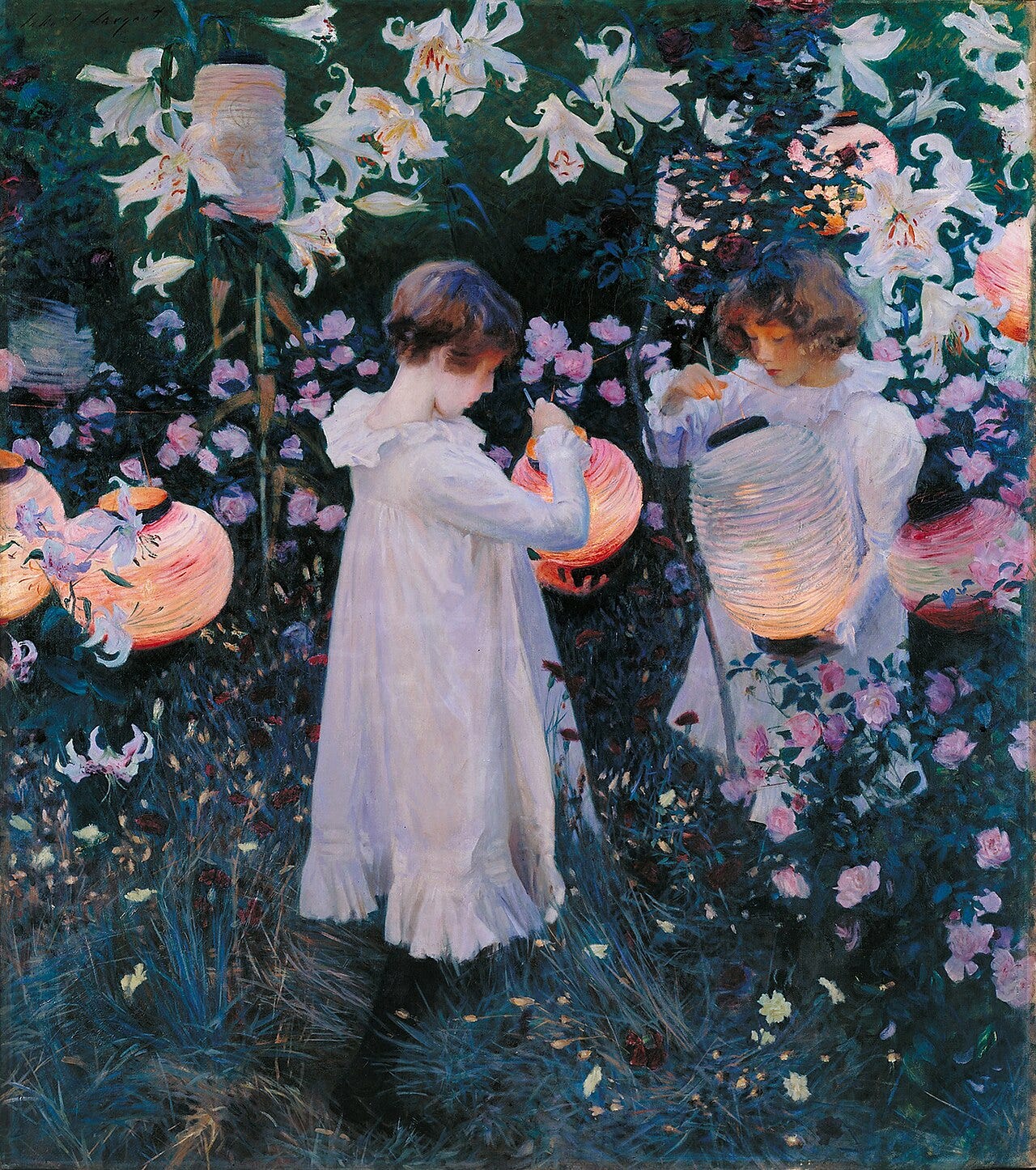
There he painted Carnation, Lily, Lily, Rose. Two small girls light paper lanterns in a garden at twilight. He could only work a few minutes each evening, chasing that exact fading light.
It was a hit at the Royal Academy in 1887, bought for the nation, and it now hangs at Tate.
Painting beside Monet
Sargent admired Claude Monet and turned that admiration into a real friendship. The two probably met in Paris as early as 1876.
From the summer of 1885 he visited Monet several times at Giverny. On one occasion he painted Monet at work outdoors, brush in hand. That picture, Claude Monet Painting by the Edge of a Wood, dates from about 1885 and belongs to Tate.
He also collected, buying several of Monet's canvases for himself. Still, he never went all the way into Impressionism. He kept his figures solid and clearly built, rather than dissolving everything into flecks of pure colour.
He borrowed the light, not the whole recipe.
The murals that ate his last decades
Portraits made Sargent rich. Murals were where he tried to prove something bigger.
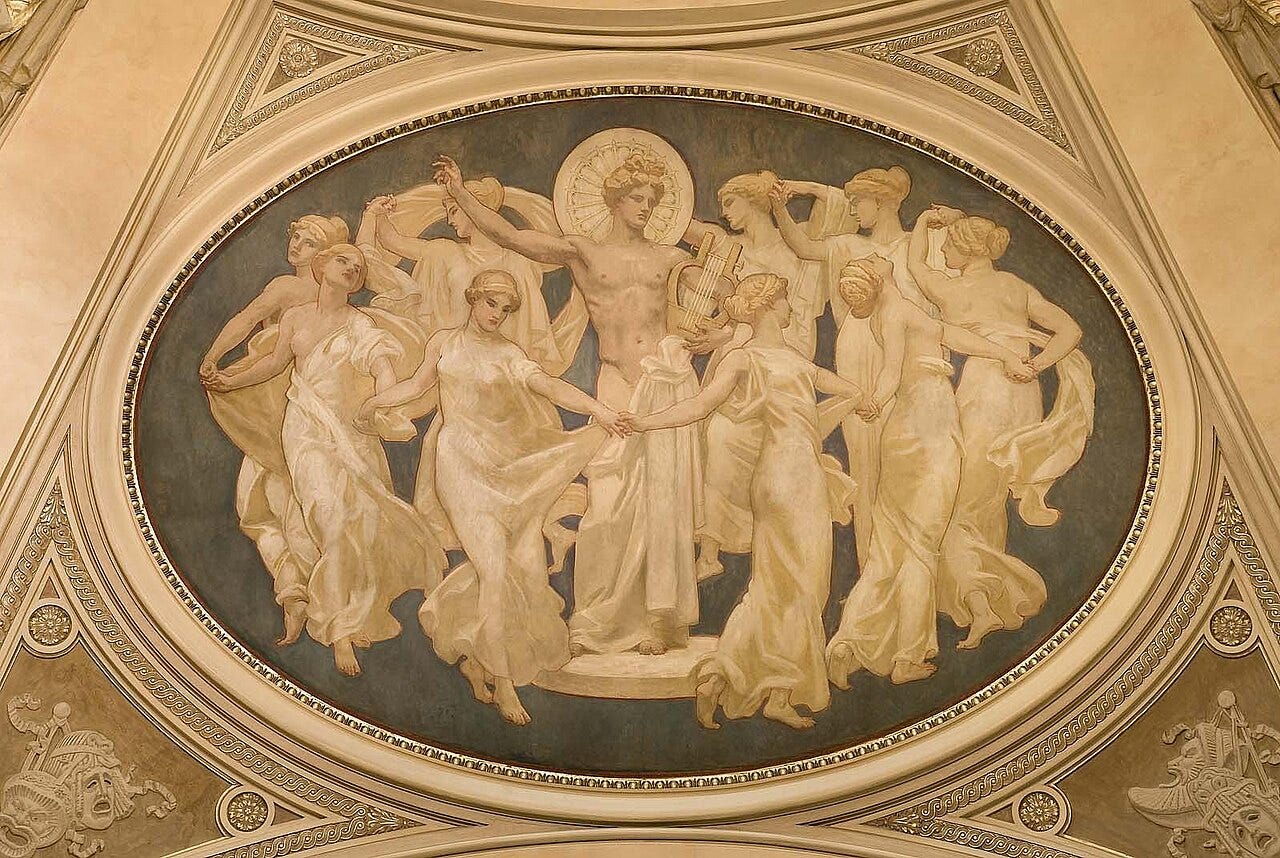
From 1890 he took on a vast decorative cycle for the new Boston Public Library. Later came a second commission for the Museum of Fine Arts Boston, and work for Harvard's Widener Library.
These projects stretched across the rest of his life, and he treated them as his serious ambition, not a sideline.
During his American stay from 1916 to 1918 he was busy installing the library murals in person. Visitors who know him only for society ladies in satin are often surprised.
He spent years on ceilings and walls of religion and myth, work that few of his portrait clients ever saw.
The charcoal mugs
Around 1907 Sargent swore off formal oil portraits and the fashionable crowd that came with them. But the demand for his likenesses would not die. So he found a compromise: charcoal.
He turned out roughly twenty to thirty charcoal portraits a year, each finished in a sitting or two. He called them, with a shrug, his mugs.
They were quick and cheaper than an oil, yet clients still lined up for them. A Sargent in charcoal was a way to be seen by the most wanted portraitist alive without waiting months for a canvas.
Many of these heads now sit in museums and print rooms, prized as small, fast records of an age.
The bachelor no one could fully read
Sargent never married. His close world was small: his sisters Emily and Violet, Violet's children, and a tight circle of friends who often traveled and posed for him.
His private life left almost no paper trail. That silence has led some later biographers to speculate about his attachments and his desires.
Here honesty matters. The documentary record simply does not settle the question, and no relationship is confirmed by firm evidence.
What is clear is where his energy went. He worked relentlessly, moving between London, the Alps, Venice, and Boston, and the studio seemed to hold most of his life.
The knighthood he turned down, and a quiet end

Britain took him in. He was elected an associate of the Royal Academy in 1894 and a full Academician in 1897.
By most accounts he went on to decline a knighthood. Accepting it would have meant becoming a British subject, and he chose to keep his American citizenship instead.
In 1918 he served as an official war artist, traveling to the western front. The end came suddenly. Sargent died in his sleep in April 1925, of heart disease, at his Tite Street home in Chelsea.
He was about to sail to Boston to finish museum work, and memorial exhibitions soon followed in Boston, London, and New York.
More secrets to unlock


The John Singer Sargent questions that keep coming up
Who was John Singer Sargent? An American portrait painter, the leading society portraitist of his time.
When was he born? In Florence, Italy, in 1856, to American parents.
When did he die? In London, in 1925.
What is he famous for? The portrait Madame X and his brilliant watercolors.
Why did he stop painting portraits? He grew tired of vain sitters and wanted his freedom.
Where can I see his work? The Met in New York holds Madame X; major museums hold his watercolors.
Was John Singer Sargent Italian or American? He was American. Sargent was born in Florence in 1856 only because his American parents were living abroad as expatriates. He held United States citizenship his whole life and is reported to have refused a British knighthood rather than give it up.
Did Sargent ever marry? No. Sargent never married and left few close attachments outside his family and a small circle of friends. His private life is thinly documented, which has fed later speculation, but no relationship is confirmed by solid evidence.
For me the Sargent worth crossing a city for is Gassed, the frieze of blinded soldiers roped together. Madame X, the picture that once drove him from Paris, now hangs in pride of place at the Met, and he called it the best thing he ever did.