
A polyptych is a painting made of many separate panels joined together, usually as an altarpiece. The word means many folds. Most often the panels are hinged, so it shows one set of images when shut and a richer one when opened for feast days.
What I love about the form is that it was never one fixed picture. It was built to change through the year, opening for feast days and closing the rest of the time.
The Ghent Altarpiece, finished by the van Eycks in 1432, has a dozen panels and ranks among the most stolen artworks in history.
A polyptych, meaning many folds, is less a single picture than a machine built to hold an entire faith.
Polyptych at a glance
What it is: an altarpiece of many joined panels.
The word: from Greek, many folds.
The trick: hinged wings that open and close.
The two faces: a plainer outside, a glorious inside.
The family: the two panel diptych and three panel triptych.
Keep learning art the fun way


A painting that opens
The defining feature of most polyptychs is movement.
The central panels are fixed, and side panels, called wings, are hinged to fold over them.
Closed, the altarpiece shows a quieter image, often in muted grisaille tones or a simple Annunciation. Opened, on holy days, it blazes into full color and gold.
The same object could be two completely different experiences depending on the day of the church calendar.
It is sacred theatre with a curtain you can fold.
The family of folds
Polyptych is the big word in a small family.
A diptych is two panels. A triptych is three, a center with two wings, the most common altarpiece shape of all.
Anything with more than three panels is a polyptych, and the grandest could run to dozens of compartments stacked in tiers, with saints, scenes and predella panels along the base.
The more folds, the more story it could tell.
Two, three, or many. The principle never changes.
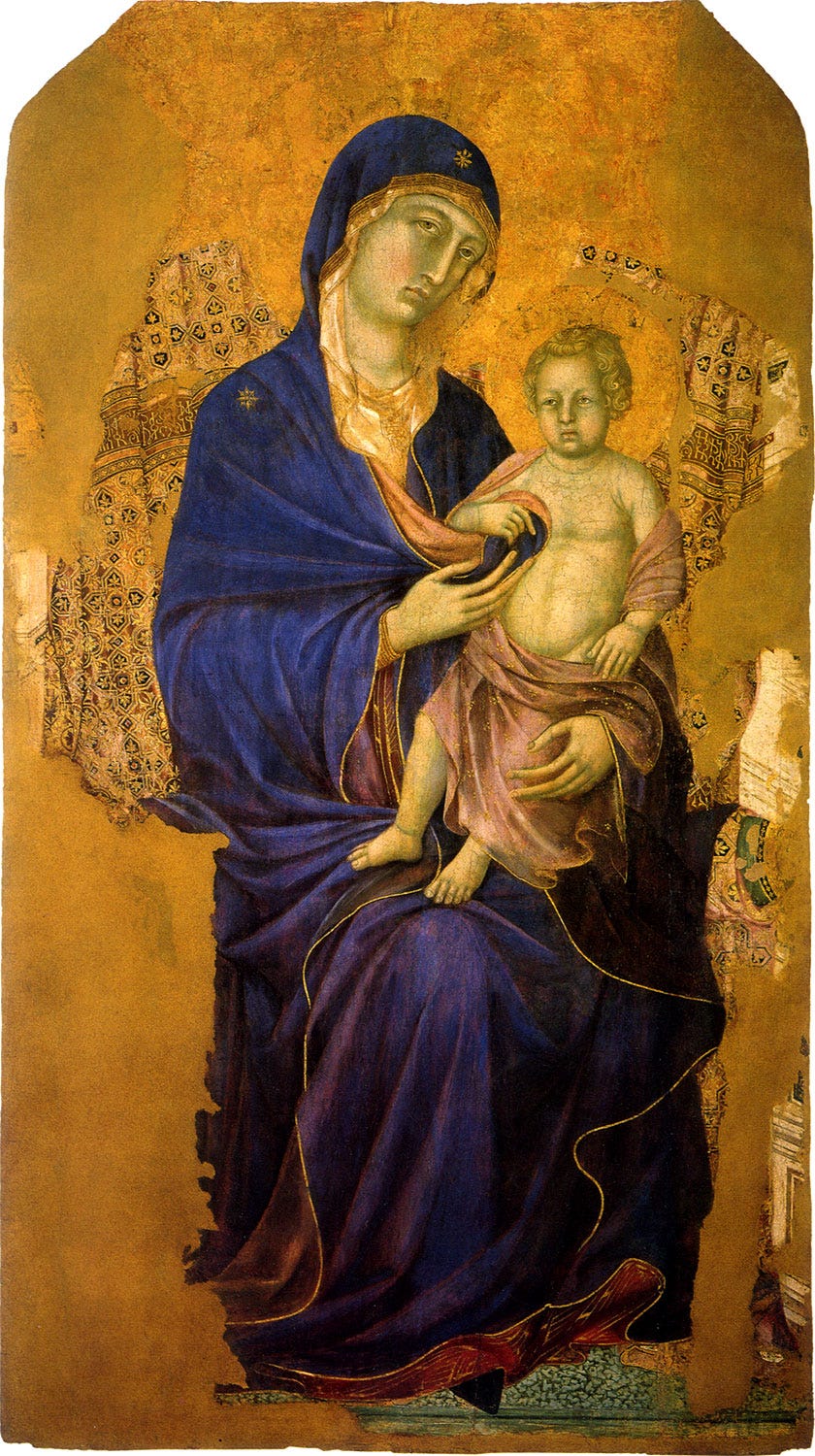
Built to be opened and shut
These were working objects, not just pictures.
Painted in egg tempera and gold on wood, a polyptych had to survive constant opening and closing, candle smoke and centuries of use.
Many were later sawn apart by dealers and sold as separate paintings, which is why panels from one altarpiece are now scattered across different museums.
Curators still work to reunite, at least on paper, polyptychs that were broken up long ago.
A single altarpiece can now live in five cities at once.
The whole world on an altar
At its grandest, the polyptych tried to hold everything, and that ambition is what draws me to it.
Duccio's Maesta for Siena Cathedral packed the life of the Virgin and Christ into dozens of glowing panels, front and back.
The van Eyck brothers' Ghent Altarpiece opens to reveal a whole cosmos of figures around the Lamb of God. One of its panels, the Just Judges, was stolen in 1934 and has never been found.
These were the most ambitious paintings of their age, less a picture than a painted universe you could fold shut at night.
The bigger the faith, the more panels it took to hold it.
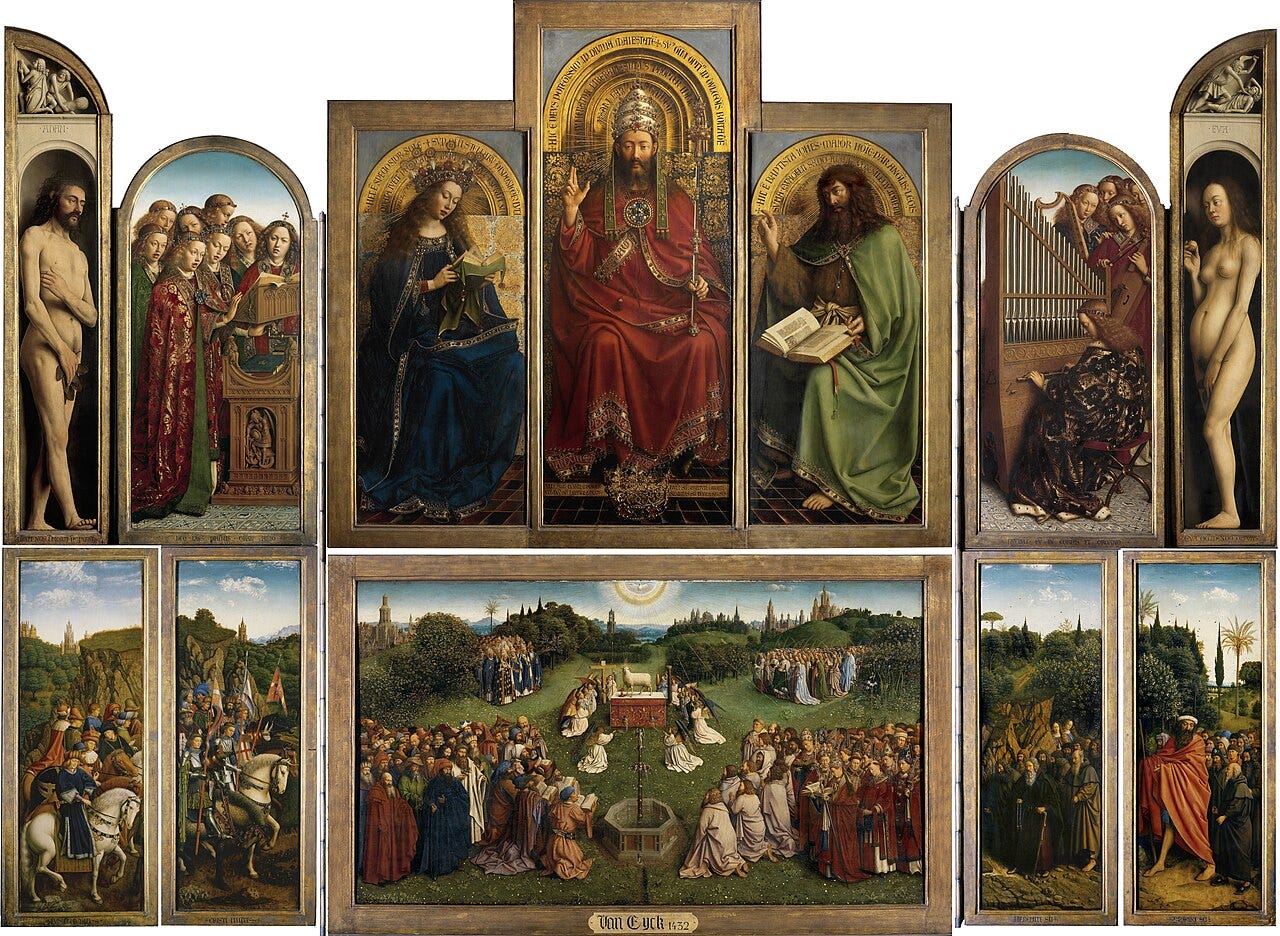
Two great polyptychs survive in museums. The Demidoff Altarpiece by Crivelli is in the National Gallery, and Gentile da Fabriano’s Valle Romita Polyptych in the Brera.
The polyptych questions I get
What is a polyptych? An altarpiece made of many joined panels, usually hinged to open and close.
What does the word mean? Many folds.
How is it different from a triptych? A triptych has three panels. A polyptych has more than three.
Why do the panels open and close? To show a plainer image when shut and a glorious one when opened on holy days.
Why are many now split up? Dealers often sawed them apart to sell the panels separately, scattering them across museums.
More secrets to unlock


The picture you could fold away
To me, a great painting is usually one fixed image on a wall. The polyptych imagined something stranger: a picture that changed through the year, opening like a book and closing like a cupboard.
For centuries the grandest art in Europe was a vast hinged machine of gold panels, which is exactly why so many were later sawn up and scattered, a single altarpiece now split among museums in different countries.
