
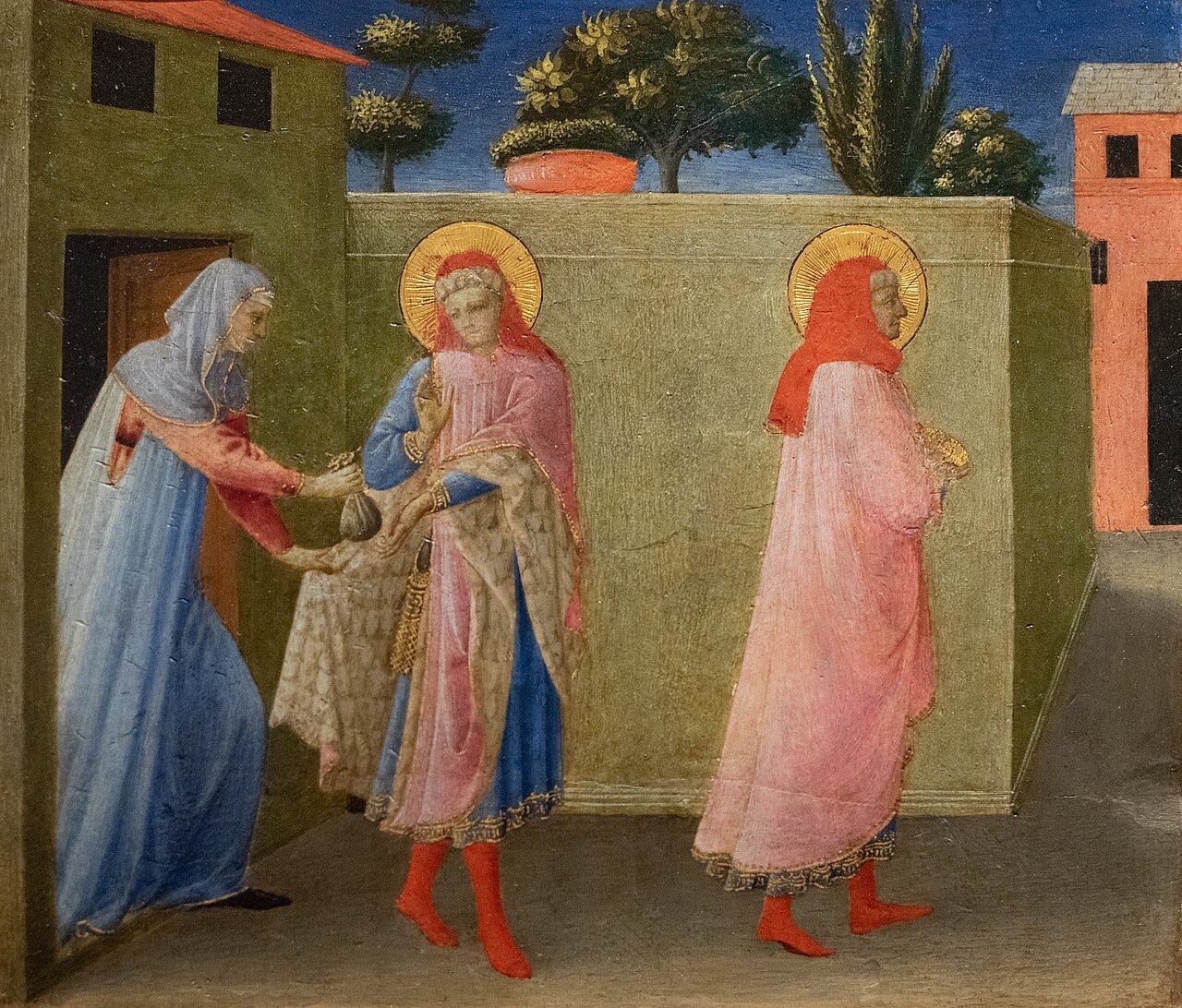
A predella is the long, low strip of small paintings that runs along the bottom of an altarpiece, beneath the main image. While the saints above stand in timeless majesty, the predella tells stories: little scenes from their lives, in a row like frames in a comic strip.
A low strip of small scenes running along the base of an altarpiece, beneath the towering saints.
The grand saints above were fixed by tradition, posed and gilded. Down on the predella, the painter was finally free to tell a real story.
Predella at a glance
What it is: the row of small scenes at the base of an altarpiece.
The position: directly under the main panel, near eye level.
The job: to tell stories, usually from the lives of the saints above.
The freedom: small and low, so painters could be more imaginative.
The fate: often sawn off and scattered into museums.
Keep learning art the fun way


The story strip of the altar
An altarpiece works on two levels, and the predella is the lower one.
Up high sits the grand, still image: the enthroned Virgin, a row of saints, painted to be worshipped.
Down below, the predella runs a sequence of small narrative panels, often the miracles, martyrdoms or legends of those same saints.
Because it sat near eye level, the predella is where a worshipper could lean in and read the story, scene by scene.
The saint stands above in glory. Below, the predella shows how they got there.
Where painters felt free
The small scale of the predella made it a playground, and that is exactly where I look first.
The main panel had to be formal, hieratic, often gold grounded and fixed by tradition.
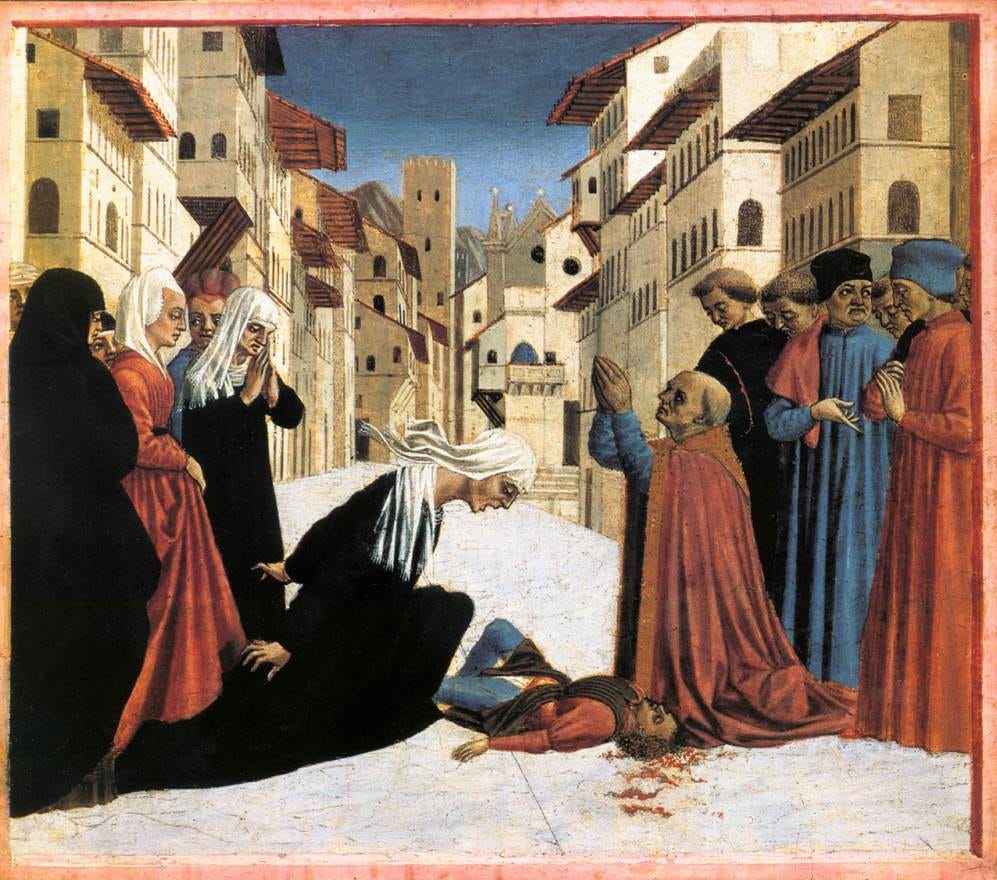
The predella, small and secondary, gave the painter room to experiment: lively figures, real landscapes, free storytelling, fresh perspective.
Some of the most charming and free painting of the early Renaissance, in glowing tempera and gold, hides in these little strips.
The big panel showed what the painter had to do. The predella showed what they could do.
Part of a bigger structure
The predella belongs to the architecture of the altarpiece.
It forms the base of larger structures like the triptych and the many panelled polyptych, supporting the main tier of saints above.
In a grand altarpiece, the predella is the foundation course of a painted building, the step on which the whole sacred structure stands.
It is the plinth of the painting, and the painting on the plinth.
Scattered to the winds
Like the altarpieces they belonged to, predellas were often broken up.
When dealers dismantled altarpieces to sell the parts, the little predella panels were easy to detach and sell one by one.
Today a single predella might be spread across several museums and continents, its scenes separated from each other and from the great panel they once sat beneath.
Curators piece these sequences back together, at least on paper.
A story painted as one strip now reads across a dozen cities.
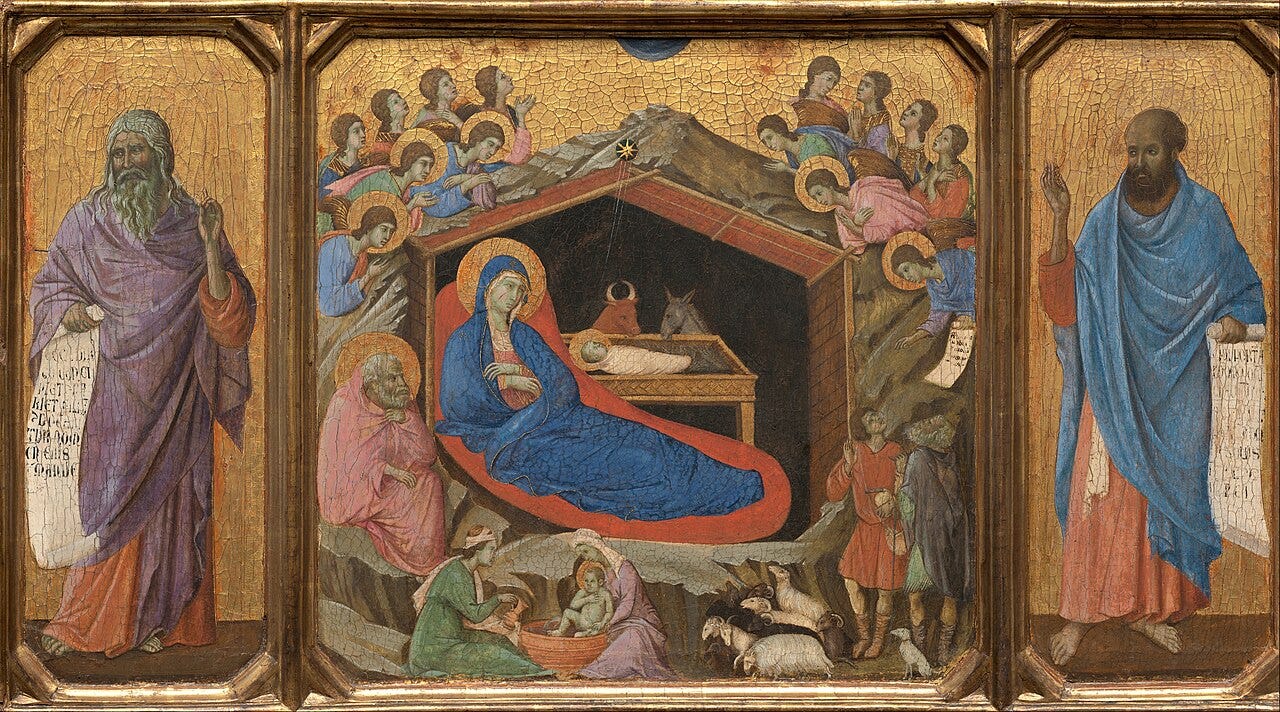
Many predella panels now hang alone in museums. The National Gallery of Art holds Duccio's Nativity from the Maesta of 1308 to 1311, and the National Gallery in London a row of Sassetta's Saint Francis panels.
Predella, the questions at the foot of the altar
What is a predella? The row of small narrative scenes along the base of an altarpiece.
Where is it located? Directly beneath the main panel, usually near eye level.
What does it show? Usually stories from the lives of the saints depicted above.
Why was it more playful? Being small and secondary, it freed painters to experiment with narrative and perspective.
Why are predella panels scattered? Altarpieces were often broken up, and the small panels sold separately.
More secrets to unlock


The best painting in the room, hiding at the bottom
The eye goes up first, to the great golden saint commanding the altar. The real surprises, I think, wait at knee height.
Freed from the weight of the icon above, the painter could simply tell a story with wit and nerve, and some of the freshest passages in early Renaissance art sit down there. To me it is worth crouching.
