
A tondo is a painting or carved relief made in a perfect circle, born in Renaissance Florence for the home rather than the church. It is the hardest shape in art: a circle gives a composition no corner to hide a weakness in.
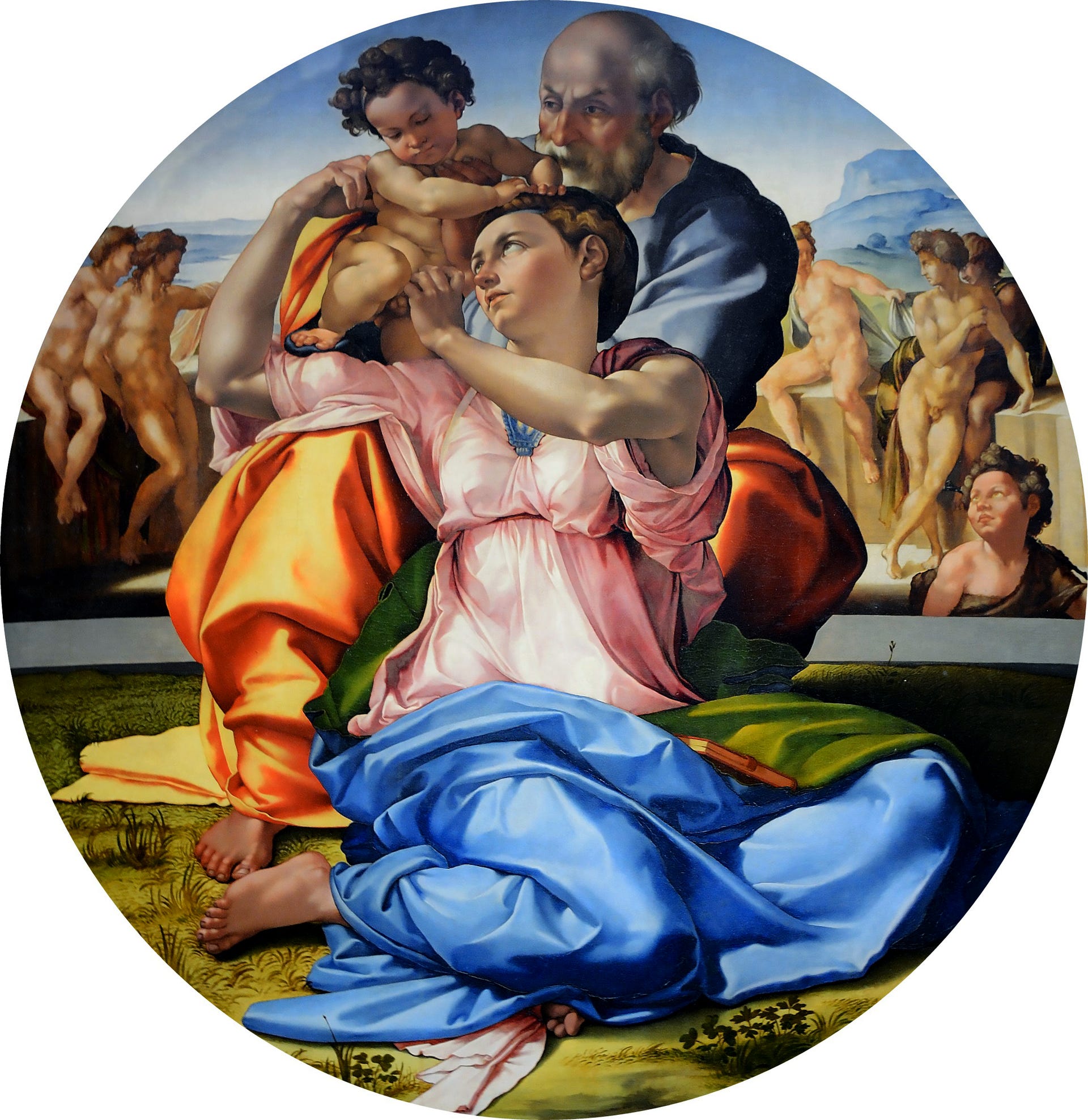
Most paintings are rectangles for a boring reason: canvas and panel are cut that way. A tondo throws out that convenience on purpose.
I have always found the format a little strange and a little moving at once: Florence took the hardest frame to compose inside and decided it was the right shape for its most private pictures.
Tondo, fast:
The name comes from the Italian rotondo, meaning round.
It is a circular painting or a circular carved relief, both count as a tondo.
Renaissance Florence made it fashionable, roughly between 1450 and 1550.
Most tondi were bought for private homes, often to mark a marriage or a birth.
The composition has no corner to rest in, which is exactly the challenge.
Florence has more stories
A few more from the Renaissance rivalry that shaped how we still judge a painting today.


How to recognize a tondo
A tondo is round, not oval, framed as a true circle rather than cropped into one. It almost always holds a warm, intimate subject, most often the Virgin and Child, with figures and gazes curved to follow the frame instead of fighting it.
A rectangle has straight edges an artist can lean a figure against. A circle offers nothing to lean on.
So the whole arrangement has to curve: heads, arms and drapery echo the round frame until the picture feels like it is gently turning in place.
Painters who tried to force a rectangle's habits onto a circle usually lost the fight. The best tondi feel inevitable, as if no other shape could have held that particular gesture.
Where the tondo comes from
The format grew out of the desco da parto, a painted birth tray given to Florentine mothers after childbirth. By the late 1400s, painters translated that same domestic, celebratory purpose into round panel paintings, mostly images of Mary and her son, meant for a bedroom rather than an altar.
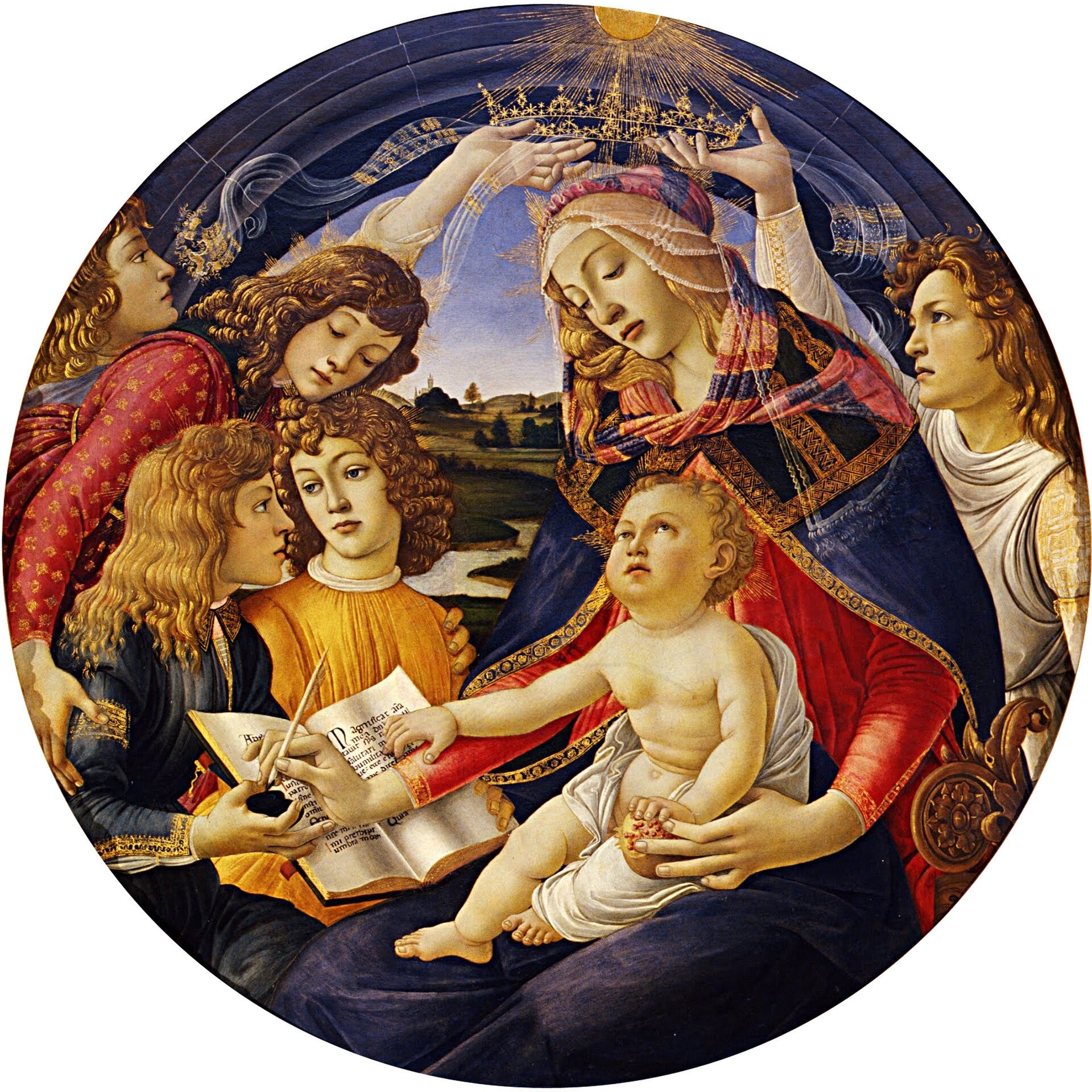
No one made the format sing quite like Botticelli. In the Madonna of the Magnificat, he curves the figures, the gestures and even the gazes to follow the frame, so the whole image seems to rotate gently around its own center.
The desco da parto tradition explains why so many tondi feel domestic rather than grand: they were wedding gifts and birth gifts first, church furniture only by accident.
Three ways Florence used the circle
Florentine workshops put the round frame to three uses: devotional Madonnas for private homes, portrait tondi for wealthy patrons, and carved marble reliefs for chapels and collectors. The shape stayed constant while the subject and the material changed completely from one commission to the next.
Painted Madonnas: the most common use, warm and domestic, meant for a bedroom wall.
Portrait tondi: rarer, used for portraits of patrons who wanted something less conventional than a rectangle.
Carved marble reliefs: the same round format in stone, sculpted rather than painted.
Michelangelo's version: power, not sweetness
Michelangelo painted only one finished panel picture in his life, the Doni Tondo, and he used the circle to build tension rather than calm. The Holy Family twists in a muscular spiral, restless energy packed into a frame usually reserved for lullabies.
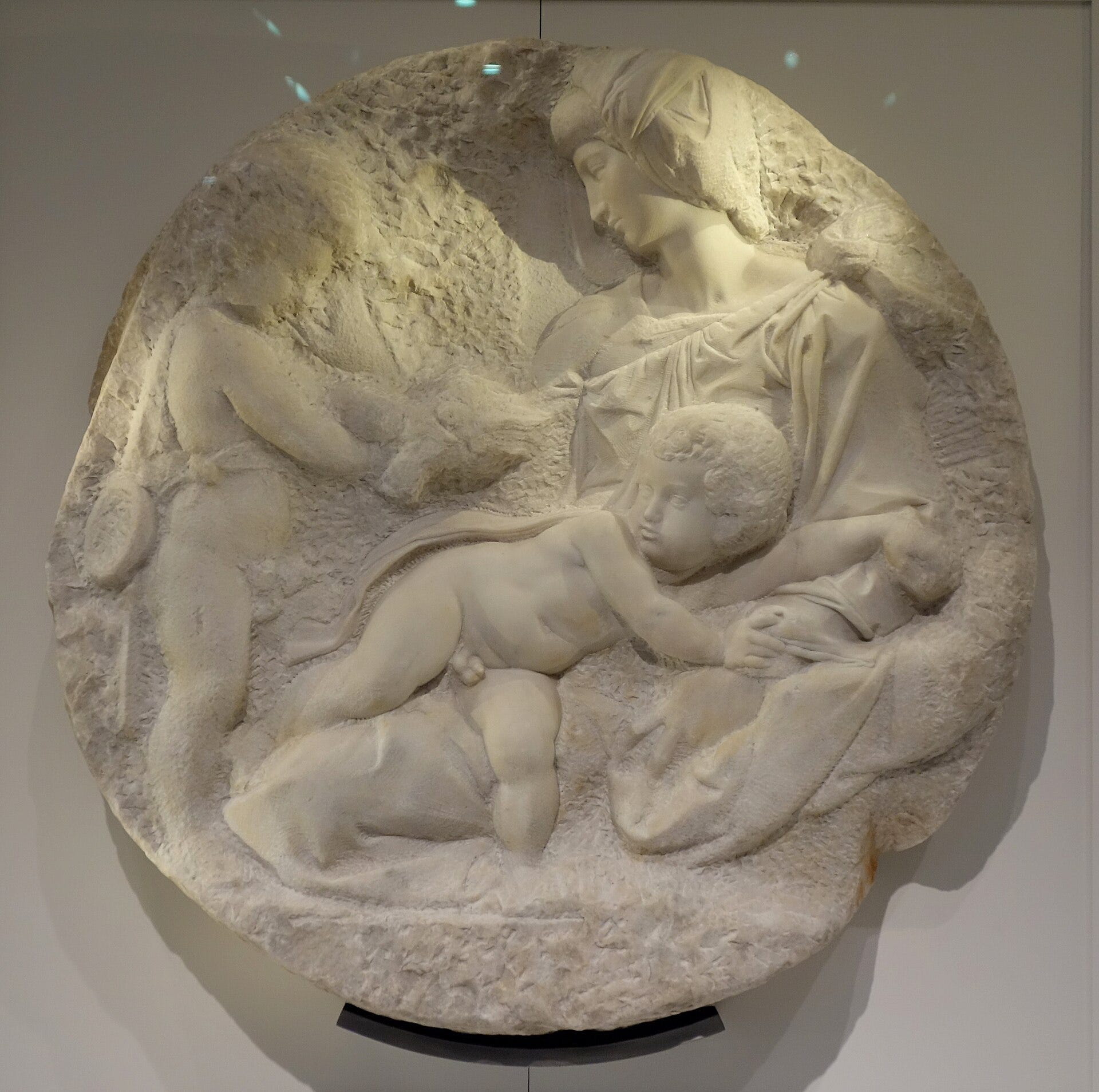
He also carved the format in marble. The unfinished Taddei Tondo shows the infant Saint John startling the Christ Child with a goldfinch, the surface left rough where Michelangelo simply stopped working.
Even unfinished, the marble shows what the format demands: every limb had to answer the curve of the frame, not just the logic of the bodies.
Raphael's quiet answer: Madonna della Sedia
Raphael took the same round frame and went the opposite direction from Michelangelo, wrapping the Virgin and Child so tightly into the circle that mother, son and chair seem to have grown together. Painted around 1514 for the Medici, it remains one of the most reproduced images in Western art.
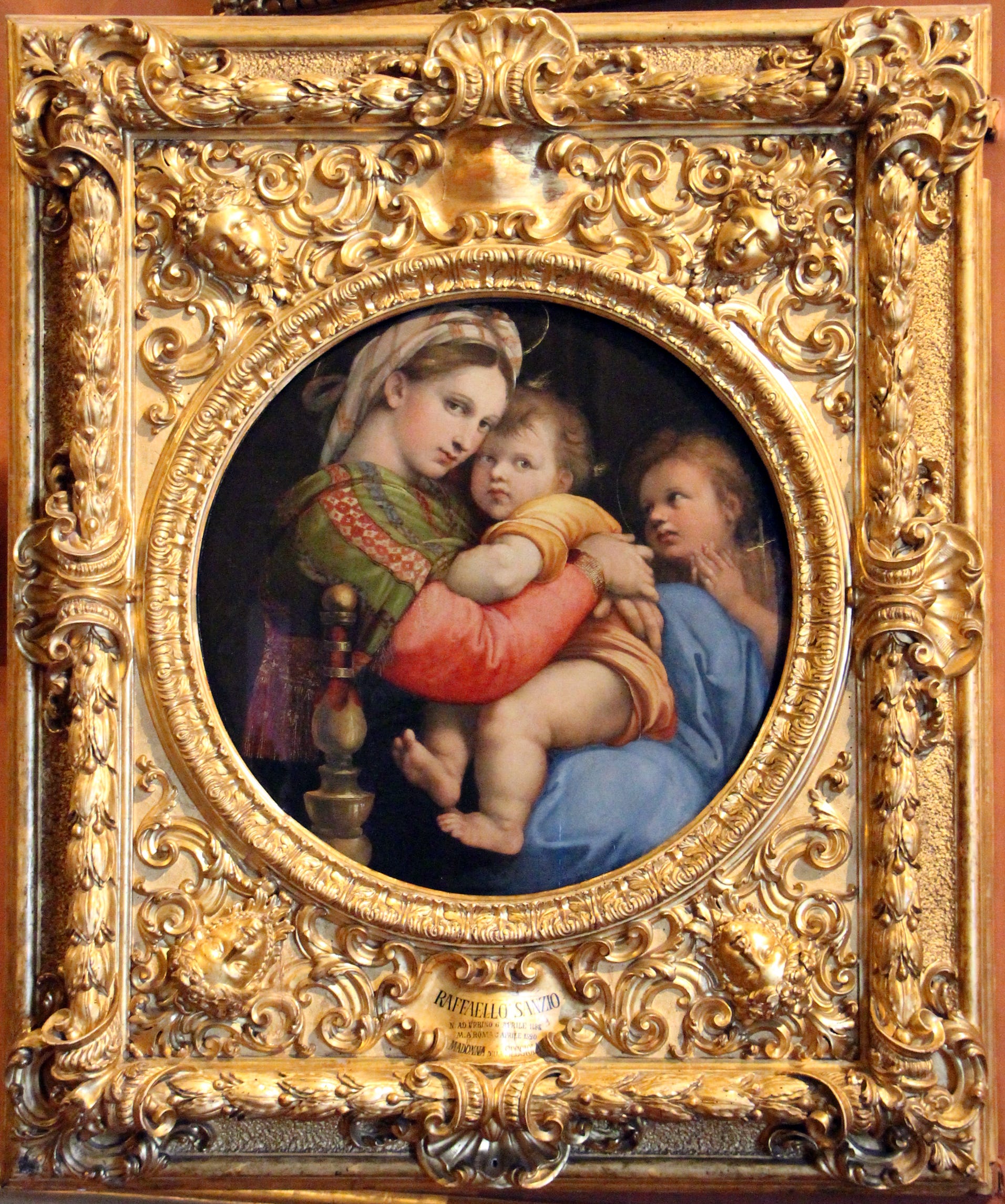
Where Michelangelo used the circle for drama, Raphael used it for warmth, folding a mother's arm and a child's leg around the frame until nothing about the pose reads as posed at all.
The composition was copied so often in the 1800s, on plates, in prints and in tapestries, that many people met the Madonna della Sedia as a reproduction long before they ever saw the original in Florence.
Keep exploring Renaissance secrets
A few more stories from the same circle of Florentine rivals and their sitters.


Tondo questions, answered
What is a tondo? A circular painting or a circular carved relief, most often showing the Virgin and Child.
Where does the word come from? From the Italian rotondo, meaning round.
When was the tondo most popular? In Renaissance Florence, roughly between 1450 and 1550.
What were tondi used for? Mostly private homes, often bought to mark a marriage or the birth of a child.
Who is the tondo most associated with? Botticelli and Michelangelo, whose Doni Tondo is the most famous painted example.
Is a tondo always a painting? It is not: the format also appears as a carved marble relief, like Michelangelo's Taddei Tondo.
The Doni Tondo is the only panel painting Michelangelo is universally agreed to have finished, a single circular exception in a career spent mostly carving marble and painting ceilings.