
Sandro Botticelli painted the most beautiful pagan dreams of the Renaissance for the Medici, then fell under the spell of a doomsday friar, turned against his own art, and died forgotten for nearly 350 years.
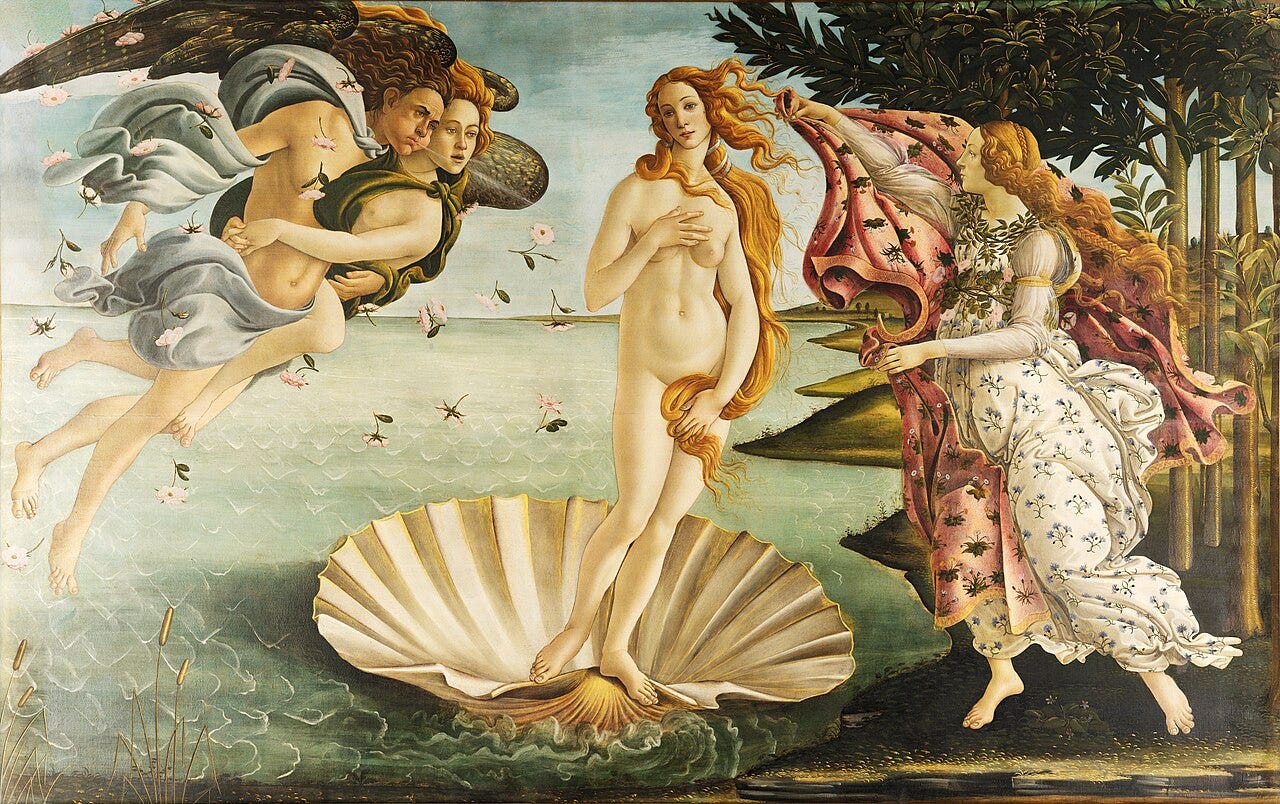
That fall, from golden goddesses to apocalyptic gloom, is the real story behind the postcards.
The Birth of Venus and Primavera are so famous now that we forget how strange they were: huge, almost life size pagan goddesses, made in a Christian city, at a moment when one preacher was about to set fire to exactly this kind of beauty.
Botticelli lived on both sides of that fire.
Botticelli in five lines:
He lived from around 1445 to 1510, his whole life in Florence.
His fame rests on two pagan allegories, the Birth of Venus and Primavera.
He worked for the Medici, the ruling family, at the peak of the Renaissance.
Late in life he followed the radical friar Savonarola and his art turned dark.
He was forgotten for centuries and only rediscovered in the 1800s.
More incredible painter stories
If Botticelli pulled you in, you will love these too:


So this story runs downhill on purpose, from the height of beauty to the bonfire.
Botticelli at a glance
1445. Born Alessandro Filipepi in Florence around this year. The nickname came from a brother.
1481. Summoned to Rome to fresco the walls of the new Sistine Chapel.
1482. Primavera, painted for a Medici household around this time.
1497. The bonfires of the vanities burned in his Florence, and Savonarola’s shadow fell across the work.
1510. Died poor and out of fashion. He was buried, at his wish, at Ognissanti, near Simonetta Vespucci.
The goddesses that should not exist
Start with the two paintings everyone knows, because nothing like them had been seen in a thousand years.
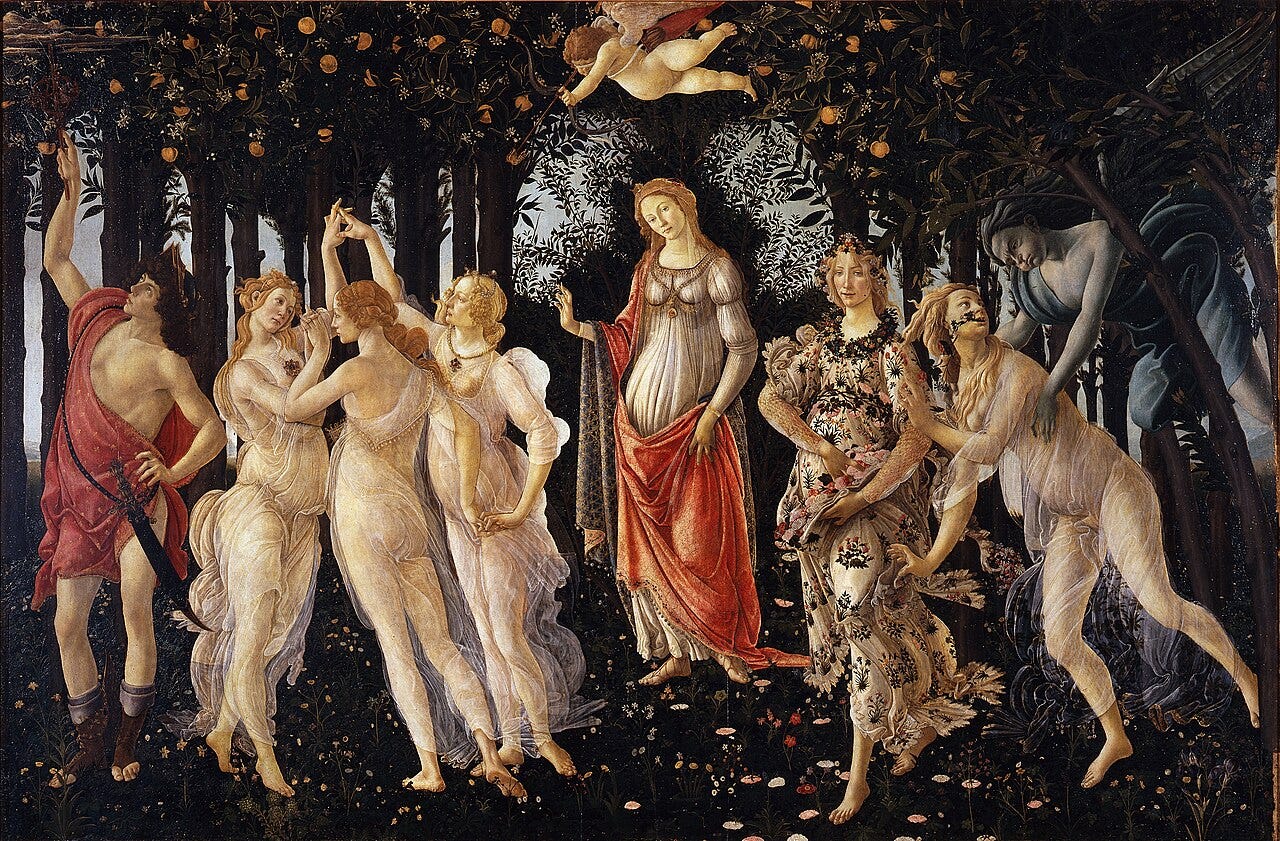
In a Christian city, Botticelli painted enormous canvases of naked and half dressed pagan gods: Venus blown to shore on a shell, Spring scattering flowers in a sacred grove. These were not church commissions.
They were made for the fabulously rich Medici circle, who loved the recovered myths of ancient Greece and Rome. Both are now usually tied not to Lorenzo the Magnificent himself but to a younger cousin, Lorenzo di Pierfrancesco de Medici, for whose household they were probably painted.
Nothing on this scale had been painted in a thousand years. Since antiquity, the female nude in art had mostly belonged to Eve and to shame.
Botticelli handed it back to a goddess and made it feel noble again, in the middle of a deeply Christian city.
They are also puzzles. Behind the beauty sits a whole philosophy, the idea that earthly beauty is a ladder to divine love. I unpack what the Birth of Venus means and the denser riddle of Primavera in their own stories.
The face he could not stop painting
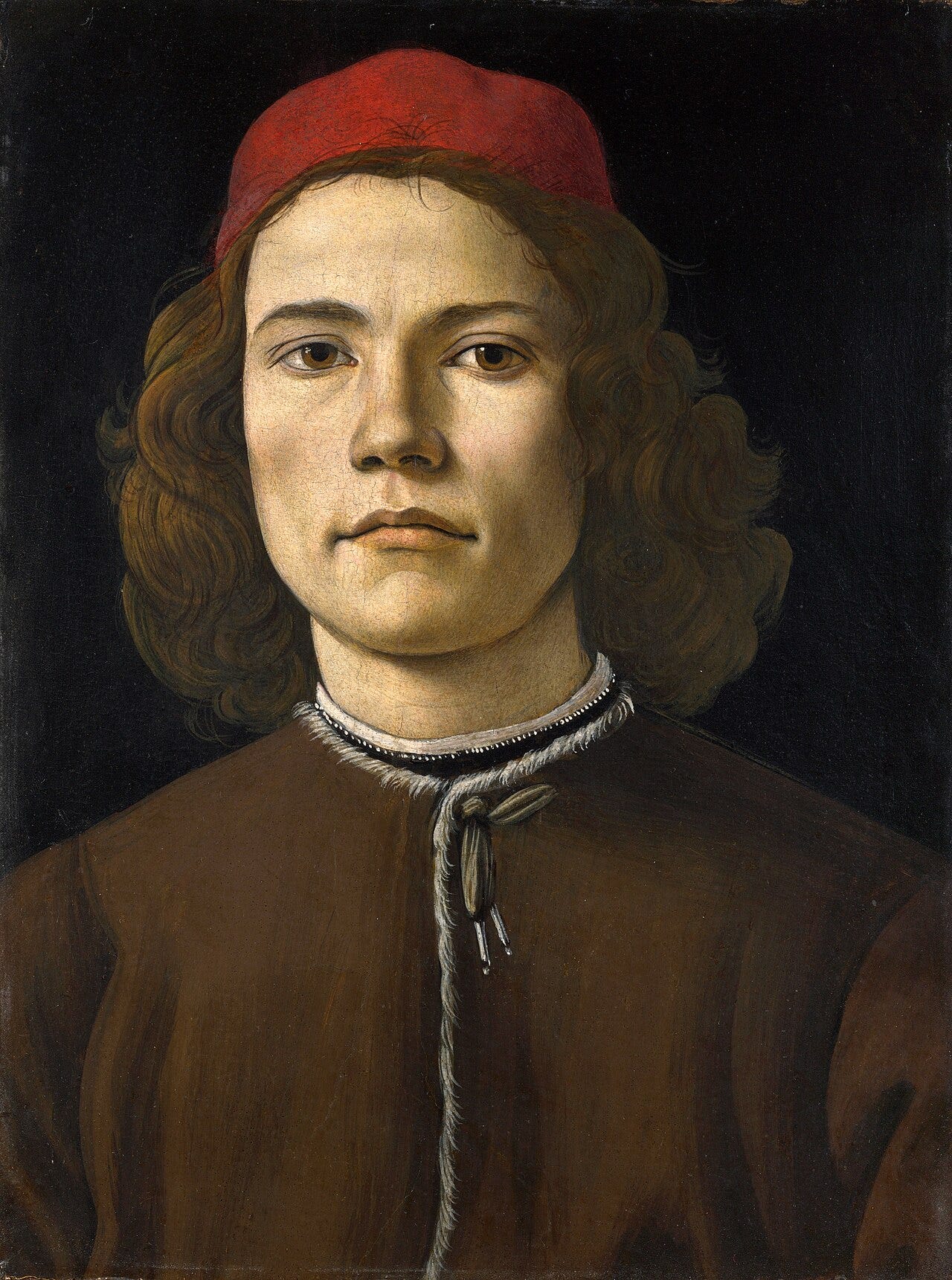
Look across his work and the same woman keeps returning: pale, oval face, long neck, reddish gold hair, a far away look.
She is often linked to Simonetta Vespucci, called the most beautiful woman in Florence, who died young in 1476. Whether she truly modeled for him or became an ideal he chased for decades is its own haunting story, told in Botticelli: The Impossible Love.
The workshop and the golden city
Botticelli grew up in Florence as the city was becoming the engine of the Renaissance.
He trained under Filippo Lippi, a monk and painter whose soft, tender Madonnas shaped his early style, and he absorbed the clean line of the Florentine drawing tradition.
He later repaid the debt by teaching Lippi's own son, Filippino, who grew into a master in turn. By his thirties he ran a busy workshop and had the best patrons in the city, above all Lorenzo de Medici, called the Magnificent.
This was a Florence drunk on antiquity. Scholars in the Medici circle, the poet Poliziano, the philosopher Marsilio Ficino, were reviving Plato and the old myths, and Botticelli turned their ideas into paint.
The summons to Rome
His reputation grew so fast that the Pope came calling.
Around 1481 Botticelli was one of a small group of the best Florentine painters summoned to Rome to fresco the walls of a brand new chapel for Pope Sixtus IV.
We know it now as the Sistine Chapel, though its famous ceiling, by Michelangelo, was still a generation away. Botticelli painted several large scenes on its lower walls, including the punishment of rebels against Moses.
To be picked for that job was a stamp of arrival. At that moment he was among the most sought after painters alive.
Hidden in the Adoration
One earlier painting doubles as a group portrait of his whole world.
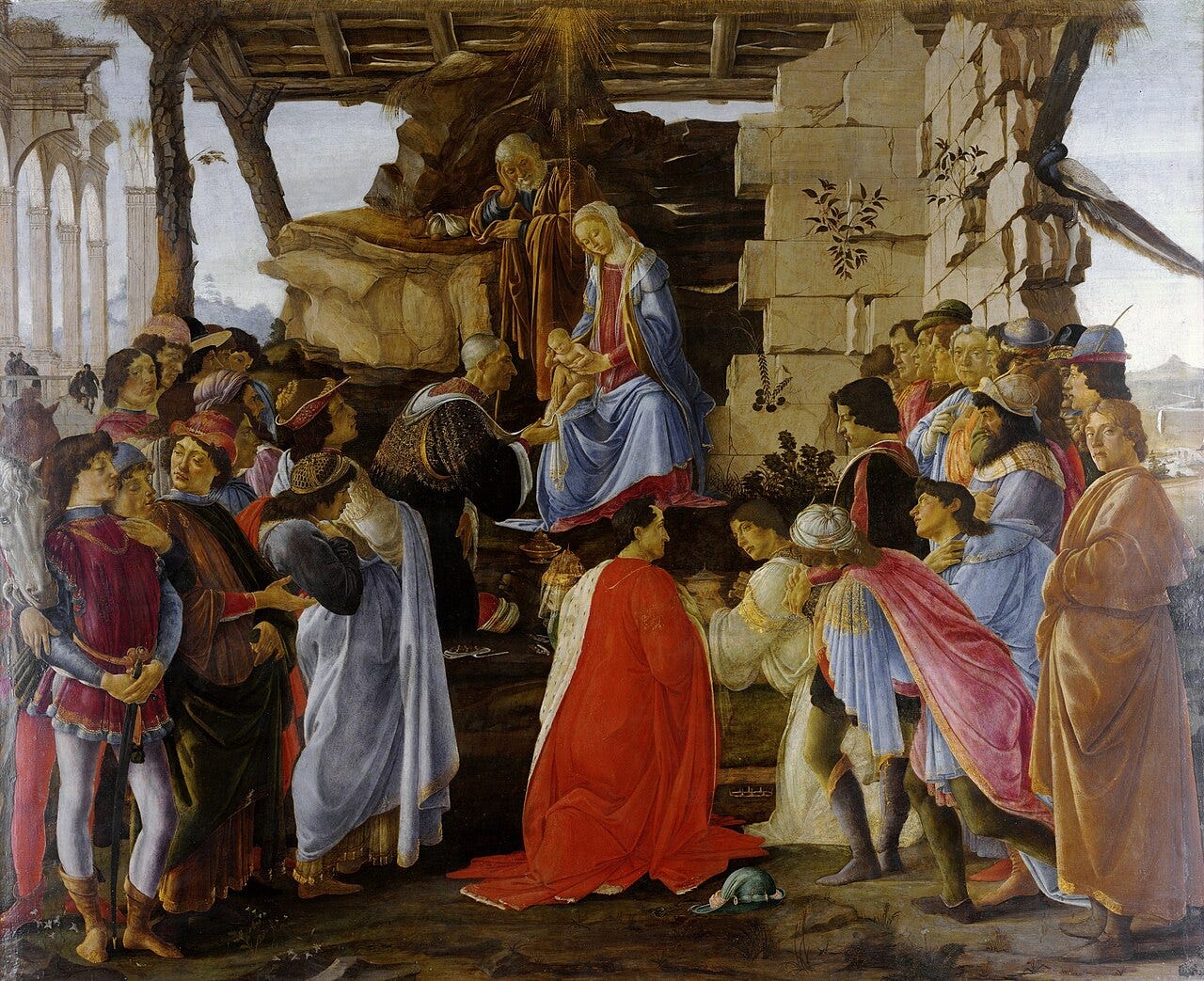
In his Adoration of the Magi, made around 1475 for a Florentine church, Botticelli filled the holy scene with the faces of the Medici, casting the rulers of Florence as the kings and courtiers kneeling before the Christ child.
It was loyalty and flattery turned into a sacred picture.
He also slipped in himself. At the right edge, a young man in a yellow cloak turns and looks straight out at us, widely read as a self portrait, one of the only moments we meet Botticelli's own eyes.
The friar who broke him
Then the mood of Florence turned, and Botticelli turned with it.
In the 1490s a Dominican friar named Girolamo Savonarola seized the soul of the city with apocalyptic sermons against luxury, vanity and pagan art. He drove out the Medici and set up a strict religious republic.
In 1497 his followers built the bonfire of the vanities, a huge pile of mirrors, fine clothes, books and paintings, set alight in the main square.
Botticelli, by the accounts of the time, became a believer. His brother was a devoted follower, and Botticelli is said to have shared the friar’s grief over a sinful world. His art changed with his soul.
Did he burn his own art?
The most famous claim is that Botticelli threw his own paintings onto Savonarola’s fire.
It is partly legend and partly likely, and the truth is more interesting than either. What is certain is that his late work abandoned the serene goddesses for raw, crowded, anxious religious scenes.
The full story of the fire is in Why Did Botticelli Burn His Own Paintings.
The dark final act
Savonarola was excommunicated, tortured and burned in 1498, but the gloom stayed in Botticelli’s brush.
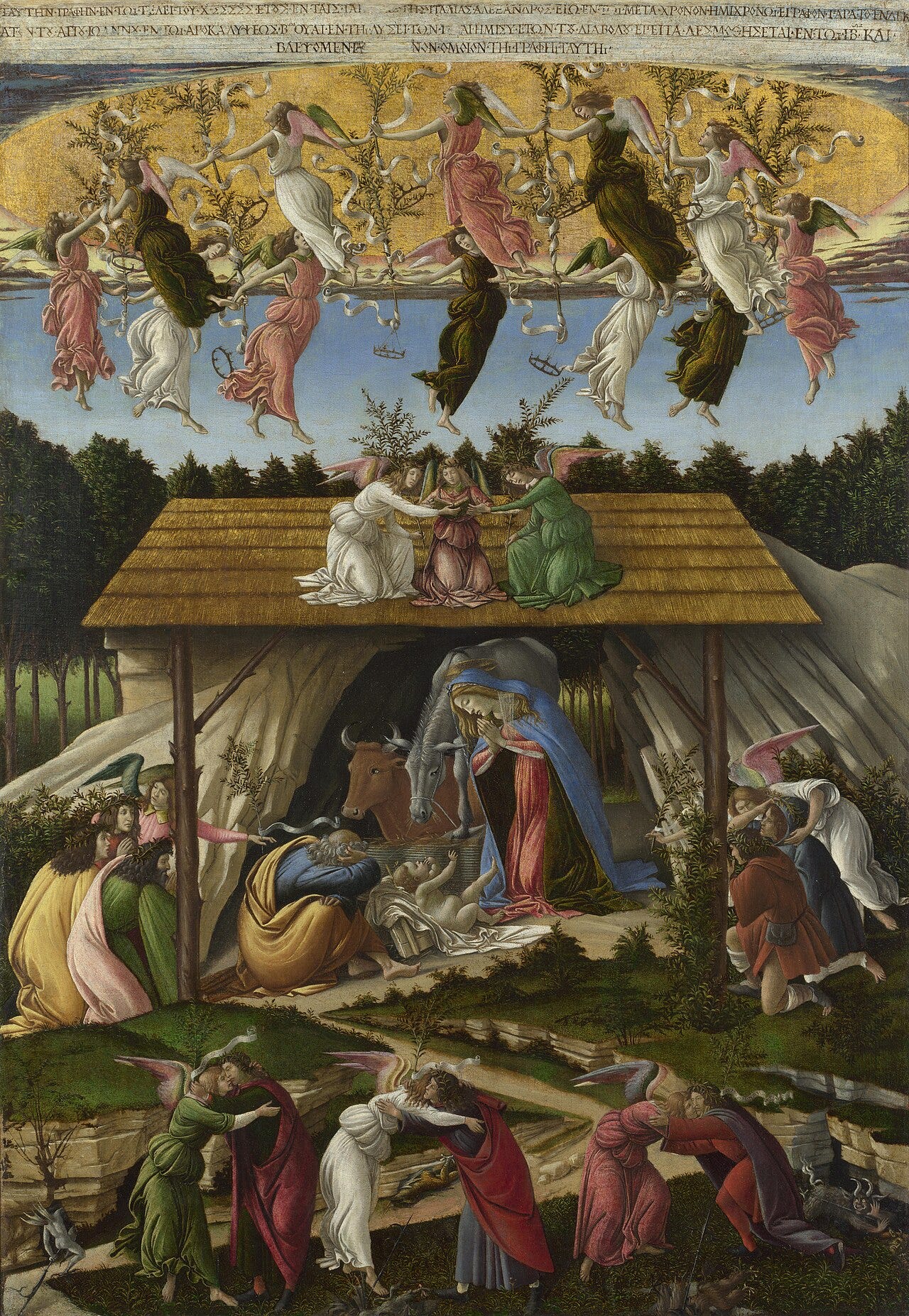
His Mystic Nativity, painted around 1500, is nothing like the Venus. It is small, packed with embracing angels and a strange Greek inscription about the end of the world and the devil loose upon the earth.
The painter of spring had become a painter of dread.
He kept working into the new century, but taste was already moving toward Leonardo and the young Michelangelo. The graceful line that had defined Florence now looked old fashioned.
Even before the friar, a darker, more anxious mind was showing. Around 1495 he painted the Calumny of Apelles, a tense allegory of false accusation, an innocent man dragged before a corrupt judge by figures named Slander, Envy and Deceit.
He built it from an ancient writer's description of a lost Greek painting, a scholar's puzzle turned into a cry about injustice.
By the accounts gathered later by Vasari, his final years were hard. He earned little, grew infirm, and got about on crutches, leaning on the charity of the Medici he had once made immortal.
The Dante obsession
Away from the public commissions, Botticelli poured years into one private epic.
He set out to illustrate the whole of Dante’s Divine Comedy, the great poem of Hell, Purgatory and Paradise, in a series of large drawings on parchment.
Nearly a hundred survive, sweeping from the crowded torments of the Inferno to the dissolving light of Paradise, where the figures almost vanish into pure line.
It was a labor of love that probably never paid, and it shows the side of him that mattered most: not a colorist or a realist, but the supreme draughtsman of his age.
How to read his line
The secret of a Botticelli is not depth or shadow. It is the line.
He drew his figures with a flowing, springy contour, the edge of a shoulder or a strand of hair becoming a piece of music in itself.
He cared less about making bodies look solid and real than about rhythm and grace. His colors are clear and decorative, his space shallow, his beauties weightless, almost floating.
That is why his work can feel more like a dream or a pattern than a window. He was chasing an ideal, not a fact.
Forgotten, then resurrected
For about 350 years after his death, Botticelli was a footnote.
Tastes moved on, and his flat, linear grace looked primitive next to the High Renaissance giants. He was barely mentioned for centuries.
Then, in the 1800s, English critics and the Pre Raphaelite painters fell in love with exactly that early, linear quality. Dante Gabriel Rossetti hunted down a Botticelli portrait, Walter Pater wrote a famous essay in 1870, and John Ruskin preached his virtues.
Within a generation Botticelli went from forgotten name to Victorian craze, and the Birth of Venus became one of the most reproduced images on earth.
Three Botticellis to know
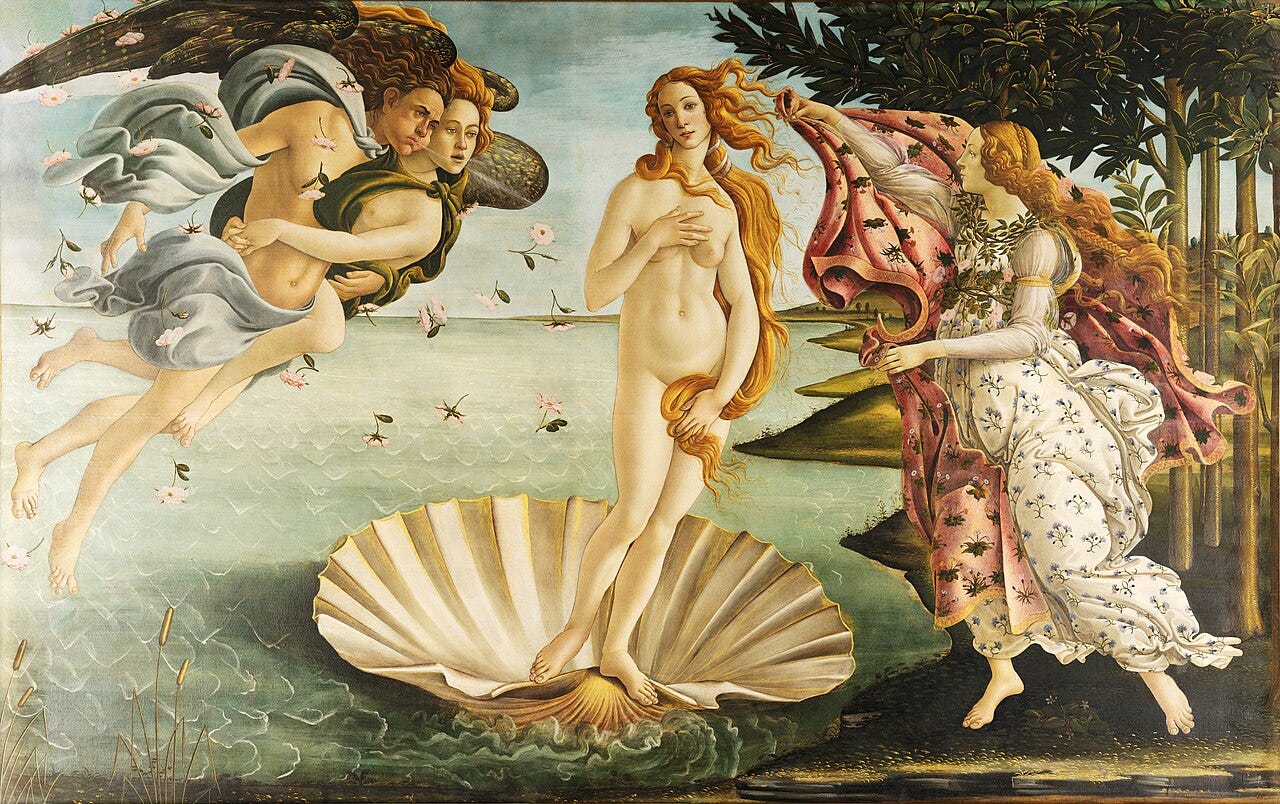
The Birth of Venus, around 1485. Beauty itself, arriving on the shore.
Primavera, around 1480. A garden of gods, and the densest puzzle in Renaissance art.
Mystic Nativity, around 1500. The same hand, after the fire, painting the end of the world.
Where to find him
Most of the essential Botticelli sits in two cities.
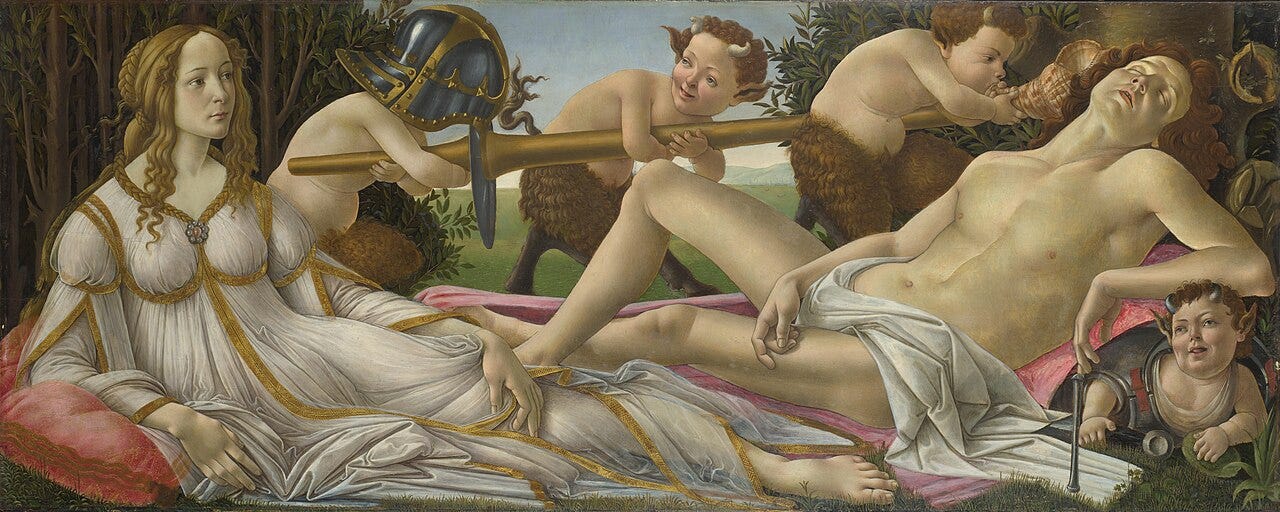
The Uffizi in Florence holds both the Birth of Venus and Primavera, in the same rooms. In London, the National Gallery has Venus and Mars and the Mystic Nativity.
The Botticelli questions that keep coming up
What is Botticelli famous for? Two pagan icons, the Birth of Venus and Primavera, painted for the Medici circle.
Was the Birth of Venus a religious painting? No, it is a pagan mythological scene rooted in Renaissance philosophy.
Did Botticelli really burn his paintings? He followed the friar Savonarola and his late art turned grim. How much he burned is debated.
Why was he forgotten? His flat, linear style fell out of fashion for centuries after his death.
What was Botticelli's real name? Alessandro di Mariano Filipepi. Botticelli, meaning little barrel, was a family nickname.
When was Botticelli born? Around 1445, in Florence, Italy.
When did Botticelli die? On 17 May 1510, in Florence, largely out of fashion.
Where can I see his work? Mainly the Uffizi in Florence; the National Gallery in London has two.
Was Botticelli even his real name? No. He was born Alessandro Filipepi, and the nickname, which means little barrel, belonged to a brother first. The story behind the name is worth reading on its own.
More secrets to unlock


Buried at the feet of a memory
Botticelli died in 1510, old, out of fashion, and largely alone.
He left one last request that says everything about the face that haunted his whole career. He asked to be buried in his parish church, near the grave of Simonetta Vespucci, the woman long tied to his Venus, who had died 34 years before him.
He got his wish. The painter of the most beautiful woman in the world chose to spend eternity at her feet.
