
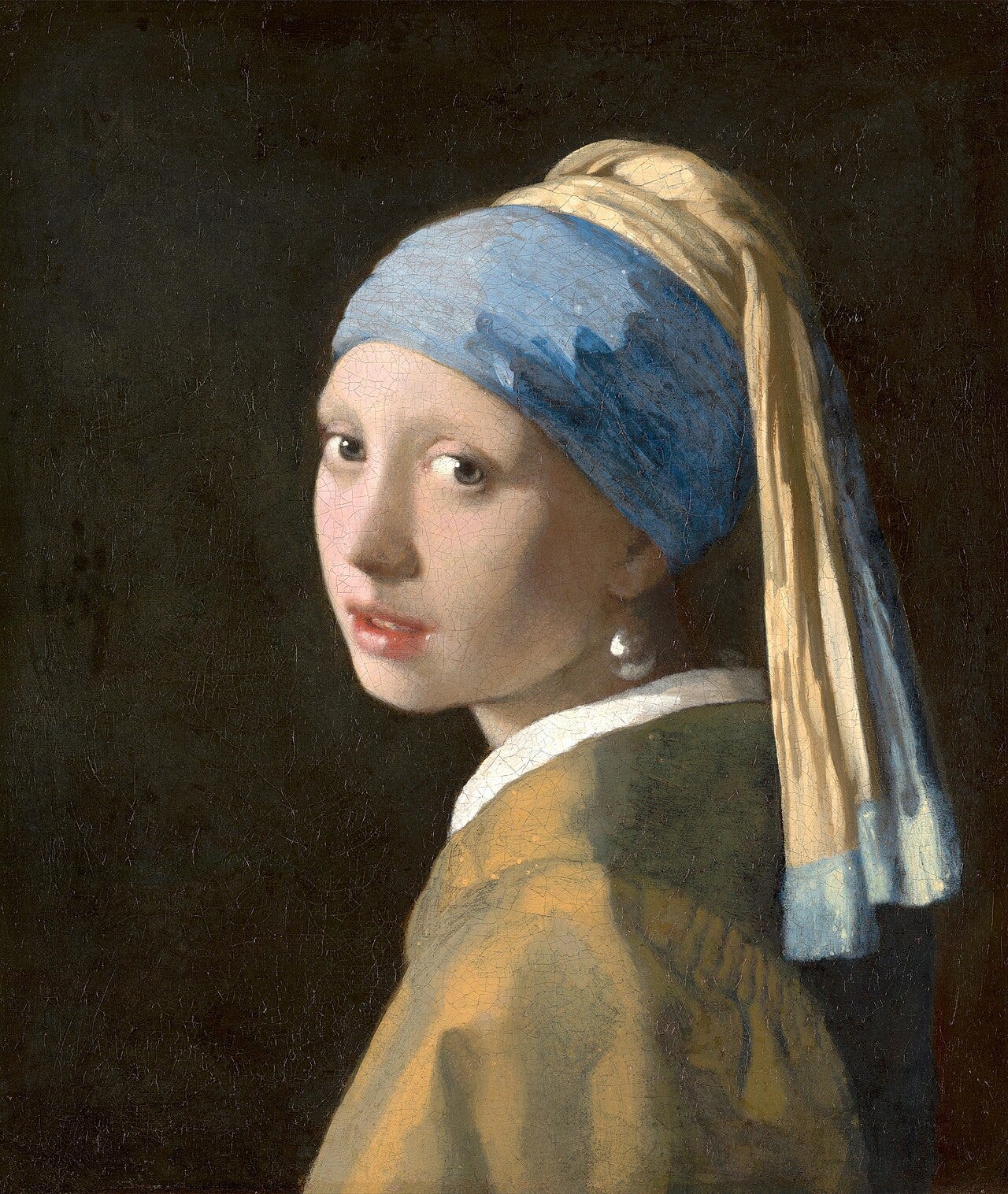
A tronie is a Dutch Golden Age painting of a head or face made as a study of a type, an expression or a costume, rather than a portrait of a specific, named person.
The sitter is usually anonymous, a model dressed up as an old man, a soldier, an exotic stranger or a pretty girl. Vermeer's Girl with a Pearl Earring is the most famous of them all.
A head study of a type or an expression, an old man, a soldier, a pretty girl, with no real person behind it.
The most famous tronie of all is Vermeer's Girl with a Pearl Earring, a face no one has ever been able to name.
Tronie at a glance
What it is: a Dutch head study of a type or expression, not a named sitter.
The word: old Dutch for face or mug.
The aim: to capture character, costume, light or emotion.
The makers: Rembrandt, Vermeer and Frans Hals.
The famous one: Girl with a Pearl Earring.
Keep learning art the fun way


Not a portrait
The crucial thing about a tronie is what it is not.
A portrait is commissioned by a specific person who wants to be recognized and remembered. A tronie has no such client and no name.
The model is anonymous, a prop for the real subject: an interesting face, a dramatic light, a fanciful costume. So the girl with the pearl earring is not a Miss Somebody.
She is a study of a face turning in the light.
No sitter to flatter, no name to record, just the head itself.
Faces for the open market
Tronies were made to sell, not to commission.
In the booming Dutch art market of the 1600s, painters made these head studies on speculation and sold them to collectors who simply liked them.
That freedom is exactly why they are so inventive: with no patron to please, the artist could chase pure expression, exotic turbans, theatrical lighting and loose brushwork.
It overlaps with genre painting, the era's taste for scenes of ordinary life and type.
A face painted for whoever wanted to buy a face.
A studio laboratory
For a painter, the tronie was a place to experiment.
It let artists test extreme expressions, study how light falls on skin, and try out costumes from the studio dressing-up box, without the constraints of a real commission.
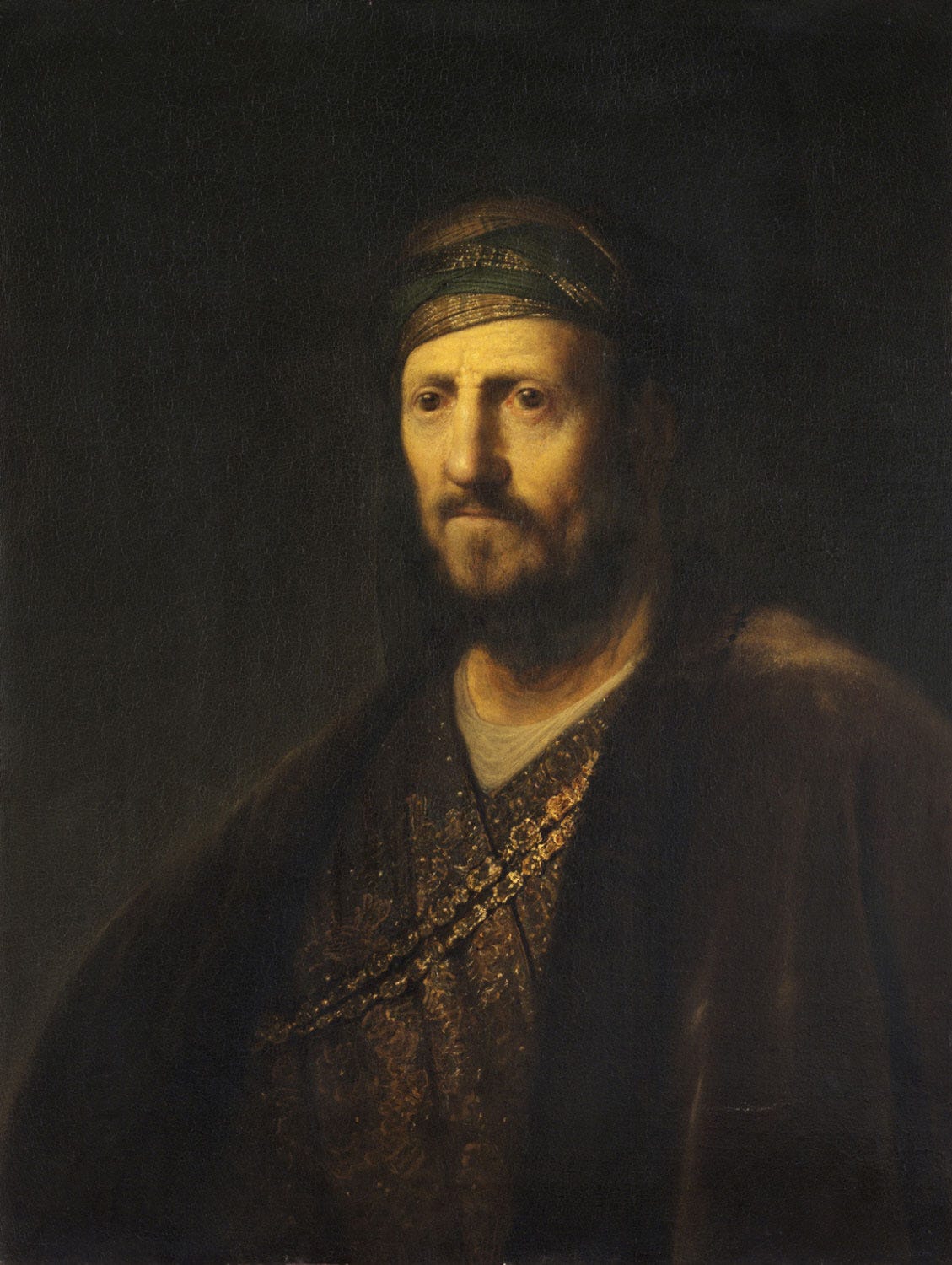
Rembrandt used tronies to push facial expression to the limit. Vermeer used the format for his quiet, luminous girl, exotic turban, single pearl, glance over the shoulder.
There is more on him in the full Vermeer story.
The tronie was the lab where painters tried things on real faces, for no one but themselves.
Why we keep mistaking them for portraits
Tronies fool modern eyes for an understandable reason.
We are so used to the idea that a painted face must be somebody that we instinctively ask who Girl with a Pearl Earring is. The honest answer is that she is probably nobody in particular, an idealized face, a tronie.
The mystery we feel is not a lost identity. It is the whole point of the genre: a face with no name, free to be anyone you imagine.
To me the missing name is not a gap at all. It is the whole design.
The most famous tronie of all hangs in the Mauritshuis in The Hague, and the Rijksmuseum holds Rembrandt’s Man in Oriental Dress.
Vermeer used the same hush and falling light in his Woman Holding a Balance.
Common questions about the tronie
What is a tronie? A Dutch head study of a type, expression or costume, not a portrait of a named person.
What does the word mean? Old Dutch for face or mug.
How is it different from a portrait? A portrait shows a specific, named sitter. A tronie shows an anonymous type or face.
Is Girl with a Pearl Earring a tronie? Yes, it is the most famous example.
Who painted tronies? Rembrandt, Vermeer and Frans Hals, among many Dutch painters.
More secrets to unlock


The face that belongs to no one, and everyone
We keep asking the girl with the pearl earring for her name, and she keeps not giving it, because she never had one. The tronie was built to be a face without a person, a study of light and character free of any identity.
With no name to limit her, she can be anyone, which is exactly why the whole world feels it knows her.
