
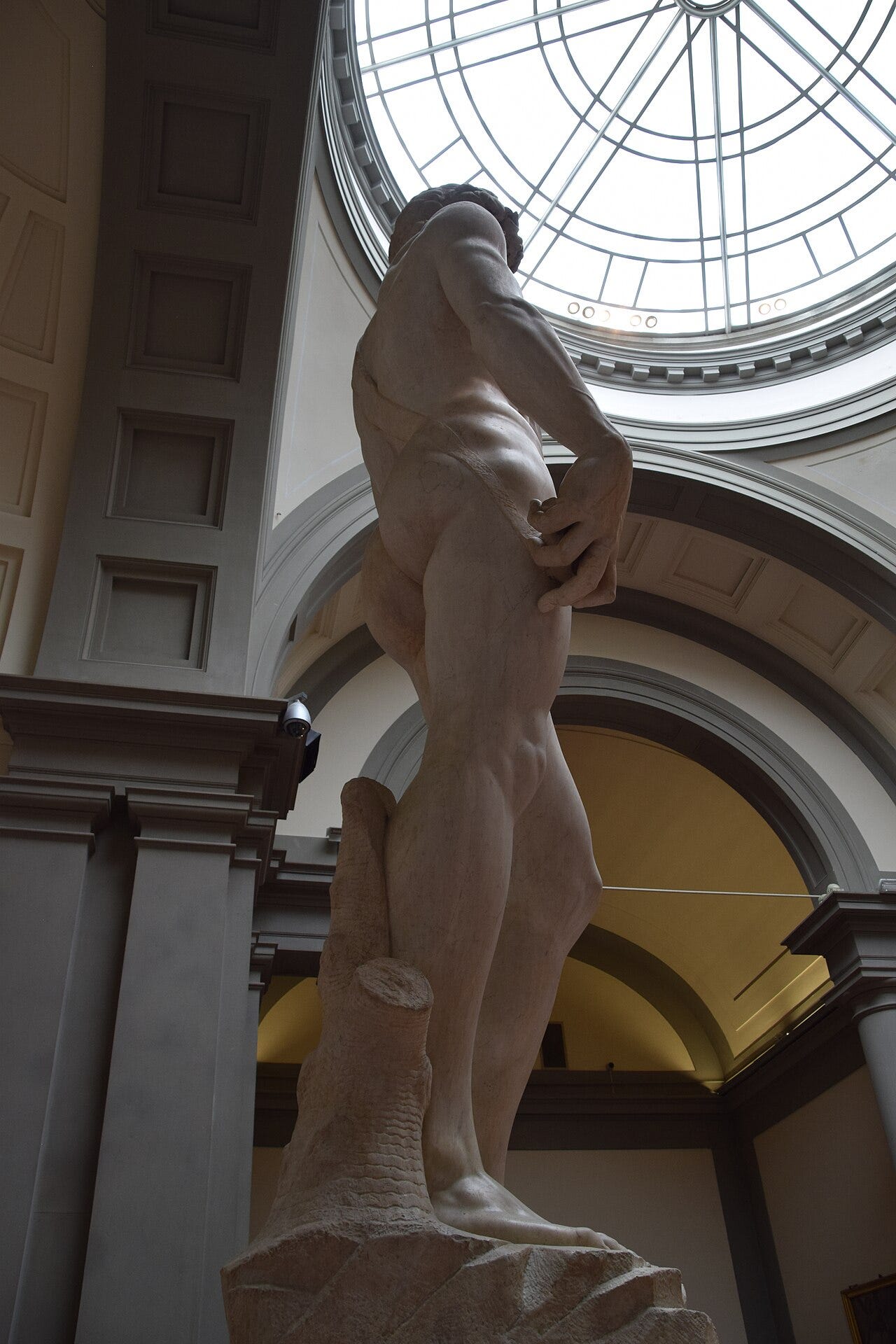
Contrapposto is a way of posing a standing figure so the weight rests on one leg. That tips the hips and shoulders in opposite directions and runs a gentle S curve through the body.
The word is Italian for counterpoise, and the trick is simple: it makes carved stone look like it could breathe.
Stand with your weight on one leg and let the other relax. Your hips tilt one way, your shoulders the other, and your spine settles into a soft curve.
Greek sculptors caught that shift around 480 BC and locked it into stone. What astonishes me is that one small observation is what made marble start to look alive.
Contrapposto, the essentials
What it is: a stance with the weight on one leg, hips and shoulders tilted against each other.
The word: Italian for counterpoise.
Born: ancient Greece, around 480 BC.
The model: the Doryphoros by Polykleitos, the textbook example.
Why it matters: it made the human figure look alive instead of stiff.
Keep learning art the fun way


The moment sculpture learned to stand
Before contrapposto, figures stood to attention. Egyptian statues and early Greek kouroi face dead ahead, arms at their sides, weight even on both feet. Solid, frozen, eternal.
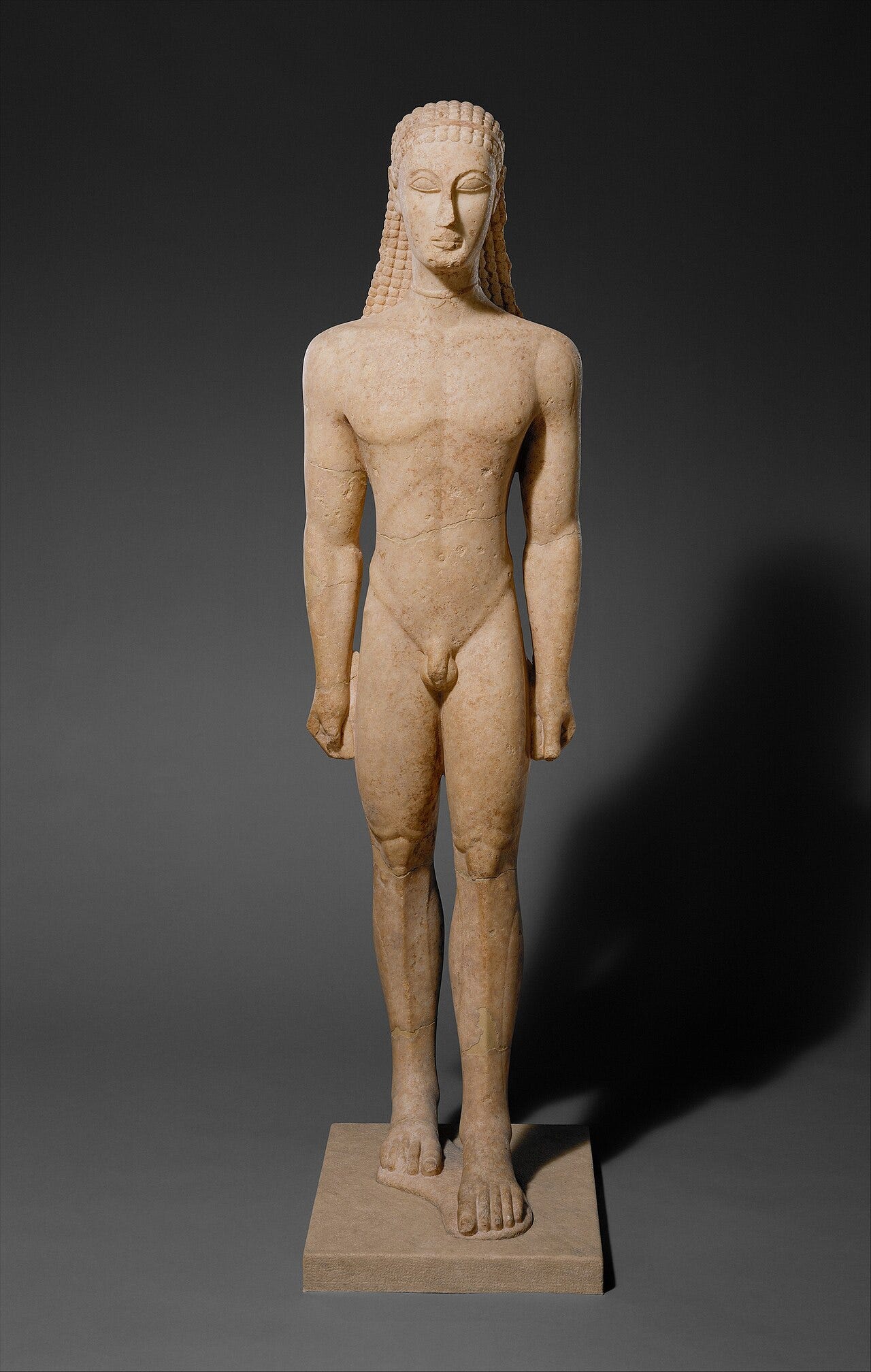
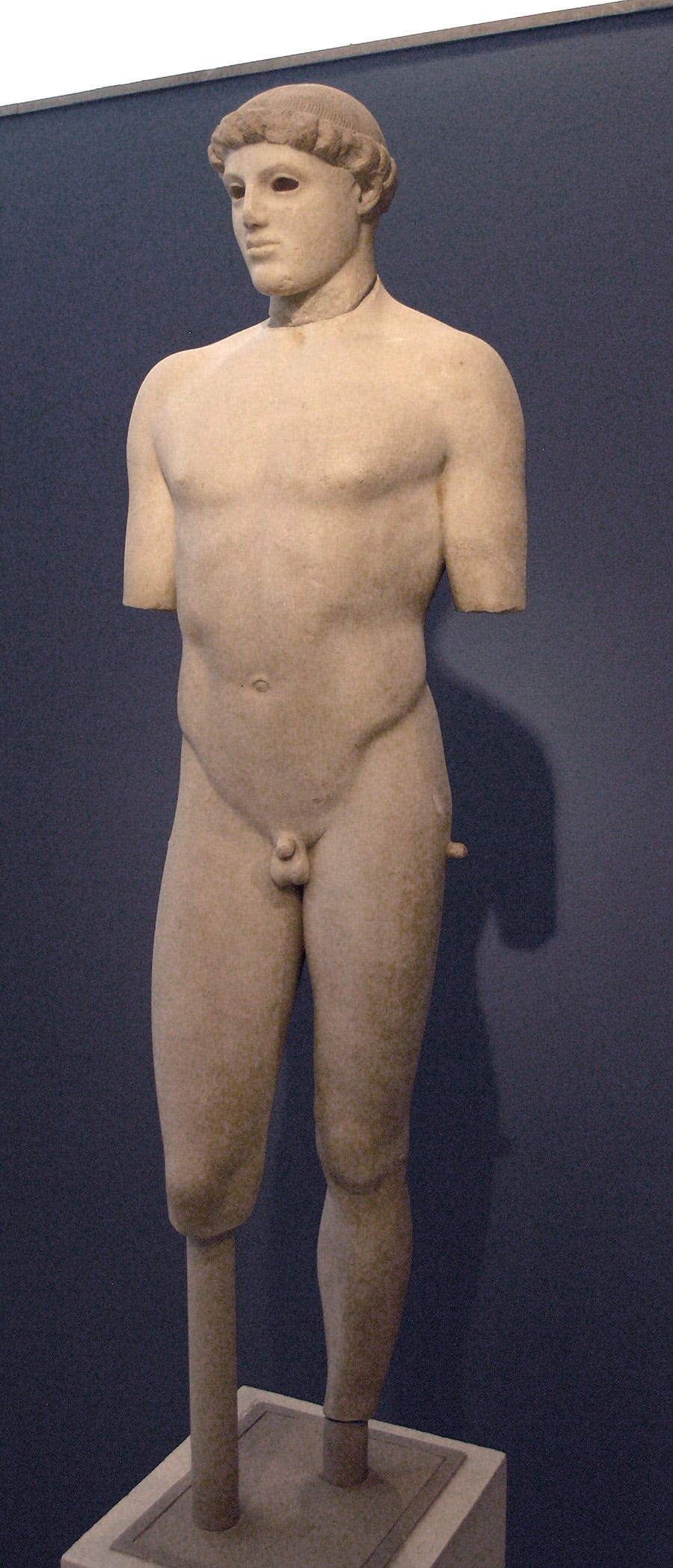
Around 480 BC a Greek sculptor moved the weight onto one leg. The Kritios Boy, found buried in the debris the Persians left on the Acropolis, is usually called the first surviving statue to do it. One small shift, and the body came alive.
That tilt of the hips is the hinge between art that stands and art that seems to live.
Polykleitos wrote the rulebook
A generation later, the sculptor Polykleitos turned the idea into a system.
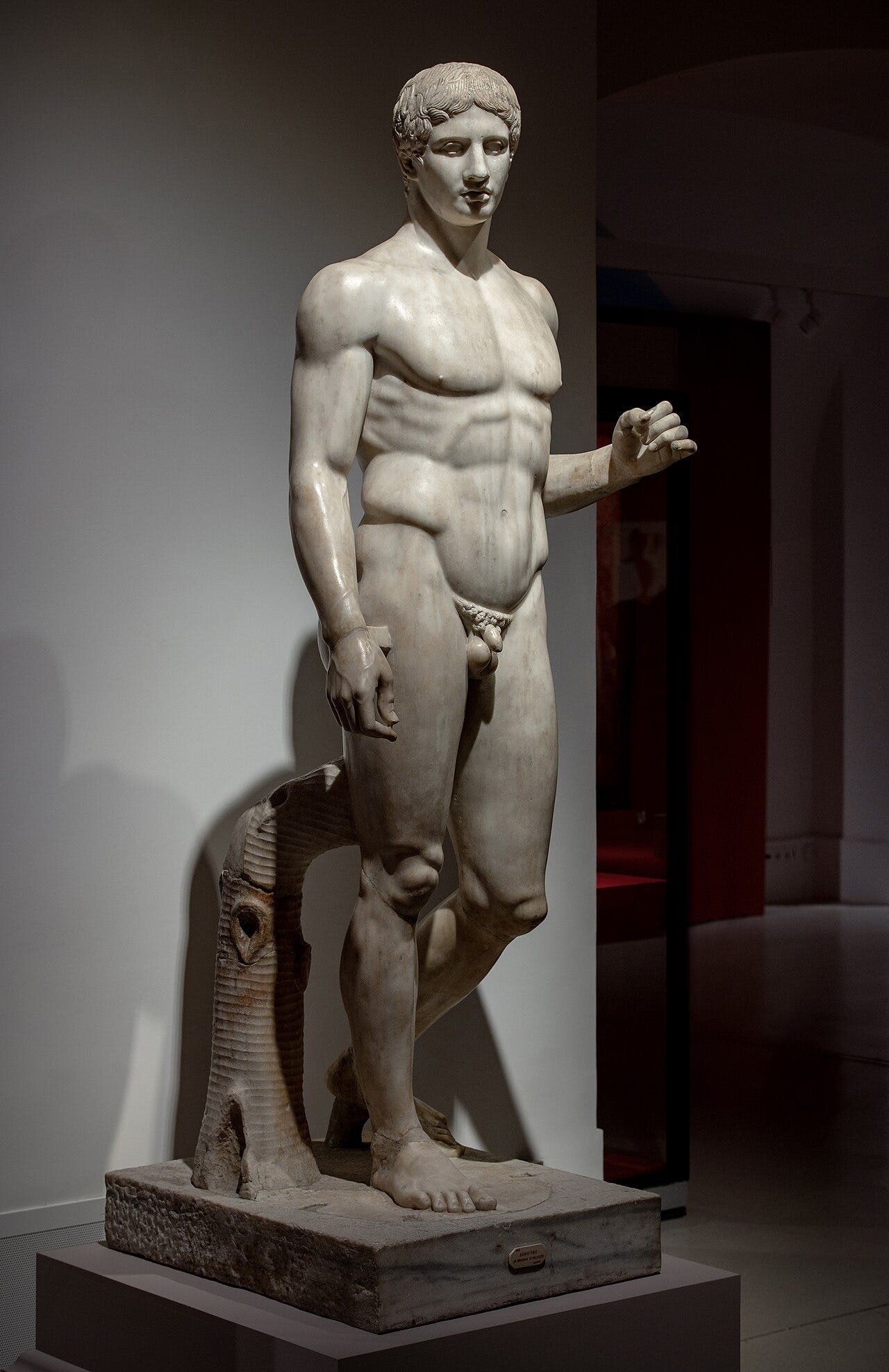
His bronze Doryphoros, the Spear Bearer, is the textbook contrapposto: weight on one leg, one hip up, the opposite shoulder up, the body balanced in a calm cross rhythm.
He even wrote a treatise, the Canon, on the ideal proportions of the human form, the same hunt for perfect measure that later drove Leonardo.
The original bronze is lost. It survives only through Roman marble copies, which already treated it as a classic.
Why it looks alive
A common myth says contrapposto is just cocking one hip to look graceful. It is really an illusion of physics: the body shows a real skeleton bearing weight, which is why it reads as a living body rather than a frozen pose.
Contrapposto works because of what it implies.
Shift the weight and you imply a skeleton under the skin, muscles doing real work, a spine that bends. You imply a moment in time, as if the figure just settled and might step off next.
A figure planted flat on both feet reads as a diagram. A figure in contrapposto reads as a person caught mid pause.
Lost, then found again
The idea faded with antiquity and slept through the Middle Ages, when figures went stiff and frontal once more.
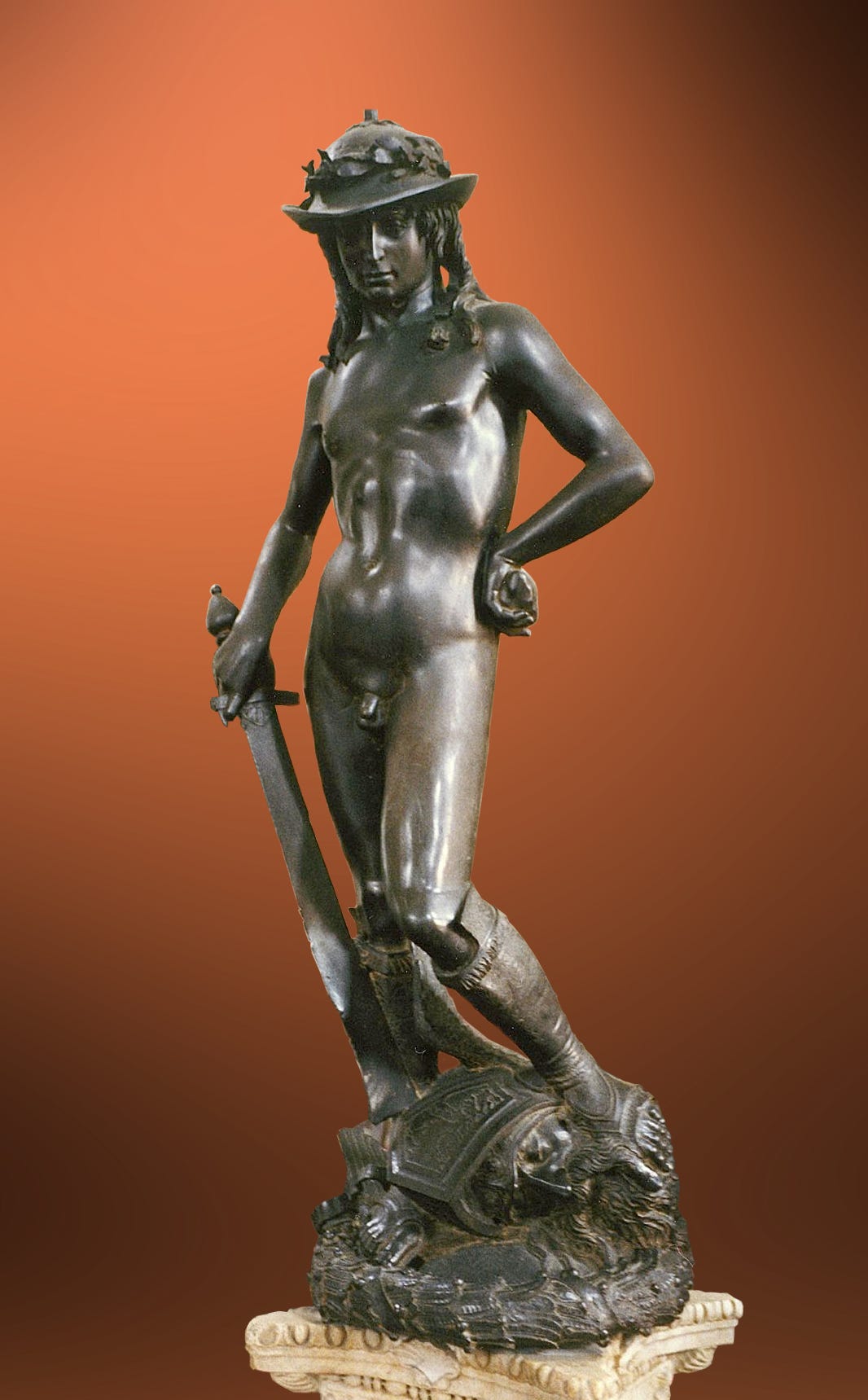
The Renaissance woke it up. Donatello’s bronze David, the first freestanding nude since the ancient world, stands in an easy contrapposto.
Decades later Michelangelo carved the David, over five meters of marble, weight on one leg, and made the pose the very image of human nerve.
Painters used it too. Botticelli's Venus balances on one leg as she drifts to shore, her body a soft counterpoise.
When the pose got twisted
Then artists pushed it too far on purpose.
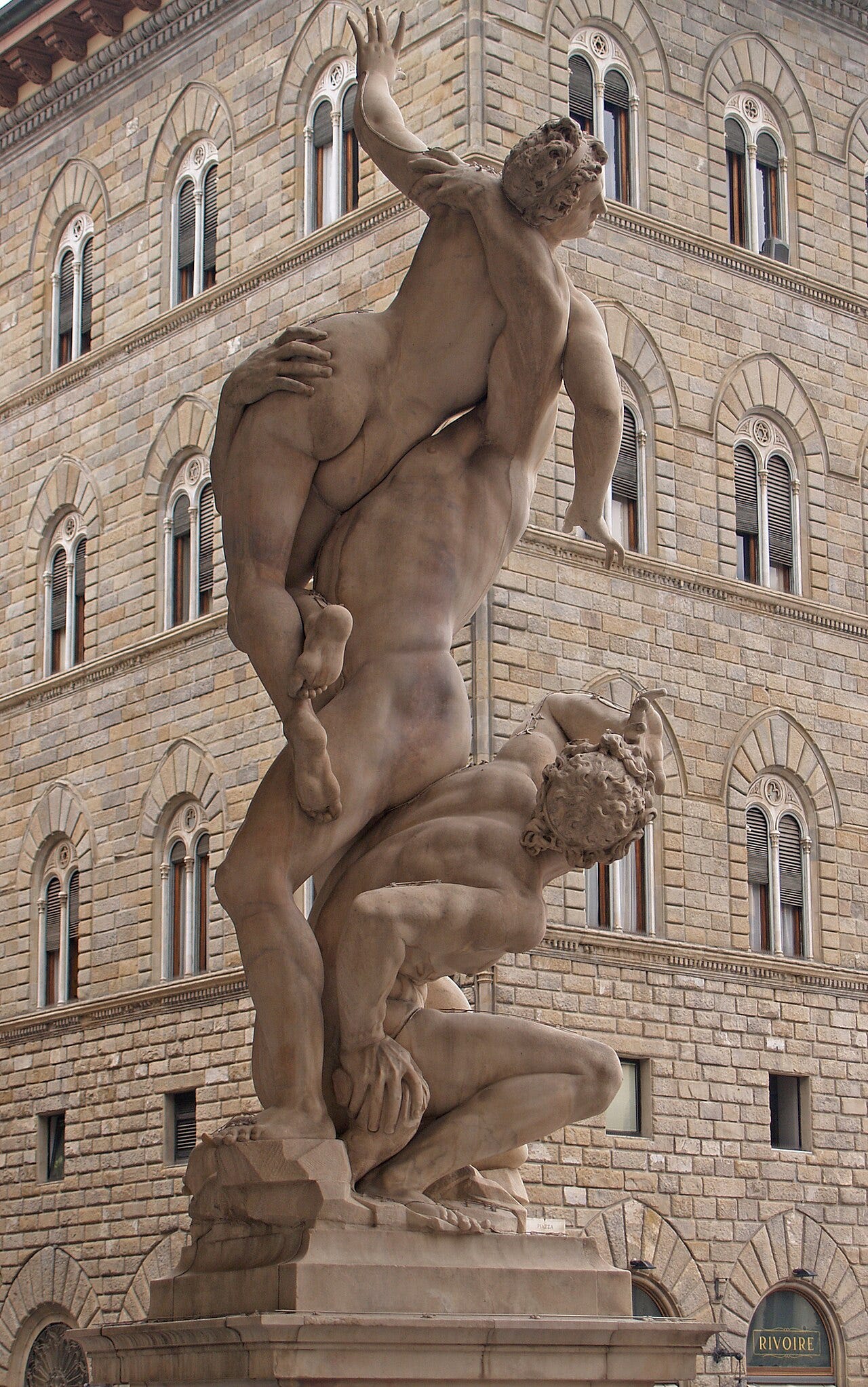
The Mannerists of the 1500s took the calm counterpoise and wound it into a spiral, the figura serpentinata, a body turning like a flame. Giambologna built groups that rise and twist so you have to walk around them to read the whole thing.
What began as a way to look natural became a display of pure skill, and I will admit the Mannerist spirals lose me a little.
Contrapposto, the questions readers send
What does contrapposto mean? Italian for counterpoise: a pose with the weight on one leg, hips and shoulders tilted in opposite directions.
Who invented contrapposto? Ancient Greek sculptors, around 480 BC. The Kritios Boy is the earliest known example.
What is the most famous example? The Doryphoros by Polykleitos in antiquity, and Michelangelo's David in the Renaissance.
Is contrapposto only in sculpture? No. Painters use it to make standing figures look natural and at ease.
What is figura serpentinata? An exaggerated, spiraling version of contrapposto favored by Mannerist artists.
More secrets to unlock


The pose that taught stone to breathe
I never look at a standing statue the same way now. Once you spot it, you check every figure's feet, and almost every standing figure for the next two thousand years turns out to rest on that one quiet diagonal.
