

A pentimento is a change an artist made while painting that resurfaces later, often under X ray: an arm moved, a hat painted out, a finger covered over. As the top layer turns transparent with age, the first idea shows through like a ghost.
The word is Italian for repentance, and the most famous case is Sargent's Madame X, whose fallen shoulder strap he hastily repainted upright after the 1884 Salon scandal.
Pentimento, the short version
What it is: a change the artist made, now showing through.
The word: Italian for repentance, a painter thinking again.
The cause: upper paint grows more transparent as it ages.
The clue: a faint second contour, a buried hand or limb.
The tool: X ray and infrared reveal the hidden ones.
Keep learning art the fun way


The painting changes its mind
No great painting arrives perfect on the first try.
Artists shift a pose, move a hand, drop a figure, narrow a sleeve. They simply paint over the part they have rejected and carry on.
For a while the change stays invisible, sealed under the fresh layer the painter laid on top.
A pentimento is the moment of doubt, preserved by chemistry.
Why the ghost returns
The effect is physical, not magical.
Oil paint is never fully opaque, and it grows more transparent over a century or two. When that happens, a dark shape the artist painted out can start to read through the lighter paint on top.
So a leg that was moved leaves two legs faintly visible, or a hand reappears where it was meant to vanish.
The painter hid it perfectly for their own lifetime. Time did the unhiding.
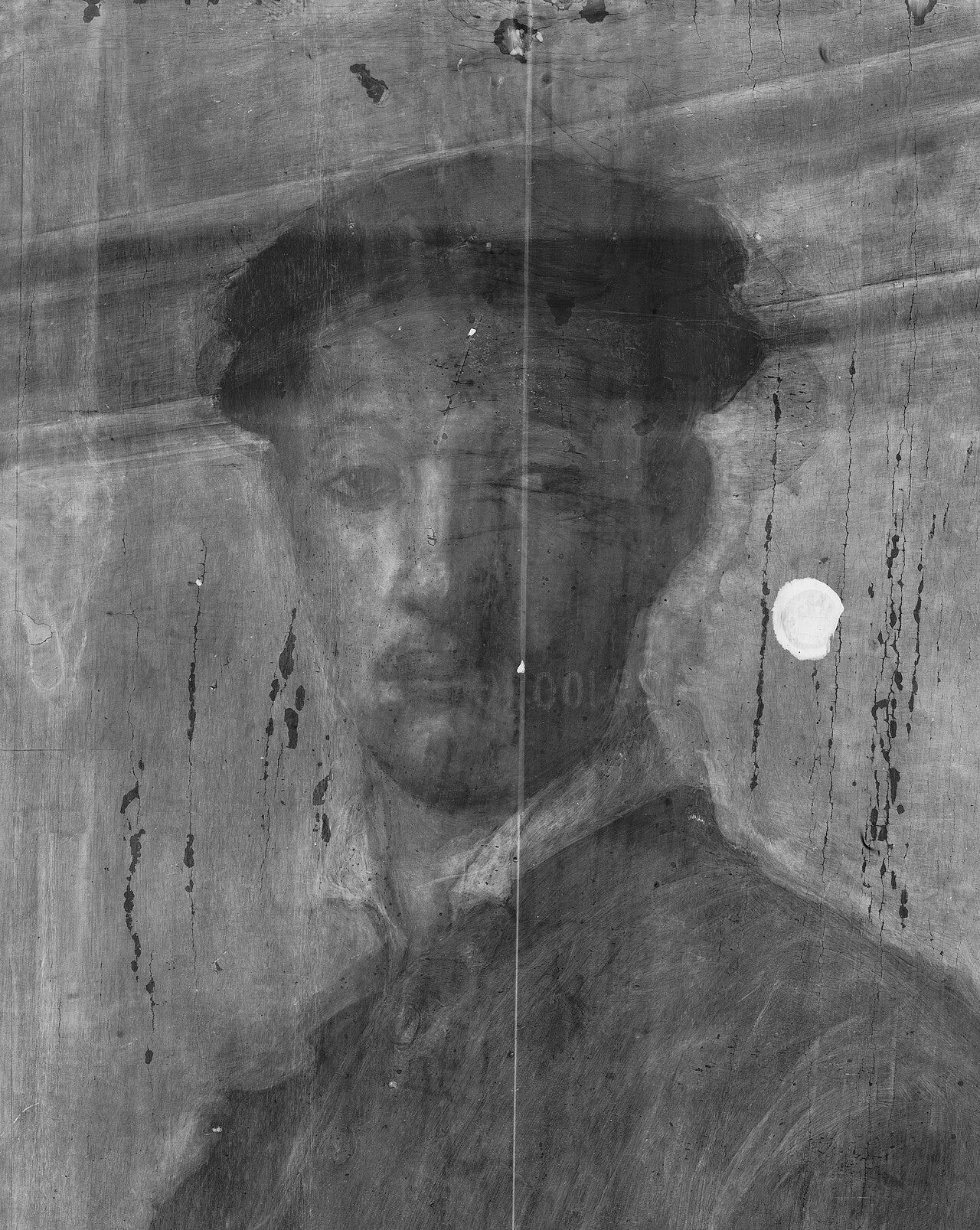
What the X ray sees
Most pentimenti are still hidden, and that is where science comes in.
Conservators X ray and scan old paintings and constantly find buried changes: a different face under a portrait, a window where a door now stands, whole figures painted out.
These discoveries reshape how a work is understood, showing the long process of thought behind a surface that looks effortless.
The masters of that restless reworking, Leonardo and Rembrandt among them, hid dozens of second thoughts under their finished paint.
Sometimes what the X ray turns up is not a small change but an entire different painting on the same reused canvas, a stranger story covered in paintings hidden under other paintings.
The smooth final picture is the tip of a buried iceberg of decisions, and I trust a reworked painting more than a flawless one for exactly that reason.
Three pentimenti that surprised the experts
Three changes that still get me:
Sargent's Madame X: the fallen shoulder strap, repainted upright after the 1884 Salon scandal.
Vermeer's Girl with a Pearl Earring: a green curtain behind her that faded over time, confirmed by the 2018 Mauritshuis study.
Goya's Don Ramon Satue: a man in a Napoleonic era uniform, found beneath it by a 2011 Rijksmuseum X ray.
Not the same as underpainting
It is easy to confuse two hidden layers.
Underpainting is the planned first layer, the grey or brown map of light made on purpose under every painting. A pentimento is different.
It is a mistake or a change of heart, something the artist tried, rejected and covered. One is the foundation. The other is the regret.
Two at the Met show the idea. Sargent repainted the strap on Madame X, and X rays of Bronzino’s Portrait of a Young Man reveal his changes underneath.
Leonardo reworked his panels endlessly, and the place I most enjoy watching that restless hand is his Lady with an Ermine.
Pentimento, in a few questions
What is a pentimento? A change the artist made during painting that has become visible over time or under X ray.
What does the word mean? It is Italian for repentance, the artist thinking again.
Why does it appear? Oil paint grows more transparent with age, so an earlier covered version can show through.
How do experts find hidden ones? With X ray and infrared imaging of the painting.
Is it the same as underpainting? No. Underpainting is the planned base layer. A pentimento is a change the artist tried to hide.
More secrets to unlock


The most human mark in a finished picture
Genius is supposed to be effortless, the perfect picture arriving whole.
A pentimento says otherwise. The great painter hesitated, tried a pose, hated it, moved the hand, the way anyone fumbles toward something right. Sargent's slipped strap, hidden in 1884, still shows faintly under the upright one today.
