
Trompe l'oeil, French for deceive the eye, is painting so convincing that for a second it passes as the real object: a fly to brush off a frame, a letter to lift from the wall, a window that turns out to be flat plaster.
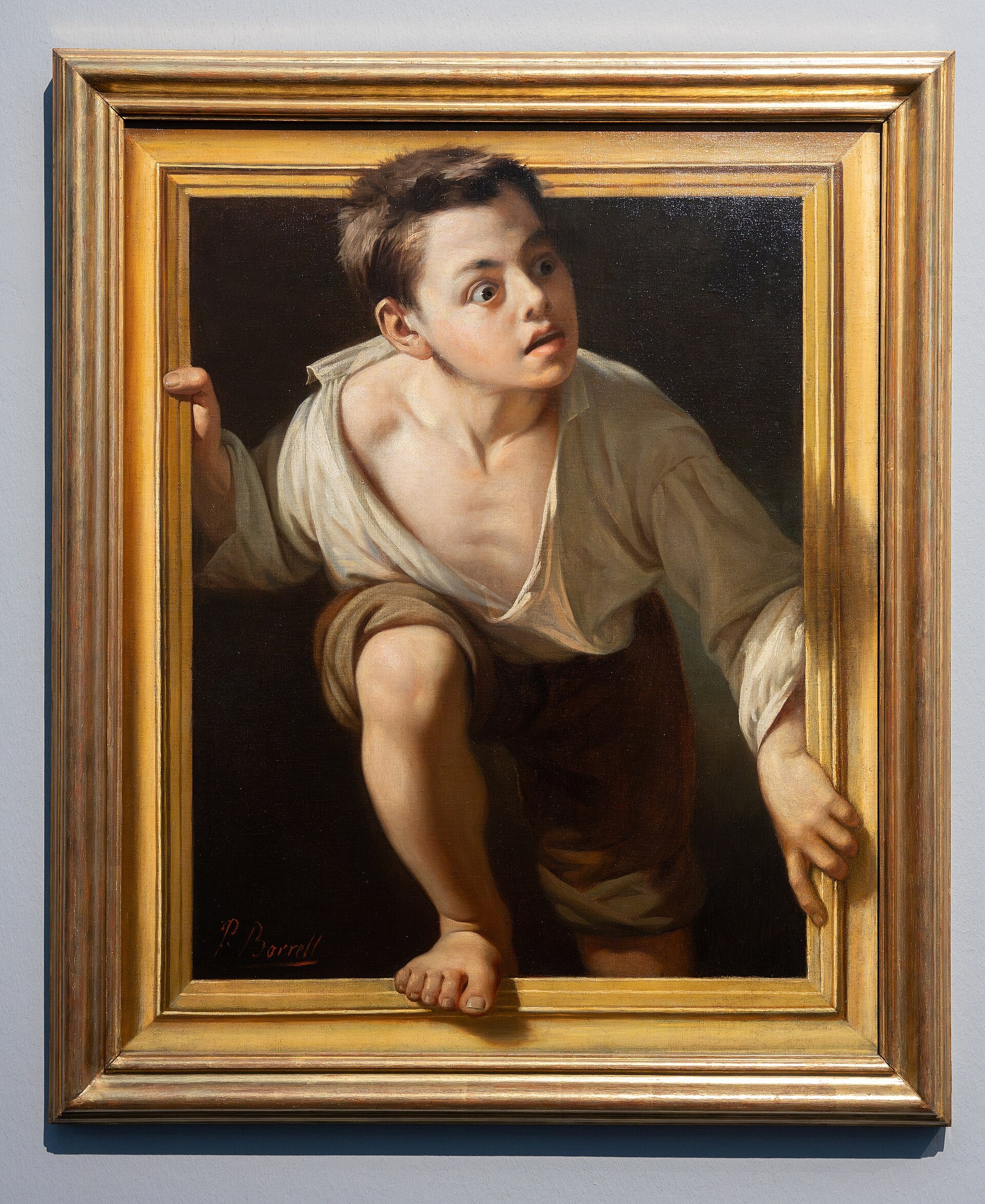
Most paintings ask a viewer to look into another world. Trompe l'oeil pretends to already be sitting in this one.
I think it is the oldest party trick in art, and still one of the hardest to pull off convincingly.
The trick, fast:
French for deceive the eye.
Objects shown at true size, in the room's own light, casting shadows that seem to fall on a real surface.
No scene to step into, just a thing that appears to be right there.
Favorite subjects: letter racks, niches, painted insects, fake windows and doors.
Still practiced today, on murals, ceilings and street art.
More illusions worth seeing
A few more paintings built to test what the eye is willing to believe.


How to recognize trompe l'oeil
Trompe l'oeil removes every clue that says picture: objects sit at their true size, lit by the same light as the room around them, throwing shadows that seem to fall on a real surface, with no story or distant scene to break the spell.
There is nothing to look into here, only a thing that appears to be sitting right there in the room.
Most trompe l'oeil pictures are close cousins of still life painting, just pushed one step further into pure illusion.
The flatter the surface and the plainer the background, the stronger the lie holds up.
A cast shadow is often the real giveaway of skill: painted too soft and the object looks stuck on, painted too sharp and it looks cut out with scissors.
Where it comes from
The dream of fooling the eye is ancient. The Roman writer Pliny described a contest between two Greek painters, Zeuxis and Parrhasios, in which Zeuxis painted grapes so lifelike that birds flew down to peck at them, only to lose when Parrhasios fooled him with a painted curtain.
Zeuxis had deceived the eyes of birds. Parrhasios had deceived the eyes of a fellow painter, which counted for more, and he won the contest.
That story has been retold for two thousand years for a reason: it already argues that the deepest illusion is not fooling an animal, it is fooling another expert eye.
The trompe l'oeil toolkit
Painters built a working toolkit for the illusion over the centuries: letter racks holding ribbons and quills, painted niches with a glass or a skull, a single fly meant to be brushed away, and fake doors, windows or columns that stretch a real room further than it goes.
Letter racks: ribbons tacked to a board, holding letters, combs and quills that look ready to lift off.
Niches: a painted shelf in a painted alcove, holding a glass or a skull.
Insects: a single fly on the surface, placed so a viewer reaches to flick it away.
Architecture: fake doors, windows and columns that extend a real room.
Gijsbrechts and the painting that plays dead
Cornelis Gijsbrechts painted The Reverse of a Framed Painting around 1670, showing nothing but the back of a canvas, its wooden stretcher, its label and its dust, so convincingly that the picture is sometimes hung backward in galleries by mistake.
Gijsbrechts made several versions of this same joke across his career, as if daring museum staff to notice before a visitor did.
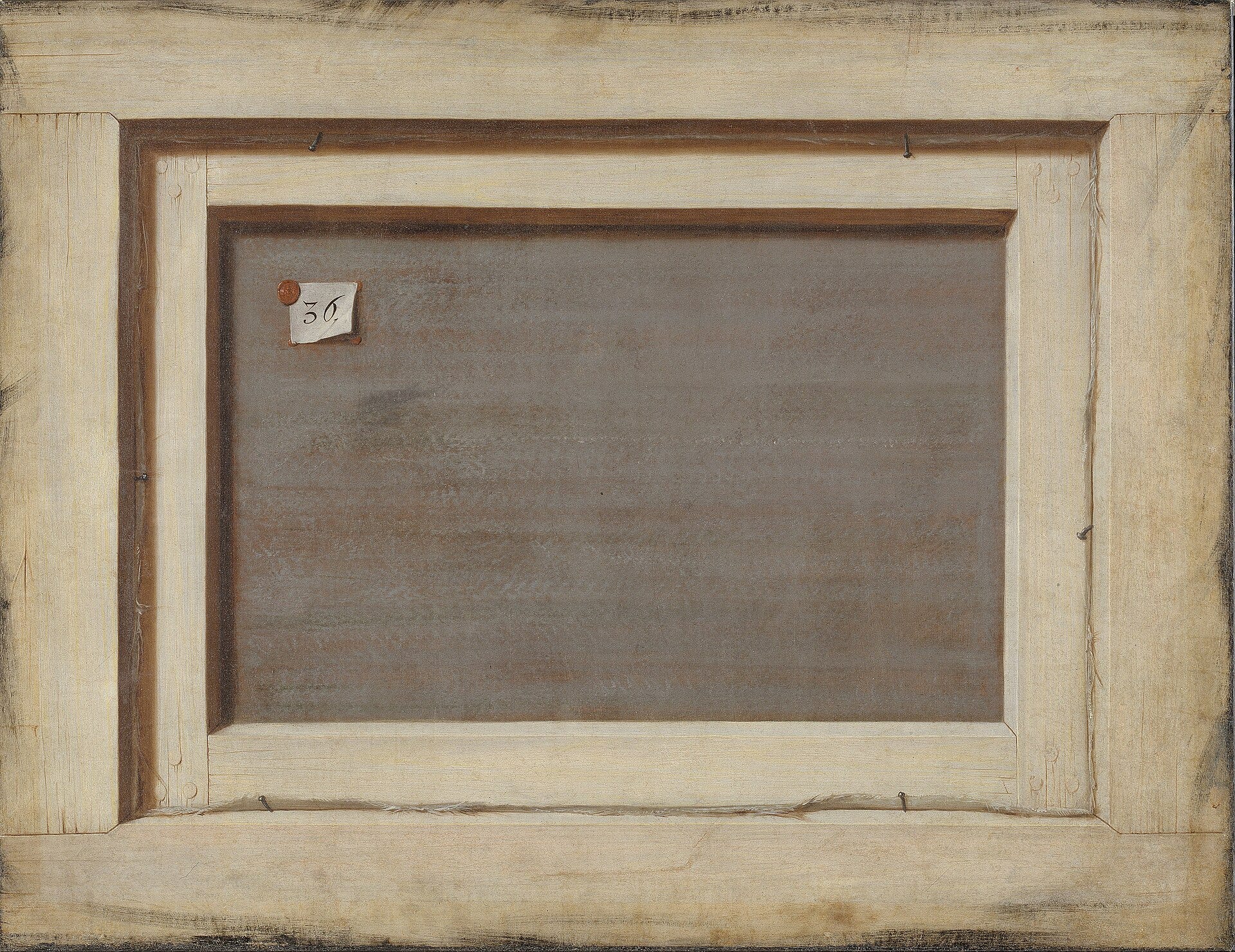
It is a different trick from anamorphosis, which hides a distorted image inside a picture rather than pretending the picture is not there at all.
Fooling the ceiling
Baroque painters aimed the same illusion straight up, covering church ceilings with painted architecture and open sky so convincing that stone columns seem to rise into real clouds, an effect that only works from one marked spot on the floor below.
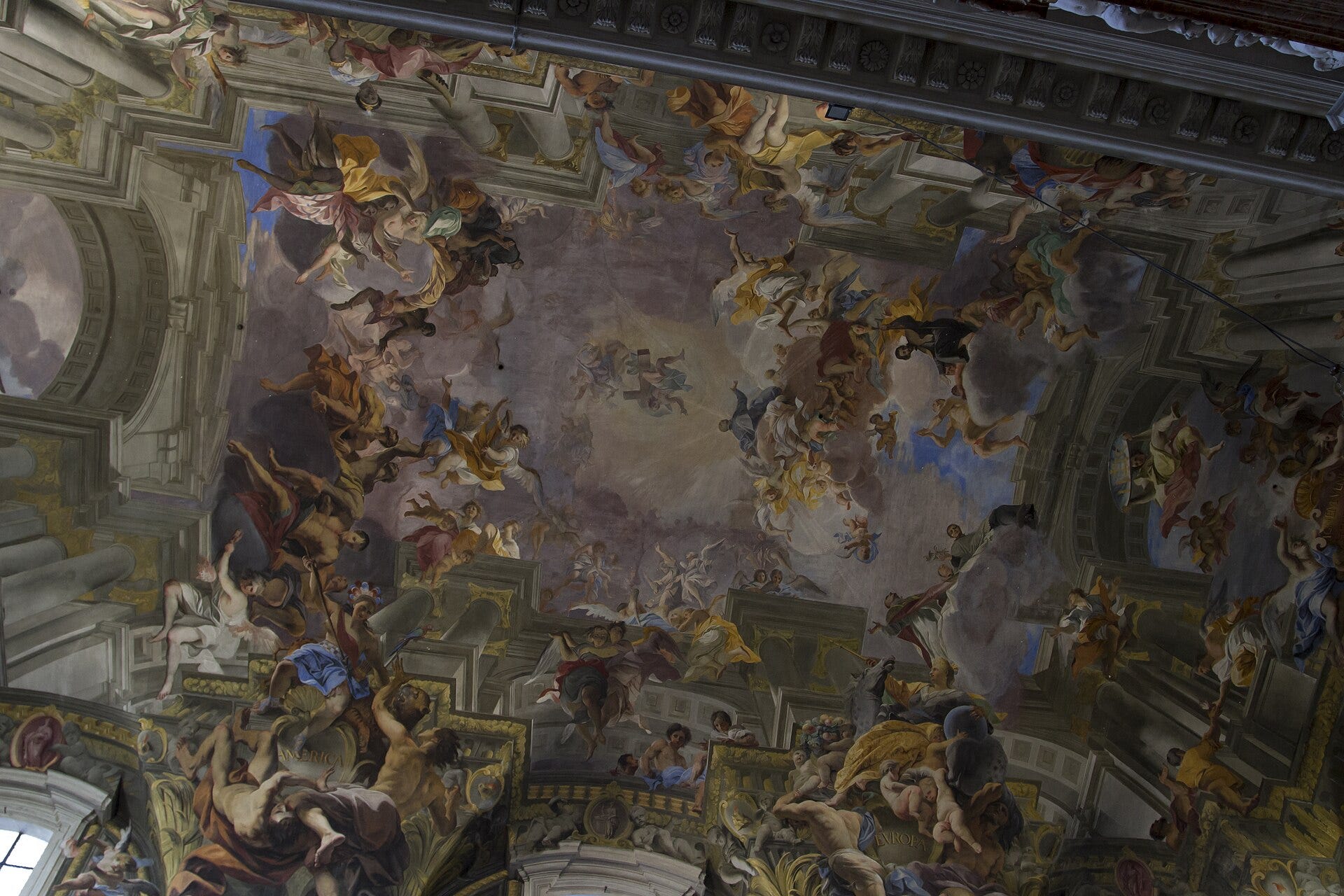
Stand on the marked disc set into the floor of Sant'Ignazio and the flat ceiling reads as a soaring dome that does not actually exist, built entirely from extreme foreshortening.
A cabinet that is not really there
Domenico Remps painted his Cabinet of Curiosities around the 1690s as a trompe l'oeil display case crowded with shells, coral, instruments and coins behind a half open glass door, using the same command of light and shadow that Caravaggio had turned toward drama a century earlier.
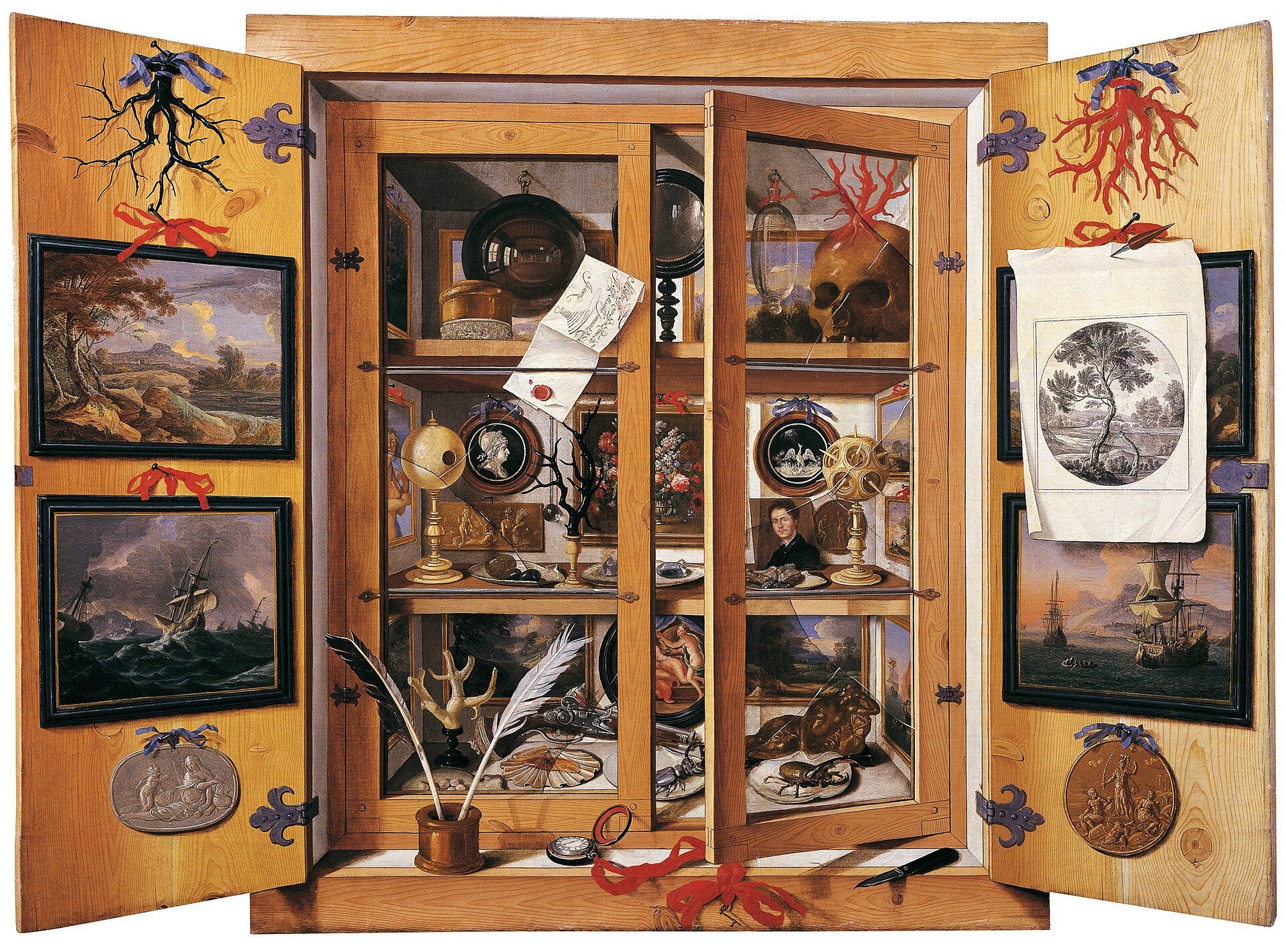
That same mastery of chiaroscuro, the tool Caravaggio pushed to its limit and that is unpacked in The Caravaggio Code: The Secret Nobody Saw for 400 Years, is what convinces the eye that painted glass, shell and metal are sitting only inches away.
Keep testing your eyes
A few more paintings and stories that ask what a viewer really sees, and what is only implied.


Trompe l'oeil questions, answered
What does trompe l'oeil mean? French for deceive the eye, painting that looks like a real three dimensional object.
How is it different from ordinary realism? It shows things at true size, in the viewer's own space, with no scene to step into, purely to fool the eye.
What are common trompe l'oeil subjects? Letter racks, niches, painted insects, and fake windows, doors or architecture.
Who invented trompe l'oeil? The idea is ancient: Pliny describes Greek painters competing to fool the eye around 400 BC.
Is trompe l'oeil still used today? Yes, on murals, ceilings, stage sets and street art.
Is trompe l'oeil the same as anamorphosis? It is not: anamorphosis hides a distorted image inside a picture, while trompe l'oeil pretends the picture is not there at all.
Pere Borrell del Caso painted Escaping Criticism in 1874 as a joke aimed at critics who called his work unoriginal, and the boy in the frame has been climbing out of it for more than a century and a half.