
Foreshortening is a way of drawing an object or a body so it appears to rush back into space, looking shorter and more compressed than it really is.
It is how a painter makes a pointing arm or an outstretched leg seem to come straight at you, off a flat surface.
Point your arm straight at someone and they see almost no arm at all, just a fist and a bunched sleeve.
Painting that honestly, a long thing crammed into a short space, is foreshortening, and for centuries it was the hardest test in the studio.
The word is simply fore plus shorten. Italian painters called it scorcio, and treating it as a craft worth mastering was a Renaissance idea.
Foreshortening in sixty seconds
What it is: showing a form receding into depth, so it looks shortened.
The point: it builds the illusion of three dimensions on a flat surface.
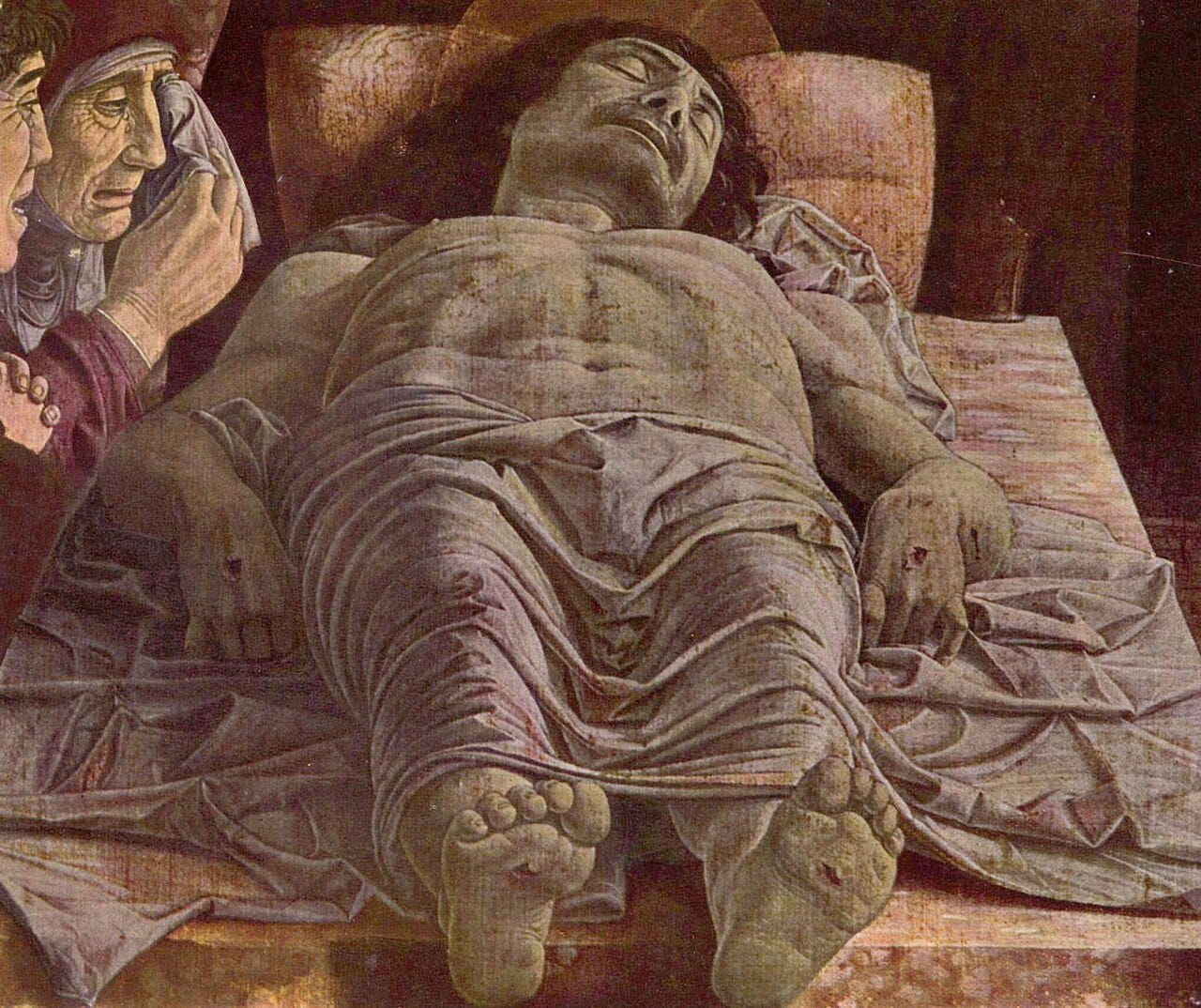
The classic example: Mantegna's dead Christ, seen from the feet.
The hard part: you paint what the eye sees, not what the mind knows.
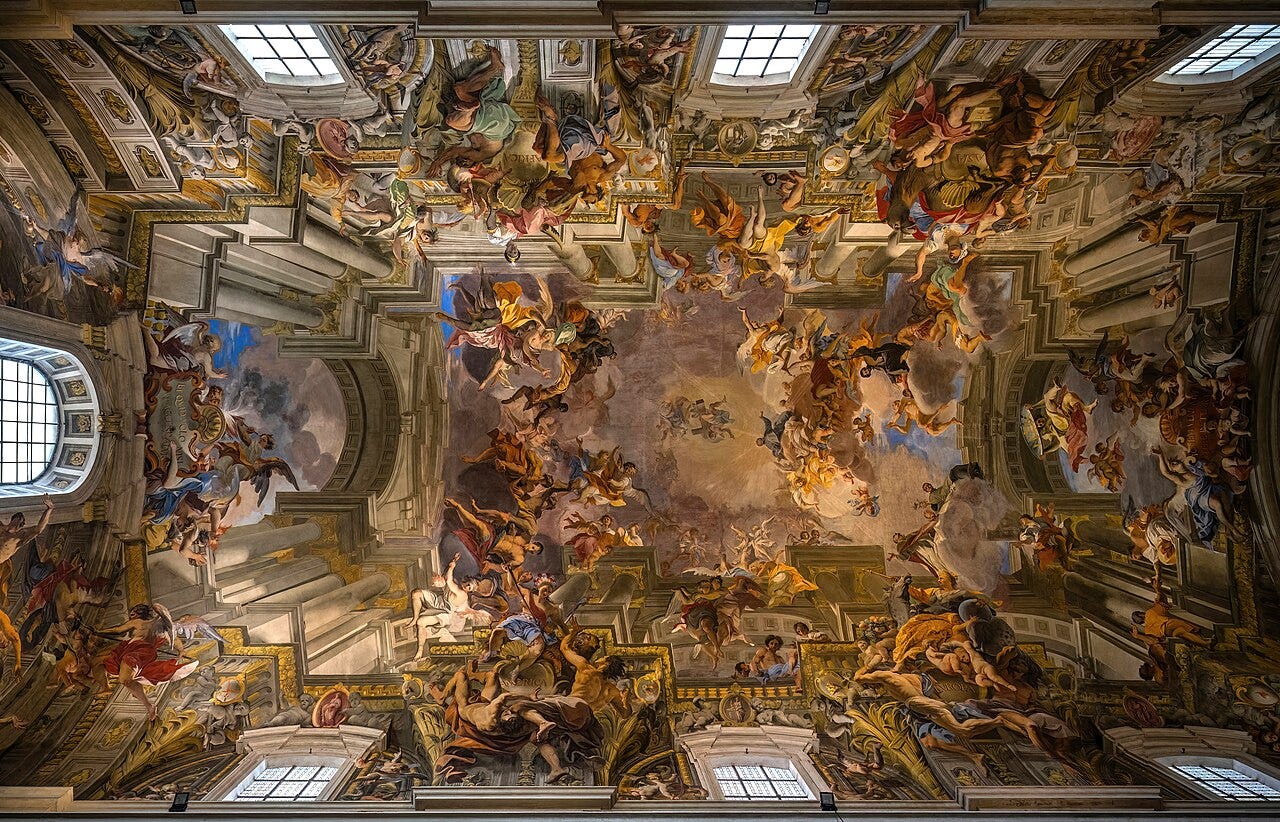
The extreme form: ceiling figures seen from directly below.
Keep learning art the fun way


Drawing what you see, not what you know
Your brain knows a leg is long. So when a painter shows that leg pointing at you, squashed to a fraction of its length, something in you resists.
Foreshortening is the skill of ignoring what you know and painting only what the eye receives. A foot thrust forward can be larger than the head behind it, and still look right.
And it is not just for human bodies. A road, a table, a gun barrel, any object turned sharply toward you is foreshortened too.
Get it wrong and the body looks snapped. Get it right and it lifts off the wall.
Mantegna's dead Christ
The most famous foreshortening in art is a body on a slab.
Around 1480 Andrea Mantegna painted the Lamentation over the Dead Christ, a panel barely 68 by 81 centimeters, from the foot end, so the soles meet the viewer first and the body rushes back to the head.
It is raw, almost rude, and it puts the death within arm's reach.
Mantegna even shrank the feet a little, so they would not block the body. He bent the measurements to serve the punch, an honest cheat of the kind buried inside many famous paintings, and I think it is exactly what makes it a triumph.
It is not the same as perspective
People mix the two up. They are cousins, not twins.
Perspective organizes the space of a whole scene: the floor, the walls, the lines running to the horizon. Foreshortening applies that same logic to a single object or limb, compressing it as it turns away from you.
Perspective builds the room. Foreshortening builds the body inside it. The two together gave Renaissance painting its depth, the obsession that drove Leonardo. Like contrapposto, it was part of the kit for making a figure look convincingly alive.
Painting the ceiling: di sotto in su
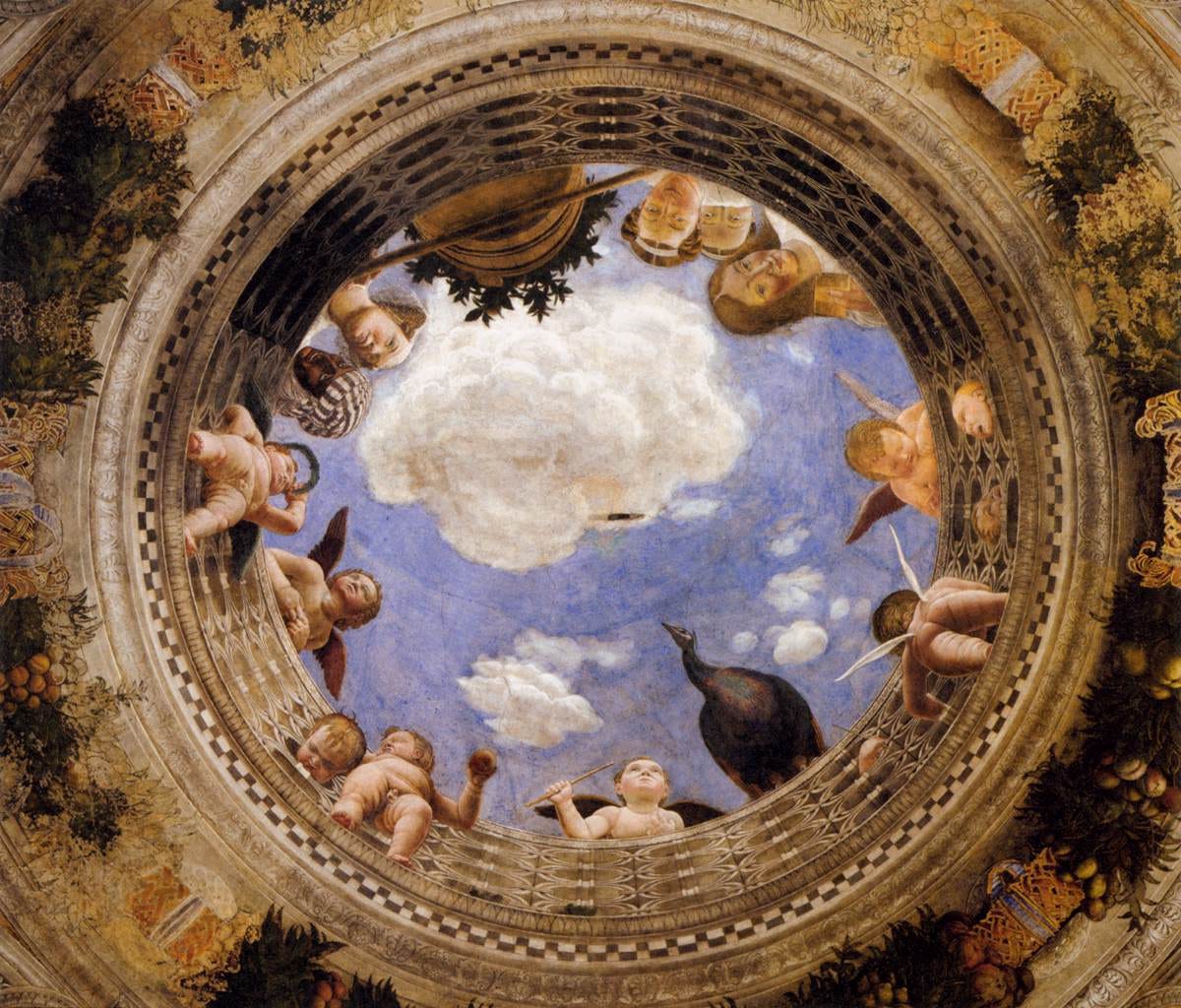
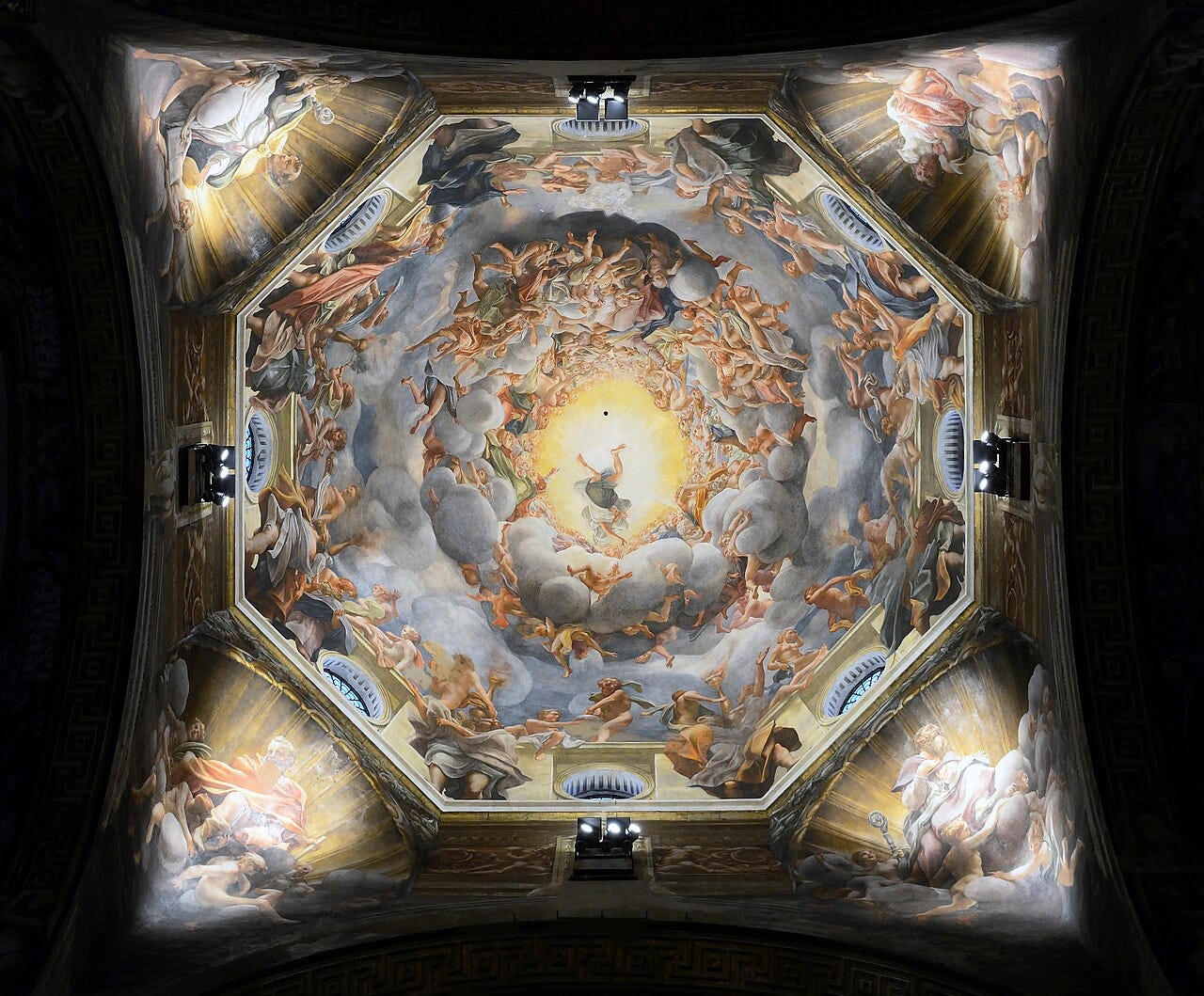
The most extreme use of foreshortening points straight up.
When artists painted ceilings, they used di sotto in su, Italian for seen from below. Figures are foreshortened as if floating right overhead, feet first, rising into the sky.
Mantegna opened a painted oculus in the ceiling of the Camera degli Sposi in Mantua, finished around 1474, with figures peering down through it, the first ceiling made to dissolve into open sky.
Later Correggio and the Baroque masters filled whole domes with bodies tumbling toward heaven.
The hardest trick to fake
Foreshortening was a test of skill, and everyone knew it.
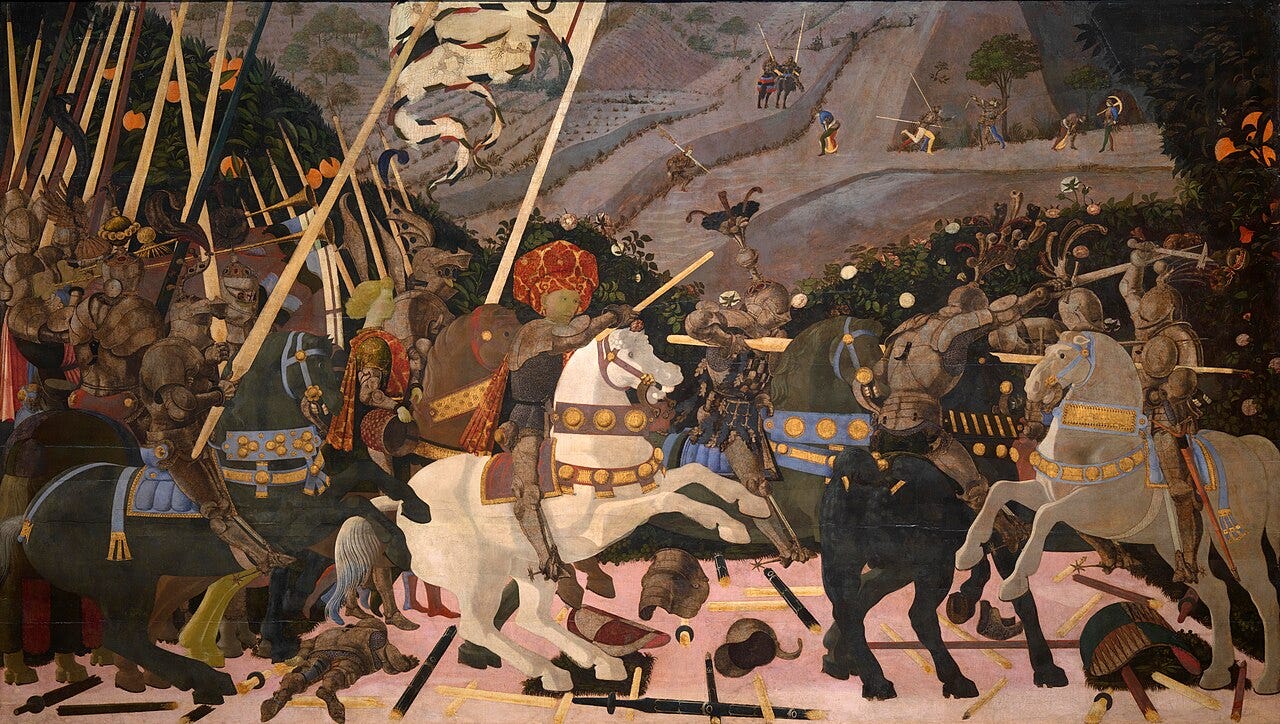
Paolo Uccello chased it so hard that he packed his battle scenes with lances, horses and a fallen soldier all collapsing into space. It became his signature and nearly his madness.
Vasari claimed Uccello stayed up all night over his drawings, and when his wife called him to bed he would only murmur how sweet a thing perspective was. To me that is the Renaissance obsession in a single anecdote.
A convincing foreshortened figure proved a painter could do the hardest thing in representation: bend a human body through depth and keep it believable.
How painters pull it off
Measure, do not guess. Painters hold a pencil at arm's length to read the true, shortened lengths the eye actually sees.
Trust the overlaps. Which form crosses in front of another tells the eye what is near and what is far.
Push the near part bigger. The closest hand or foot is drawn larger than it feels it should be.
Let the detail bunch. A compressed form piles its folds and marks at the near end, like that fist and sleeve.
Foreshortening, untangled
What is foreshortening in art? Drawing an object or figure so it recedes into space and looks shorter, to fake depth on a flat surface.
Who invented foreshortening? No single person. Greek and Roman painters already used it; the Renaissance, led by Mantegna, turned it into a studied craft.
What is the most famous example? Mantegna's Lamentation over the Dead Christ, seen from the feet, around 1480.
How is it different from perspective? Perspective orders a whole scene. Foreshortening compresses a single object or limb as it turns away from you.
What is di sotto in su? Italian for seen from below: extreme foreshortening used to paint figures on ceilings.
Can foreshortening happen in photography? Yes. A wide lens up close exaggerates it, which is why a hand reaching toward the camera looks huge.
More secrets to unlock


The trick that proves a painter can see
Here is the test I use. Cover the feet of Mantegna's dead Christ with your thumb and the body goes flat and ordinary. Lift your thumb and it lunges off the slab.
A panel the size of a hand towel, and still the clearest lesson in foreshortening ever painted.
