
Perspective in art is the system that lets a flat, two dimensional surface fake real, three dimensional depth, so a painting looks like a window you could step through. It is the illusion of space.
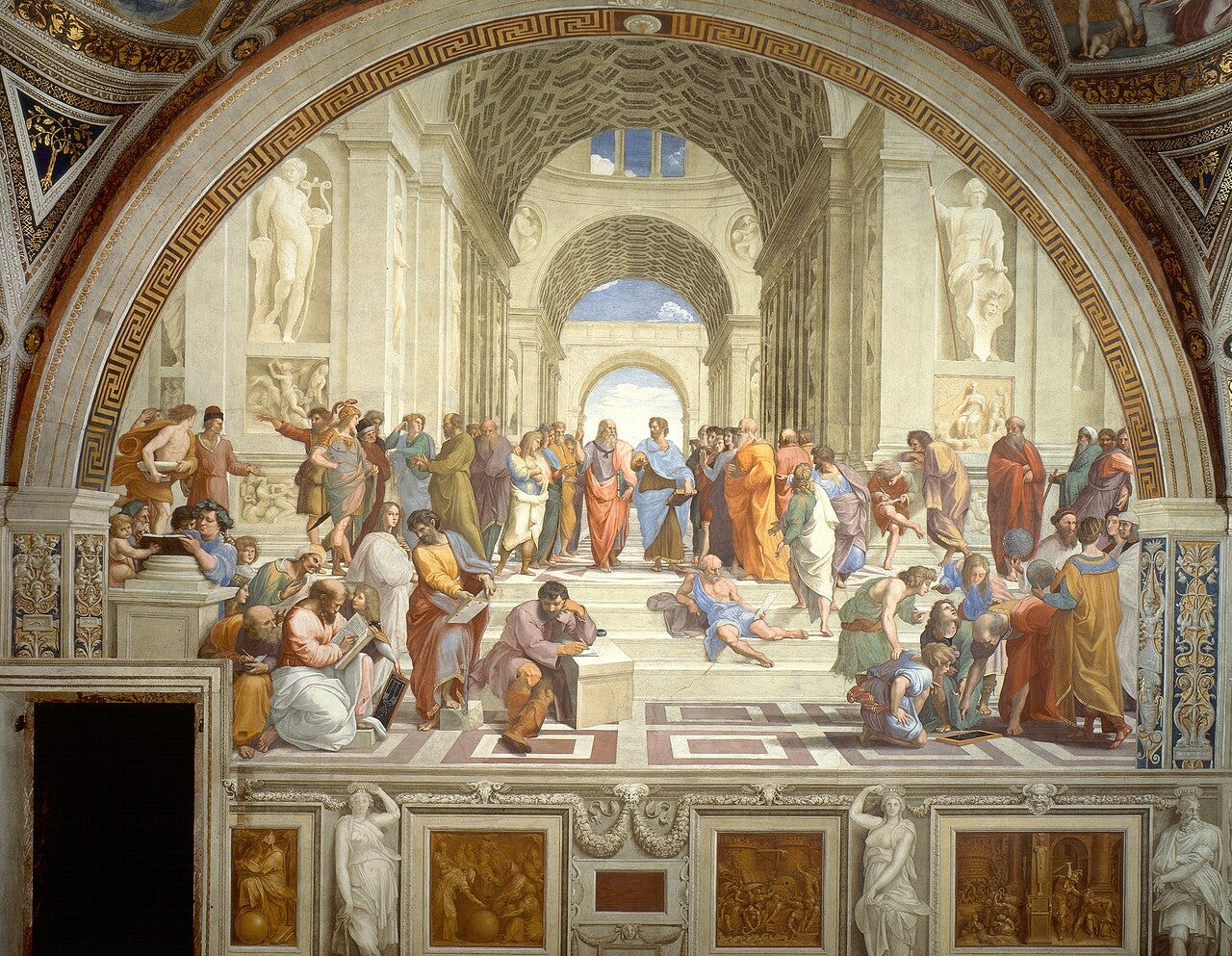
It was worked out in Florence around 1420, and it rewired Western art overnight.
Perspective is not natural. It is an invention.
For a thousand years, painters had no system for depth. Figures floated on flat gold, sized by importance, not by distance. Then a handful of Florentines cracked the mathematics of how the eye sees space, and suddenly painting could open like a real room.
Perspective is the closest art ever came to engineering an illusion.
Perspective in one minute:
What it does: makes a flat picture look deep and three dimensional.
The key trick: parallel lines appear to meet at a single vanishing point.
The inventor: the architect Brunelleschi, in Florence, around 1420.
The showcase: Leonardo’s Last Supper, where every line points at Christ.
It was the breakthrough that powered the whole Renaissance.
Learn art the fun way


What does perspective actually mean?
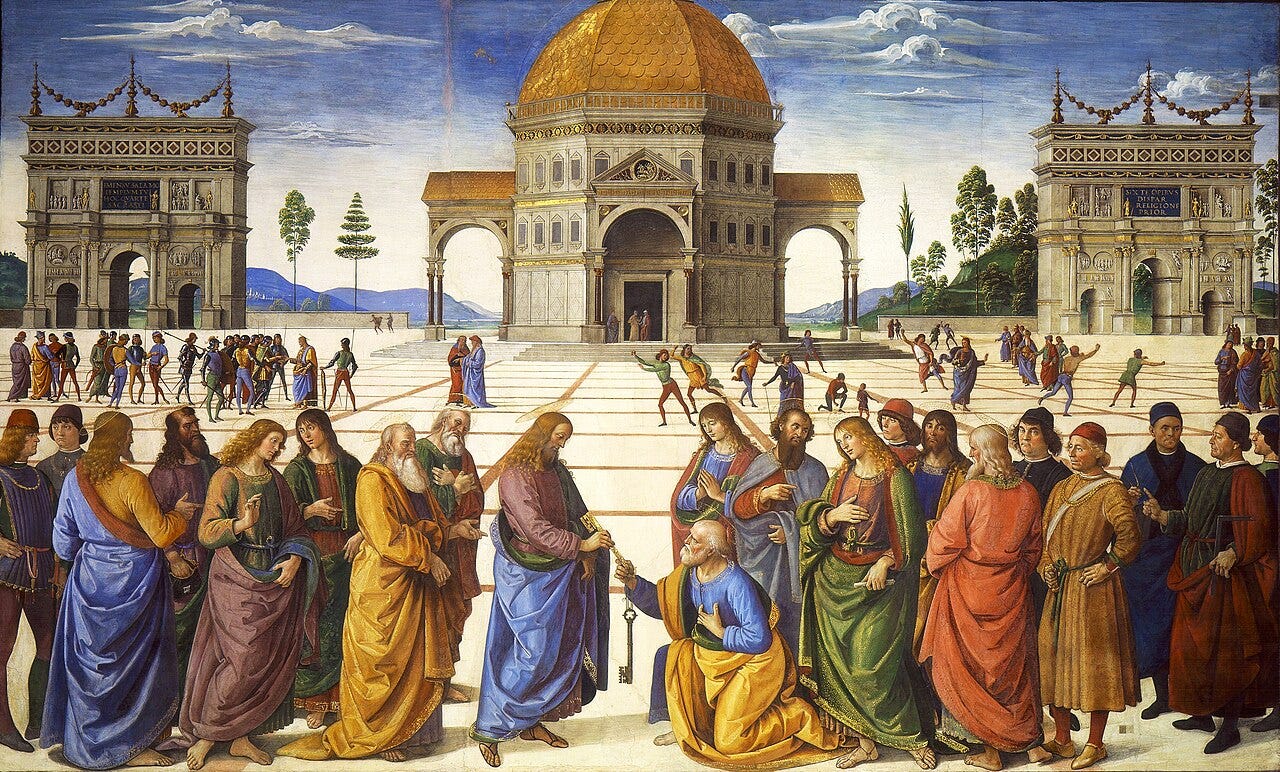
Perugino taught this same handling of perspective to a young Raphael, a link Pietro Perugino, The Complete Story follows in detail.
To me, perspective is a system for lying convincingly about space.
That is the whole job. A canvas is flat, the world is deep, and perspective is the set of rules that tricks your eye into seeing depth on a flat surface. Its close cousin, foreshortening, does the same trick for a single object.
And like any good trick, once you know how it works, you cannot unsee it.
How linear perspective works
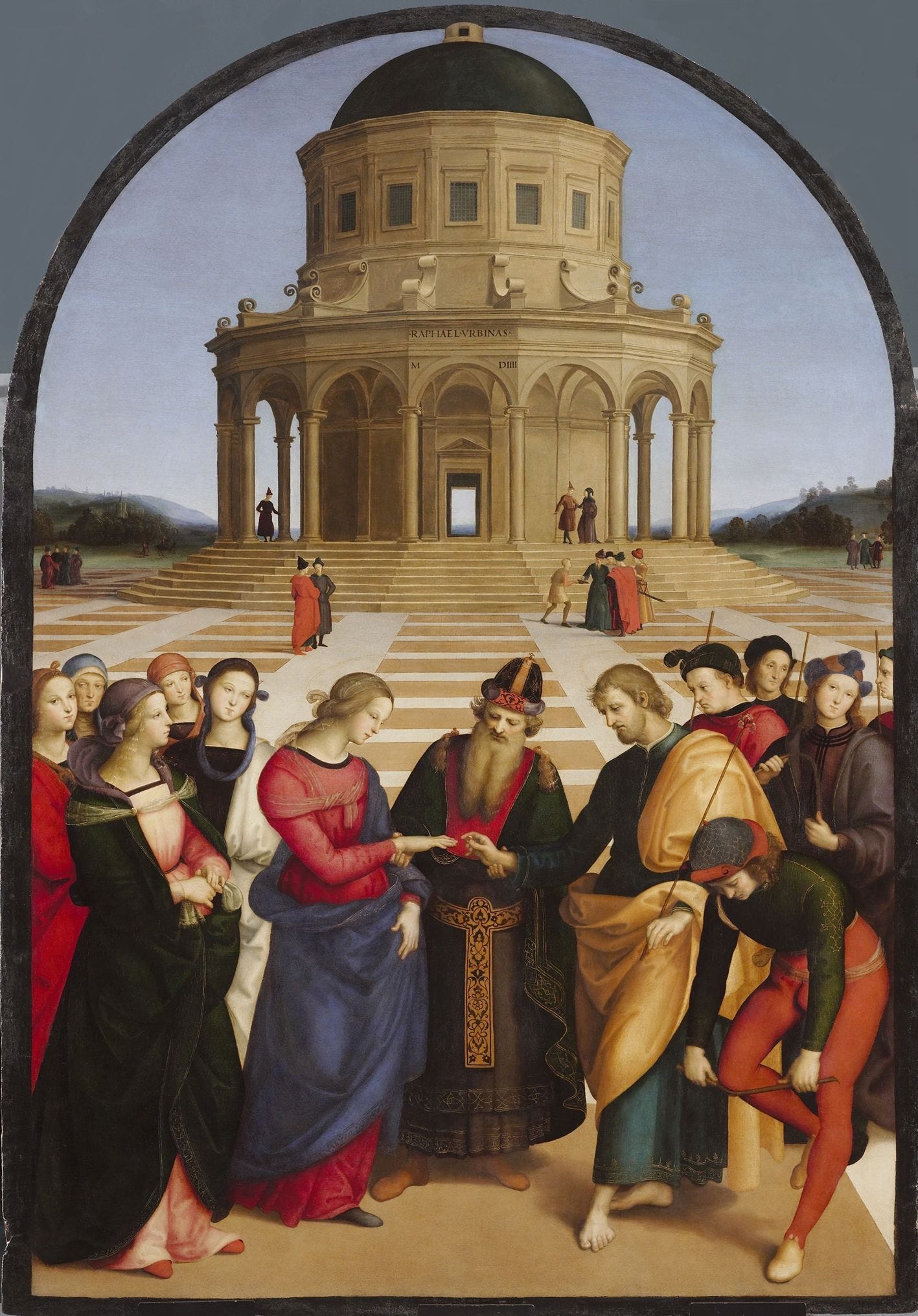
Here is the single most important idea, and it is simpler than it sounds.
Look down a straight road. The two edges are parallel, so they never actually meet. But they appear to come together in the distance, shrinking to a single dot on the horizon.
That dot is called the vanishing point.
Linear perspective takes that fact and builds a whole system on it. Every parallel line in the scene, the edges of a floor, a table, a building, is drawn to converge on the vanishing point. Things are drawn smaller the further back they sit.
The result: a flat painting that your brain reads as a deep, believable space.
Who invented perspective?
The architect Filippo Brunelleschi, in Florence, around 1420.
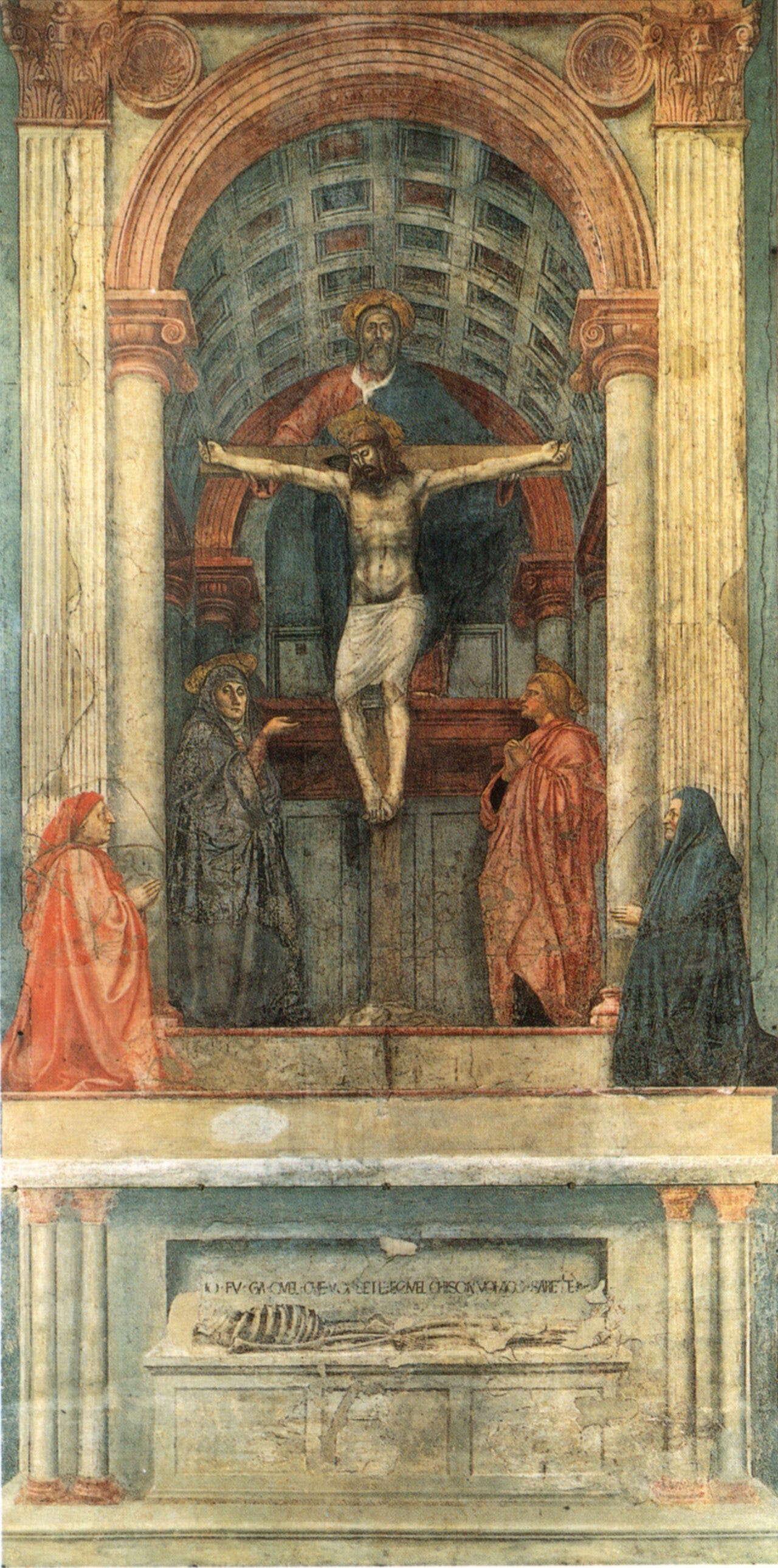
He demonstrated the maths of single point perspective, and the painter Masaccio was the first to use it with full power, in his fresco The Holy Trinity, where a painted chapel seems to punch a hole straight into the wall.
A few years later, Leon Battista Alberti wrote it all down in his treatise On Painting in 1435, turning a trick into a teachable science. From Florence, that single point system spread across Europe.
After that, perspective became the price of entry to serious painting.
Two kinds of perspective worth knowing
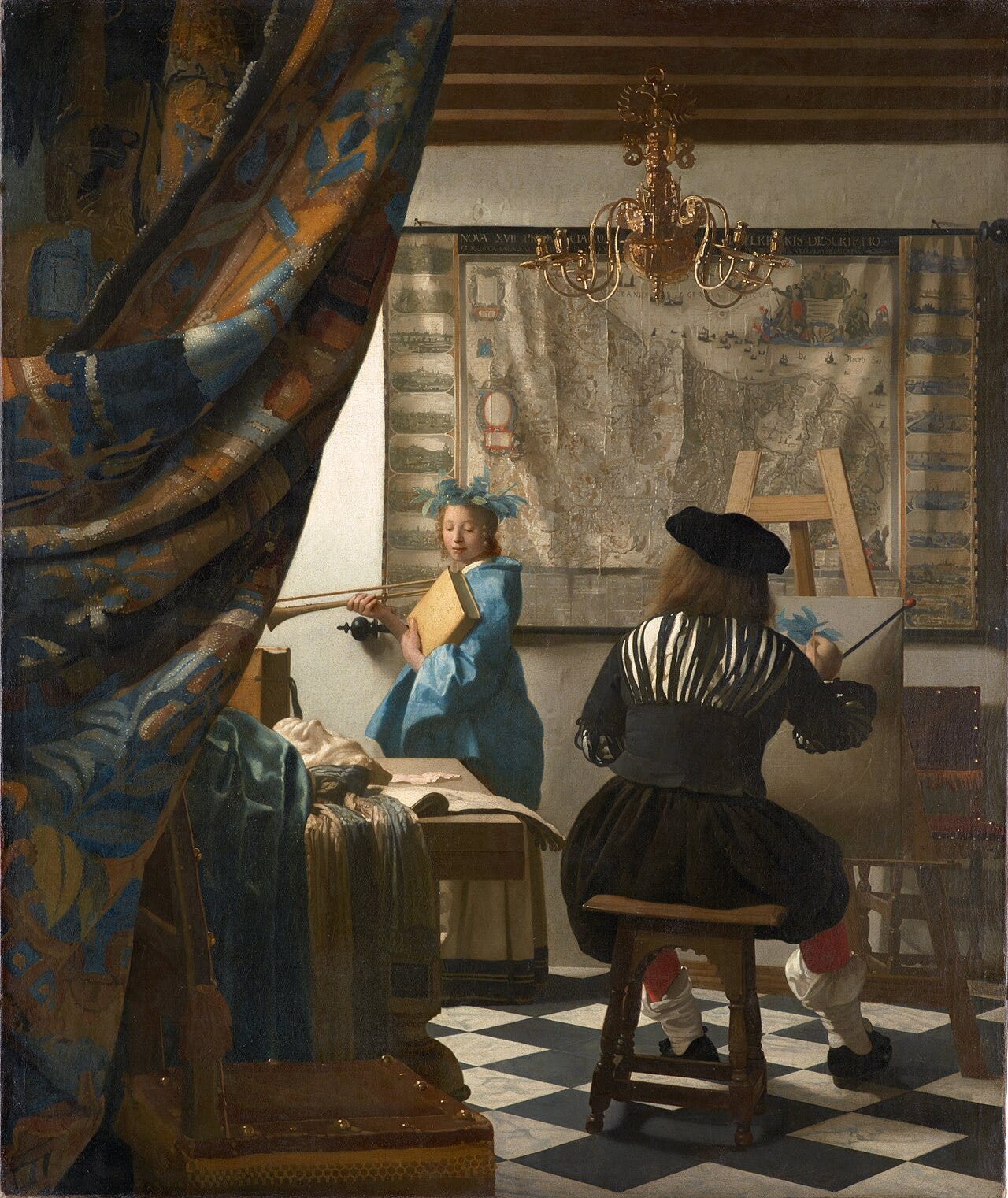
Most people only know one. There are two, and the second is sneaky.
Linear perspective. The geometric kind: vanishing points and converging lines. It controls the shape and size of things in space.
Atmospheric (or aerial) perspective. The subtle kind: distant things look paler, hazier and bluer, because of the air between you and them. Leonardo was a master of it.
The sentence to keep: linear perspective fakes the shape of space, atmospheric perspective fakes the air inside it.
The most perfect use of perspective
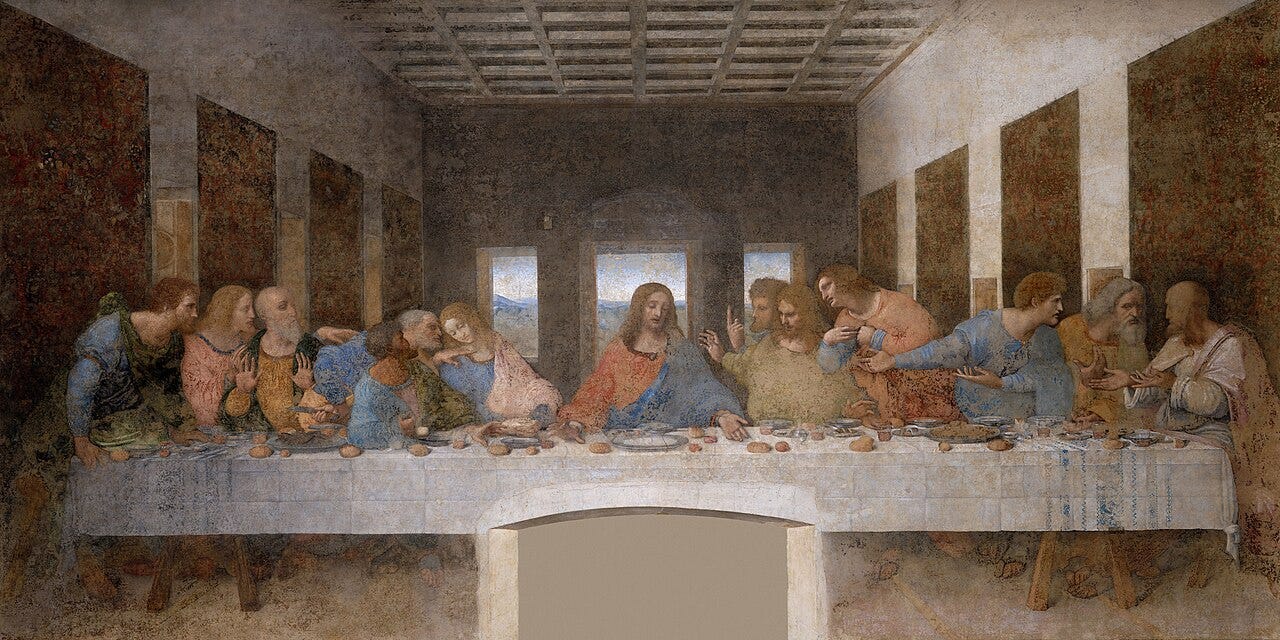
If you want one painting that shows the full power of the trick, it is this one.
Leonardo’s Last Supper places the vanishing point directly behind the head of Christ. Every line of the painted room, the walls, the ceiling, the windows, silently points your eye straight to him.
You feel it before you understand it, and I never get over it. The architecture itself worships him.
Here perspective does more than fake depth. It directs emotion.
Leonardo hid the whole design of the Last Supper in that single vanishing point, and the soft sfumato he paired with it melts every edge around it.
You walked through it today
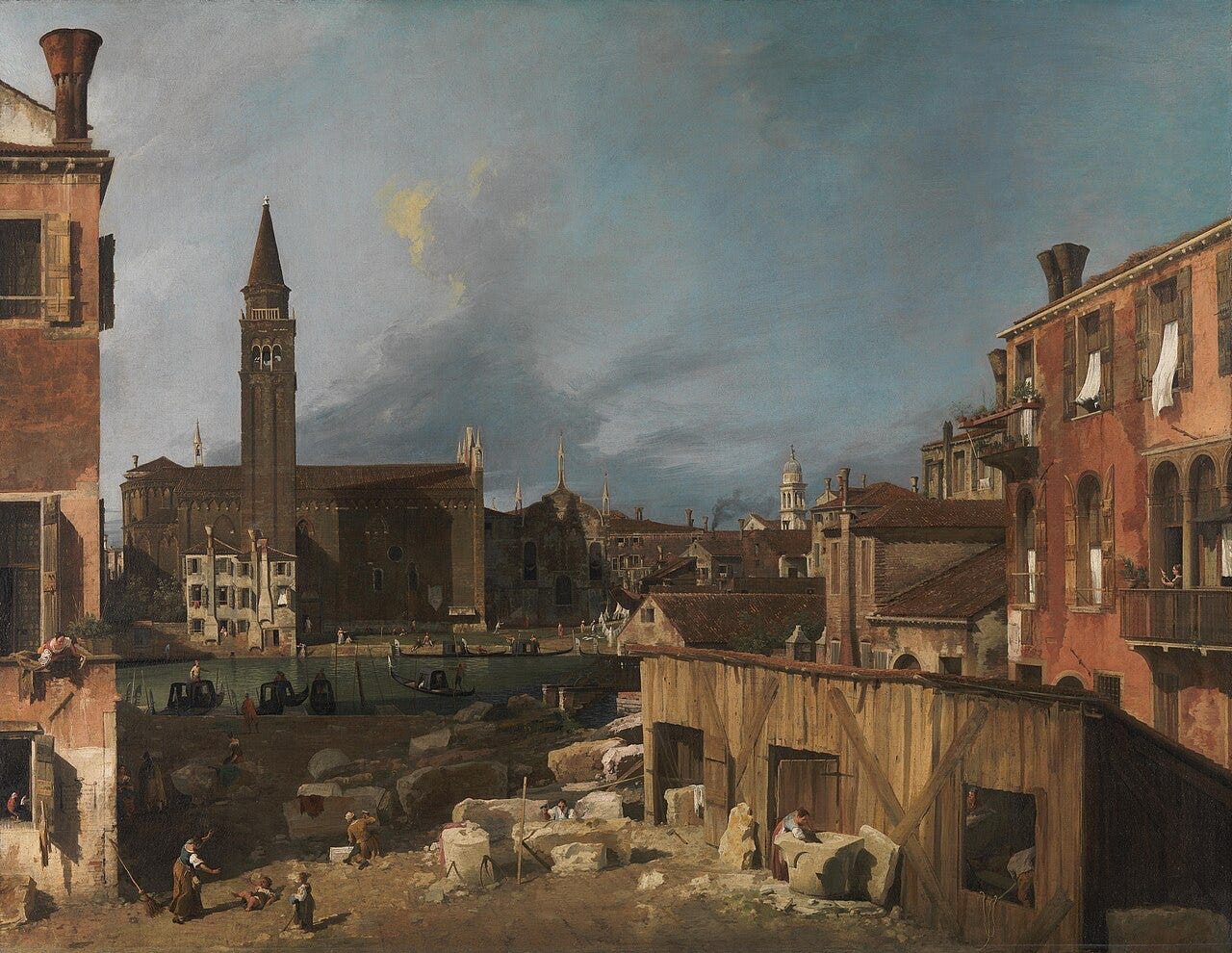
You live inside Renaissance perspective right now.
Every believable, deep image on a screen is built on the rules a Florentine worked out 600 years ago.
Video games. Every 3D world is rendered with vanishing points and converging lines. You walk through Brunelleschi’s maths.
Film and animation. Sets, camera lenses and CGI all obey perspective to feel real.
Architecture and product design. Every 3D render and blueprint uses it.
Photography. A camera lens is a perspective machine. It captures the world exactly as the Renaissance learned to fake it.
So when people call old art irrelevant, point at any video game. It is running on a 1420 Florentine discovery.
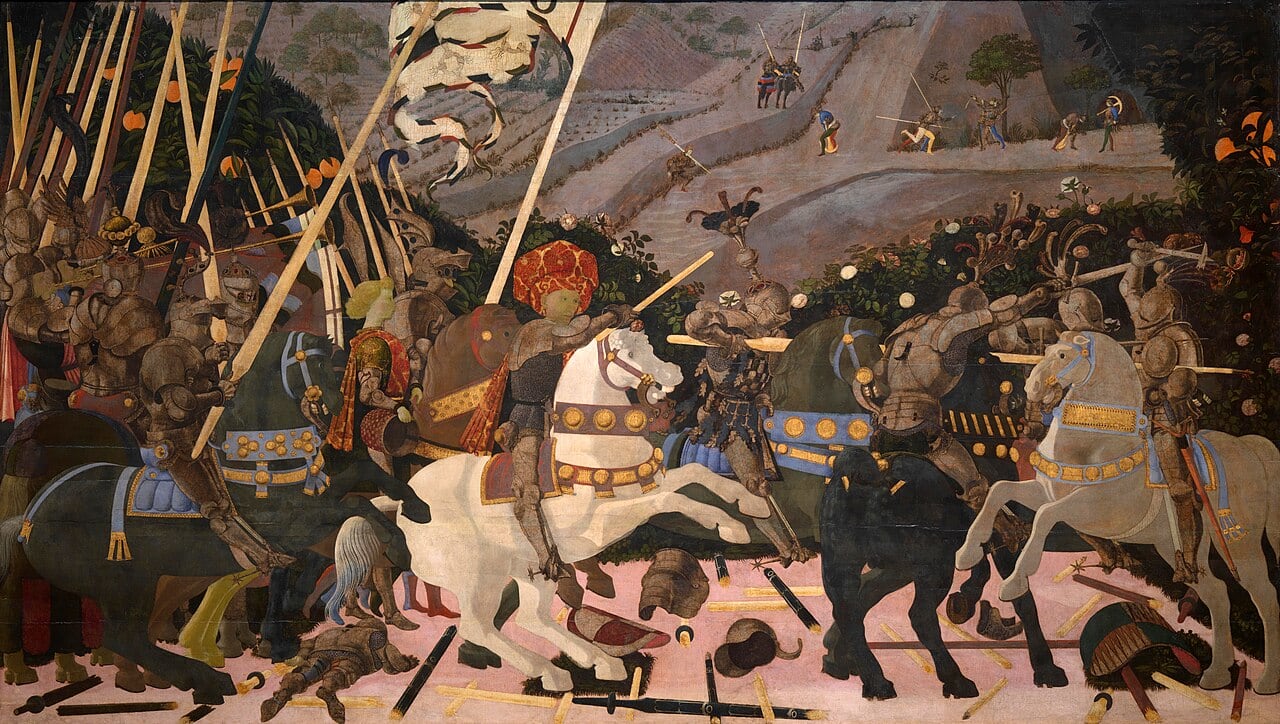
For a classic demonstration, look at Uccello's Battle of San Romano at the National Gallery, where the broken lances line up on a perspective grid.
Perspective, the depth questions
What is perspective in art in simple terms? A system of techniques that makes a flat picture look like it has real, three dimensional depth.
Who invented perspective? The architect Brunelleschi demonstrated linear perspective in Florence around 1420, and Alberti wrote down the rules in 1435.
What is a vanishing point? The single point on the horizon where parallel lines appear to meet, creating the illusion of distance.
What is the difference between linear and atmospheric perspective? Linear perspective uses converging lines and vanishing points. Atmospheric perspective uses paler, bluer, hazier tones to suggest distance.
What is the difference between one point and two point perspective? One point perspective has a single vanishing point, good for looking straight down a road or room. Two point uses two, better for viewing something like a building from a corner.
More to unlock


More than geometry
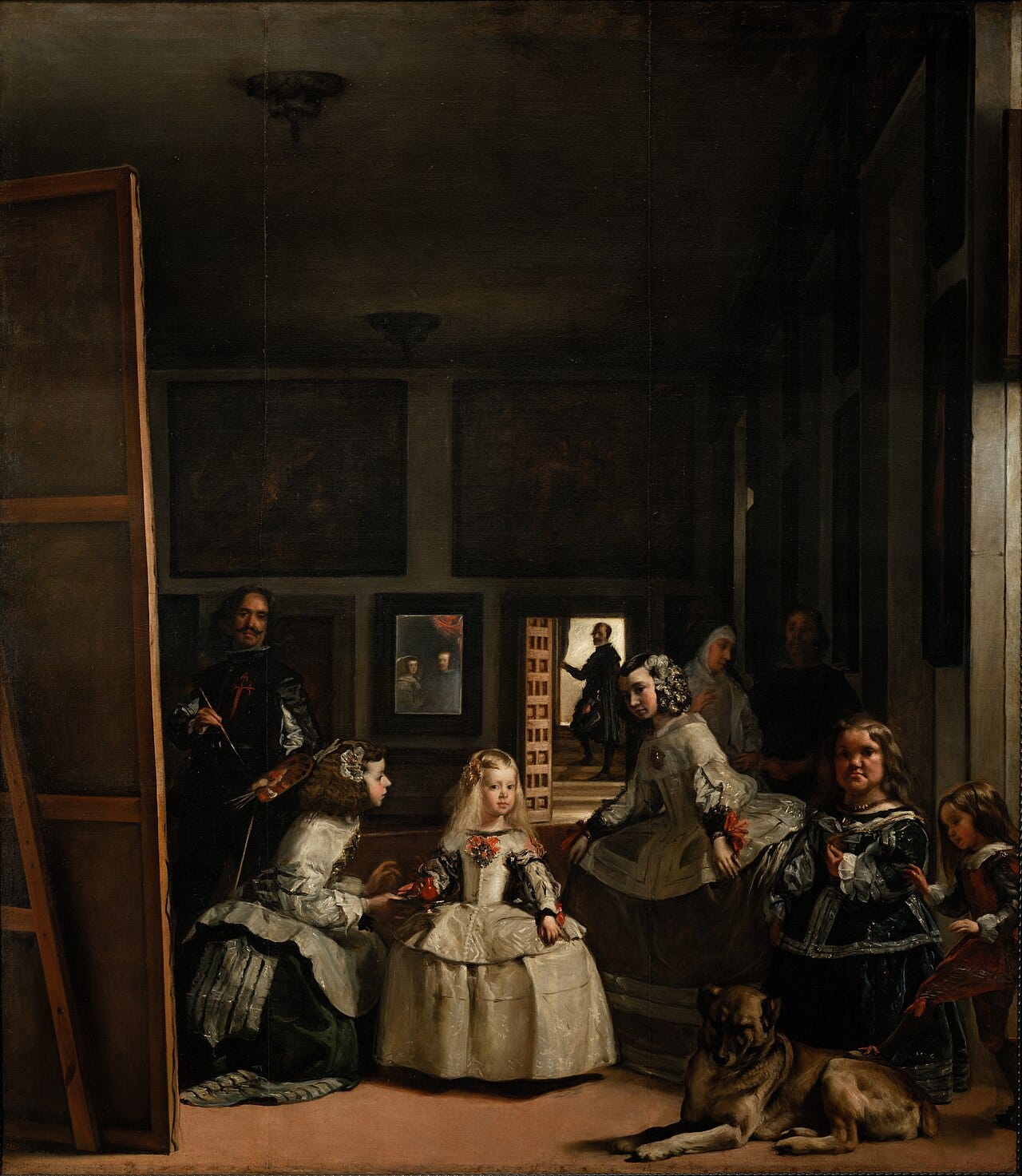
Perspective gets treated as a dry, technical skill, the boring geometry part of art class. I think that is a shame.
But think about what it actually achieved. A flat wall of plaster became a deep room. A painted horizon became a place you could imagine walking toward. For the first time, a picture became a window you could almost step through.
Every immersive image humans have made since, every film, every game, every virtual world, descends from that one Florentine idea: that you can build a believable space out of nothing but lines and maths.
Brunelleschi proved it around 1420 with a painted panel and a mirror: he rendered the Florence Baptistery so exactly that viewers looking through a peephole could not tell his picture from the real building behind them.
Six hundred years later, every screen you own still runs on the same trick.
