
The honest answer is that nobody knows, because she was never meant to be anybody. Vermeer’s most famous painting is not a portrait of a real, named woman.
It is a tronie, a Dutch type of picture that shows an imaginary character or mood, not a specific sitter. Even the pearl is an illusion.
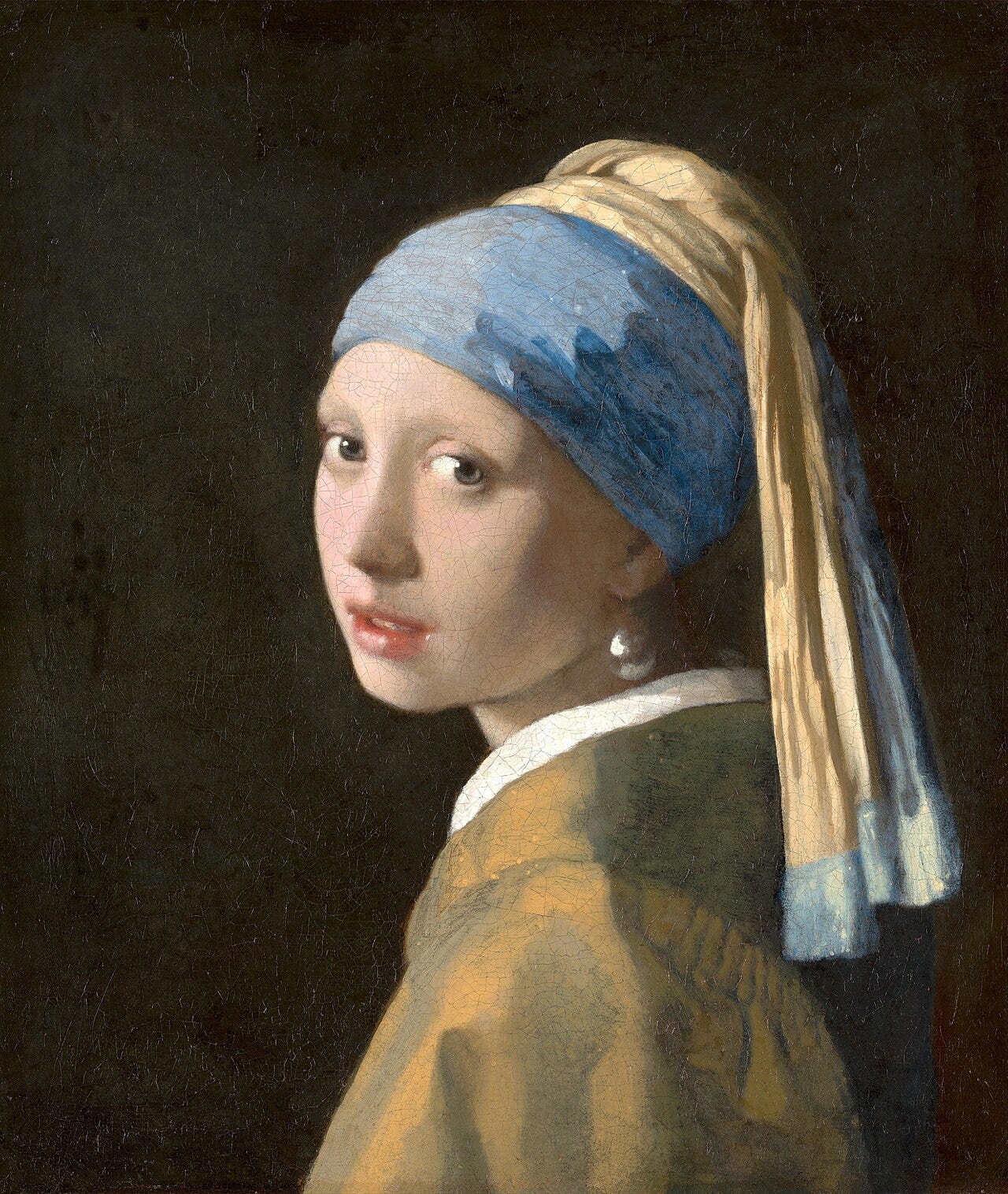
So the most recognizable face in Dutch art belongs to no one we can name.
What she actually is comes as a small shock.
The question everyone asks first
Stand in front of her and the instinct is immediate. Who was she? A daughter, a servant, a secret love?
The painting invites it. She turns as if you just called her name, lips parted, caught mid breath. It feels like a portrait of a real, present person.
That feeling is exactly the trick, and it is the wrong question.
What a tronie actually is
In the Dutch Golden Age, painters made works called tronies.
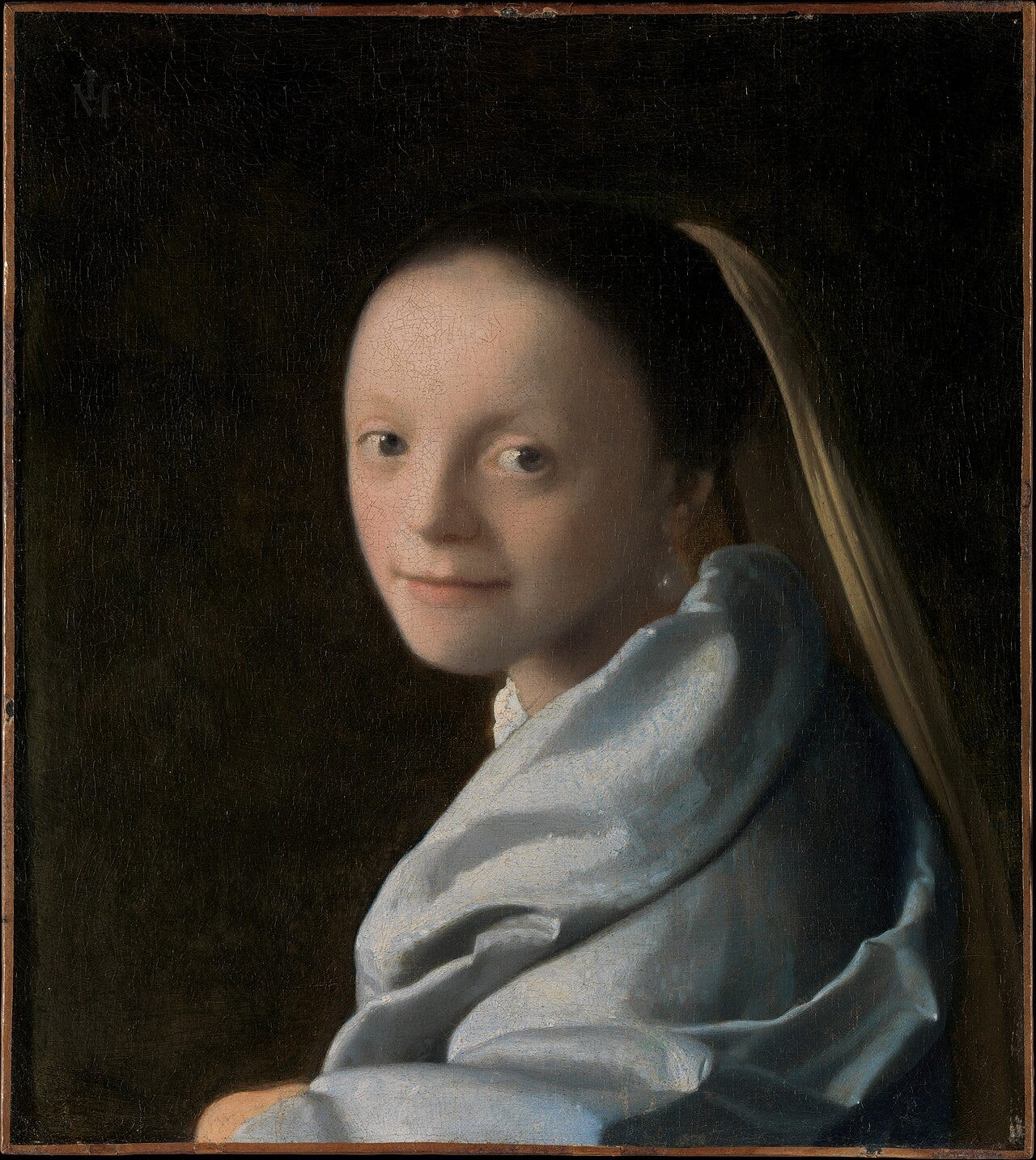
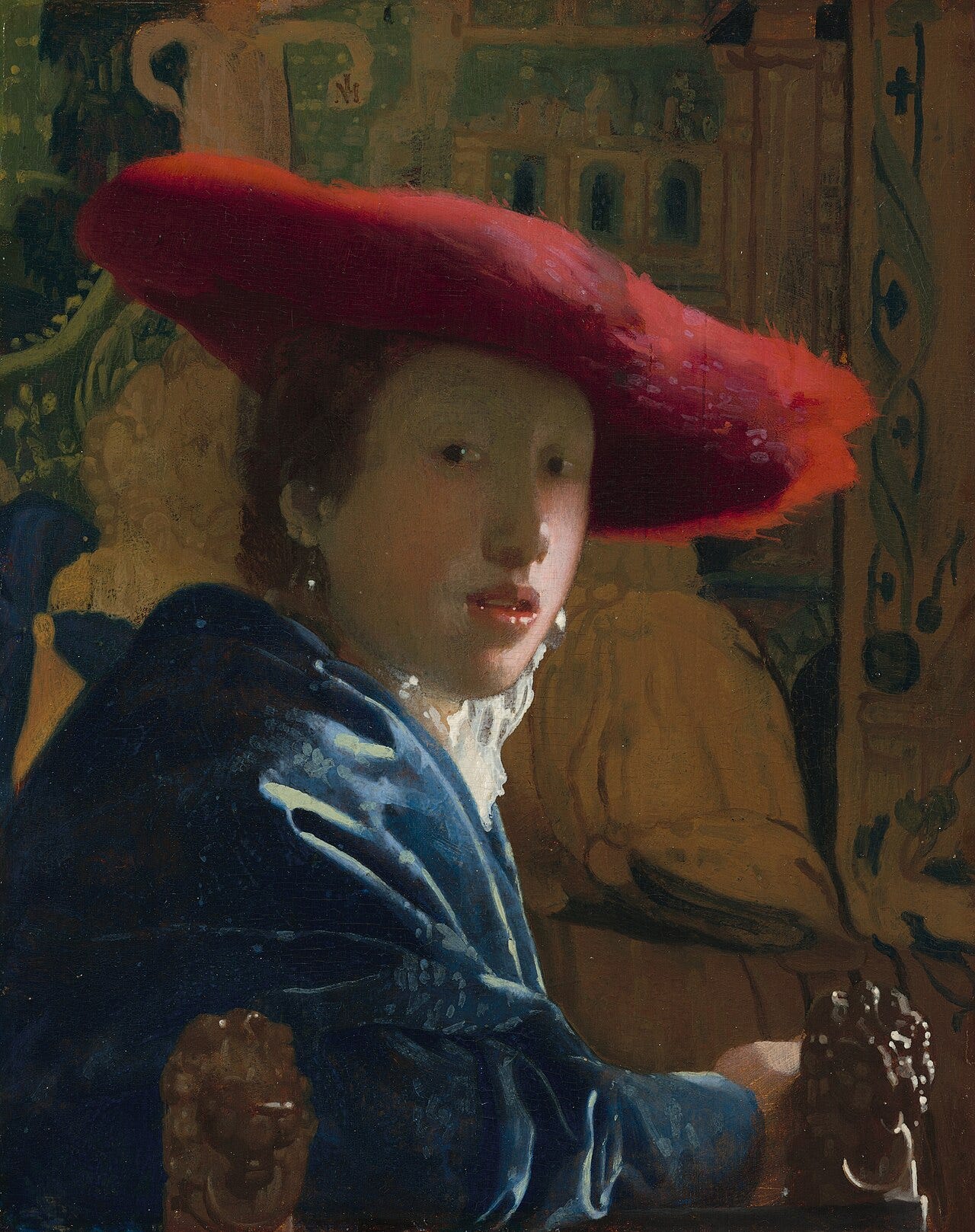
A tronie was not a commissioned likeness of a particular person. It was a study of a head, a type, a costume or an expression: an old man, a soldier, an exotic beauty.
Rembrandt made dozens, often using his own face. Buyers knew they were not looking at Mr or Mrs Someone. They were looking at a character.
Girl with a Pearl Earring is one of these. The turban and the costume are not Dutch street clothes. They are props, meant to lift her out of her own time and make her a little foreign, not to record a real wardrobe.
The pearl that cannot be real
Look closely at the famous pearl and a second illusion appears.
It is far too large to be a natural pearl of the period. There is no hook, no wire, no clear way it even hangs from her ear. And it is painted with almost nothing: a bright dab of white at the top for the highlight, and a softer smear below where her white collar reflects into it.
Most likely it is a glass or imitation pearl, or simply a flourish Vermeer invented. The most studied jewel in art history is two strokes of paint and a lot of suggestion, and to me that is the whole genius of Vermeer.
The candidates, and the famous fiction
People still want a name, so theories pile up.
Some have guessed Vermeer’s eldest daughter, Maria. Others suggest a daughter of his patron. The truth is there is no evidence for any particular girl, and as a tronie she may have been built from imagination as much as from a model.
One thing is certain. The maid named Griet, with her whole tragic backstory, comes from Tracy Chevalier’s 1999 novel and the film that followed, not from history.
She is a beautiful invention layered onto a painting that was always, deliberately, anonymous.
The two big myths, cleared up
Myth: she is a portrait of a specific woman Vermeer knew. Fact: she is a tronie, an imaginary character study.
Myth: the servant “Griet” was real. Fact: Griet is fiction, from a 1999 novel.
Detail: the pearl is too big to be real and is painted in barely two brushstrokes.
Keep learning art the fun way


More secrets to unlock


She was almost lost
She was nearly forgotten for good.
In 1881 the panel sold at auction for a pittance, grimy and unattributed, to a collector who later left her to the Mauritshuis in The Hague. Cleaning since revealed the dark space behind her was once a deep enamel green.
For why so little of his work survives, see why Vermeer painted so few paintings, and for his quiet command of light, his Woman Holding a Balance.
The questions people still ask about her
Who is the Girl with a Pearl Earring? No one specific. She is a tronie, an invented character, not a named sitter.
Is it a real pearl? Almost certainly not. It is too large and was probably glass or pure invention.
Was she Vermeer’s daughter? It is one guess among several, with no proof.
Where is the painting? In the Mauritshuis in The Hague.
Why is she so famous? The lifelike turn, the glowing light, the mystery, and a modern novel and film that made her a star.
Why the mystery is the point
We keep hunting for her name because the painting feels like a person, and persons have names.
But Vermeer built her to be exactly this: a face with no biography, a look aimed straight at you across 350 years. The reason she haunts millions is the reason we cannot name her: she was made to belong to everyone and no one.
I tell the whole strange story of the man who painted her in Vermeer: The Complete Story.
