
When Camille, Monet’s first wife and great early model, died in 1879 at only 32, he painted her on her deathbed, and later admitted he was horrified to catch his own eye coldly studying the colors of death moving across her face.
The painter in him would not switch off, even in his grief.
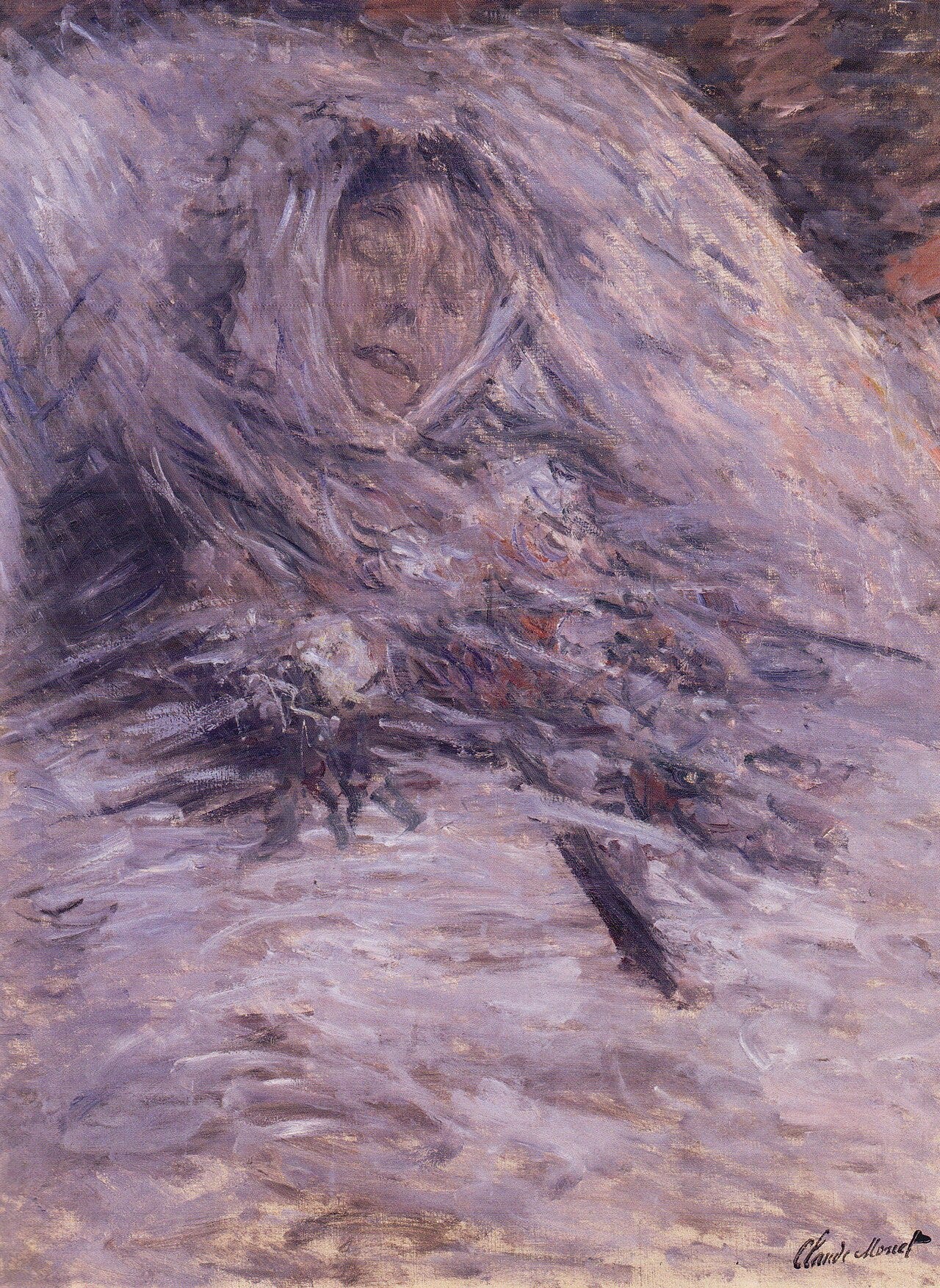
It is the most personal and the most uncomfortable picture he ever made.
Behind it lies a confession that explains everything.
Why he could not stop himself
Monet painted Camille as she lay dead because, by his own account, he could not help it.
He loved her, and he was destroyed by losing her. But standing at her bedside, his trained eye started reading the blues and grays settling over her skin, the way it read light on a field. He picked up a brush almost against his will.
Keep learning art the fun way


Who Camille was
Long before Giverny and the fame, there was Camille Doncieux.
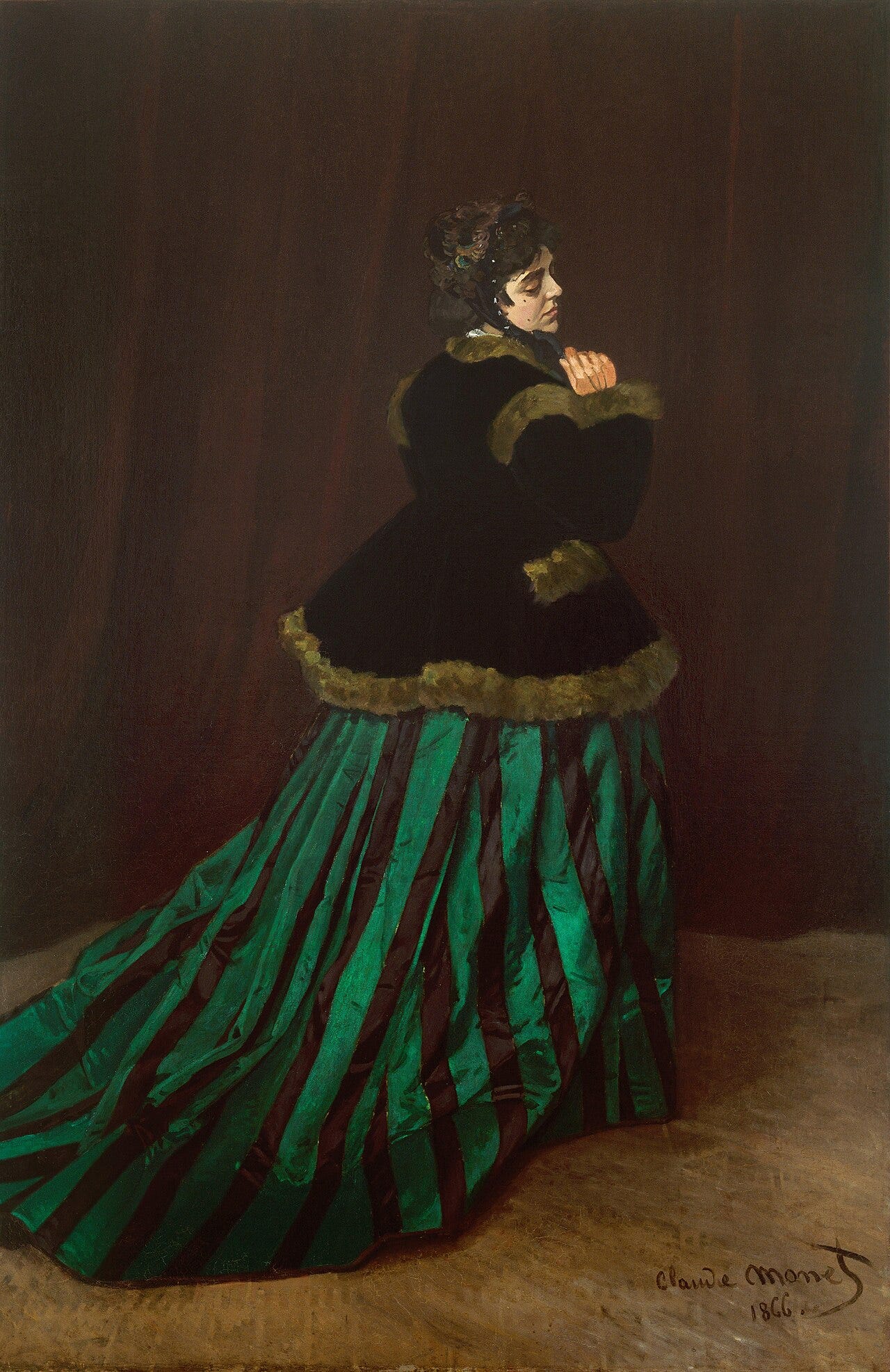
She was Monet’s model from the mid 1860s, the young woman in the famous green dress that first won him notice, and in countless garden and outdoor scenes.
She became his wife and the mother of his two sons. She also lived through the hardest, poorest years with him, the evictions, the unpaid bills, the rejected paintings.
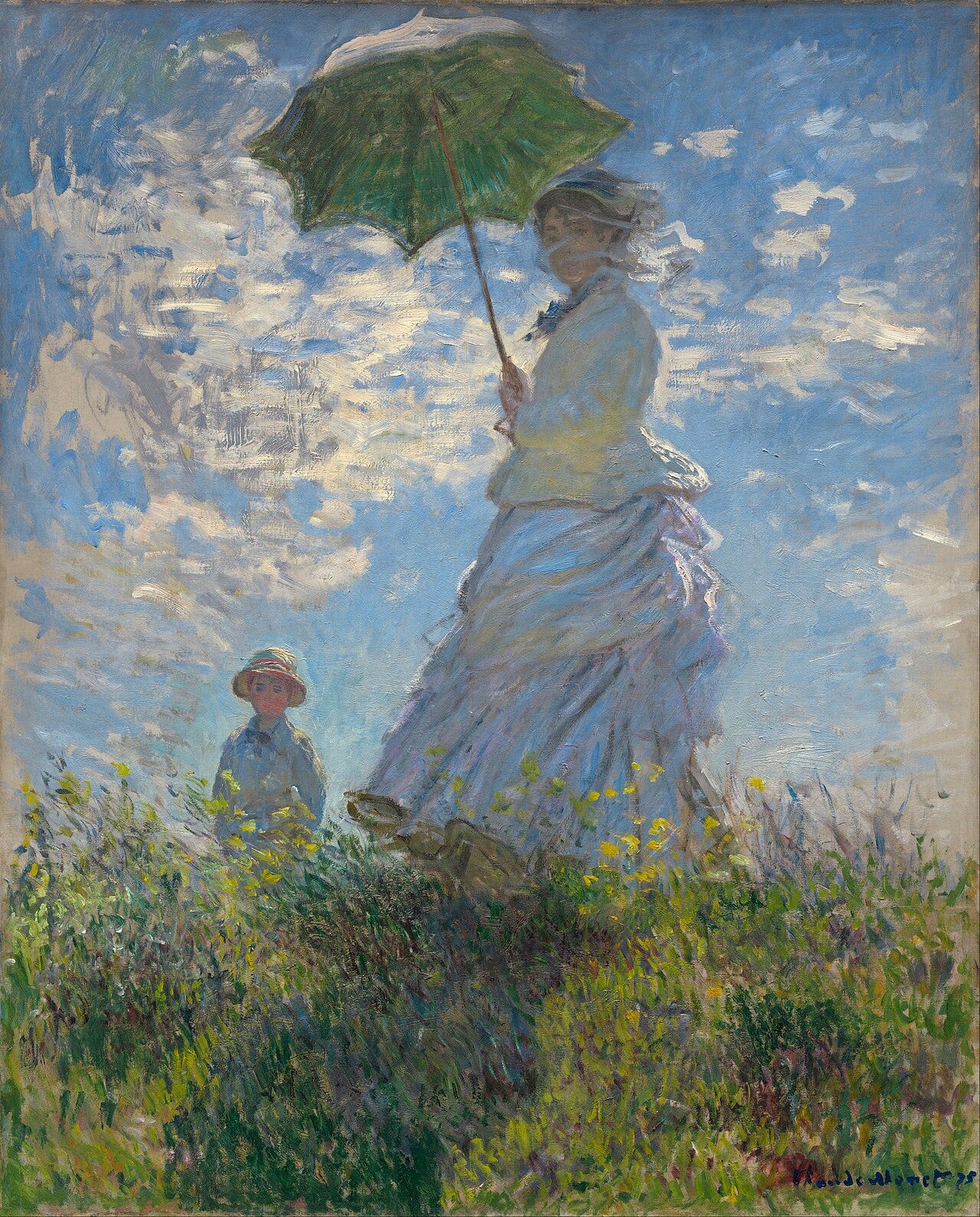
She is everywhere in his early work. Monet painted Camille more than thirty times, reading in the grass, walking with a parasol, turning in that green dress.
She was the figure who made his sunlit world feel human. The deathbed picture is the last entry in a long, loving series, which is part of what makes it so hard to look at. Manet was often at that house too; the summer he painted Camille and their son is its own story.
The loss
By the late 1870s Camille was seriously ill, worn down by poverty and childbirth, probably by cancer.
She died in September 1879, at 32. Monet was left with two young sons and very little money, in a household he was already sharing with the family of Alice Hoschedé, who would later become his second wife.
The painting itself
The picture he made is unlike anything else in his work.
Camille lies wrapped in pale sheets, her face dissolving into strokes of violet, blue and faint rose, half buried in a veil of loose paint that looks almost like falling snow.
It is tender and ghostly at once. The painting now hangs in the Musée d’Orsay in Paris.
The confession that explains it
Years later Monet told his friend Georges Clemenceau what had happened inside him at the bedside.
He described watching the colors of death creep across the face of the woman he loved, and realizing with a shock that his instinct was to analyze those tones, to reach for the right blues and yellows, before he had even understood his own grief.
He was disturbed by it. The reflex to see color had become deeper than thought.
It is one of the most honest things any artist has ever said about the cost of an obsessive eye.
What the picture really shows
It would be easy to read coldness here. That misses it.
Monet did not display the painting or sell it as a curiosity. It stayed private. What it records is not a lack of feeling but the opposite, a man so fused with his way of seeing that even heartbreak arrived as light and color.
The gift and the curse were the same thing, and to me that is the truest thing ever said about him.
FAQ about Camille and the painting
Why did Monet paint his dying wife? At Camille’s deathbed his painter’s instinct took over, and he found himself recording the colors of her death.
Who was Camille Monet? Monet’s first model, muse and wife, and the mother of his two sons.
When did Camille die? In September 1879, aged 32, after long illness and years of poverty.
Where is the deathbed painting? In the Musée d’Orsay in Paris.
Did Monet remarry? Yes, he later married Alice Hoschedé, who had helped raise his children.
More secrets to unlock


The eye that never closed
Monet went on to decades of fame, a garden, a pond and the most famous lilies in the world.
He rarely spoke of Camille again, but he kept the painting. His confession to Clemenceau reveals the engine of his whole life: an eye so trained on light it could not stop, even at the worst moment.
I follow that life, from the first Impressionist to the water lilies, in Monet: The Complete Story.
