
Pablo Picasso helped invent Cubism, painted Guernica, the great antiwar mural of 1937, and changed his style again and again over a career of about seventy-five years. Those three achievements made his name the shorthand for modern art.
Cool Stories About Art is a newsletter to learn art the fun way.
Join 200,000+ readers and get:
10 new art stories / month
The entire archive of content (140+ articles)
Comment, ask questions, and chat with other readers
The changes started early. Picasso first reached Paris from Spain in October 1900, and in February 1901 his friend Carles Casagemas killed himself over a failed love affair. The grief darkened the work that followed.
In Barcelona in 1902 Picasso developed a blue monochromatic style, the Blue Period, with beggars and the destitute painted in almost nothing but blue. In 1904 he returned to live in Paris, and in 1905 the Rose Period brought pink tones and a new cast of acrobats and harlequins.
Later he would move on again, and by 1926 his work had close ties to Surrealism, the movement that drew its images from dreams. Between those years, though, stands the turn that mattered most.
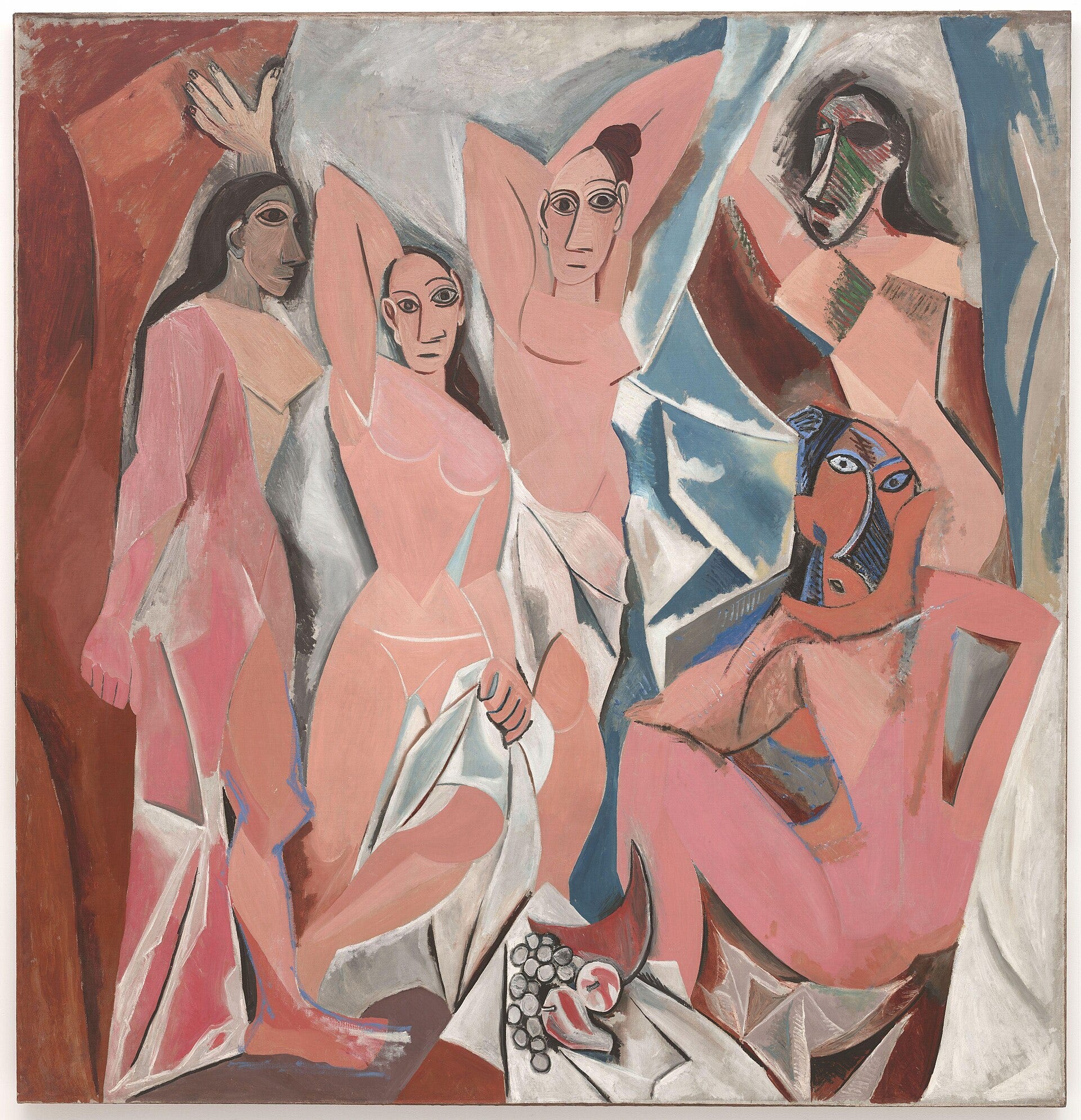
In 1907 Picasso painted Les Demoiselles d'Avignon, the canvas credited with starting Cubism. It shows five naked women whose bodies are broken into flat, splintered planes with hard edges.
Their faces borrow from two sources far from French painting: Iberian sculpture, carved in Spain before the Romans, and African masks, which the two women on the right seem to wear.
Picasso kept the picture to himself. For nine years it stayed rolled up in his studio, seen by his friends and almost no one else.
Picasso's fame, then, did not arrive in one blow. It came in pieces: a partnership with another painter, a police file, and a mural that critics could not agree on.
The canvas his friends did not want
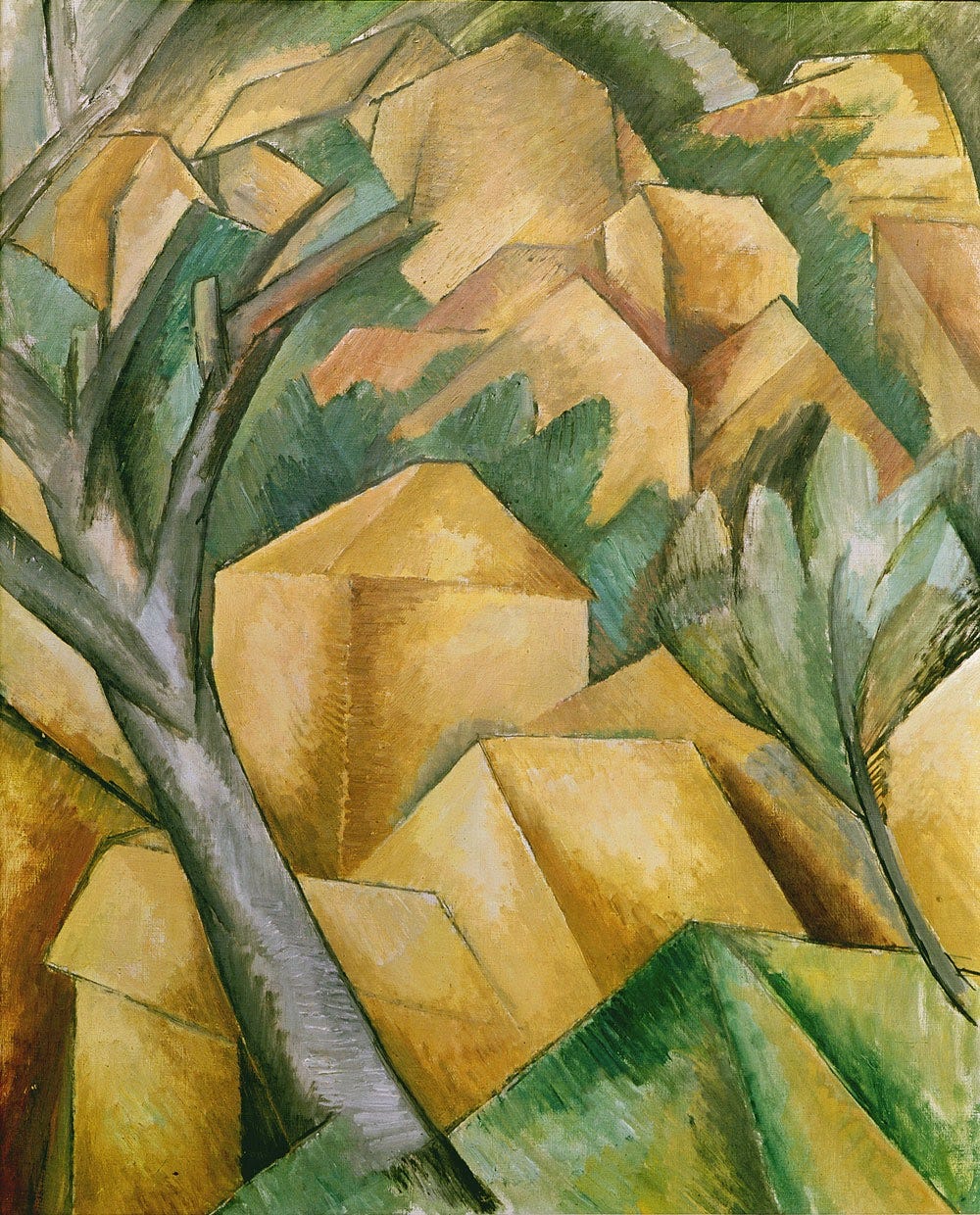
Most of the friends who saw Les Demoiselles d'Avignon in the studio disliked it. One of them, a young French painter, was just as put off, then kept coming back to study it.
What You'll Discover
How Cubism got its name.
Why the police questioned him in 1911.
How critics first received Guernica.
What the Louvre did in 1971.