
What Is Japonisme?
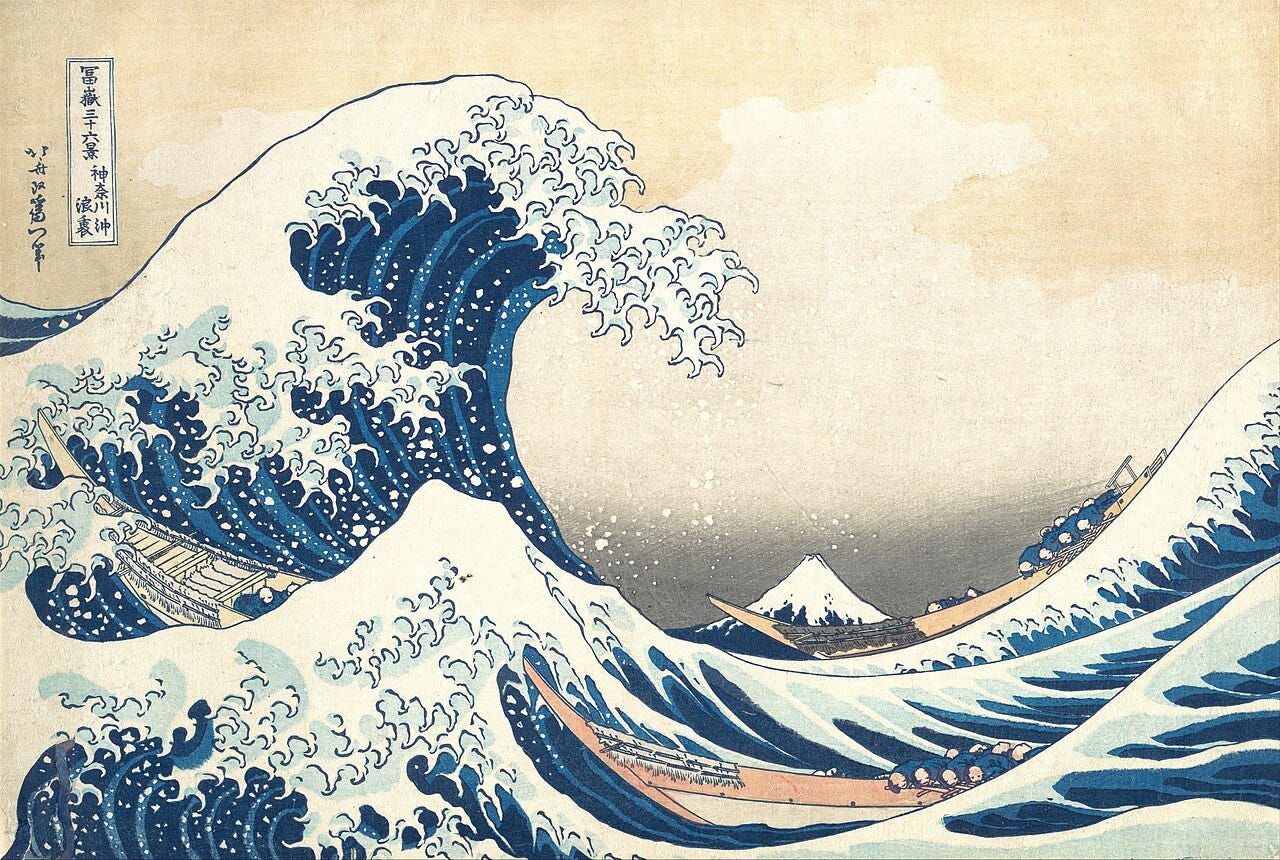
Japonisme is the strong influence of Japanese art on Western painting and design from about 1860 onward, after Japan reopened to trade. European artists fell hard for Japanese woodblock prints and their flat, cropped, open style.
They used those ideas to break free of their own old rules of perspective and finish.
Learn its handful of tricks, flat color, hard crops, high angles, and you start spotting them everywhere in modern art.
The French critic Philippe Burty coined the word japonisme in 1872, when the craze was already sweeping Paris studios.
What the West learned from a print
What it is: Japanese influence on Western art after about 1860.
The trigger: Japan reopening to trade, flooding Europe with prints.
The source: ukiyo e Japanese woodblock prints.
The lessons: flat color, sharp crops, high viewpoints, empty space.
The converts: Whistler, Monet, Degas and Van Gogh.
If you want the version with the names
The ones I would send you to next:
Six women, one monster, what Picasso did to the women who loved him
The darker truth about Gauguin, the part of the Tahiti story that never makes the wall label
Inside Monet house at Giverny, room by room, including his own bedroom
The prints that changed everything
It arrived as cheap, colorful paper.
Japanese ukiyo e prints, mass produced woodblock images by masters like Hokusai and Hiroshige, poured into Europe from the 1860s, sometimes as wrapping paper around imported goods, and on full show at the 1867 Paris World's Fair.
Western artists had never seen anything like it. Here were pictures that ignored the rules they had been taught: no deep perspective, no modeled shadow, just clean shapes, hard outlines and graphic design.
A throwaway print taught Paris a new way to compose a picture.
The dealer Siegfried Bing fed the appetite, opening a Paris shop for Japanese art and launching the lavish journal Le Japon Artistique in 1888.
A new set of rules
Those woodblocks handed Western art a fresh toolkit.
Artists learned to flatten space into broad areas of color, to crop a scene at the edge as if glimpsed in passing, to look down from a high angle, and to leave large parts of a composition wide open.
These devices feel modern because, I would argue, they helped invent modern art, feeding straight into Impressionism and Post Impressionism.
The graphic, cropped, off center look of modern pictures starts here, and it carried on into Art Nouveau posters and, much later, the clean lines of graphic design and manga.
Van Gogh and the dream of Japan
For some artists, and these are the ones I find most interesting, the influence ran very deep.
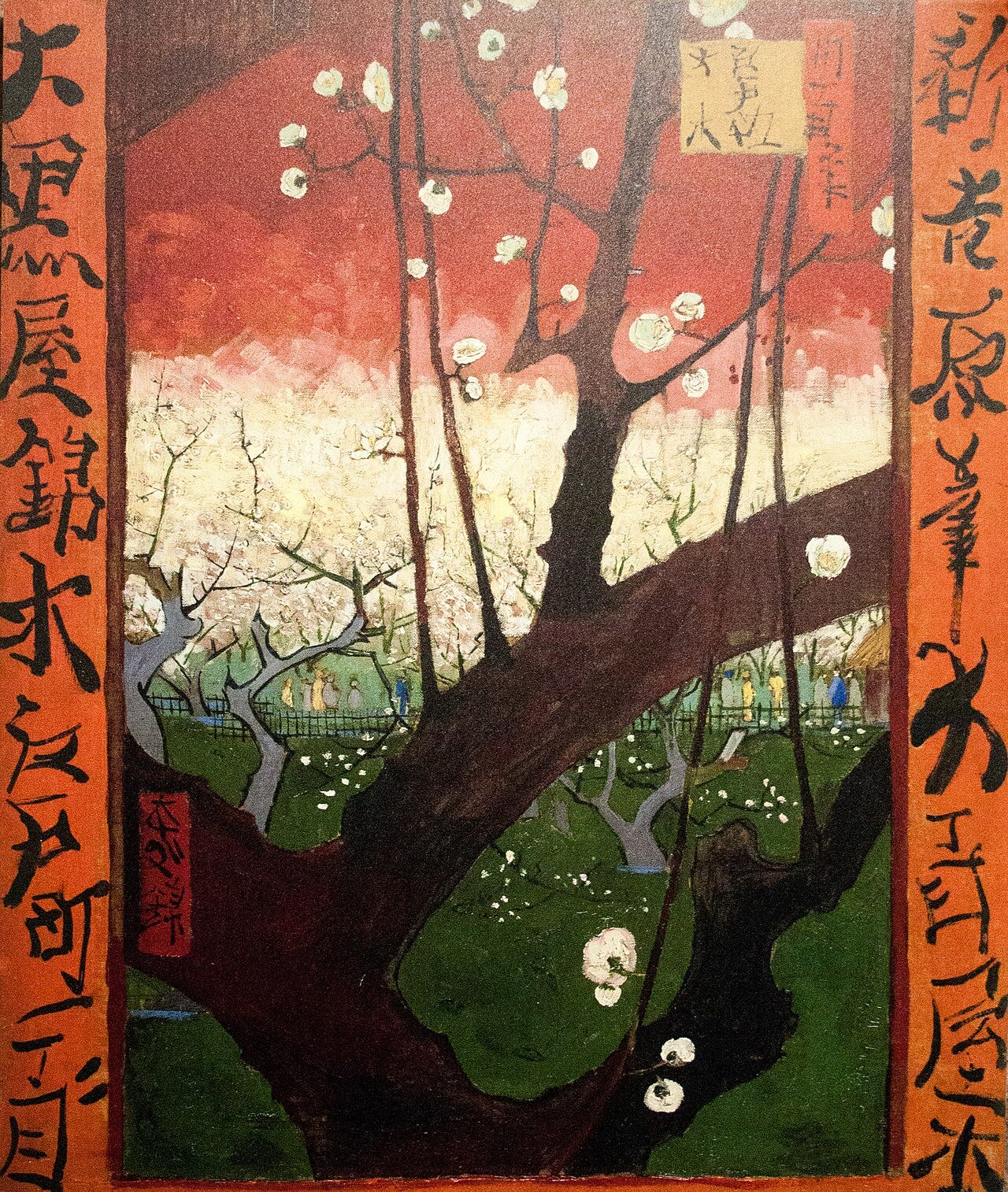
Van Gogh collected Japanese prints, copied them in oil, and even imagined the sunlit south of France as a kind of Japan, a place of pure color and clear light.
Whistler built whole compositions around Japanese spareness. Monet filled his garden at Giverny with a Japanese bridge and water lilies, and hung 231 Japanese prints in his house. Degas borrowed the steep, off center viewpoints for his dancers.
Japan turned into something the West painted toward, half real country, half dream.
Deeper than kimonos and fans
Japonisme runs far deeper than kimonos and fans in Western paintings.
The shallow imitation, dressing a European model in Japanese costume, was the surface. The deep influence was structural: a new sense of design, flatness and cropping that changed how pictures were built, not just what they showed.
That is why Japonisme matters far more than its exotic props suggest. It helped Western art stop imitating depth and start designing on the surface.
The fans were the fashion. The flatness, to my mind, was the real lesson.
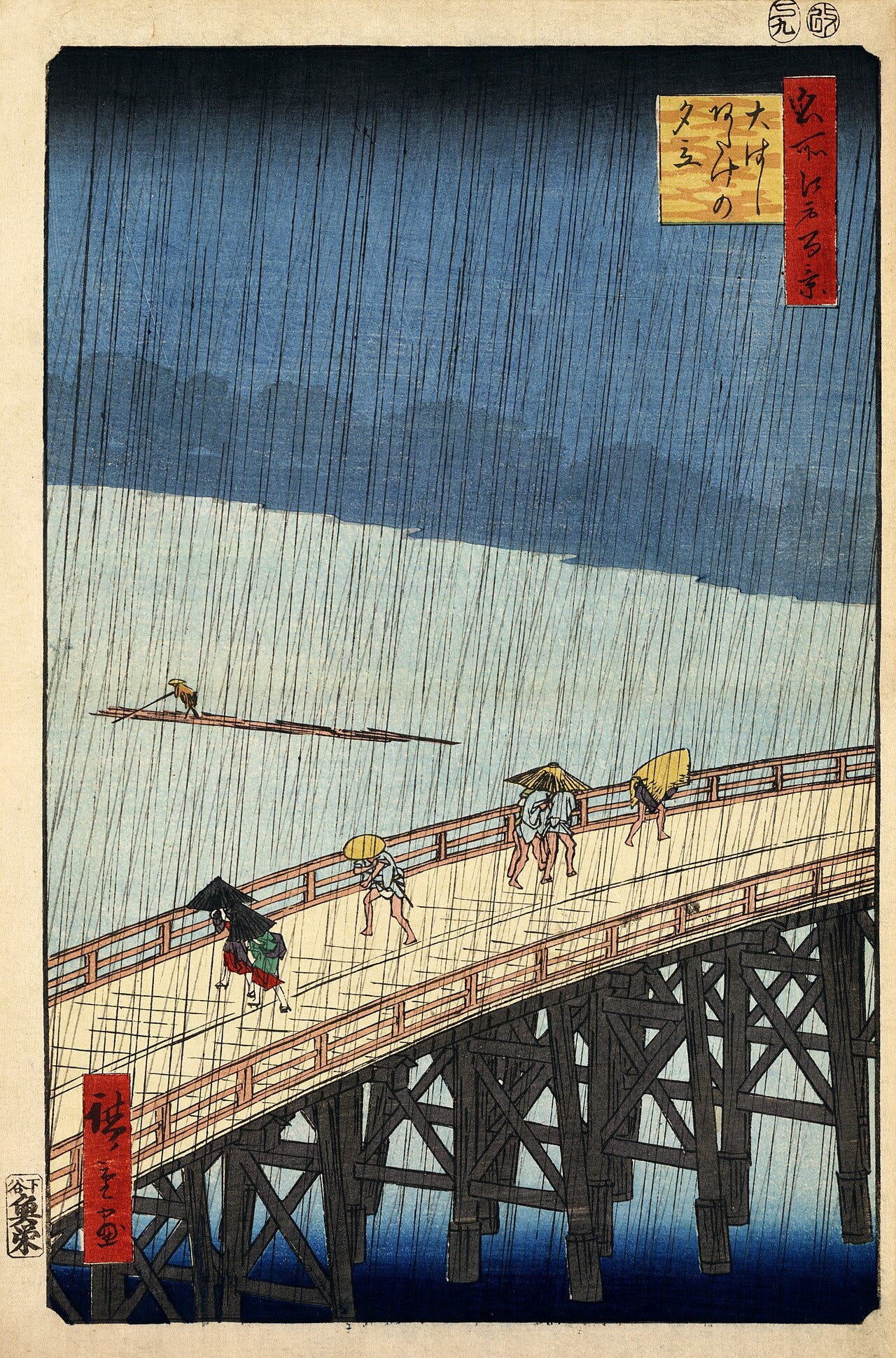
The debt is easy to see. Hokusai's Great Wave, now at the Met, has the graphic power Europe envied, and Van Gogh painted his own oil copy of Hiroshige's plum orchard, now in the Van Gogh Museum.
Van Gogh dreamed of Japan in the south of France, the very room behind the secret of his Arles bedroom.
Japonisme, questions about the craze
What is Japonisme? The strong influence of Japanese art on Western art from around 1860.
Who coined the term? The French critic Philippe Burty, in 1872.
What caused it? Japan reopening to trade, which flooded Europe with woodblock prints.
What is ukiyo e? The Japanese woodblock prints, by masters like Hokusai and Hiroshige, that Europe fell for.
What did Western artists learn? Flat color, abrupt cropping, high viewpoints and the use of empty space.
Who was influenced? Whistler, Monet, Degas and especially Van Gogh.
Is it just adding Japanese objects to paintings? No. The deepest influence was on composition and design, not props.
The packing paper that rewired Western art
Western painting found its future by looking East. Whistler turned a London dining room into the blue and gold Peacock Room in 1877, and Art Nouveau lifted its whiplash line straight from Japanese design.
The cheap print, used as padding around a parcel of imported goods, ended up teaching Europe how to build a picture all over again.
