
Albrecht Dürer (1471 to 1528) was a painter and printmaker from Nuremberg, and the most surprising fact in his file is a rhinoceros he never saw: his woodcut of 1515 served as the picture of the animal in Europe until the late eighteenth century.
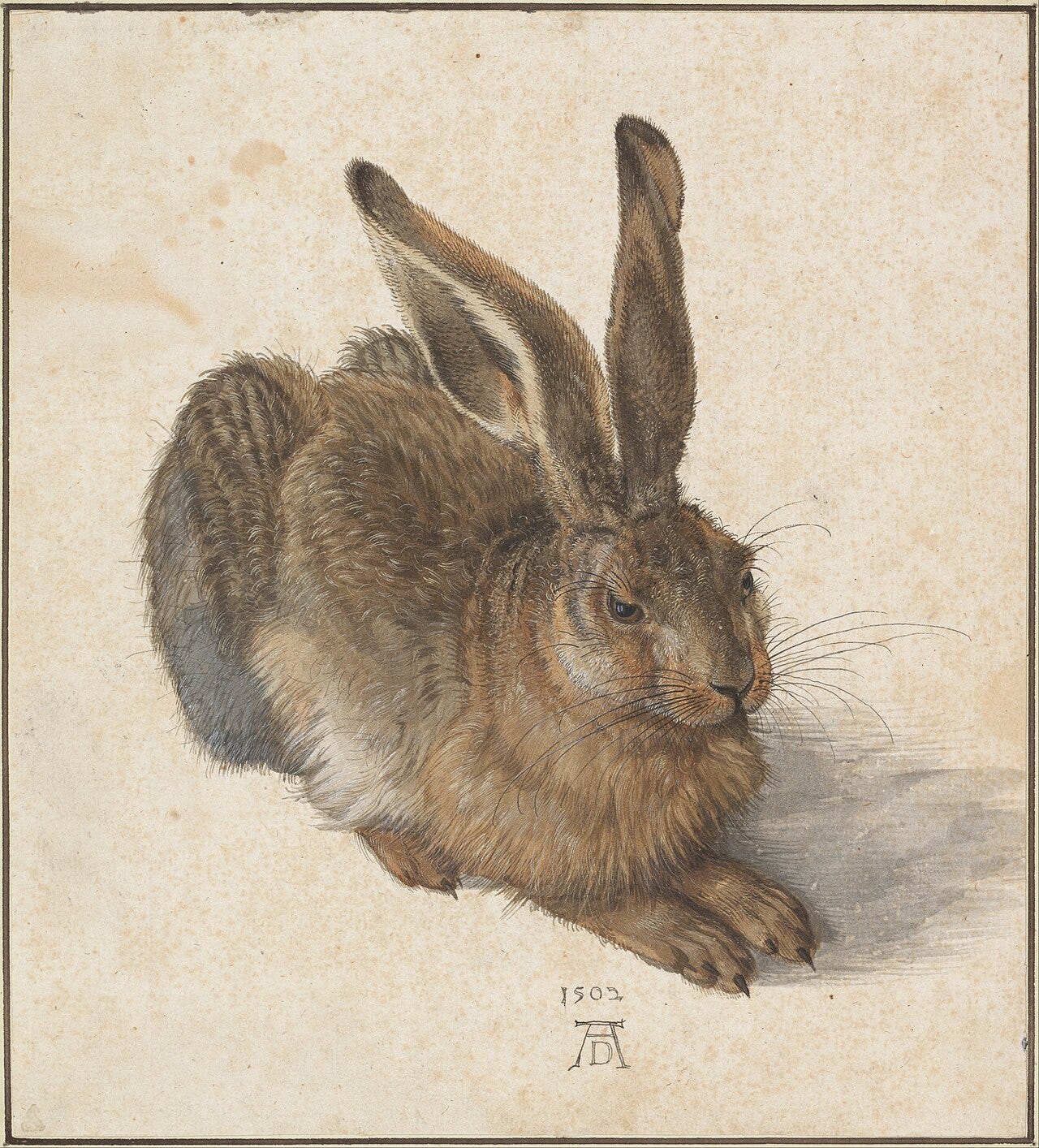
He is better known for the Young Hare, for a pair of praying hands and for painting his own face. But the traces he left in letters and in a travel diary, and the stories other people told about him, are stranger than any of those, and most of them turn on one question: what a picture is worth once a famous name is attached to it.
Cool Stories About Art is a newsletter to learn art the fun way.
Join 200,000+ readers and get:
10 new art stories / month
The entire archive of content (140+ articles)
Comment, ask questions, and chat with other readers
The word that matters there is picture. Dürer is remembered as an artist who looked hard at nature, and the rhinoceros is the famous case where he did not look at all. He had a description in a letter and a sketch by someone else, and from those two scraps he made an animal wearing armored plates.
Europe took it for a likeness, and went on copying it for generations. A guess made by a famous hand beat the real thing.
I think the rest of his story turns on the same question, and the record is more interesting than the legend.
What did Dürer's rhinoceros get wrong?
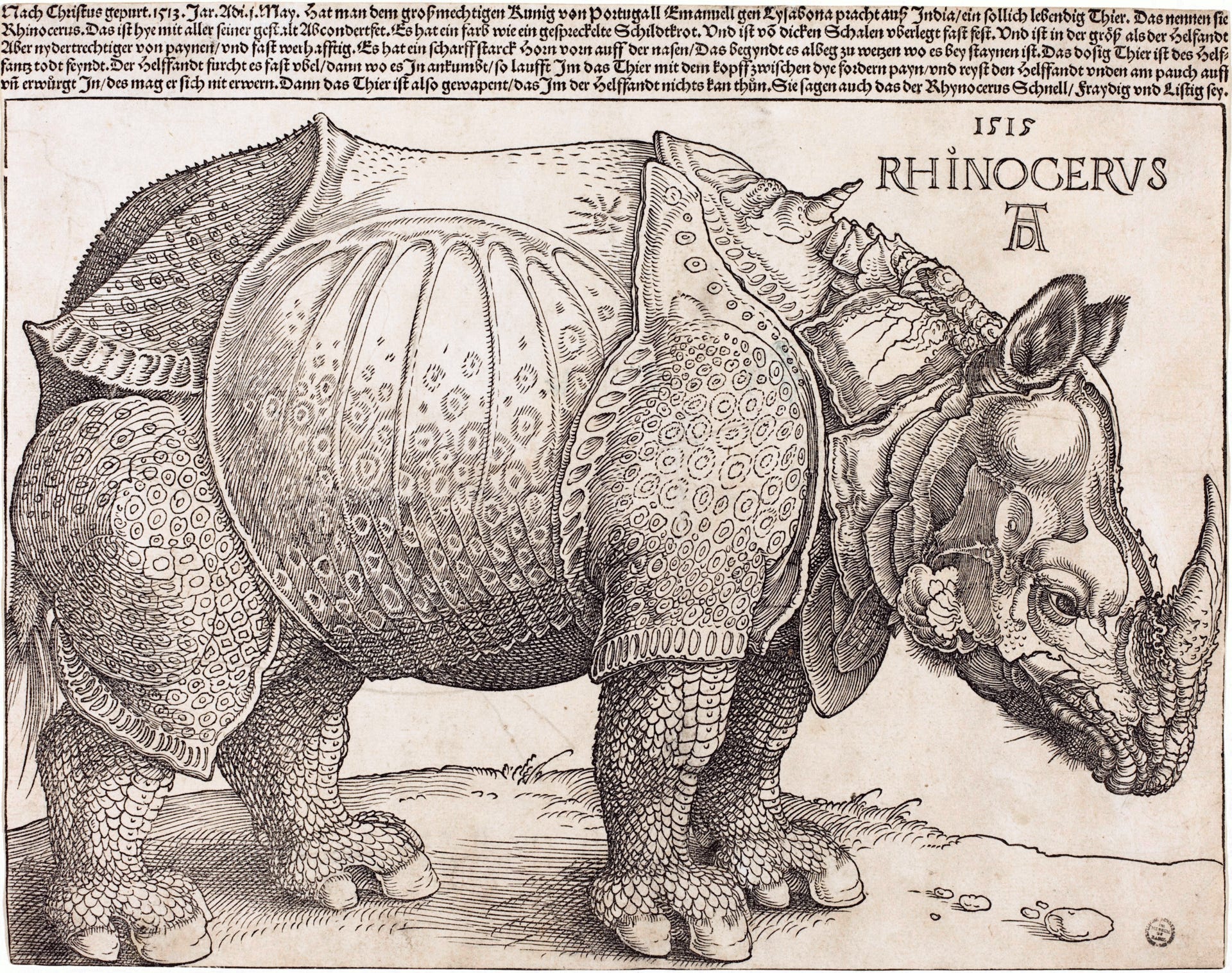
Two things, and both show at a glance…
What You'll Discover
Who borrowed his initials.
What he wrote home from Venice.
Why he faced the viewer head on.
What he saw in Brussels.
What the praying hands were for.