
El Greco was a painter from Crete named Domenikos Theotokopoulos, who trained as an icon painter, settled in Toledo and died there in 1614. The most surprising fact about him is on his own canvases: he signed his full Greek name, often in Greek letters, and not the nickname the world uses.
He was born in 1541 in Candia, now Heraklion, a city of the Republic of Venice, and he spent the last 35 years of his life in Toledo.
Cool Stories About Art is a newsletter to learn art the fun way.
Join 200,000+ readers and get:
10 new art stories / month
The entire archive of content (140+ articles)
Comment, ask questions, and chat with other readers
The name on the museum wall was a label other people gave him. In Italy he was Il Greco, in Spain Domenico Greco or El Griego, as John Updike noted in the New York Review of Books, and each time the word said the same thing: the man from somewhere else.
Even the label hides a story. Crete belonged to Venice when he was born, so the man called a Greek was in fact a Venetian subject, and in 1566 a Venetian nobleman sued him, probably for breaking a commission contract. Legal battles followed him for the rest of his life.
His fame turned out to be just as borrowed. Other people decided what his paintings were worth, and they changed their minds more than once.
What did El Greco paint before he left Crete?
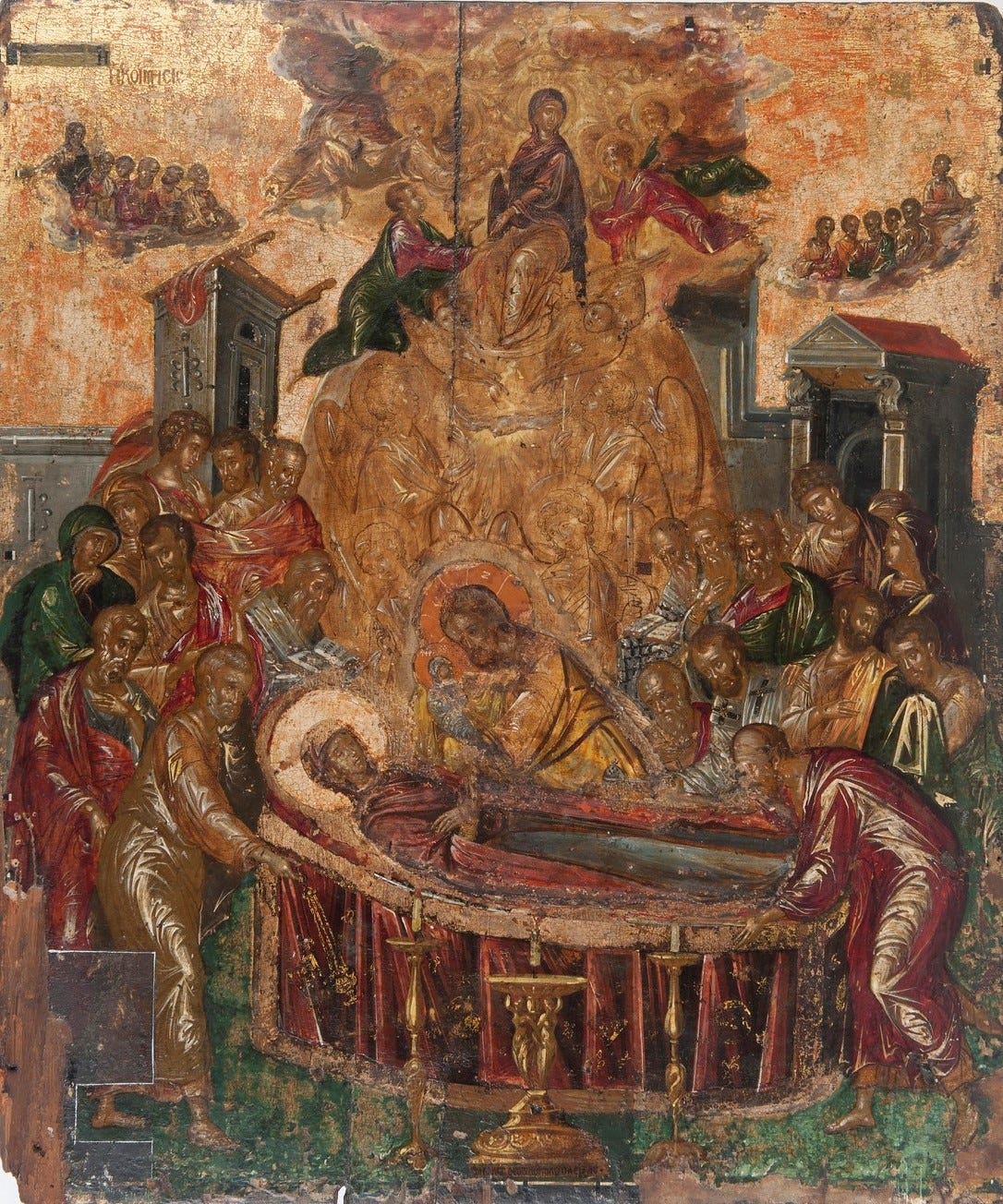
Icons. The Art Institute of Chicago dates his apprenticeship as an icon painter to roughly 1550 through 1565, and the Frick Collection notes that one of the few records from his early years already shows him as an established icon painter by 1566…
What You'll Discover
What he offered to do to Michelangelo.
Who sent his paintings back.
What his eyes had to do with it.
Who brought him back to life.