
Raphael was the Italian painter of the School of Athens and the Sistine Madonna, and he died in Rome on 6 April 1520, aged 37, after a fever that doctors have argued over ever since. The most surprising fact comes after his death: in 1833 a pope had his tomb in the Pantheon opened, because a skull kept at a Roman art academy had long passed for his.
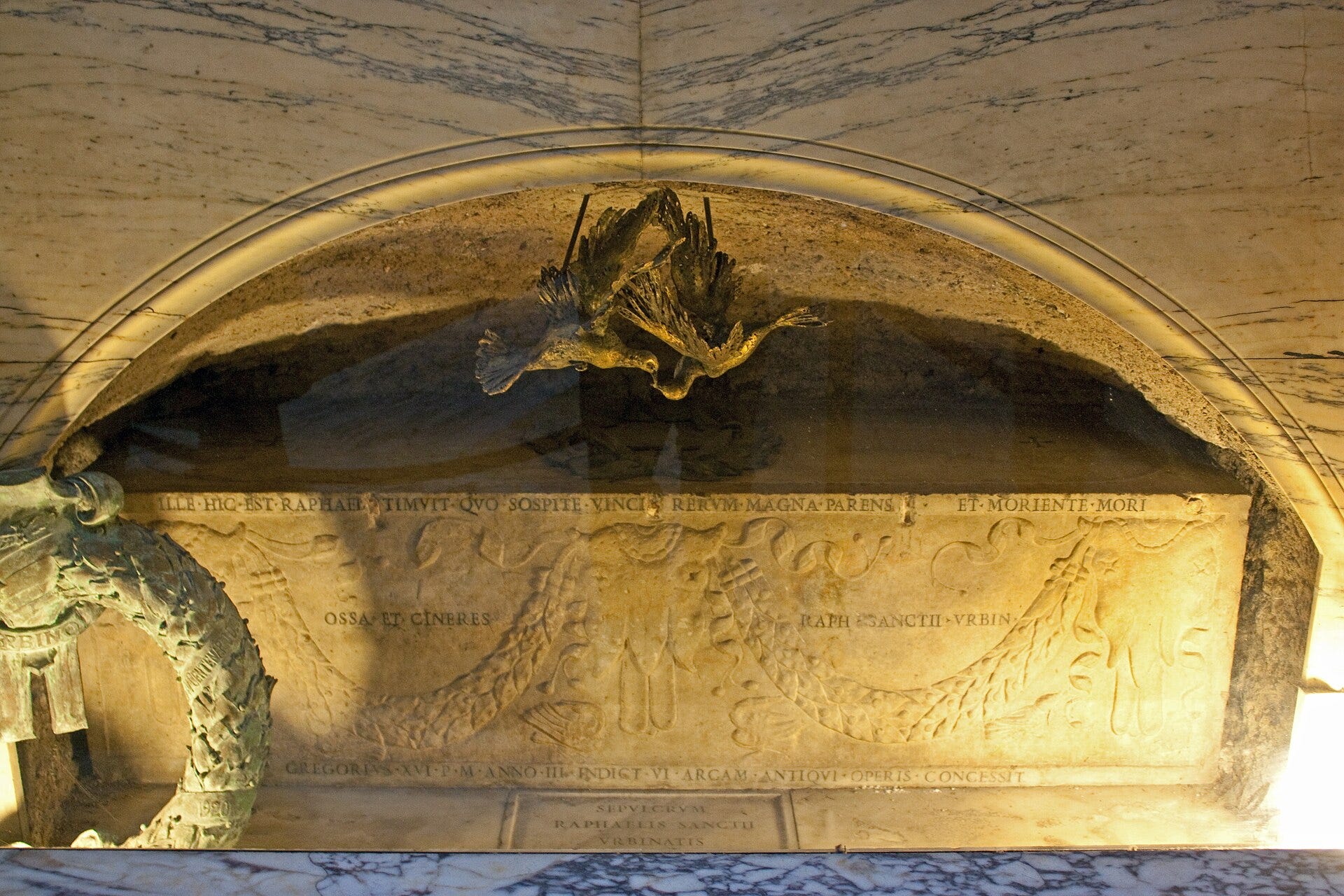
At his own request he was buried in the Pantheon, under a statue of the Virgin that he had commissioned himself. For more than three centuries his admirers believed they knew where his body lay. Some of them also believed they knew where his head was, and the two places were not the same.

Cool Stories About Art is a newsletter to learn art the fun way.
Join 200,000+ readers and get:
10 new art stories / month
The entire archive of content (140+ articles)
Comment, ask questions, and chat with other readers
The skull sat in a display case at the Accademia di San Luca, the art academy of Rome. Students treated it as a relic, and on the feast day of San Luca they touched it with their pencils. Whether it was really his had been an old argument, since the story went that the tomb in the Pantheon was missing its skull.
In September 1833 the tomb was opened to settle the question. The skeleton inside was intact, and plaster casts were taken of its skull. If that skull was his, the relic at San Luca was not.
His burial is the part of the story that comes with a date and a list of witnesses. His death has neither. The usual answer blames a night of love, a study published in 2026 blames a bacterium, and nobody can prove either.
Who took pieces of Raphael home?
Several of the people in the room…
What You'll Discover
What a rib fragment says.
Who the baker's daughter was.
What he borrowed from Michelangelo.
Why his assistants named sons Raphael.