
Jean Francois Millet was the French painter who made peasants heroic. At a time when serious art meant gods and kings, he painted farm workers stooping in the fields with the gravity of saints.
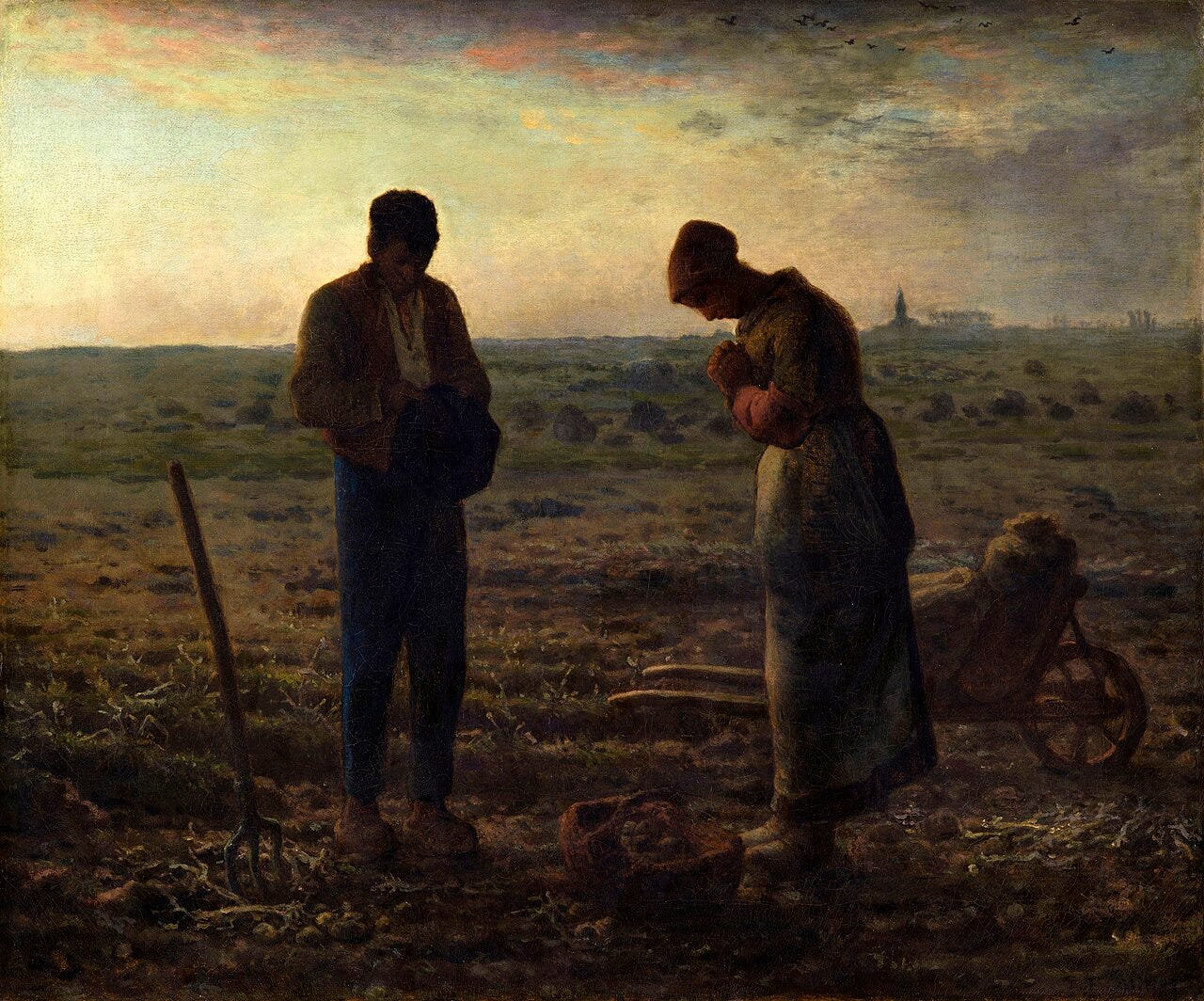
The Gleaners and The Angelus turned hard rural labor into something monumental, and a little dangerous.
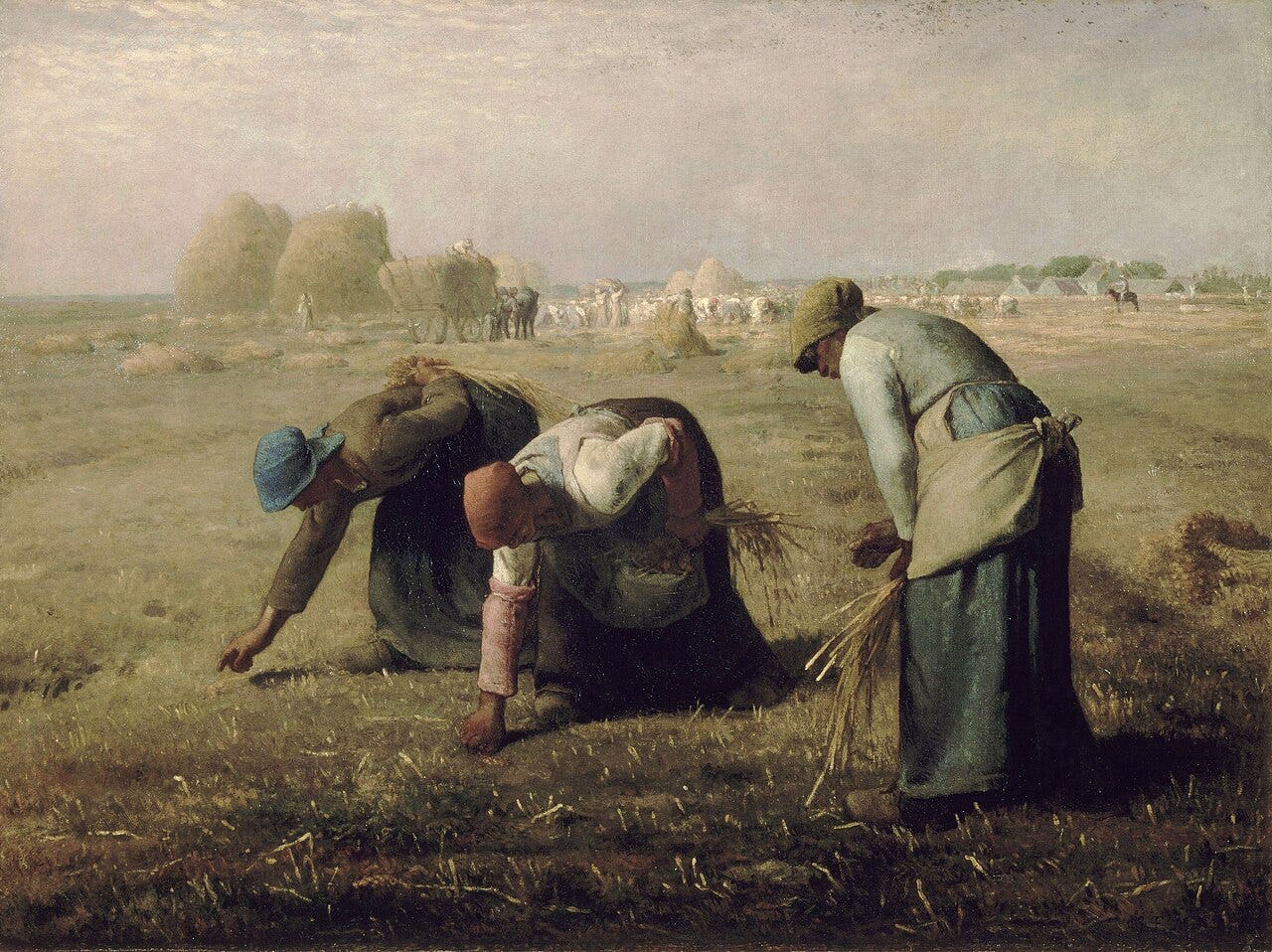
To paint the poor at this scale, with this dignity, was almost a political act. Critics smelled socialism. Van Gogh saw a hero.
Born: Gruchy, Normandy, 1814, into a farming family
Known for: dignified peasant scenes, the Barbizon school
Died: Barbizon, France, 1875
More incredible painter stories
If Jean-François Millet pulled you in, you will love these too:


Jean-François Millet at a glance
1814. Born on a farm at Gruchy, above the Normandy coast.
1849. Left Paris during a cholera outbreak and settled in Barbizon for good.
1857. The Gleaners drew fury at the Salon.
1859. Finished The Angelus, later among the most reproduced paintings in France.
1875. Died in Barbizon. Fourteen years later The Angelus sold for over half a million francs.
The dignity of work
Millet grew up among farmers and never forgot it. He settled in the village of Barbizon, near the forest of Fontainebleau, with a group of painters who turned away from the city to paint nature and country life directly.
His figures are solid, weary and noble. In The Gleaners, three women bend to gather leftover grain, the poorest work in the field, painted with the seriousness usually reserved for history painting. See what is Realism art.
The Angelus and the politics
His most famous work, The Angelus, shows two peasants pausing in a field to pray at the sound of the church bell. It became one of the most reproduced images of the 19th century, printed on countless walls and objects.
Some viewers found his dignified poor inspiring. Others, in a nervous age of revolutions, found them threatening, reading socialism into the sympathy he showed for rural labor.
The painter who shaped Van Gogh
No artist mattered more to Vincent van Gogh than Millet. Van Gogh copied his peasant scenes again and again to learn, and treated him almost as a spiritual father. That deep debt is explored in the paid feature how Millet shaped Van Gogh.
Through Van Gogh, Millet's vision of labor and landscape flowed straight into modern art.
Born on a farm above the Normandy sea
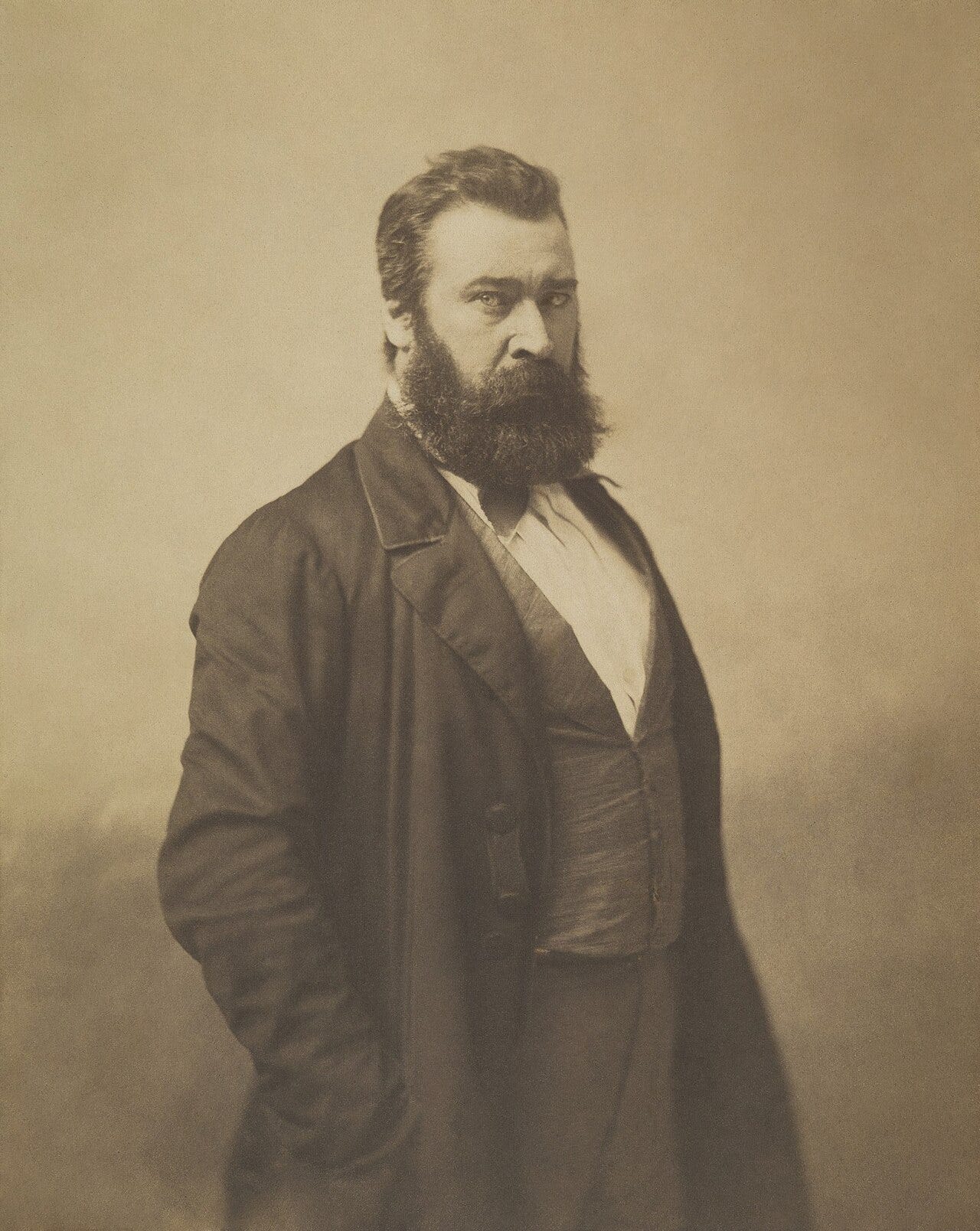
Jean Francois Millet was born on 4 October 1814, in the hamlet of Gruchy, near Greville, on the windswept coast of Normandy.
His family were farmers, not gentry. As a boy he worked the land himself, hoeing, harvesting and hauling, the same labor he would spend his life painting.
He was not an unread country boy, though. He grew up on the Bible and read Virgil, and that mix of soil and scripture never left him. When he later drew a peasant bent over a field, he was drawing a world he had lived inside.
From Cherbourg sketches to a Paris studio
By about the age of 19, Millet was studying art in the port town of Cherbourg with local painters. His talent was clear enough that the town gave him a grant to continue in Paris.
In 1837 he arrived in the capital and enrolled in the studio of Paul Delaroche, a fashionable history painter. He stayed until roughly 1839.
Paris did not welcome him. Fellow students mocked his heavy build and rough manners, and the polished academic style never suited him. He was a farmer's son in a room of city boys, and it showed.
The years he painted just to eat
Success came slowly and cruelly. After the Salon rejected one of his entries in 1840, Millet went back to Cherbourg and spent much of 1841 grinding out portraits for whoever would pay.
To survive through the 1840s he also painted pretty, sensual pictures, nudes and light mythological scenes in a soft manner that sold. He was not proud of them.
His first real notice came in 1844. The money was thin, the direction still unclear, but he was learning that his true subject was work, not flattery.
Escaping Paris in the cholera summer
The turning point was 1848 and 1849. The 1848 revolution threw Paris into chaos, and Millet, already poor, found the city unbearable. His peasant subjects arrived in force at the Salon of 1848 with The Winnower, a painting later lost to fire.
Then in 1849 a cholera outbreak swept the capital. Millet packed up his growing family and left for Barbizon, a small hamlet at the edge of the forest of Fontainebleau.
He meant it as a temporary retreat. He stayed for the rest of his life, twenty six years, and built his entire reputation there.
The village of painters in the forest
Barbizon was not empty countryside. It was becoming a colony of artists who wanted to paint nature directly, outdoors in the plein air, rather than inventing tidy landscapes in a studio.
Millet became close to Theodore Rousseau, a landscape painter who anchored the group now known as the Barbizon school. The two men supported each other through lean years.
Their shared idea was simple. Ordinary rural life, a woodcutter, a flock, a plain field, deserved to be treated with the seriousness that painting usually saved for kings and saints.
The Sower and the giant in the field
At the Salon of 1850, Millet showed The Sower, a dark, heavy figure striding across a hillside, flinging seed with one huge arm.
There was no charm in it, no cottage prettiness. The peasant filled the canvas like a monument, faceless and powerful. To viewers still nervous after the 1848 uprising, that scale felt almost threatening.
Some critics read the picture as a warning about the rural poor. Millet insisted he had no political message. The size and the shadow, he said, were about dignity and rhythm, not revolt, though few listened.
Three women and a storm of hostility
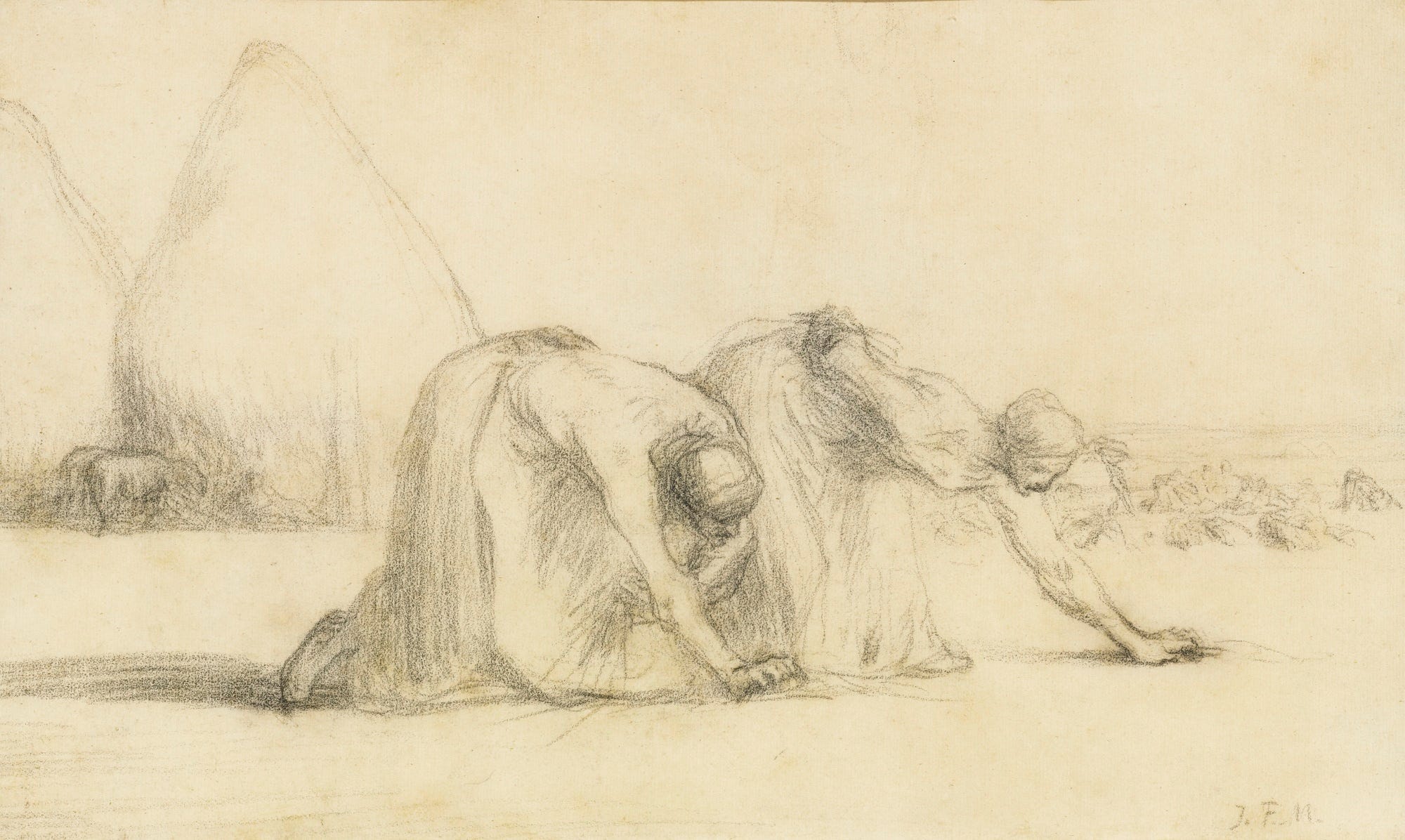
Gleaning was the old right of the poor to pick up stray grain left in a field after the harvest. In The Gleaners, shown at the Salon of 1857, Millet painted three women stooped low to do exactly that.
The reception was harsh. Reviewers called the women coarse, even dangerous, and some saw the three bent backs as a portrait of poverty aimed straight at comfortable Paris.
Millet had not painted a protest poster. He had painted the truth of a task he had watched all his childhood. The hostility said more about the fears of his audience than about the canvas now hanging in the Musee d'Orsay.
A crowded house and the friend who paid the bills
Behind the paintings was constant money trouble. Millet and Catherine Lemaire had nine children, and feeding them in Barbizon often meant trading pictures for boots and bread.
His lifeline was Alfred Sensier, a Paris official who became his friend, supplier and dealer. Sensier sent paints, canvas and cash when sales dried up, and he saved Millet's letters.
Those letters became the source for the first real biography of the artist, which Sensier assembled and which appeared in 1881, after both men had died.
Much of what we know about Millet's own voice survives because one loyal friend kept the receipts.
The quiet late turn to open landscape
In his final years Millet leaned away from the lone peasant and toward the land itself. Commissioned to paint the four seasons for the industrialist Frederic Hartmann, he produced canvases like Spring, a rain washed orchard now in the Musee d'Orsay.
Works such as Haystacks: Autumn, held at the Metropolitan Museum in New York, show the same shift. The human figures shrink, and the weather, the light and the fields take over.
Official approval finally arrived. By 1868 he was receiving state recognition, including the Legion of Honour.
A pauper's death, then a record price and a Dali obsession
Millet died at Barbizon on 20 January 1875, aged 60. He had won respect but never real wealth.
Then the market went wild. At the Secretan sale on 1 July 1889, his small painting The Angelus set off a bidding war and sold for a record sum.
French national pride was wounded, and the following year the department store magnate Alfred Chauchard bought it back for an even larger price.
He later left it to France, and it now hangs in the Musee d'Orsay.
The strangest fan came later. Salvador Dali was obsessed with The Angelus, convinced the couple were mourning a buried child. Pissarro, Seurat and Van Gogh all copied Millet too. The poor man's painter had quietly reshaped modern art.
The Jean-François Millet questions that keep coming up
What is Jean Francois Millet famous for?
Dignified paintings of peasants, above all The Gleaners and The Angelus.
Was he political?
He insisted he simply painted what he knew, but critics read radical sympathy into his work.
Who did he influence?
Van Gogh above all. See also landscape painting.
Why was Millet's work controversial? He painted peasants and laborers at life size, with a dignity usually reserved for saints and nobles. To some critics that felt political, even dangerous, in the France of the 1850s.
More secrets to unlock


Why the bowed back still carries weight
Millet insisted that ordinary working people deserved the grandest treatment in art, and changed who painting was allowed to be about. The bowed back in a field has carried weight ever since. Read his line to Van Gogh in the complete Van Gogh story.
The devotion had a number: in the asylum at Saint-Remy, Van Gogh painted twenty one copies after Millet prints in a single year. The bowed backs kept teaching long after the hand that drew them was gone.