
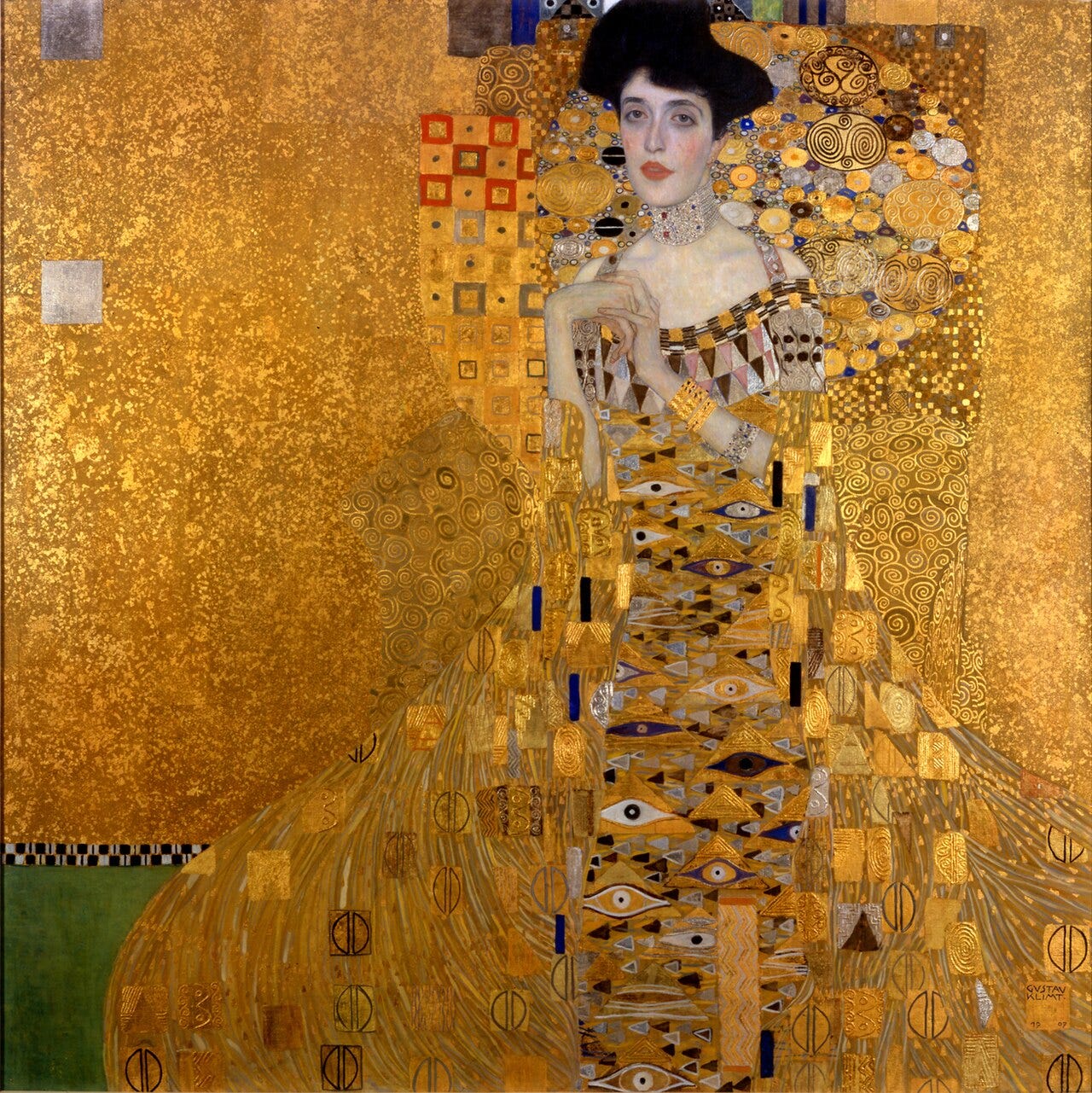
Woman in Gold is the popular name for Gustav Klimt's 1907 Portrait of Adele Bloch Bauer, a Viennese Jewish socialite painted in glowing gold. The Nazis looted it in 1938, and after a long legal fight her niece, Maria Altmann, won it back in 2006.
It then sold for about 135 million dollars, a record at the time. That sale earns it a spot among the most famous paintings ever bought and sold for money.
Behind the gold is one of the great true stories of theft, memory and justice in modern art.
Keep learning art the fun way


Who was Adele
Adele Bloch Bauer was a wealthy, cultured Jewish hostess whose Vienna salon drew the city's thinkers and artists.
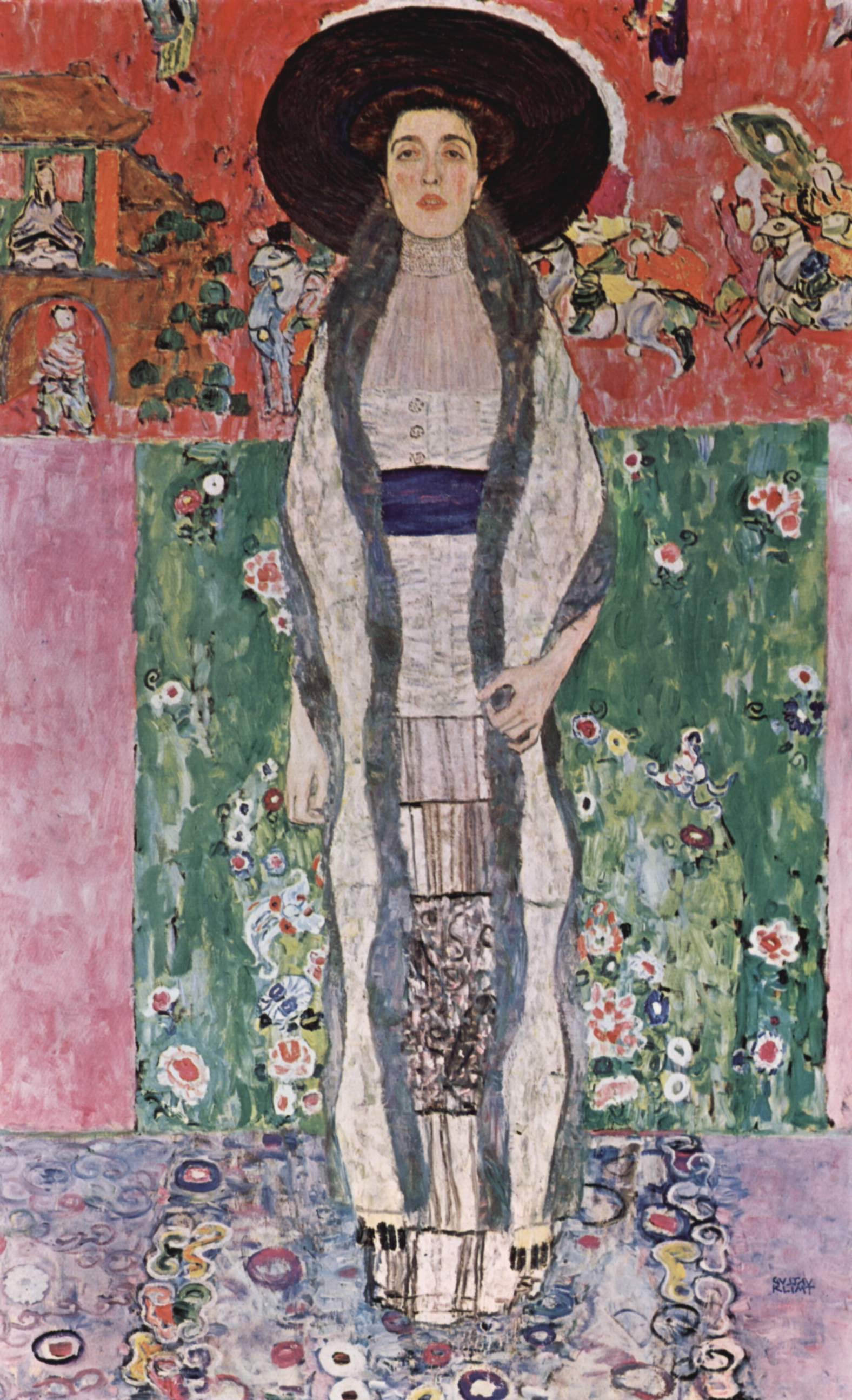
She is the only person Klimt ever painted in two full golden portraits, which has fueled rumors for a century that they were lovers.
She died young, in 1925, and asked that her husband keep the paintings and one day leave them to the state. That casual wish would later become a weapon, and to me it is the hinge the whole case turned on.
The gold portrait
Painted at the peak of his Golden Phase, the portrait took Klimt three years, from 1904 to 1907. The same Golden Phase closed with Tree of Life, a golden mural made for a private mansion in Brussels.
Adele almost dissolves into a storm of gold pattern, only her face, hands and a jeweled choker fully solid. It is the same alchemy he used in The Kiss, turning a real woman into a Byzantine icon.
The Nazi theft
When Germany annexed Austria in 1938, the Bloch Bauer family was Jewish and in danger. They fled, and their home and collection were seized.
The Nazis took the portrait and quietly renamed it Woman in Gold, scrubbing the Jewish name Bloch Bauer off the title. Stripped of her identity, Adele hung in a Vienna museum as an anonymous golden lady.
It is one of countless artworks torn from their owners, like the mafia and the missing Caravaggio.
Maria Altmann's fight
Adele's niece, Maria Altmann, had escaped to America. Late in life she decided to reclaim the family paintings.
With a young lawyer, Randol Schoenberg, she took on the Austrian state. The case climbed all the way to the United States Supreme Court, and in 2006 an Austrian panel finally ruled in her favor.
Austria had argued Adele's old wish meant the paintings were theirs. The judges disagreed.
The record sale and the film
Altmann sold the portrait to the cosmetics heir Ronald Lauder for around 135 million dollars, the highest price ever paid for a painting at that point.
It now hangs in his Neue Galerie in New York. The whole saga became the 2015 film Woman in Gold, with Helen Mirren as Maria Altmann.

More secrets to unlock


The questions everyone asks about Adele
Who is the woman in gold? Adele Bloch Bauer, a Viennese Jewish socialite.
Who painted it? Gustav Klimt, in 1907.
Why is it famous? It was looted by the Nazis and recovered after a landmark lawsuit.
How much did it sell for? About 135 million dollars.
Where is it now? The Neue Galerie, New York.
Today the painting hangs in New York, and the world knows exactly whose face it is again. I tell the whole story of the man who painted her in Gustav Klimt: The Complete Story.
