
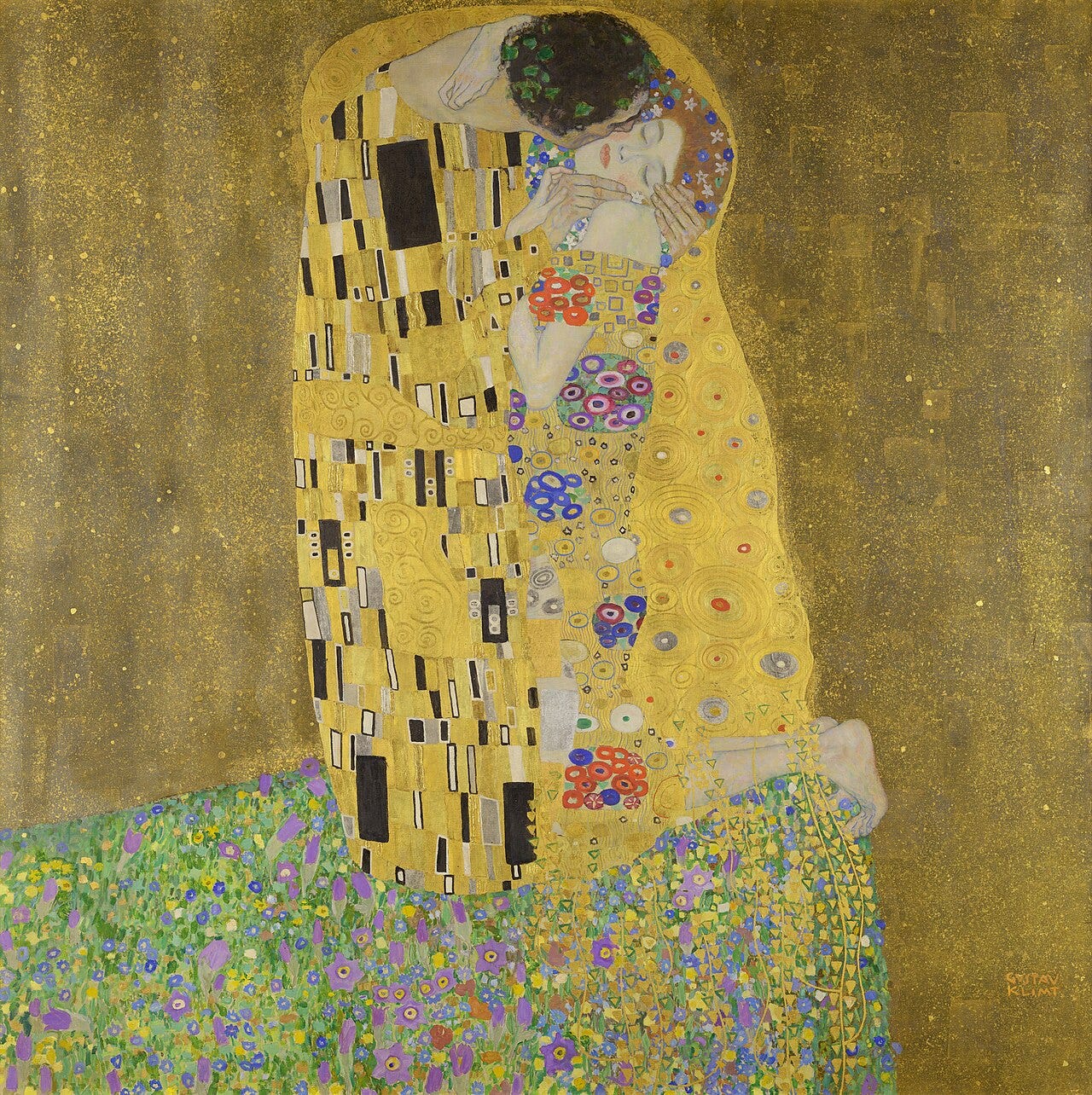
Klimt painted in gold because he grew up the son of a gold engraver and was floored by the golden Byzantine mosaics he saw in Ravenna.
In his Golden Phase, around 1899 to 1910, he pressed real gold leaf into his canvases to turn modern women into glowing icons., the finest examples of which hang at the Belvedere in Vienna
The gold is not a color choice. It is craft, memory and a quiet provocation, all at once.
Here is where it came from, what it does, and why he eventually walked away from it.
Why the gold, quickly
The roots: his father was a gold engraver.
The spark: Byzantine mosaics in Ravenna, Italy.
The period: his Golden Phase, about 1899 to 1910.
The material: real gold and silver leaf, not yellow paint.
The effect: ordinary people made to look holy.
Keep learning art the fun way


Born into the gold trade
Klimt's father, Ernst, was a gold engraver. Gustav and his brothers grew up around metal leaf, tools and ornament.
Handling gold was not exotic to him. It was the family trade, in his fingers from childhood. When he reached for it as an artist, he already knew how it behaved.
The mosaics of Ravenna
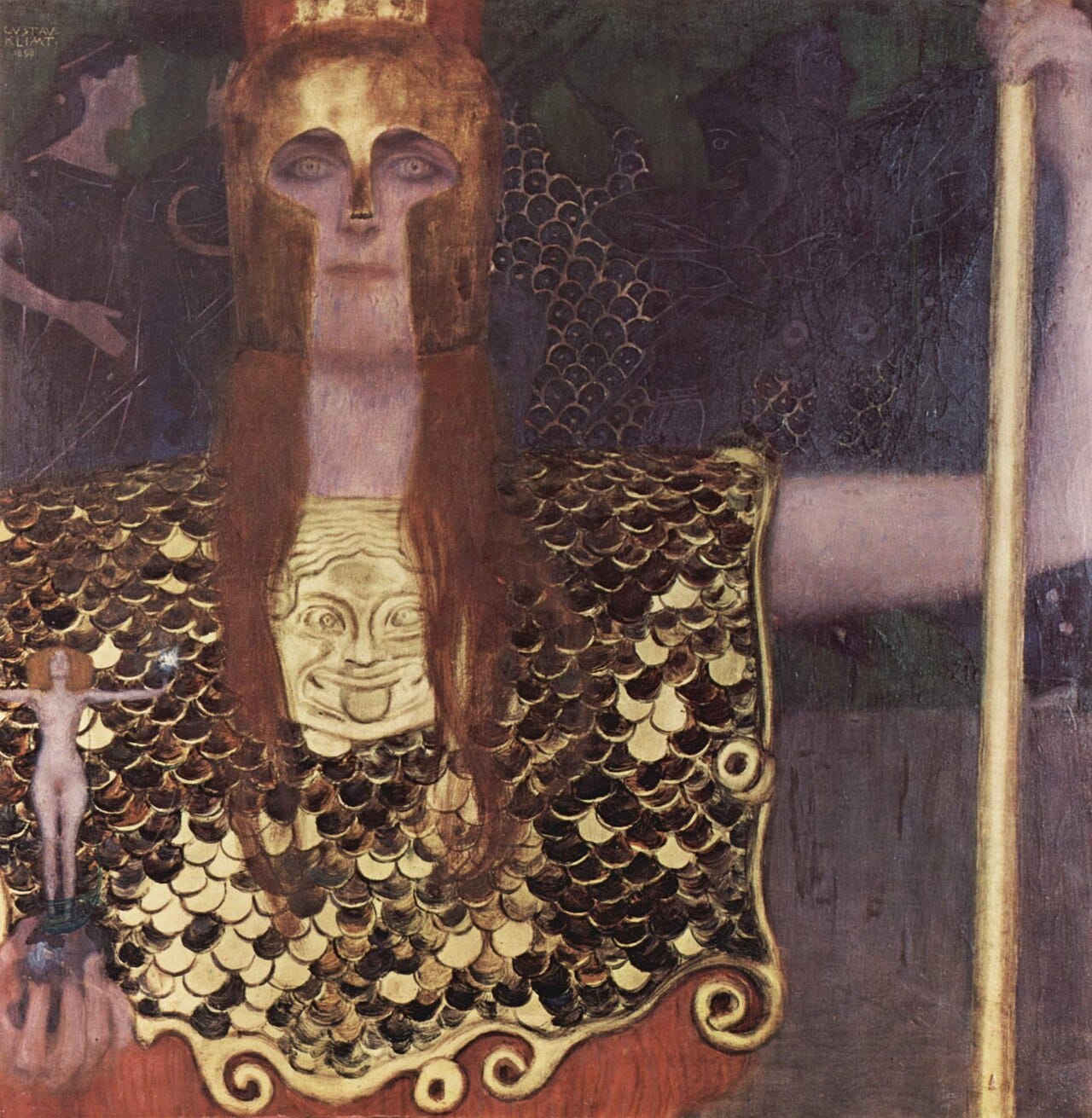
In 1903 Klimt traveled to Ravenna, in Italy, and saw its sixth century Byzantine mosaics, walls of saints and emperors set against pure gold.
It hit him hard. Those flat golden backgrounds, with no sky and no depth, made the figures float in a sacred nowhere. He came home determined to do the same with paint and leaf, and to me Ravenna is the key to the whole Golden Phase.
Turning women into icons
Gold does something strange to a picture. It kills depth and makes the surface glow, so the figure stops being a person in a room and becomes an icon in eternity.
Klimt took that holy device and wrapped it around very unholy subjects: lovers mid embrace, society wives, naked desire. He gave sex the gold once reserved for God. You can see it at full power in The Kiss and Woman in Gold, and it spreads across a whole wall in Tree of Life.
How the gold went on
This is real metal, not a tube of paint. Klimt applied gold and silver leaf by hand, the ancient technique of gilding, then tooled patterns into it and raised some ornament in relief.
Up close his golden surfaces are full of tiny worked detail, spirals, eyes and squares pressed into the metal. It is jeweler's work as much as painting, full of buried pattern like the secrets in other famous paintings.
Why he stopped
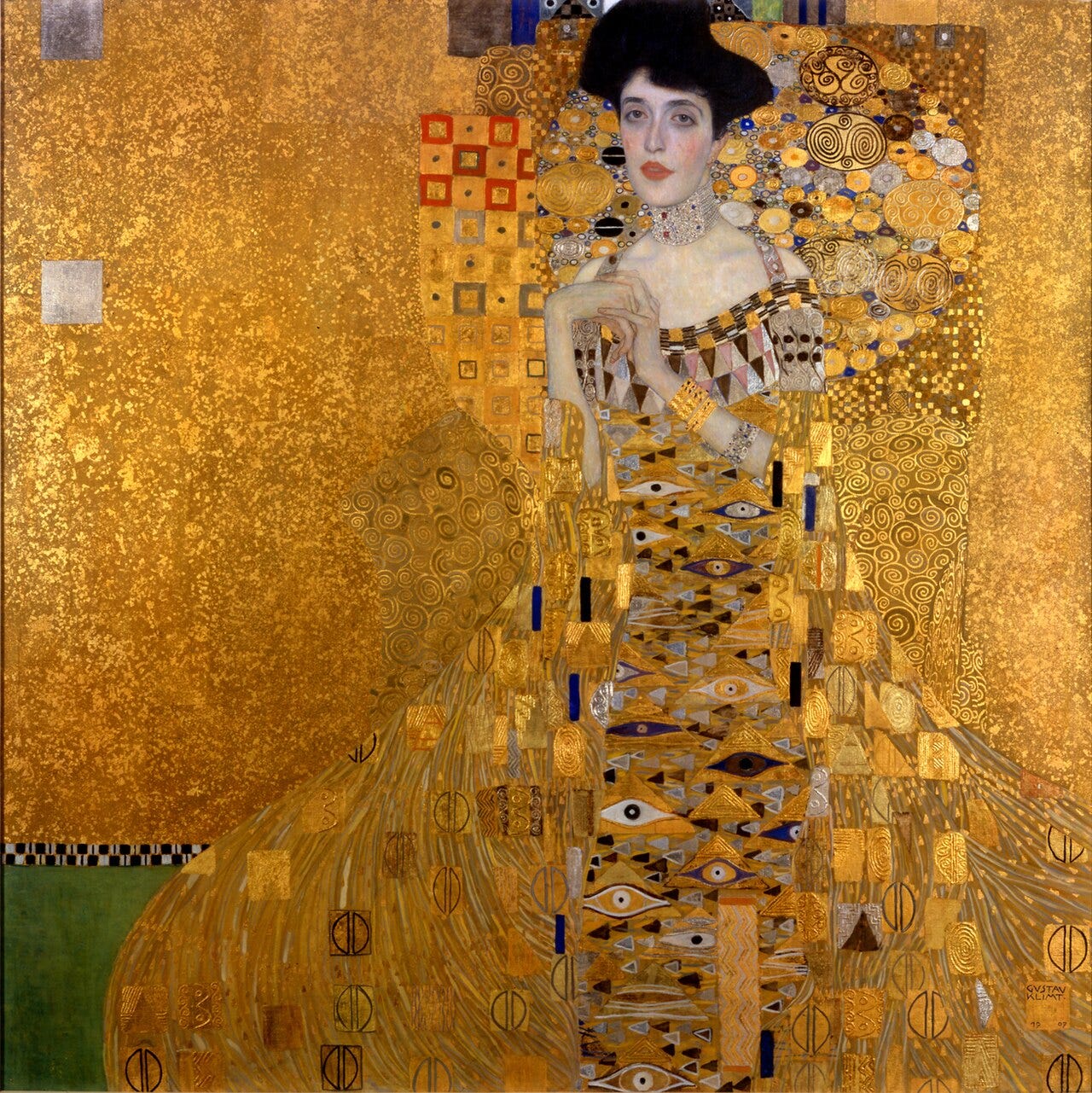
The Golden Phase was a decade, not his whole life.
After about 1910 Klimt moved on, trading gold for dense fields of bright color and pattern, partly under the influence of younger French painters. The gold had said what he needed it to say.
More secrets to unlock


How the gold worked, answered
Why did Klimt use gold? His father was a gold engraver, and Byzantine mosaics inspired him.
Is it real gold? Yes, real gold and silver leaf.
What is the Golden Phase? His most famous decade, about 1899 to 1910.
What are the main golden works? The Kiss and the Woman in Gold portrait.
Did he always paint in gold? No. It was one phase, abandoned after about 1910.
That borrowed holiness, gold once saved for saints wrapped around Viennese wives, is exactly why people still stop dead in front of his work. I tell the whole story in Gustav Klimt: The Complete Story.
