
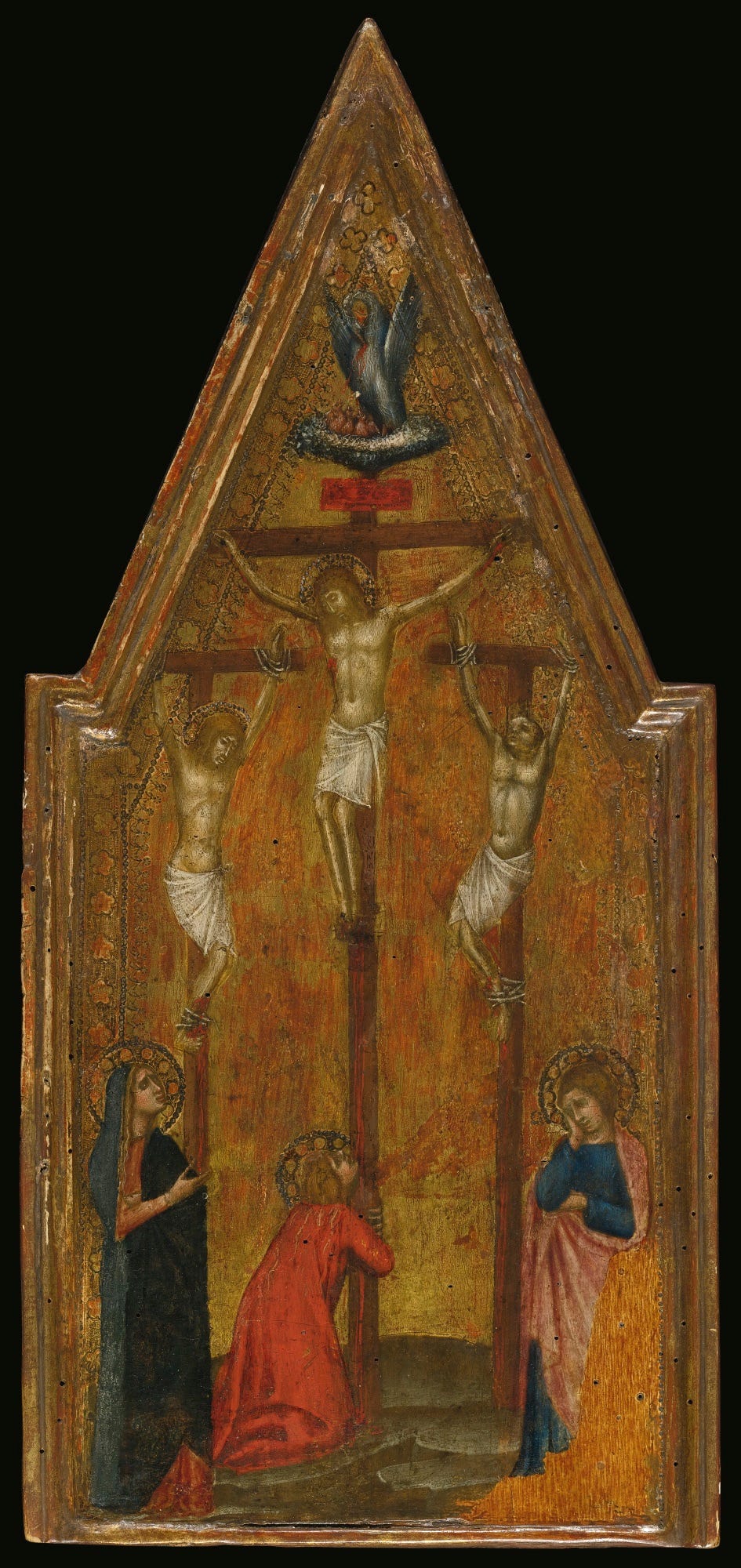
Gilding is the craft of covering a surface with a very thin layer of real gold, called gold leaf. In painting, it created the glowing gold backgrounds, halos and borders of medieval and early Renaissance art.
Done well, the gold is burnished to a mirror shine, so a painted saint seems to float in pure, glowing light.
Real gold, beaten into leaves thinner than paper and laid down by hand over a prepared surface.
And the catch: it is not gold paint at all, but real gold, which is why a gilded surface glows instead of looking flat and yellow.
Gilding, the basics
What it is: applying real gold leaf to a surface.
The material: gold beaten into sheets thinner than a hair.
The look: a brilliant, reflective, burnished gold.
The home: medieval and early Renaissance panels and manuscripts.
The two methods: water gilding (burnished) and oil gilding (matte).
Keep learning art the fun way


Gold thinner than paper
To me the wonder starts with the material itself.
Gold can be beaten into leaves so thin they are almost transparent, far thinner than a sheet of paper, light enough to drift on a breath.
A single ounce can be hammered out to cover more than 100 square feet, which is part of how medieval workshops afforded so much shine. The gilder lifts each fragile leaf with a static charged brush, lays it on the prepared surface, then polishes it.
A coin of gold could gild a whole saint.
The bed beneath the gold
Burnished gilding depends entirely on what lies underneath, much as the painter Cennino Cennini set it down around 1400.
For the brightest, mirror like gold, the panel is first coated in gesso, then a soft red clay layer called bole. The gold leaf is laid over the bole and burnished with a smooth stone tool until it shines.
The artist could also press patterns into the gesso first, so the finished gold carries tooled halos and borders that catch the light. The same glowing gold fills the pages of an illuminated manuscript.
The shine you admire is really the polish of the clay you never see.
Water gilding versus oil gilding
There are two main ways to lay the gold, with different looks.
Water gilding, used for the finest panels, lets the gold be burnished to a brilliant mirror, but it is delicate and demanding.
Oil gilding sticks the leaf down with a slow drying oil size, giving a softer, matte gold that is tougher, good for frames and architecture. The choice is dazzle or durability.
Mirror or glow: the method decides which gold you get.
Why so much gold
The gold was never only decoration, and this is the part I find most beautiful.
In a dark medieval church lit by candles, a gold ground turned a painting into a source of light, flickering and alive, lifting the holy figures out of earthly space into a timeless realm.
Gold was also simply precious, a fitting offering for the divine, often laid beside glowing egg tempera. When perspective and naturalism arrived, the gold ground slowly gave way to painted skies, but for centuries, heaven was gold.
And gold never fully left. Centuries later Gustav Klimt brought back gold leaf in his golden phase, covering The Kiss in 1907 and 1908 with the same beaten metal a medieval monk would have known.
The background was not empty. It was the light of the sacred.
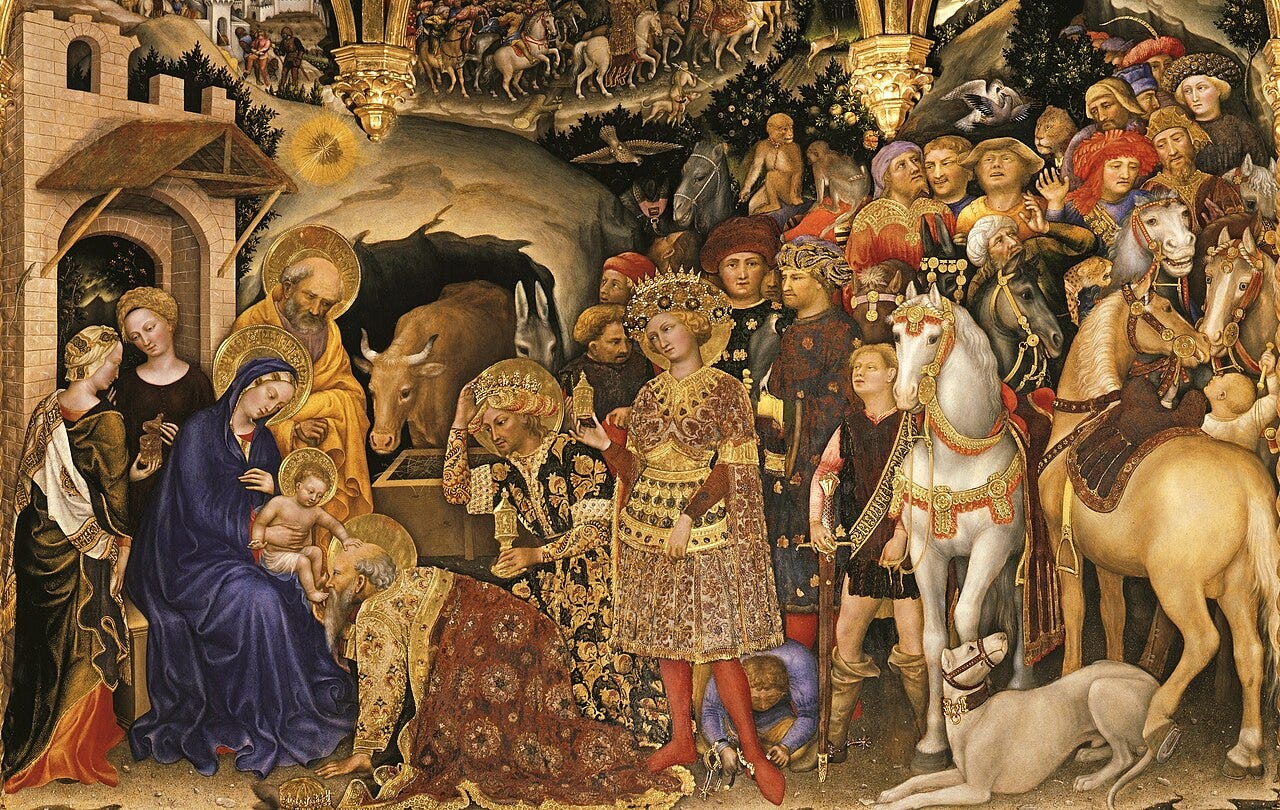
The glow is everywhere in early Italian art. Gentile da Fabriano’s Adoration of the Magi blazes with tooled gold in the Uffizi, and the Wilton Diptych in the National Gallery sets its figures against burnished gold.
Gilding, the gold questions
What is gilding? Applying a very thin layer of real gold leaf to a surface.
Is gilding gold paint? No. It is actual gold beaten into ultra thin sheets and laid by hand.
How thin is gold leaf? About a ten thousandth of a millimeter, so thin that light almost passes through it.
What is gold leaf laid on? Usually a gesso ground with a red clay layer called bole, then burnished to a shine.
Water gilding or oil gilding? Water gilding can be burnished to a mirror; oil gilding is matte and more durable.
Which artists used gold leaf? Medieval and early Renaissance panel painters, and later Gustav Klimt in his golden phase.
Why did medieval art use so much gold? It caught candlelight, signaled the sacred, and lifted figures into a heavenly realm.
More secrets to unlock


The light that came from the wall
Most paintings show light. A gold ground gives it off.
In a candlelit church, those burnished backgrounds turned a wooden panel into a small source of light. Even now, in a dim gallery, a gold ground pulls the light toward it, and I always find my eye dragged to it before I have read a single label.
