
A failed Dutch painter named Han van Meegeren faked Vermeers so convincingly that the top experts hailed them as lost Vermeers, and he sold one to Hermann Goring.
After the war he was charged with treason for handing a national treasure to the enemy, so he confessed to a lesser crime: the paintings were fakes, all painted by him.
To prove it, he had to forge a Vermeer under guard, in front of the court.
It is the strangest story in Vermeer’s orbit, and it says as much about experts as it does about the painter they worship.
A failed painter’s revenge
Van Meegeren wanted to be a great artist, and the critics laughed at him.
Dismissed as old fashioned and second rate, he decided to humiliate the experts who had rejected him. If they would not praise his own work, he would feed them a fake by a master and watch them fall over themselves.
He chose Vermeer, partly because so few of his paintings survive that a new discovery was plausible.
He studied 17th century methods, mixed his pigments, and baked the canvases to harden the paint and crack it like old age. The fakes were good enough to age, literally. Vermeer's own precision, which many still credit to a camera obscura, was exactly what van Meegeren had to fake by hand.
That artificial cracking mimics craquelure, the web of fine lines real paint develops over centuries, and it remains one of the details experts study to catch a fake.
Keep learning art the fun way


He sold a fake to Goring
His finest fraud was a painting he called Supper at Emmaus.
In 1937 the most respected Vermeer authority of the day declared it a genuine, newly found Vermeer, perhaps his finest. It was bought for a fortune and hung as a national treasure. Van Meegeren, the rejected painter, had fooled the entire art world.
Then the war came, and one of his fakes was sold to Hermann Goring, the senior Nazi and obsessive art looter, who believed he owned a real Vermeer.
Treason, or just fraud
That sale nearly cost him his life.
When the Allies found the painting among Goring's loot and traced it back to van Meegeren, he was arrested in 1945 for collaboration: selling a piece of Dutch heritage to the enemy was treason, punishable by death.
To save himself, he made an almost unbelievable confession. It was no treasure. It was a fake. He had painted it himself.
Better to be a forger than a traitor.
He had to forge one in court
The authorities did not believe him.
So, to prove his own guilt, van Meegeren was made to paint a brand new Vermeer from scratch, under supervision, while the court watched.
He produced one more convincing fake, and the case turned. He was convicted not of treason but of forgery, a far lighter charge.
In a final twist, the public adored him. Here was the little Dutchman who had swindled Goring and made fools of the snooty experts. He was sentenced to a year, and died of a heart attack in 1947 before serving it.
What the story really exposes
Everyone takes the wrong lesson from this. The scandal does not prove that Vermeer is easy to fake.
Van Meegeren did not copy a real Vermeer. He invented new Vermeers in a style experts expected, and they saw what they wanted to see.
The scandal exposed how much art authentication leaned on big names and confident opinions rather than hard proof. It is one reason the study of why so few real Vermeers exist is now done with science as much as connoisseurship.
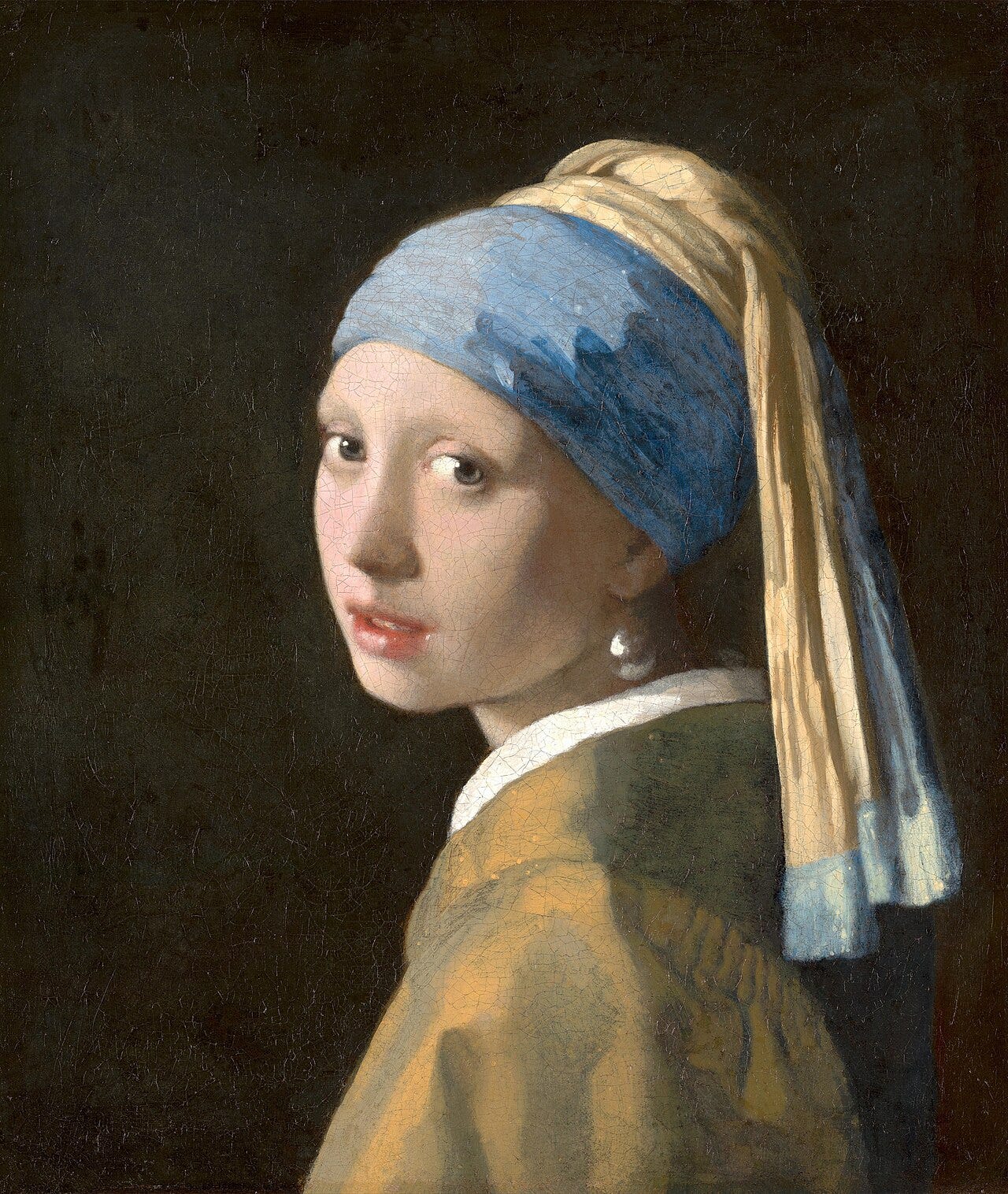
The real Vermeers, like the Girl with a Pearl Earring, have never been matched. The fakes only proved how badly people wanted more of them.
The questions people ask about van Meegeren
Who was Han van Meegeren? A Dutch painter who forged fake Vermeers in the 1930s and 1940s.
Did he really fool the experts? Yes. The leading Vermeer authority declared his Supper at Emmaus a genuine, newly found Vermeer.
What was the Goring connection? One of his fakes was sold to the Nazi leader Hermann Goring during the war.
Why did he confess to forgery? To escape a treason charge for selling national treasure to the enemy.
How did he prove it? He painted a new fake Vermeer under guard, in front of the court.
More secrets to unlock


The forger who became a folk hero
A man who could not get his own paintings taken seriously ended his life as the most famous forger in history, cheered for cheating a Nazi.
His fakes once hung beside the real thing as equals. Today they are curiosities, while the genuine Vermeers grow only more precious. I tell the story of the quiet, ruined genius behind those originals in Vermeer: The Complete Story.
I read a real Vermeer up close in Vermeer's Woman Holding a Balance.
