
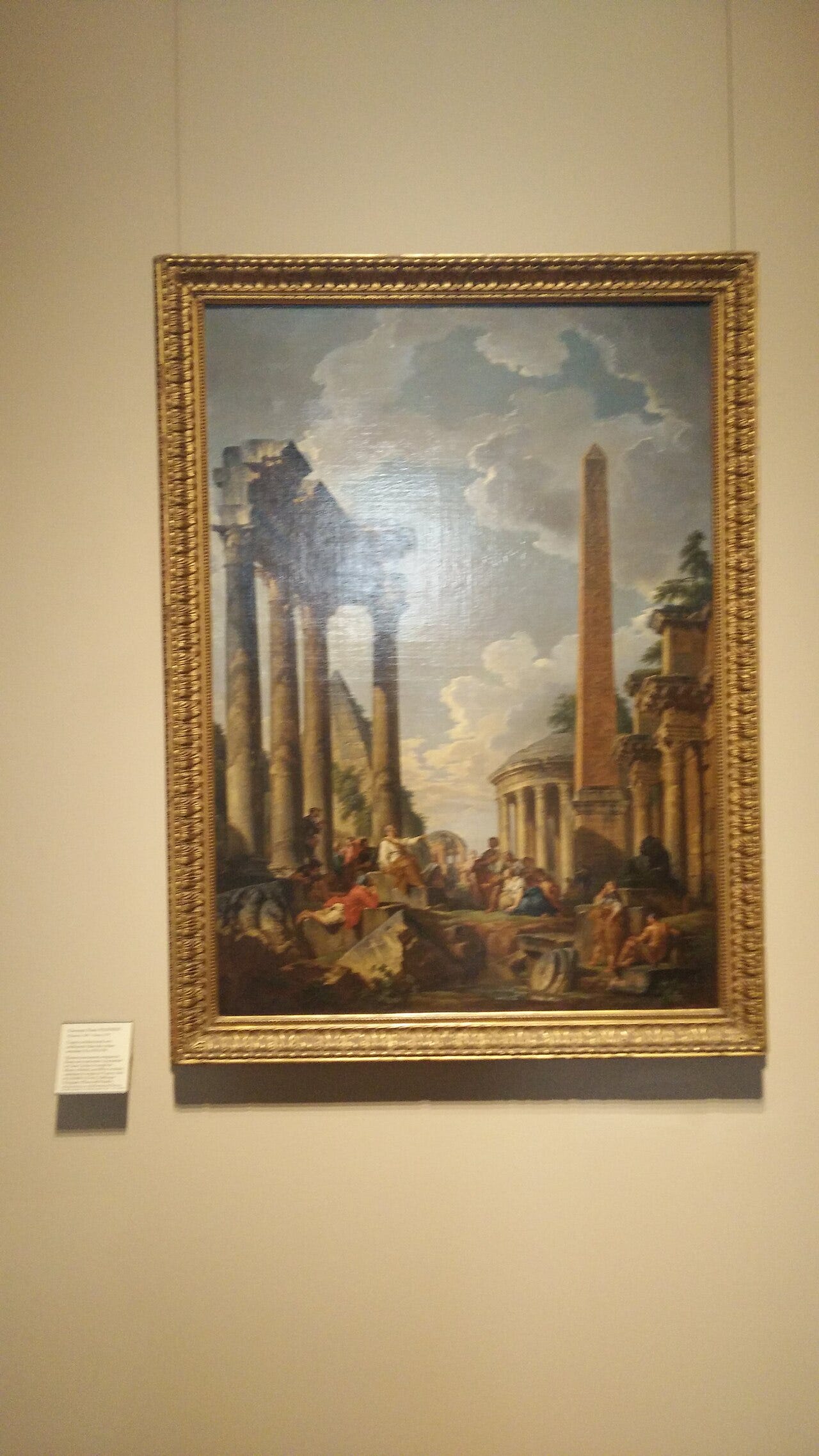
A capriccio is a painting of an architectural fantasy: real buildings, ruins and monuments rearranged into a place that never existed.
The painter takes the Colosseum, a Greek temple and a Venetian palace and assembles them into one impossible, convincing city. The word is Italian for caprice, a flight of fancy.
The Colosseum, a Greek temple and a Venetian palace, gathered into one city that has never existed.
A capriccio is an architectural fantasy, from the Italian for caprice, real monuments shuffled like furniture.
Capriccio in sixty seconds
What it is: an invented architectural scene, made of real and imagined buildings.
The word: Italian for caprice, a whim or fancy.
The opposite: the veduta, a faithful view of a real place.
The mix: famous monuments combined into one impossible setting.
The masters: Canaletto, Guardi and Panini.
Keep learning art the fun way


A city that never was
To me, the capriccio is architecture set free from geography.
A painter would gather buildings that do not belong together, an ancient Roman arch, a crumbling temple, a Gothic tower, and compose them into a single harmonious scene.
The result looks real, obeying all the rules of perspective and foreshortening, yet no such place has ever existed. It is a landscape of pure imagination wearing the clothes of reality.
You could not visit it with a map. You can only visit it in paint.
The opposite of a view
To understand the capriccio, set it beside its sober twin.
A veduta is a topographical view, a careful, accurate portrait of a real city, the kind of souvenir a Grand Tourist bought to prove they had seen Venice or Rome.
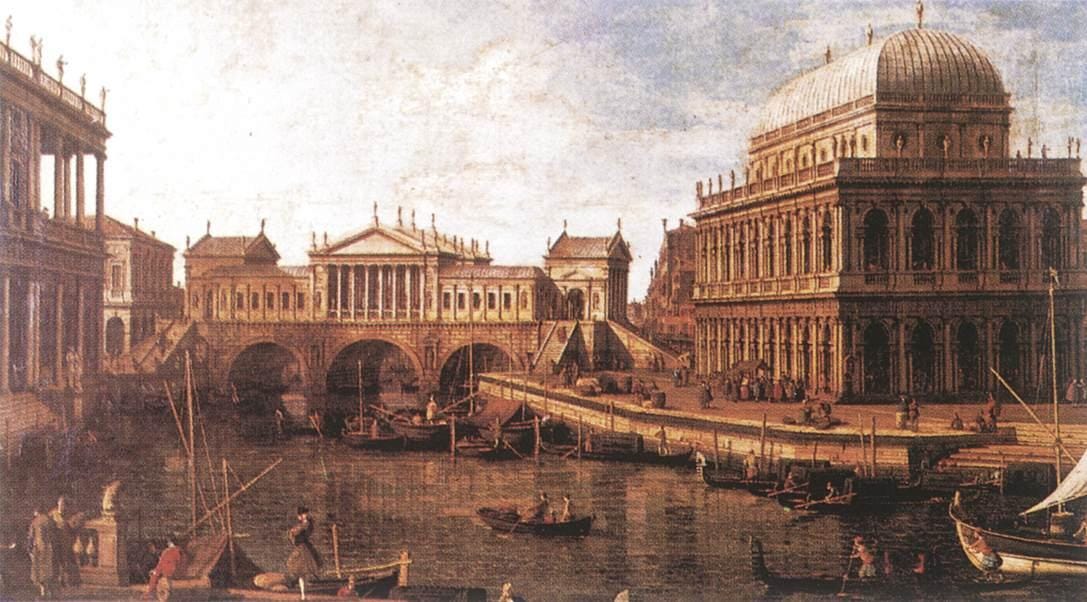
The capriccio is its dreaming cousin: the same painters, the same skill, the buildings simply shuffled and invented. Canaletto, famous for exact Venetian views, also painted capricci where he moved monuments around like furniture.
One records the city. The other rebuilds it for fun, and I find the rebuilt one far more interesting.
Ruins and melancholy
Many capricci share a mood: the beauty of decay.
In the 1700s, painters and their Grand Tour clients were fascinated by ruins, by the sight of mighty Rome reduced to broken columns and weeds.
The capriccio fed that taste, piling up romantic fragments of the ancient world into elegant, slightly sad fantasies. Panini filled huge canvases with imaginary galleries of Roman ruins, painted in glowing oil.
The fantasy was not just playful. It was a daydream about time and loss.
A licence to play
A myth says a capriccio is just a careless invented backdrop. In truth it obeys strict perspective. Canaletto, the great recorder of Venice, even built a capriccio around Palladio's rejected design for the Rialto Bridge, dropping that unbuilt span among real Venetian monuments to show the city as it might have been.
The capriccio gave a serious painter permission to invent.
View painting demanded accuracy. The capriccio lifted that rule, letting the artist compose the most pleasing arrangement of arches, light and distance, unbound by what was actually there.
It is architecture as music, real notes recombined into a new tune. That freedom is exactly what the word promises: caprice, the painter following a whim.
The discipline of the view, with the imagination switched back on.
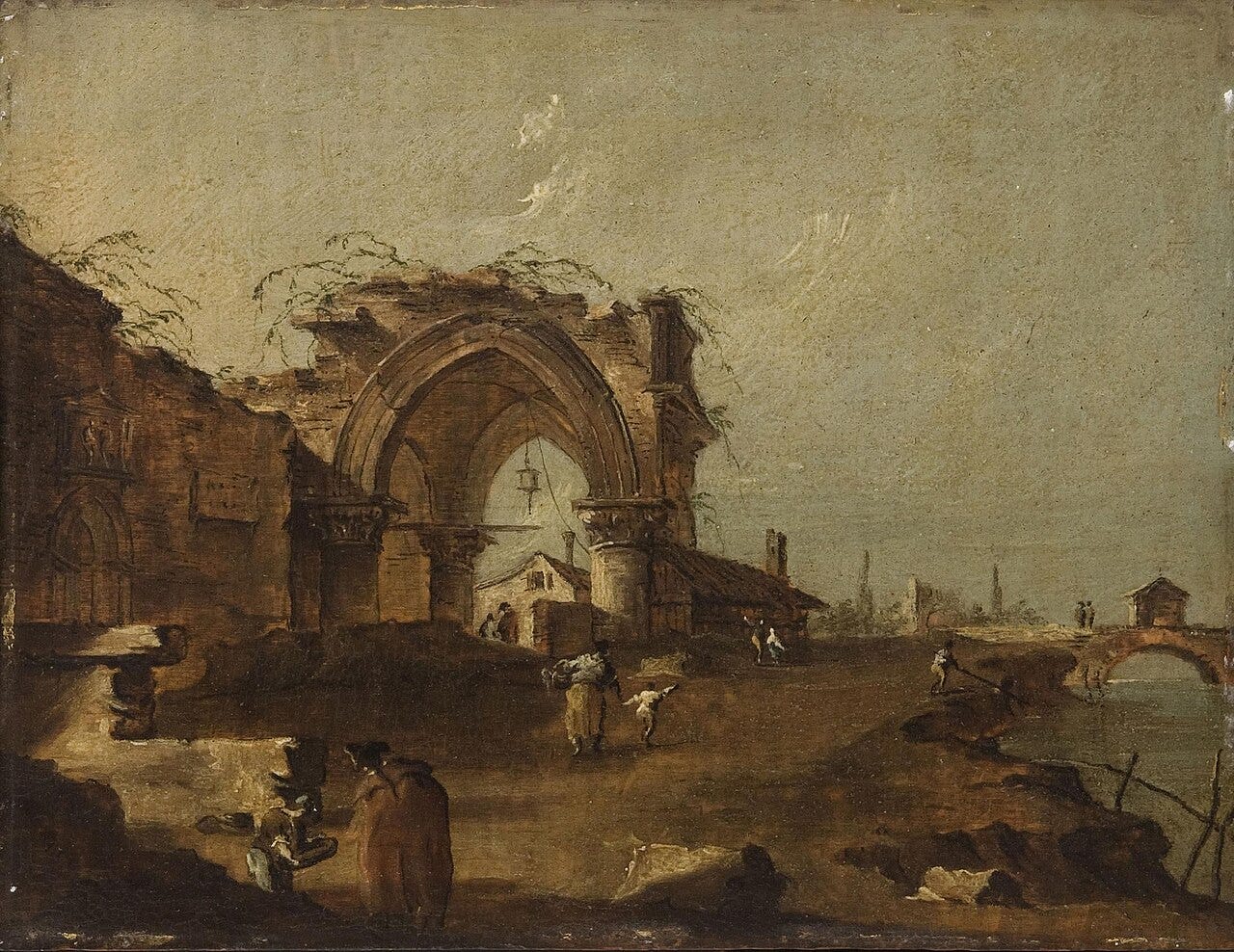
You can see the dream cities in person. The National Gallery holds Guardi’s Architectural Caprice, and the Met a Panini capriccio of figures in classical ruins.
Capriccio, your questions answered
What is a capriccio? A painting of an invented architectural scene, mixing real and imagined buildings.
What does the word mean? Italian for caprice, a whim or flight of fancy.
How is it different from a veduta? A veduta is an accurate view of a real place. A capriccio is a fantasy.
Who painted them? Canaletto, Francesco Guardi and Giovanni Paolo Panini, among others.
Why were ruins so common? The 1700s loved romantic ruins, and the capriccio let painters pile them up freely.
More secrets to unlock


The most honest kind of fake
A capriccio never pretends to be true. Where a faithful view can quietly flatter reality, the capriccio openly admits it is a daydream, a city assembled from memory and longing.
And yet it is built with such skill it can feel more real than the street outside. That is what I love about it: the most convincing places in art are sometimes the ones that were never there.
