
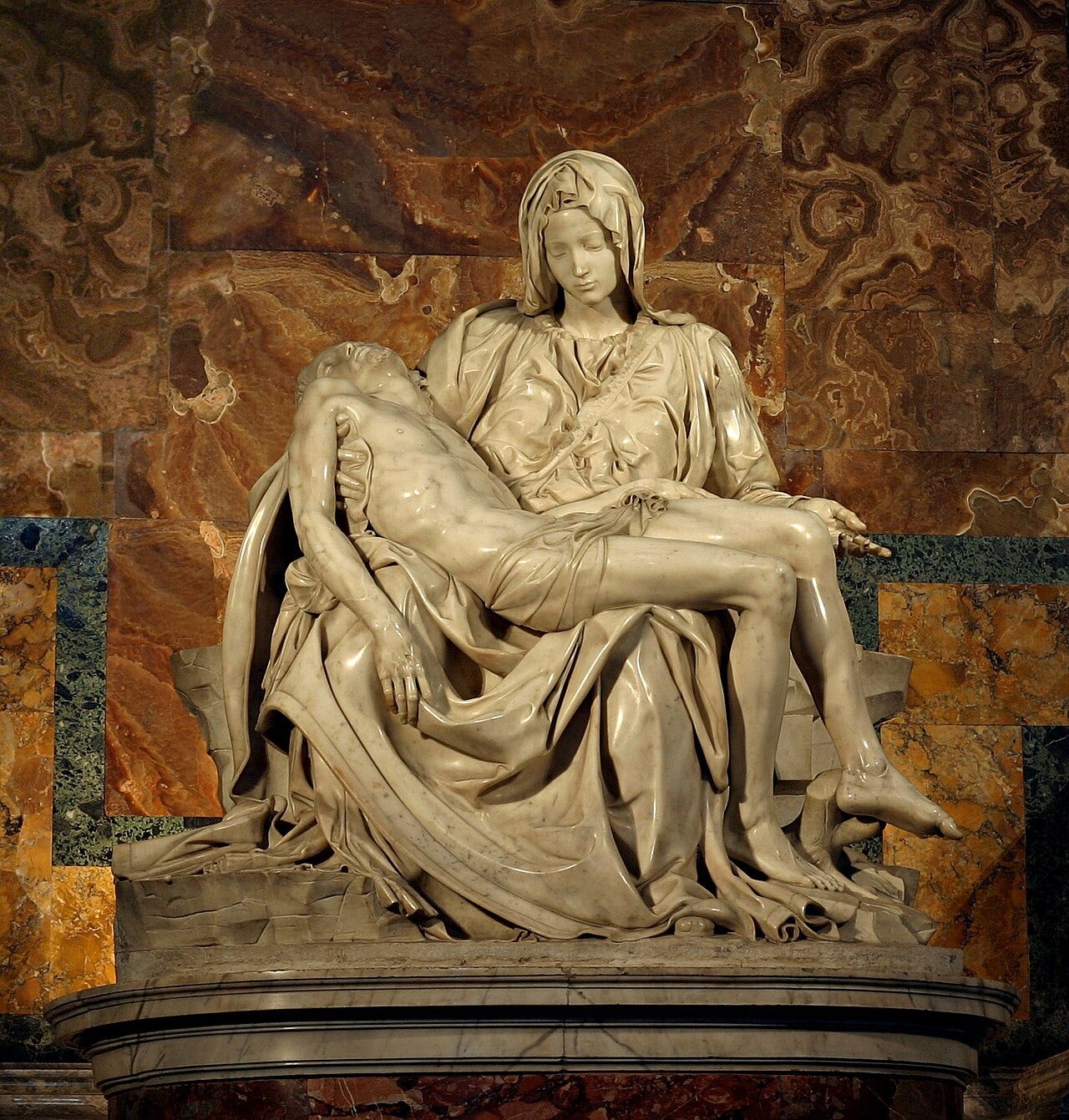
A Pieta is an image of the Virgin Mary cradling the dead Christ across her lap after the crucifixion. The word is Italian for pity. No Gospel describes the scene; it was invented as a devotional image, to make you feel a mother's grief. It is one recurring subject among many painted for churches over the centuries, twelve of which appear together in a guide to famous religious paintings.
A mother holds her dead son across her lap and looks down at him in silence.
That single image is a Pieta, from the Italian for pity, and it may be the most concentrated study of grief in Western art.
Pieta in sixty seconds
What it is: the Virgin Mary cradling the dead Christ.
The word: Italian for pity, or compassion.
The surprise: it is not described in the Bible.
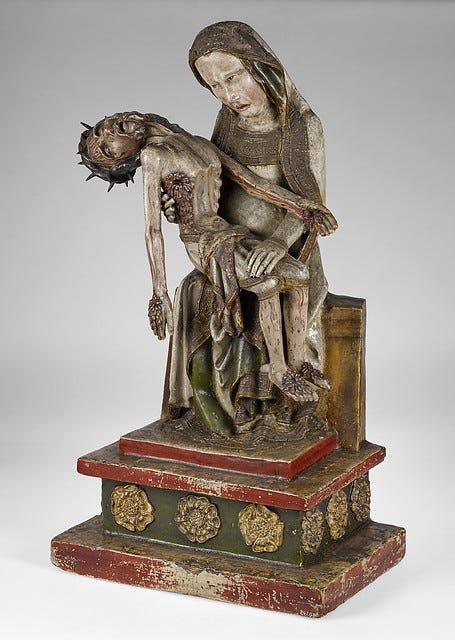
The origin: medieval Germany, made for private prayer.
The high point: Michelangelo's marble Pieta, carved when he was 24.
Keep learning art the fun way


A grief with no Gospel
Here is the part that still surprises me. The Pieta is not in the Bible.
No Gospel describes Mary holding her dead son. The image was invented in the Middle Ages, in German speaking lands, where it was called a Vesperbild, a picture for evening prayer. Its only job was to slow you down and break your heart.
It is pure devotion, designed for one person kneeling alone, not for a story.
Michelangelo's marble
The most famous Pieta is also one of the first great works by a young genius.
Michelangelo carved his Pieta in 1498 and 1499, when he was about 24. Mary holds the body of her grown son as if he were weightless, her own face strangely young and calm.
Asked why she looks younger than her son, Michelangelo said purity does not age.
It is the only work he ever signed. The story goes that he overheard visitors crediting it to another sculptor, came back at night, and carved his name across the band on Mary's chest. He never signed anything again.
When someone attacked it
The marble Pieta has its own scar.
In 1972 a man jumped the rail and struck it with a hammer, shouting that he was Jesus Christ, breaking Mary's arm and part of her face.
It was painstakingly repaired. Today the Pieta sits behind bulletproof glass, the price of being the most loved sculpture in the world.
The painted Pieta
Long before and after Michelangelo, painters took up the same subject, and the painted versions move me most.
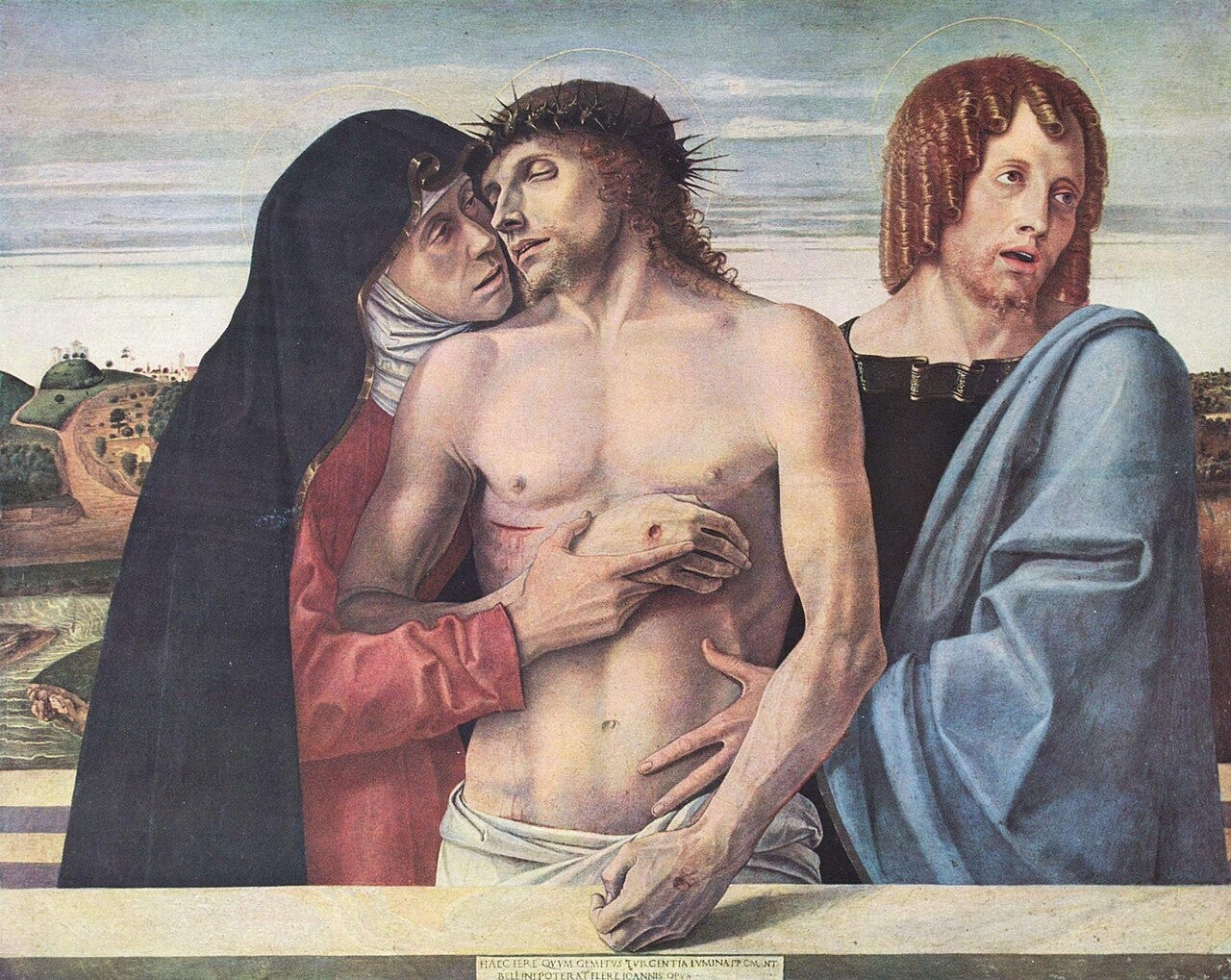
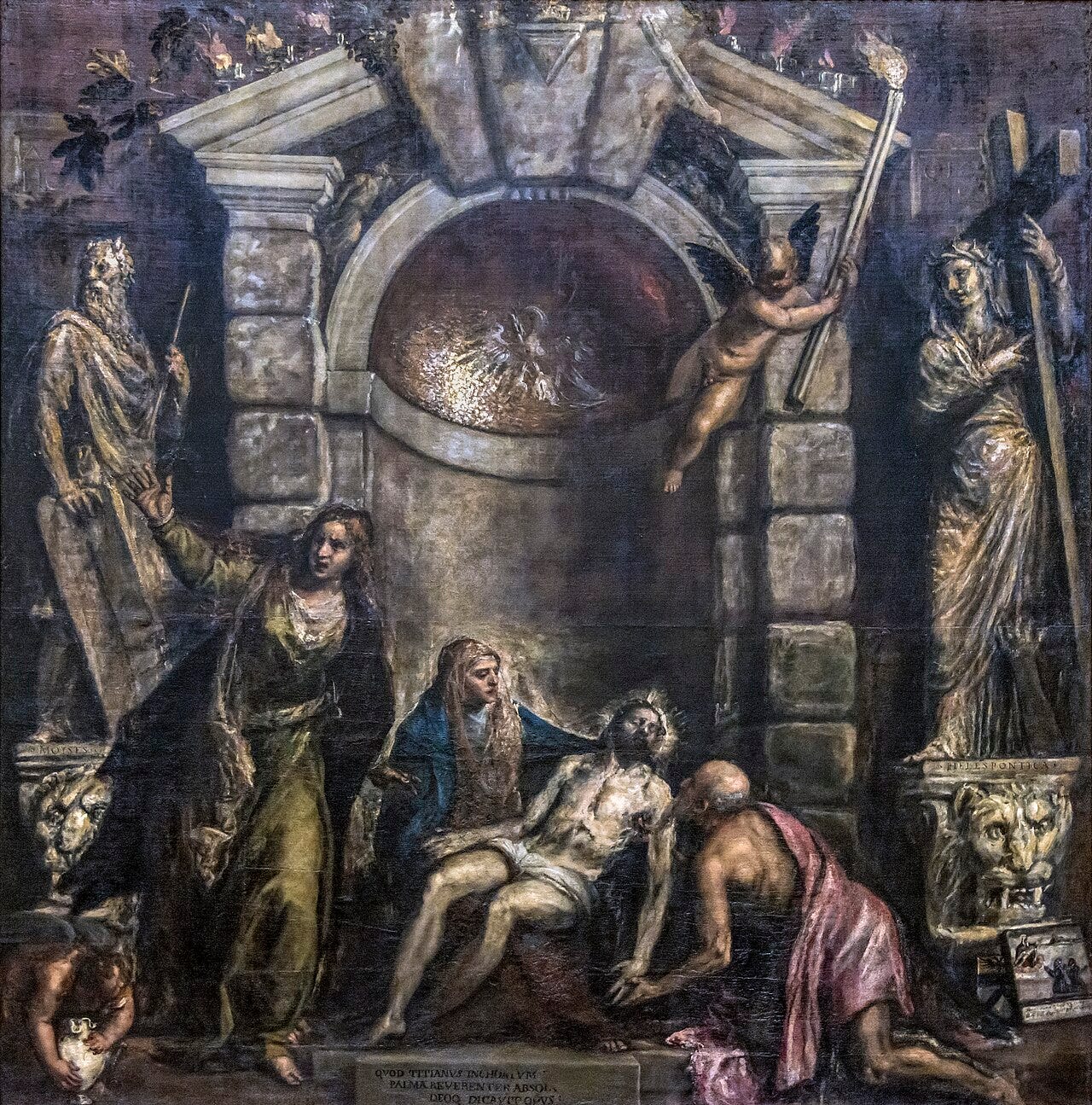
Giovanni Bellini and Titian painted searing Pietas, Titian's left unfinished as his own intended tomb picture. Botticelli painted a stark, grieving version late in life.
Giovanni Bellini, The Complete Story follows the several Pietas he painted across a long career, including the one described here.
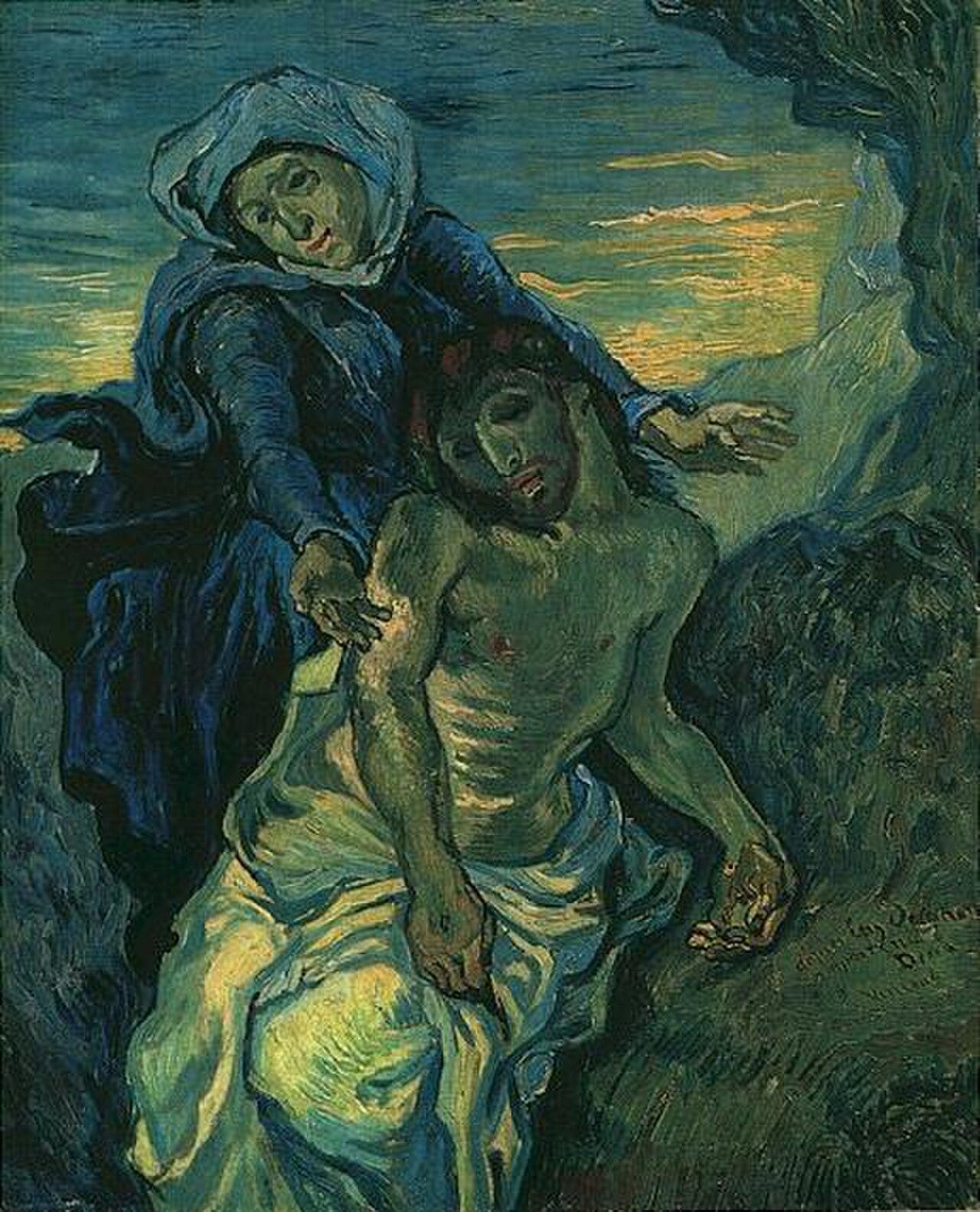
Centuries later Vincent van Gogh, copying a Delacroix, painted a Pieta where Christ has his own red bearded face.
The subject keeps returning because it asks the simplest, hardest thing of a painter: show a mother holding her dead child.
Pieta or Lamentation
People mix up two close subjects, and the difference is simple.
A Pieta is intimate: Mary alone with the body of Christ, often just the two of them. A Lamentation is a crowd scene, with Saint John, Mary Magdalene and others gathered around the body to mourn.
Reading which figures are present, and what they hold, is the heart of iconography. The Pieta strips all of that away to two people.
Pieta, questions people ask
What does Pieta mean? It is Italian for pity. The image shows Mary holding the dead Christ.
Is the Pieta in the Bible? No. It is a devotional image invented in the Middle Ages, not a Gospel scene.
Who made the most famous Pieta? Michelangelo, in marble, in 1498 to 1499, now in St Peter's Basilica.
Why does Mary look so young? Michelangelo said purity does not age. The youth is symbolic, not literal.
What is the difference between a Pieta and a Lamentation? A Pieta is Mary alone with Christ. A Lamentation shows a group of mourners.
More secrets to unlock


Why it still stops people
To me, the subject never dies because it asks the hardest thing of any artist: show a mother holding her dead child.
Even Vincent van Gogh felt the pull. Copying a Delacroix from his asylum in 1889, he painted the dead Christ with his own red beard, quietly turning the Virgin's grief into a portrait of his own.
