
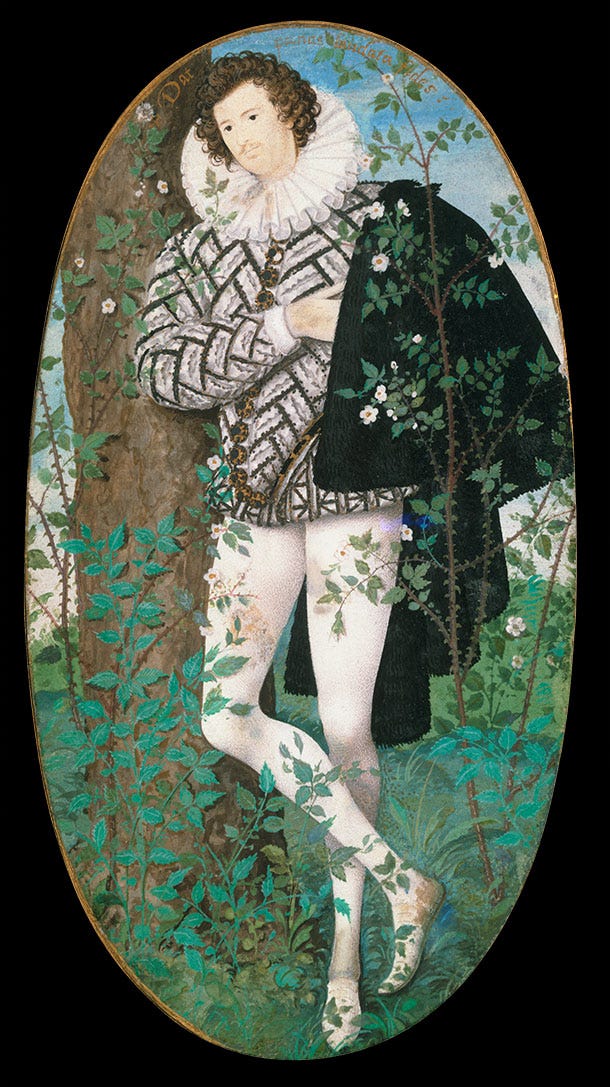
Miniature painting means very small, highly detailed pictures, made to be held and examined up close rather than hung on a wall. It covers two traditions: the European portrait kept in a locket, and the jewel like manuscript art of Persia and India, some of it painted with a brush of a single hair.
Miniature covers two worlds: the European portrait kept in a locket, and the luminous pages of Persian and Mughal art.
Miniature painting in brief
What it is: very small, finely detailed paintings made to be held.
The two traditions: European portrait miniatures and Persian or Indian miniatures.
The surface: vellum, ivory, paper or card.
The paint: usually watercolor or fine bodycolor.
The catch: the word means small, not unfinished or simple.
Keep learning art the fun way


A face you could carry
In Europe, the miniature was above all a portrait you could keep close.
From the 1500s, painters like Nicholas Hilliard made tiny portraits in watercolor on vellum, often only five or six centimetres tall, set into lockets or jewels.
They were love tokens, diplomatic gifts, and keepsakes of the absent or the dead. Later miniatures were painted on thin slices of ivory, whose glow lit the skin from beneath.
Long before photography, this was how you carried a loved one's face. Hilliard cared so much about the craft that around 1600 he wrote The Arte of Limning, the first English treatise on painting miniatures.
A portrait you could hold in your closed hand, over your heart.
The other miniature, from the East
The word also names one of the great traditions of world art.
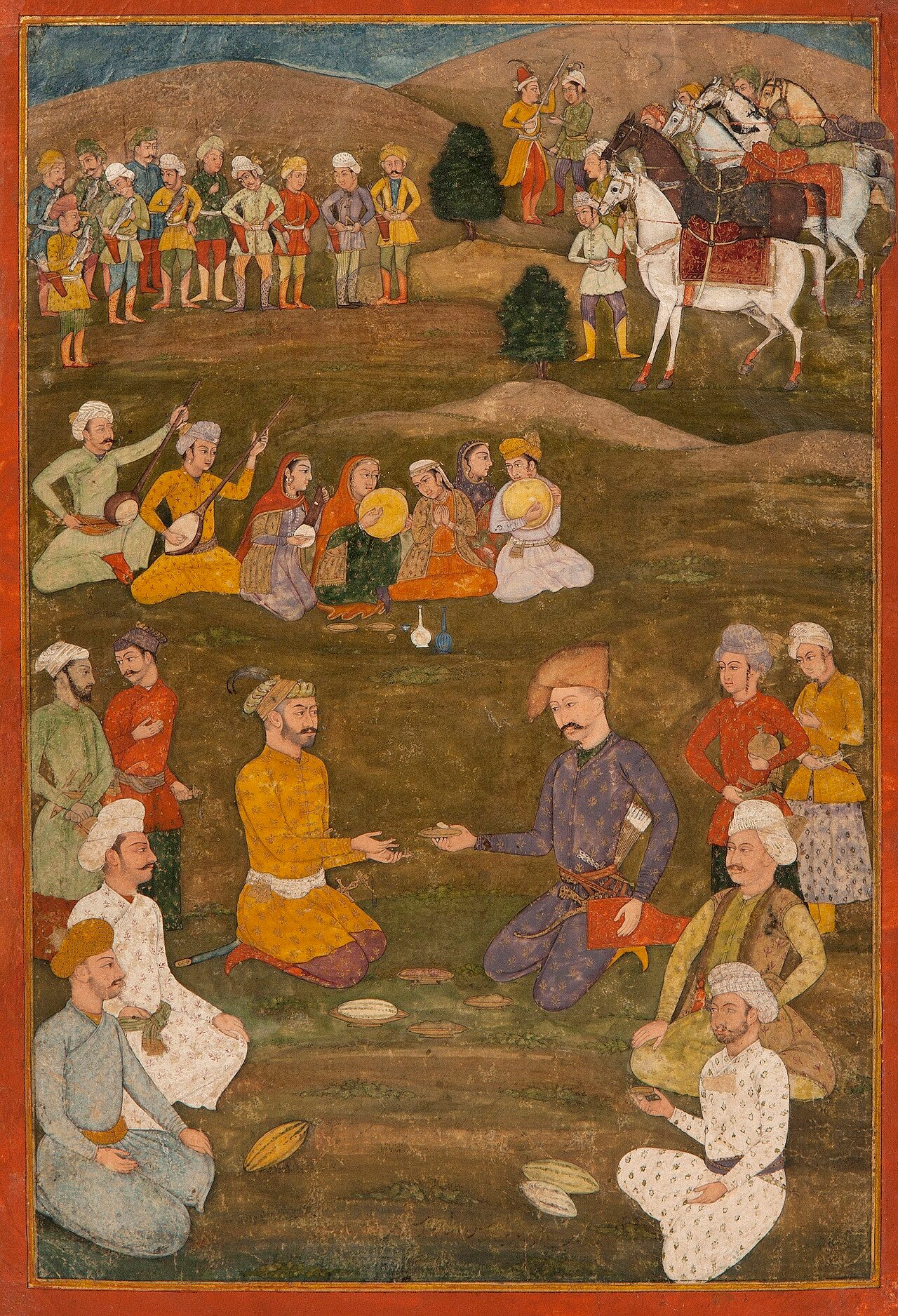
In Persia, India and the Ottoman world, miniature meant the small, intensely detailed paintings that illustrated manuscripts and albums: hunts, battles, gardens and legends.
They were painted in opaque mineral color and gold on smooth wasli paper, with brushes sometimes made of a single hair, then burnished from behind with an agate stone.
To me the Mughal and Persian miniatures are the most absorbing pictures in all of art.
Two traditions, one truth: the smaller the surface, the finer the hand must be.
The great miniature schools
The Eastern tradition splits into distinct schools, each worth knowing:
Persian (Safavid): refined court scenes and illustrated poetry, the fountainhead of the whole style.
Mughal: imperial India under Akbar and Shah Jahan, fusing Persian grace with sharp realism, seen in the Hamzanama and the Akbarnama.
Rajput: the Hindu courts, in Rajasthani and Pahari styles, painting gods, lovers and ragamala music.
Deccan: the southern sultanates, with dreamlike color and deep, glowing horizons.
Where the word comes from
The name has nothing to do with smallness, at first.
Miniature comes from minium, the red lead pigment medieval scribes used to paint the decorated initials in manuscripts. The painter of those little illustrations was a miniator.
Only later, because those manuscript pictures were small, did miniature come to mean tiny. So the word for small art secretly comes from a color, not a size.
The smallness in the name is a happy accident of red paint.
Painted in opaque jewel color
Despite the watercolor link, most miniatures are not pale and transparent.
To get their glowing, enamel like surfaces, miniaturists often used opaque bodycolor, the same idea as gouache, building dense, saturated color that reads clearly even at tiny scale.
They were after jewel like brilliance, so a portrait the size of a coin could still hold a steady, lifelike gaze.
Small did not mean faint. It meant concentrated.
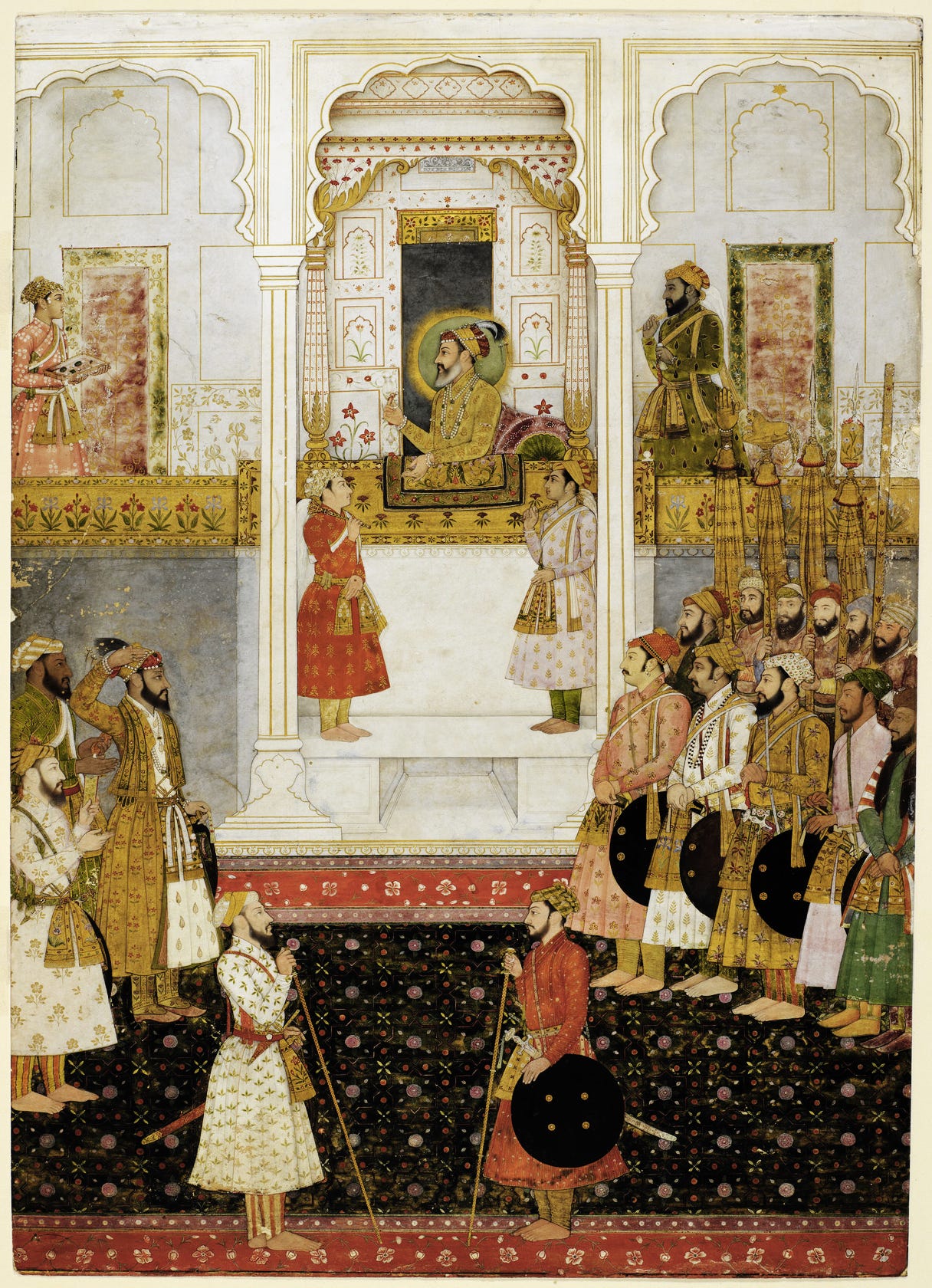
Both traditions are easy to see. The V&A holds Hilliard’s Young Man Among Roses, and the Met the Shah Jahan Album of Mughal miniatures.
Miniature painting, the small questions
What is miniature painting? Very small, highly detailed paintings made to be held and seen up close.
What are the main traditions? European portrait miniatures and the miniatures of Persian, Indian and Ottoman art.
What were they painted on? Vellum, ivory, paper or card.
Where does the word come from? From minium, the red lead pigment used for manuscript initials, not from small.
Is a miniature just a small painting? It is small, but defined by fine detail and being made to hold, not merely by size.
More secrets to unlock


The art of getting closer
Most paintings push you back so you can take them in. I love that a miniature does the opposite and pulls you in until it almost touches your nose.
One kind was made to be hidden in a locket and held over the heart. The other was made to be pored over, page by page, in a private album.
Both were the most private pictures their owners could carry, and you still have to come close to read them.
