
What Is Memento Mori?
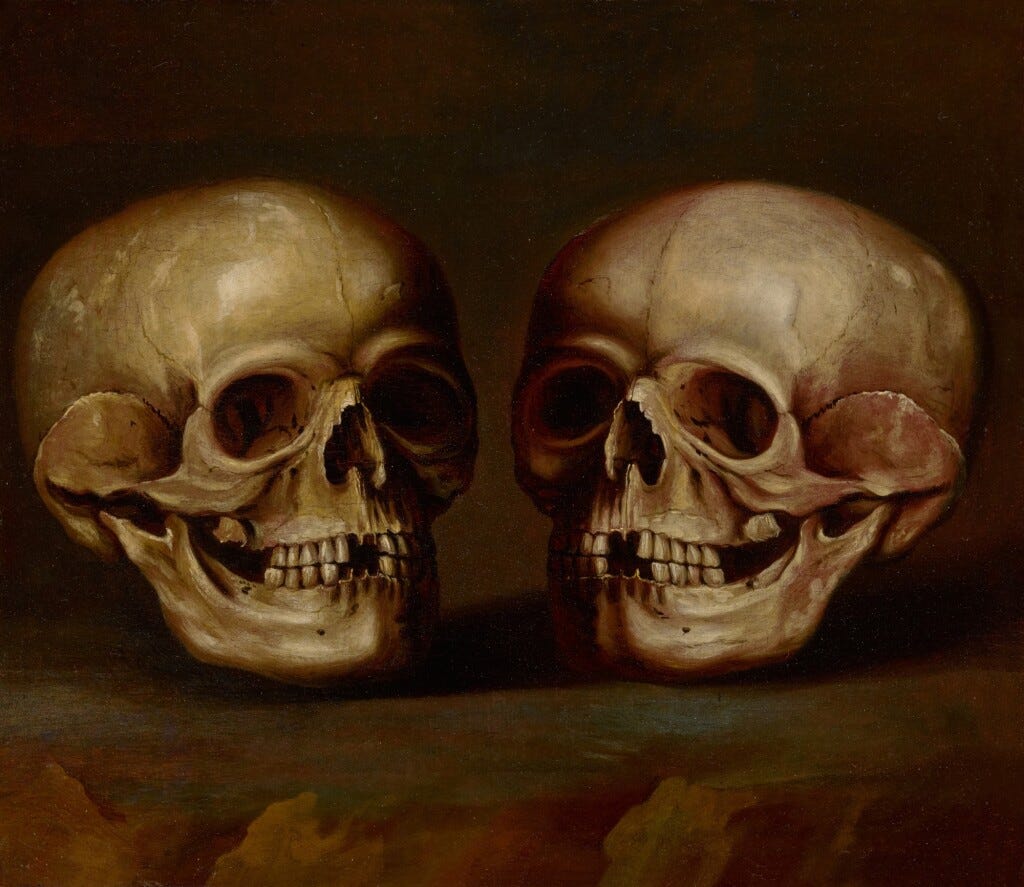
Memento mori is a Latin phrase meaning remember that you must die. In art, it is any object slipped into a picture to remind you that life is short: a skull, a snuffed candle, a clock, a wilting flower.
These small warnings are meant to wake you up to the value of the time you have.
A skull on a scholar’s desk, a candle just snuffed, a watch ticking in the dark.
Painters tucked these symbols into portraits, still lifes and church walls for more than four hundred years.
Memento mori, the basics
What it is: a prompt in art that you will die.
The phrase: Latin, remember that you must die.
The classic symbol: a human skull.
The point: not fear, but living well with the time you have.
The relatives: the vanitas still life and the danse macabre.
If you like knowing what nobody tells you
If this is the kind of art history you want more of:
Was Monet really the first Impressionist, the painting that may have got there first
The secret behind Monet Magpie, one bird in the snow, and why it matters
Lady with an Ermine, detail by detail, why she is holding that animal
A phrase with a Roman bodyguard
The idea is older than the paintings.
Tradition says that when a Roman general rode through the city in triumph, a servant stood behind him whispering a warning, reminding him that glory fades and he too would die.
True or not, the story captures the whole point of memento mori: a check on pride, a voice at your shoulder saying enjoy this, but do not forget where it ends.
Art simply made that whisper visible.
The skull on the desk
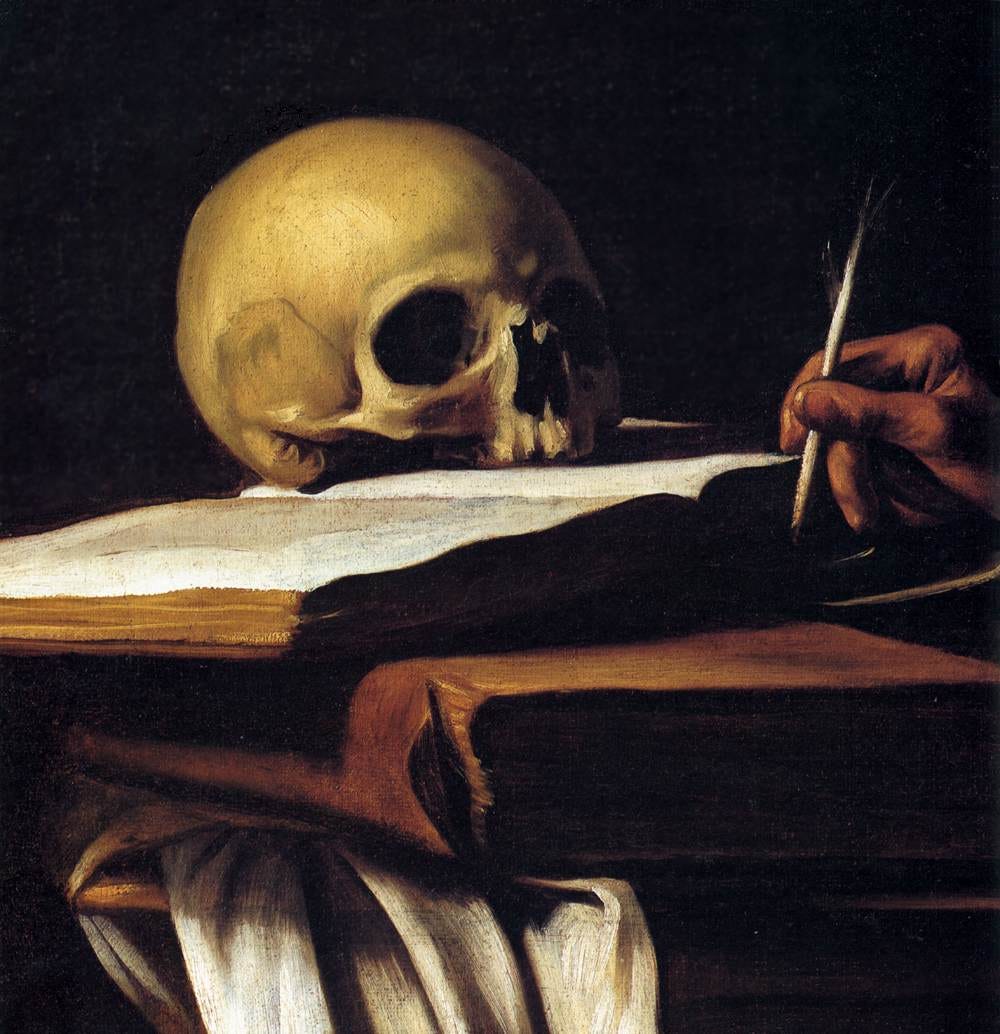
For me the most direct memento mori is also the oldest: a single human skull on a desk.
Put a human skull on a scholar’s table and the message is instant. Saint Jerome is shown with one as he studies.
Portraits sometimes hide a skull in the corner, on a ring, or worked into the sitter's clothing, a piece of buried iconography. The skull stands as a thought made solid: all this learning, all this wealth, and still this is where it goes.
One object, and the whole painting changes meaning.
Holbein's slanted skull
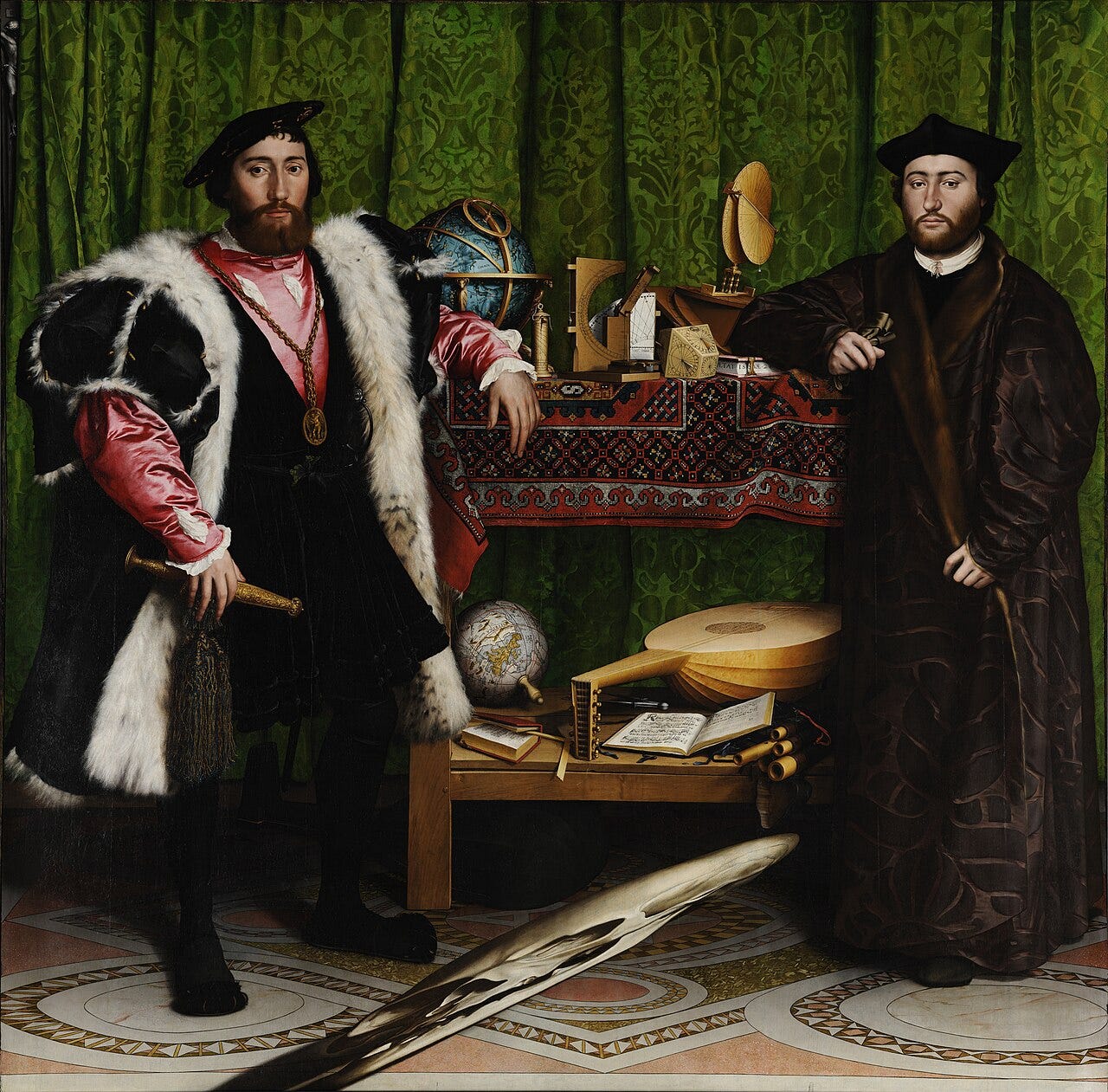
The cleverest memento mori in art is almost invisible at first.
In Hans Holbein’s The Ambassadors, two rich, powerful men stand among the tools of knowledge and music. Across the floor floats a strange grey smear.
Step to the side, look from the correct angle, and the smear snaps into focus: a human skull, painted in distortion so it only reads from the edge of the frame.
Surrounded by power and learning, death is written across the floor, waiting for the right point of view.
To me it is a trick, a puzzle and a sermon at once.
From one skull to a whole table
Memento mori grew into whole forms of art.
The vanitas still life is a memento mori spread across a table, a still life of skulls, candles and bubbles. Lit with deep shadow and a single flame, in the tenebrism of the Baroque, these images turned a grim fact into something strangely beautiful.
The warning was everywhere, because the message was for everyone.
You can hunt the skull yourself. Holbein’s The Ambassadors is in the National Gallery in London, and the Met holds the early Vanitas Still Life by de Gheyn.
Painters loved to slip these signs into plain sight, as in 7 secrets hidden in famous paintings.
The skull that ticks
Look closer and many memento mori hide a clock. Philippe de Champaigne set a watch and an hourglass beside his skull, around 1671, sharpening the point: the seconds are leaving right now.
The clock rarely sits alone. An hourglass with its sand half run, a candle pinched to a thread of smoke, a soap bubble at the second before it bursts, all say the same thing at different speeds.
They turn the skull from a flat fact into a countdown, and the thought shifts from you will die to the sharper version, your time is leaving right now.
The dance that took everyone
In the late Middle Ages the idea went viral as the Dance of Death, the danse macabre, in which skeletons lead away people of every rank.
Hans Holbein the Younger cut a famous set of these woodblock scenes in the 1520s, pairing a grinning skeleton with a pope, a merchant, a ploughman, a child.
Born in the shadow of plague, the danse macabre made the point democratic. Death takes the king and the beggar with the same grip.
It is memento mori turned into a procession, and it is why the motif spread from private prayer books onto the painted walls of churches.
Beyond the canvas
Memento mori was never only paint. In the Middle Ages, cadaver tombs known as transi showed the dead noble as a rotting corpse carved in stone, lying beneath a calm effigy of the living man.
It reached into daily life too. Mourning rings hid tiny skulls, some pocket watches were shaped like them, and a few monastic orders still greet one another with the phrase to this day.
The skull never left
The motif still works. In 2007 Damien Hirst cast a human skull in platinum and set it with 8,601 diamonds, called it For the Love of God, and priced it near 50 million pounds. A memento mori made from the very wealth it warns you about.
Memento mori, questions in the face of death
What does memento mori mean? It is Latin for remember that you must die.
What is a memento mori in art? Any symbol of death and time placed in an artwork, most often a skull.
Is it meant to be depressing? No. It is meant to make you value your time and live well.
What is the most famous example? The hidden, distorted skull in Holbein's The Ambassadors.
How is it different from vanitas? Memento mori is the broad idea. A vanitas is a still life that delivers that idea through objects.
A warning that is really an invitation
It is easy to read memento mori as gloomy, yet I think the point is the reverse. The skull on the desk is there to sharpen the day, a nudge that the hours are limited and therefore worth something.
For centuries painters hid this small alarm clock inside their loveliest pictures. Holbein even buried his skull in a portrait you have to stand sideways to read.
